
Precision vs Recall in Machine Learning: An In-Depth Guide for 2026
Introduction
In the rapidly evolving field of machine learning, model evaluation is a critical yet often misunderstood aspect. Accuracy is frequently cited as the go-to metric, but it fails to provide a complete picture, particularly for imbalanced datasets. This is where precision and recall come into play.
Precision and recall are two essential metrics that offer a more comprehensive assessment of a classifier‘s performance. While they are often presented using confusing terminology, the underlying concepts are quite intuitive once you grasp what each metric represents.
In this in-depth guide, we‘ll explore precision and recall from a technical perspective, delving into their definitions, calculations, tradeoffs, and applications. Whether you‘re a data scientist, machine learning engineer, or researcher, by the end of this article, you‘ll have a robust understanding of these crucial evaluation metrics.
Defining Precision and Recall
Let‘s start with the formal definitions. For a binary classification problem, precision and recall are defined as follows:
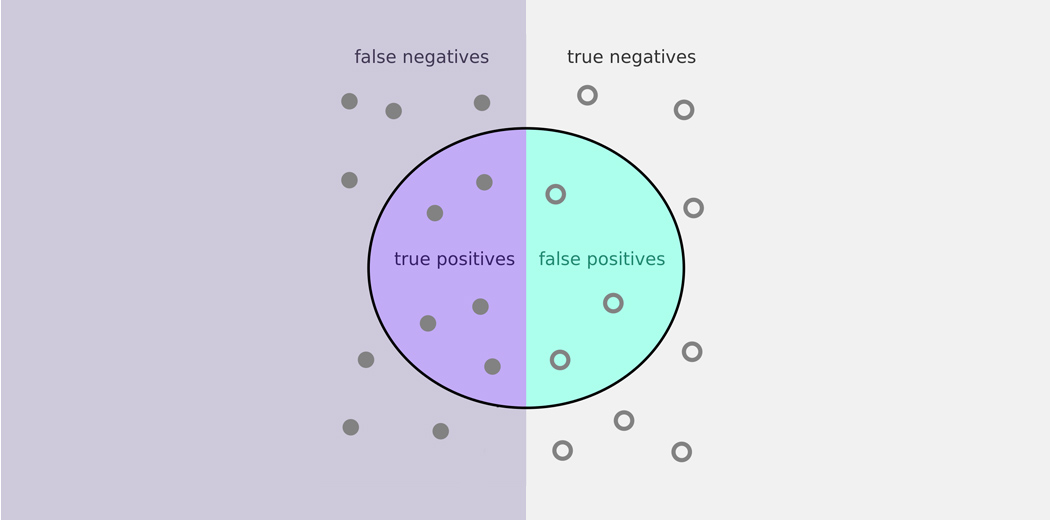
Precision: The proportion of true positive predictions among all positive predictions. Mathematically:
$$ \text{Precision} = \frac{\text{True Positives}}{\text{True Positives} + \text{False Positives}} $$
Recall: The proportion of true positive predictions among all actual positive instances. Mathematically:
$$ \text{Recall} = \frac{\text{True Positives}}{\text{True Positives} + \text{False Negatives}} $$
In simpler terms:
- Precision measures how accurate the model is when it predicts an instance as positive. High precision means low false positives.
- Recall measures how well the model finds all the positive instances. High recall means low false negatives.
To illustrate with a classic example, consider a model that predicts whether a patient has a disease based on symptoms:
- Precision: Of all the patients the model predicted as having the disease, what proportion actually had the disease?
- Recall: Of all the patients who actually had the disease, what proportion did the model correctly identify?
High precision means the model is conservative in diagnosing the disease and rarely gives false alarms. High recall means the model catches most of the actual disease cases and rarely misses a diagnosis.
The Precision-Recall Tradeoff
In an ideal scenario, we want models with both high precision and high recall. However, in practice, there is often an inverse relationship between the two. Increasing precision typically reduces recall and vice versa.
This tradeoff stems from the fact that most classifiers make predictions based on a decision threshold. Instances with predicted probabilities above the threshold are classified as positive, and those below as negative. Adjusting this threshold allows us to control the balance between precision and recall.
Consider the example of email spam classification:
- Setting a high threshold means the model will only predict an email as spam if it‘s very confident. This increases precision (fewer false positives) but may miss some actual spam emails, reducing recall.
- Conversely, a low threshold makes the model more aggressive in flagging emails as spam. This increases recall (catching more actual spam) but may also incorrectly mark some legitimate emails, lowering precision.
The optimal balance between precision and recall depends on the specific problem and the relative costs of false positives versus false negatives. In medical diagnosis, for instance, high recall is often prioritized to avoid missing cases of the disease. In fraud detection, precision may be more important to minimize flagging legitimate transactions.
The Confusion Matrix: Calculating Precision and Recall
To compute precision and recall, we start by constructing a confusion matrix, which tabulates the model‘s predictions against the true labels. For binary classification, the confusion matrix has four entries:
- True Positives (TP): Instances correctly predicted as positive
- True Negatives (TN): Instances correctly predicted as negative
- False Positives (FP): Instances incorrectly predicted as positive
- False Negatives (FN): Instances incorrectly predicted as negative
Here‘s an example confusion matrix for a binary classifier:
| Predicted Positive | Predicted Negative | |
|---|---|---|
| Actual Positive | TP | FN |
| Actual Negative | FP | TN |
Using these values, precision and recall can be calculated as:
$$ \text{Precision} = \frac{\text{TP}}{\text{TP} + \text{FP}} $$
$$ \text{Recall} = \frac{\text{TP}}{\text{TP} + \text{FN}} $$
Most machine learning libraries, such as scikit-learn in Python, provide built-in functions to compute precision and recall from the true labels and predicted labels.
Precision, Recall, and Accuracy
Accuracy is another commonly used metric, measuring the overall correctness of the model‘s predictions:
$$ \text{Accuracy} = \frac{\text{TP} + \text{TN}}{\text{TP} + \text{TN} + \text{FP} + \text{FN}} $$
While accuracy provides a global view, precision and recall offer a more nuanced perspective, especially for imbalanced datasets where one class is much more frequent than the other.
For example, consider a dataset where only 1% of instances are positive. A model that always predicts negative would achieve 99% accuracy, but 0% recall for the positive class. Precision and recall expose such performance disparities that accuracy alone might obscure.
Precision-Recall Curves and AUC
Precision and recall values depend on the classification threshold. By varying the threshold, we can plot a precision-recall curve, showing the tradeoff between the two metrics.
Here‘s an example precision-recall curve:

A perfect classifier would have a precision of 1 for all recall values, represented by a horizontal line at the top of the graph. In practice, precision typically decreases as recall increases.
The area under the precision-recall curve (AUC-PR) provides a threshold-invariant summary of the model‘s performance. A higher AUC-PR indicates better performance across all possible thresholds.
Scikit-learn provides the precision_recall_curve and auc functions to compute and plot precision-recall curves and AUC-PR scores.
The F1 Score: Balancing Precision and Recall
The F1 score is the harmonic mean of precision and recall, providing a single metric that balances both:
$$ \text{F1} = 2 \cdot \frac{\text{Precision} \cdot \text{Recall}}{\text{Precision} + \text{Recall}} $$
The F1 score ranges from 0 to 1, with 1 being the best possible value. It equally weights precision and recall, making it a good choice when both false positives and false negatives are equally undesirable.
However, in some cases, we may want to prioritize either precision or recall. The general Fβ score allows this by introducing a parameter β:
$$ \text{F}_\beta = (1 + \beta^2) \cdot \frac{\text{Precision} \cdot \text{Recall}}{\beta^2 \cdot \text{Precision} + \text{Recall}} $$
Setting β > 1 emphasizes recall, while β < 1 favors precision. The F1 score is the special case where β = 1.
Precision and Recall in Practice
The importance of precision versus recall varies across domains. Here are a few examples:
- In medical diagnosis, high recall is crucial to avoid missing cases of the disease. False positives can be filtered out by further tests, but false negatives can have serious consequences.
- In fraud detection, precision is often prioritized. False positives (flagging legitimate transactions) lead to poor user experience and lost business. Some false negatives (missed fraud) are often tolerable.
- In information retrieval, such as web search, both precision and recall matter. Users want relevant results (high precision) but also expect to see all the important documents (high recall). The F1 score is commonly used.
Understanding the relative importance of precision and recall in your specific application is essential for selecting appropriate evaluation metrics and optimizing your models.
Improving Precision and Recall
If a model‘s precision or recall is unsatisfactory, several techniques can help improve it:
- Adjust the classification threshold: Lowering the threshold increases recall at the expense of precision, and vice versa. Find the right balance for your application.
- Collect more training data: Diverse and representative data can help the model better learn the underlying patterns and improve both precision and recall.
- Handle class imbalance: For skewed datasets, consider oversampling the minority class, undersampling the majority class, or using class weights.
- Feature engineering: Create new informative features or transform existing ones to help the model better discriminate between classes.
- Try different algorithms: Experiment with various classifiers and compare their precision-recall performance. Some algorithms may be better suited for your specific problem.
- Ensemble methods: Combining predictions from multiple models can often improve precision and recall compared to individual models.
As with any model tuning, evaluate changes on a separate validation set to avoid overfitting.
Precision and Recall in Deep Learning
Deep learning models, such as convolutional neural networks (CNNs) and transformers, have achieved state-of-the-art performance on many tasks, including image classification, object detection, and natural language processing.
However, deep learning models are not immune to the precision-recall tradeoff. In fact, the high capacity of these models can sometimes lead to overfitting, resulting in high precision but low recall, or vice versa.
Techniques like data augmentation, regularization, and early stopping can help mitigate overfitting and improve precision and recall. Transfer learning, where a model is pre-trained on a large dataset and fine-tuned on a specific task, has also been shown to boost performance.
In object detection tasks, popular metrics like mean Average Precision (mAP) and mean Average Recall (mAR) are used to evaluate precision and recall across multiple object categories and intersection-over-union (IoU) thresholds.
Multi-Class and Multi-Label Precision and Recall
So far, we‘ve focused on binary classification, but precision and recall can also be extended to multi-class and multi-label problems.
In multi-class classification, where instances belong to exactly one of several classes, precision and recall can be computed for each class individually. The overall precision and recall are then typically averaged across classes, either by taking the arithmetic mean (macro-average) or weighting by the number of instances in each class (micro-average).
In multi-label classification, where instances can belong to multiple classes simultaneously, precision and recall are computed for each class independently, treating it as a binary problem. The overall metrics can be aggregated using macro-averaging or micro-averaging, similar to multi-class classification.
Scikit-learn provides the precision_score and recall_score functions with average parameter to handle multi-class and multi-label problems.
Tips and Best Practices
Here are some expert tips and best practices for working with precision and recall:
- Always consider the problem context when choosing between precision and recall. Understand the relative costs of false positives and false negatives in your specific application.
- Use precision-recall curves and AUC-PR to evaluate model performance across different thresholds. Don‘t rely on a single threshold.
- Be cautious when interpreting precision and recall for imbalanced datasets. High precision or recall can be misleading if the positive class is rare.
- When comparing models, use statistical significance tests to ensure observed differences in precision and recall are not due to chance.
- Keep in mind that precision and recall are not the only relevant metrics. Depending on the problem, consider other metrics like specificity, ROC AUC, or log loss.
- Document and report the specific definitions and calculations of precision and recall used in your work to avoid ambiguity and ensure reproducibility.
Historical Context and Recent Research
The concepts of precision and recall originated in the field of information retrieval in the 1950s, where they were used to evaluate the performance of search engines. Since then, they have been widely adopted in machine learning and data mining.
In recent years, research has focused on developing new evaluation metrics that address some of the limitations of precision and recall. For example, the Area Under the Precision-Recall-Gain Curve (AUPRG) has been proposed as a more informative metric for imbalanced datasets.
There has also been work on optimizing precision and recall directly, rather than relying on thresholding. Techniques like Precision-Recall-Optimization (PRO) and Precision-Recall-Curve Optimization (PRCO) aim to find the best model parameters to maximize precision and recall simultaneously.
In the deep learning era, researchers have explored new architectures and loss functions that are more robust to class imbalance and can achieve high precision and recall. Focal Loss, for example, down-weights the contribution of easy examples and focuses on hard examples during training.
Conclusion
Precision and recall are two sides of the same coin, providing complementary insights into a classifier‘s performance. While accuracy gives an overall picture, precision and recall offer a more detailed view, especially for imbalanced datasets.
Understanding the tradeoff between precision and recall, and how to calculate and interpret them, is crucial for evaluating and optimizing machine learning models. The F1 score and precision-recall curves are valuable tools for finding the right balance in your specific application.
However, precision and recall are not the only metrics to consider. Depending on your problem domain, other metrics like specificity, ROC AUC, or log loss may also be relevant. The key is to choose evaluation metrics that align with your project‘s objectives and real-world requirements.
By mastering precision and recall, you‘ll be well-equipped to assess and improve your classification models, making them more accurate, reliable, and valuable in practical applications.
As machine learning continues to evolve, staying up-to-date with the latest research and best practices around evaluation metrics is essential. By combining technical understanding with domain knowledge and a focus on real-world impact, you can build models that not only perform well on paper but also drive meaningful results in practice.


![How to Make Money with Claude AI: A Beginner‘s Guide [2026]](https://33rdsquare.com/wp-content/uploads/2024/03/20240312074256-65f0078051307.png.webp)

