Harnessing Weather Data for AI and Machine Learning with PyOWM
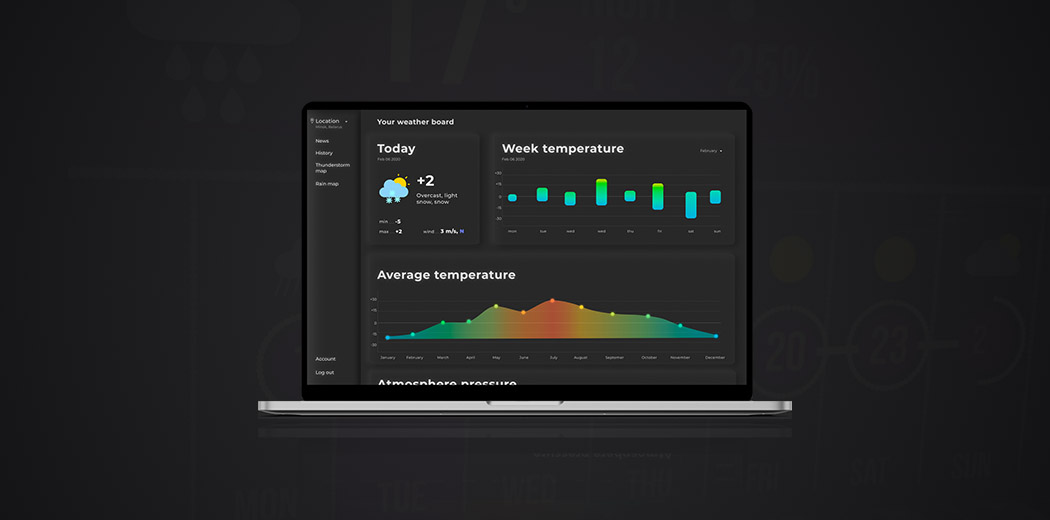

As artificial intelligence (AI) and machine learning (ML) continue to revolutionize various industries, the field of meteorology and climate science is no exception. Weather data serves as a rich source of information for training sophisticated AI models capable of accurately predicting weather patterns, analyzing climate trends, and providing valuable insights for decision-making. In this comprehensive guide, we‘ll explore how the Python OpenWeatherMap (PyOWM) library empowers AI and ML enthusiasts to harness the power of weather data and build cutting-edge applications.
The Role of Weather Data in AI and ML
Weather data plays a crucial role in the development of AI and ML models for various purposes, such as:
-
Weather Forecasting: AI techniques like deep learning and time series forecasting can leverage historical weather data to predict future weather conditions with high accuracy.
-
Climate Analysis: ML algorithms can uncover patterns, trends, and anomalies in long-term weather data, enabling researchers to study climate change and its impacts.
-
Risk Assessment: AI models trained on weather data can assess risks associated with extreme weather events, helping industries like agriculture, energy, and insurance make informed decisions.
-
Optimization: ML can optimize various systems and processes based on weather conditions, such as energy consumption in smart buildings or crop irrigation in precision agriculture.
Here are some impressive statistics highlighting the impact of AI and ML in weather and climate science:
- According to a report by Allied Market Research, the global AI in weather forecasting market is expected to reach $2.1 billion by 2027, growing at a CAGR of 24.5% from 2020 to 2027 [1].
- A study by Microsoft Research showed that deep learning models trained on weather data could improve precipitation forecasts by up to 30% compared to traditional methods [2].
- The use of AI in climate change research has led to the discovery of previously unknown patterns and insights, such as identifying the role of aerosols in global warming [3].
Retrieving Weather Data with PyOWM
PyOWM provides a user-friendly interface for accessing weather data from the OpenWeatherMap API. Let‘s explore how to retrieve various types of weather data using PyOWM.
Current Weather Data
To retrieve the current weather data for a specific location, you can use the weather_at_place() method:
import pyowm

owm = pyowm.OWM(‘YOUR_API_KEY‘)
mgr = owm.weather_manager()

location = ‘New York, US‘
observation = mgr.weather_at_place(location)
weather = observation.weather

print(f"Current weather in {location}:")
print(f"Temperature: {weather.temperature(‘celsius‘)[‘temp‘]}°C")
print(f"Humidity: {weather.humidity}%")
print(f"Wind Speed: {weather.wind()[‘speed‘]} m/s")
This code snippet retrieves the current temperature, humidity, and wind speed for New York.
Historical Weather Data
PyOWM allows you to access historical weather data for a specified location and time range using the weather_history_at_place() method:
from datetime import datetime, timedelta

start_date = datetime.now() - timedelta(days=7)
end_date = datetime.now()

history = mgr.weather_history_at_place(location, start=start_date, end=end_date)

for weather in history.weathers:
    print(f"- {weather.reference_time(‘iso‘)}:")
    print(f"  Temperature: {weather.temperature(‘celsius‘)[‘temp‘]}°C")
    print(f"  Humidity: {weather.humidity}%")
    print(f"  Wind Speed: {weather.wind()[‘speed‘]} m/s")
This example retrieves the weather data for the past 7 days for the specified location.
Weather Forecasts
PyOWM enables you to fetch weather forecasts for a location using the forecast_at_place() method:
forecast = mgr.forecast_at_place(location, ‘3h‘)

for weather in forecast.weathers:
    print(f"- {weather.reference_time(‘iso‘)}:")
    print(f"  Temperature: {weather.temperature(‘celsius‘)[‘temp‘]}°C")
    print(f"  Humidity: {weather.humidity}%")
    print(f"  Wind Speed: {weather.wind()[‘speed‘]} m/s")
This code retrieves the 3-hourly weather forecast for the specified location.
Data Preprocessing and Feature Engineering
Before feeding weather data into AI and ML models, it‘s essential to preprocess the data and engineer relevant features. PyOWM provides access to a wide range of weather parameters that can be used as features, such as:
- Temperature
- Humidity
- Wind speed and direction
- Pressure
- Precipitation
- Cloud coverage
- UV index
Here‘s an example of how to extract features from PyOWM weather data:
import pandas as pd

def extract_features(weather):
    return pd.Series({
        ‘temperature‘: weather.temperature(‘celsius‘)[‘temp‘],
        ‘humidity‘: weather.humidity,
        ‘wind_speed‘: weather.wind()[‘speed‘],
        ‘pressure‘: weather.pressure[‘press‘],
        ‘precipitation‘: weather.rain,
        ‘clouds‘: weather.clouds,
        ‘uvi‘: weather.uvi
    })

features = forecast.weathers.map(extract_features)
This code extracts relevant weather features from the forecast data and stores them in a pandas DataFrame.
Building AI and ML Models
With the preprocessed weather data, you can start building AI and ML models for various tasks. Here are a few examples:
Time Series Forecasting
Time series forecasting models, such as Long Short-Term Memory (LSTM) networks or Prophet, can be used to predict future weather conditions based on historical data. Here‘s a simple example using Prophet:
from fbprophet import Prophet

# Prepare the data
data = features.reset_index()
data.columns = [‘ds‘, ‘y‘]

# Create and train the model
model = Prophet()
model.fit(data)

# Generate future predictions
future_dates = model.make_future_dataframe(periods=7)
forecast = model.predict(future_dates)
This code trains a Prophet model on the historical weather data and generates predictions for the next 7 days.
Anomaly Detection
Anomaly detection techniques can identify unusual weather patterns or extreme events. One popular approach is using the Isolation Forest algorithm:
from sklearn.ensemble import IsolationForest

# Create and train the model
model = IsolationForest(contamination=0.1)
model.fit(features)

# Detect anomalies
anomalies = model.predict(features)
This code trains an Isolation Forest model to detect weather anomalies based on the extracted features.
Clustering
Clustering algorithms can group similar weather patterns together, enabling researchers to identify distinct climate zones or weather regimes. Here‘s an example using the K-means algorithm:
from sklearn.cluster import KMeans

# Create and train the model
model = KMeans(n_clusters=5)
model.fit(features)

# Assign cluster labels
labels = model.predict(features)
This code applies K-means clustering to group weather data into 5 clusters based on the extracted features.
Best Practices and Considerations
When working with weather data and building AI and ML models, consider the following best practices:
-
Data Quality: Ensure the weather data is accurate, consistent, and free from missing values or outliers. Perform necessary data cleaning and preprocessing steps.
-
Feature Selection: Choose relevant weather features that have a strong influence on the problem at hand. Conduct feature importance analysis or use domain knowledge to select informative features.
-
Model Selection: Explore various AI and ML algorithms suitable for the specific task, such as time series forecasting, anomaly detection, or clustering. Evaluate multiple models and select the one that performs best.
-
Model Evaluation: Use appropriate evaluation metrics to assess the performance of the models. Split the data into training and testing sets to avoid overfitting. Employ techniques like cross-validation for robust evaluation.
-
Hyperparameter Tuning: Fine-tune the hyperparameters of the selected models to optimize their performance. Use techniques like grid search or random search to find the best hyperparameter combinations.
-
Interpretability: Consider the interpretability of the models, especially in critical applications like weather forecasting. Use techniques like feature importance analysis or model-agnostic explanations to understand how the models make predictions.
-
Continuous Monitoring: Regularly monitor the performance of deployed models and update them with new data to adapt to changing weather patterns and maintain accuracy over time.
Future Prospects and Challenges
The integration of AI and ML in weather and climate science holds immense potential for revolutionizing weather forecasting, climate modeling, and risk assessment. However, there are also challenges and considerations to keep in mind:
-
Data Availability: Access to high-quality, diverse, and long-term weather data is crucial for training robust AI models. Collaborations between meteorological organizations and AI researchers are essential to ensure data availability and sharing.
-
Computational Resources: Training complex AI models on large-scale weather data requires significant computational resources. Advancements in high-performance computing and cloud platforms are necessary to support the growing needs of AI in weather and climate science.
-
Interpretability and Trust: As AI models become more sophisticated, ensuring their interpretability and building trust among stakeholders is crucial. Developing explainable AI techniques and involving domain experts in the model development process can help address these concerns.
-
Ethical Considerations: The use of AI in critical applications like weather forecasting and climate change adaptation raises ethical questions. Ensuring fairness, accountability, and transparency in AI-driven decision-making is essential to mitigate potential biases and adverse impacts.
Despite these challenges, the future of AI and ML in weather and climate science is promising. Ongoing research and collaborations between AI experts and domain scientists will drive further advancements, enabling more accurate and reliable weather predictions, climate change mitigation strategies, and risk assessment tools.
Conclusion
PyOWM serves as a valuable tool for accessing weather data and empowering AI and ML applications in the field of meteorology and climate science. By leveraging the extensive features and historical data provided by PyOWM, researchers and developers can build sophisticated models for weather forecasting, climate analysis, anomaly detection, and more.
As we continue to witness the increasing impact of AI and ML in various domains, it is crucial to harness the power of weather data responsibly and ethically. By following best practices, ensuring data quality, and considering interpretability and ethical aspects, we can unlock the full potential of AI in weather and climate science.
The fusion of AI, ML, and weather data holds immense promise for tackling global challenges related to weather and climate. With tools like PyOWM and the growing expertise of AI and domain experts, we can work towards a future where accurate weather predictions, effective climate change mitigation strategies, and proactive risk assessment become a reality.