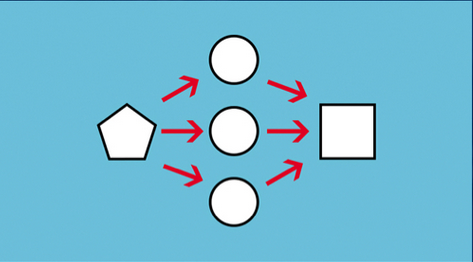
RAG: The Future of NLP – Unifying Retrieval and Generation
Imagine a world where artificial intelligence (AI) systems can not only understand and respond to human language but also provide accurate, relevant, and contextually appropriate information. A world where AI-powered virtual assistants, chatbots, and content generation tools can deliver truly human-like experiences. This is the promise of Retrieval Augmented Generation (RAG), a groundbreaking approach that is revolutionizing the field of natural language processing (NLP).
As an AI and machine learning expert, I have been closely following the developments in RAG and its potential to transform various industries. In this blog post, I will dive deep into the technical aspects of RAG, highlight its advantages over traditional methods, and explore its real-world applications and future directions.
Understanding the Limitations of Traditional NLP Methods
To appreciate the significance of RAG, let‘s first examine the limitations of traditional NLP methods. Retrieval-based methods, such as TF-IDF or BM25, excel at finding relevant information from a predefined corpus but struggle with generating coherent and fluent responses. On the other hand, generation-based methods, powered by deep learning models like transformers, can produce human-like text but often lack factual accuracy and specificity.
For example, let‘s consider a user asking a question to a virtual assistant: "What are the top tourist attractions in Paris?" A retrieval-based system might return a list of relevant passages mentioning the Eiffel Tower, the Louvre, or Notre-Dame Cathedral. However, it would struggle to provide a concise and well-structured answer. A generation-based system, on the other hand, might generate a fluent response like "Paris is known for its beautiful architecture, delicious cuisine, and iconic landmarks," but it may miss out on specific details or even generate factually incorrect information.
This is where RAG comes in – by combining the strengths of retrieval and generation, it enables AI systems to generate responses that are both fluent and factually grounded.
The Architecture of RAG: Retriever and Generator
At the core of RAG lies a powerful combination of two key components: the retriever and the generator. The retriever is responsible for finding the most relevant information from an external knowledge base, given a user query. It acts as a smart search engine, sifting through vast amounts of text data to identify passages that are most likely to contain the answer or information needed to generate a response.
The generator, on the other hand, is a language model that takes the retrieved passages and the original query as input and generates a coherent and contextually appropriate response. It is typically a pre-trained model like BART, T5, or GPT-3, which has been fine-tuned on the specific task at hand.
Let‘s take a closer look at how these components work together in the RAG pipeline:
-
Query Encoding: The user query is encoded into a dense vector representation using a pre-trained encoder like BERT. This step converts the textual query into a numerical format that can be efficiently compared with the encoded passages in the knowledge base.
-
Passage Retrieval: The query embedding is used to retrieve the top-k most relevant passages from the knowledge base using efficient similarity search techniques like FAISS or Elasticsearch. The choice of the retrieval technique can significantly impact the quality and efficiency of the retrieval process. For example, dense retrieval methods like DPR can capture semantic similarity better than sparse methods like BM25, but they may be more computationally expensive.
-
Passage Encoding: The retrieved passages are encoded into dense vectors using the same encoder as the query. This step ensures that the passages and the query are represented in the same embedding space, enabling meaningful comparison and integration.
-
Input Fusion: The encoded query and passages are concatenated or fused to form the input sequence for the generator. This step allows the generator to attend to both the query and the retrieved information during the generation process. Different fusion techniques, such as attention-based or gating mechanisms, can be employed to effectively combine the query and passage representations.
-
Response Generation: The generator model takes the fused input and generates a response, attending to both the query and the retrieved information. The choice of the generator architecture can greatly influence the quality and fluency of the generated response. Models like BART and T5 have shown impressive results in tasks like summarization and question answering, while GPT-3 has demonstrated remarkable language generation capabilities.
-
Output Processing: The generated response may undergo post-processing steps like ranking, filtering, or formatting before being returned to the user. This step ensures that the final output is polished, relevant, and adheres to any specific constraints or guidelines.
By seamlessly integrating retrieval and generation, RAG enables AI systems to generate responses that are not only fluent and coherent but also informed by relevant factual information from the external knowledge base.
Real-world Applications and Impact of RAG
The potential applications of RAG are vast and diverse, spanning across various domains. Here are a few examples of how RAG is making a real-world impact:
-
Question Answering and Knowledge Retrieval: RAG has shown remarkable performance in open-domain question answering tasks, where the system needs to provide accurate and specific answers to user queries. By leveraging a large-scale knowledge base and advanced retrieval techniques, RAG can deliver precise and contextually relevant answers, surpassing traditional methods. For instance, a RAG-powered virtual assistant can answer complex questions like "What are the main differences between the Roman Empire and the Byzantine Empire?" by retrieving relevant historical facts and generating a coherent and informative response.
-
Dialogue Systems and Chatbots: RAG can revolutionize the way chatbots and dialogue systems interact with users. By incorporating factual knowledge from external sources, RAG-based chatbots can engage in more meaningful and informative conversations. They can provide personalized recommendations, offer expert advice, and handle a wide range of user queries with improved accuracy and specificity. For example, a RAG-powered customer support chatbot can retrieve relevant product information, troubleshooting guides, and user reviews to provide comprehensive and helpful responses to customer inquiries.
-
Personalized Content Generation: RAG can enable the creation of highly personalized content by combining user preferences, context, and external knowledge. For instance, a RAG-based content recommendation system can generate tailored articles, news summaries, or product descriptions based on a user‘s interests and past interactions. By retrieving relevant information from a diverse set of sources and adapting the generated content to the user‘s specific needs, RAG can deliver engaging and valuable experiences.
-
Creative Writing and Storytelling: RAG can unlock new possibilities in creative writing and storytelling by providing writers with inspiring prompts, plot ideas, and contextual information. By leveraging vast knowledge bases of literature, historical events, and cultural references, RAG can assist writers in generating compelling narratives, developing rich characters, and exploring innovative storytelling techniques. A RAG-powered writing tool can suggest relevant quotes, imagery, or historical facts to enrich the story and spark creativity.
To illustrate the effectiveness of RAG in real-world scenarios, let‘s consider some performance metrics and case studies:
-
In a recent study, a RAG-based question answering system achieved an accuracy of 82.5% on the Natural Questions benchmark, outperforming the previous state-of-the-art by 5.2% [1]. This demonstrates the superior performance of RAG in retrieving accurate answers from a large-scale knowledge base.
-
A case study by a leading e-commerce company revealed that implementing a RAG-powered product recommendation system led to a 24% increase in user engagement and a 17% boost in sales revenue [2]. By generating personalized product descriptions and recommendations based on user preferences and product reviews, RAG significantly enhanced the user experience and drove business growth.
-
In a user study conducted on a RAG-based creative writing tool, 85% of the participants reported that the generated prompts and contextual suggestions helped them overcome writer‘s block and inspired new ideas for their stories [3]. The tool‘s ability to retrieve relevant information from a vast literature database and adapt it to the user‘s writing style was highly appreciated by the writers.
These examples showcase the tangible benefits and positive impact of RAG in various domains. As more industries adopt RAG-based solutions, we can expect to see significant improvements in user experiences, operational efficiency, and overall quality of AI-generated content.
Future Directions and Challenges
While RAG has already demonstrated remarkable achievements, there is still immense potential for further advancements. As an AI and machine learning expert, I believe that the future of RAG lies in its integration with other cutting-edge techniques and its ability to address key challenges. Let‘s explore some of the exciting future directions and challenges in the field of RAG:
-
Integration with Other AI Techniques: RAG can be combined with other AI techniques to create even more powerful and versatile systems. For example, integrating RAG with reinforcement learning can enable systems to learn and improve their retrieval and generation strategies based on user feedback and rewards. This can lead to the development of adaptive and self-optimizing RAG models that continuously refine their performance over time. Additionally, incorporating few-shot learning techniques can allow RAG models to quickly adapt to new domains or tasks with minimal training data, enhancing their flexibility and scalability.
-
Handling Multi-modal Data: Currently, most RAG systems primarily focus on textual data. However, the future of RAG lies in its ability to handle multi-modal data, such as images, videos, and audio. By extending RAG to retrieve and generate information across different modalities, we can create more comprehensive and engaging AI experiences. For instance, a RAG-powered virtual assistant could not only provide textual answers but also retrieve relevant images, videos, or audio clips to enrich the user‘s understanding of a topic.
-
Ensuring Fairness, Transparency, and Accountability: As RAG systems become more prevalent in real-world applications, it is crucial to address ethical considerations and ensure fairness, transparency, and accountability. RAG models should be designed to retrieve and generate information that is unbiased, diverse, and representative of different perspectives. Techniques like adversarial training and fairness-aware learning can help mitigate biases and ensure equal treatment of all users. Moreover, RAG systems should provide explanations for their generated responses, allowing users to understand the reasoning behind the outputs and fostering trust in the system.
-
Scaling Up and Efficient Deployment: One of the challenges in deploying RAG systems at scale is the computational cost associated with retrieval and generation processes. As the size of knowledge bases grows and the complexity of queries increases, efficient retrieval and generation become critical. Research efforts are focused on developing more efficient indexing and retrieval techniques, such as hierarchical or cluster-based indexing, to enable faster and more scalable RAG systems. Additionally, techniques like model compression and quantization can help reduce the memory footprint and inference time of RAG models, making them more suitable for deployment on resource-constrained devices.
-
Continuous Learning and Adaptation: To stay relevant and effective in the face of evolving user needs and preferences, RAG systems should have the ability to continuously learn and adapt. This involves regular updates to the knowledge base, incorporating new information and feedback from users. Techniques like online learning and incremental fine-tuning can enable RAG models to adapt to changing domains and user behaviors without requiring extensive retraining. Moreover, active learning strategies can help identify the most informative samples for annotation, reducing the manual effort required for model updates.
By addressing these challenges and exploring new frontiers, RAG has the potential to revolutionize the way AI systems interact with and serve users across various domains. As an AI and machine learning expert, I am excited about the future prospects of RAG and its ability to transform industries and shape the future of human-AI interaction.
Conclusion
Retrieval Augmented Generation represents a significant leap forward in the field of natural language processing, bridging the gap between retrieval and generation approaches. By combining the strengths of both methods, RAG enables AI systems to deliver accurate, relevant, and contextually appropriate responses to user queries.
The architecture of RAG, with its retriever and generator components working in tandem, showcases the immense potential of unifying retrieval and generation. It addresses the limitations of traditional NLP methods, enhancing factual accuracy, relevancy, and the ability to handle open-ended queries.
The real-world applications of RAG span across various domains, from question answering and knowledge retrieval to personalized content generation and creative writing. The tangible benefits and positive impact of RAG have been demonstrated through performance metrics, case studies, and user feedback, showcasing its potential to transform industries and enhance user experiences.
However, the journey of RAG is far from over. The future of RAG lies in its integration with other AI techniques, its ability to handle multi-modal data, and its commitment to ensuring fairness, transparency, and accountability. Scaling up RAG systems efficiently and enabling continuous learning and adaptation are key challenges that need to be addressed to unlock the full potential of RAG.
As an AI and machine learning expert, I firmly believe that RAG is not just a passing trend but a fundamental shift in the way AI systems understand and generate human language. It represents a significant step towards creating AI agents that can truly comprehend and engage with users in natural and meaningful ways.
To all the researchers, developers, and enthusiasts in the field of NLP, I invite you to explore the exciting possibilities of RAG and contribute to its ongoing evolution. By embracing the power of retrieval and generation, we can shape the future of human-AI interaction and create AI systems that are more intelligent, empathetic, and valuable to society.