Image Captioning with Deep Learning: A Comprehensive Guide
Introduction
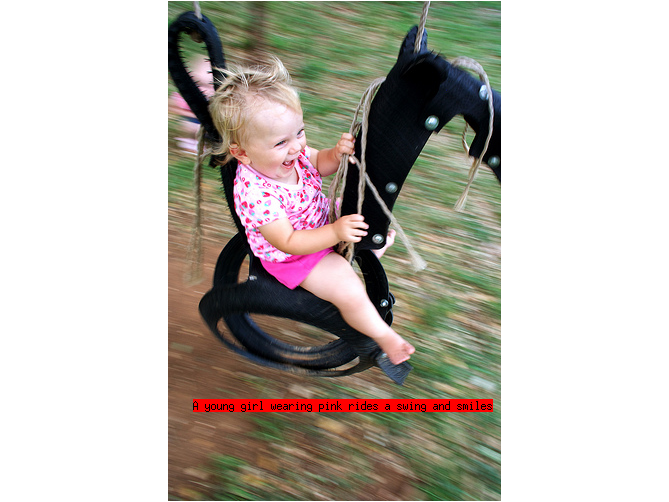
Image captioning is a challenging and fascinating task in artificial intelligence that combines computer vision and natural language processing. The goal is to automatically generate a fluent and meaningful natural language description of an input image. For example, given an image of a dog catching a frisbee in a park, an image captioning system should output a caption like "A brown dog leaps to catch a red frisbee in a grassy field."
Image captioning has a wide range of applications, from helping visually impaired users understand image content, to enabling more natural interactions with AI assistants, to improving image search and retrieval. However, it‘s an extremely difficult task that requires understanding the semantic content of images, mapping that content to language, and generating fluent and relevant descriptions. Deep learning has emerged as the most promising approach for image captioning, by learning powerful visual representations and language models from large datasets.
In this comprehensive guide, we‘ll dive into the key components of a deep learning-based image captioning system. We‘ll explore the encoder-decoder architecture that has become standard, discuss the datasets and evaluation metrics commonly used, and walk through a detailed code tutorial. We‘ll also highlight recent advances that have pushed the state-of-the-art, and consider some of the key challenges and future directions for this important task. By the end, you‘ll have a solid understanding of how to build an image captioning model using deep learning, and an appreciation for the exciting developments happening in this area.
Encoder-Decoder Architecture
The most common paradigm for image captioning with deep learning is an encoder-decoder architecture. As the name suggests, this consists of two main components: an encoder that transforms the input image into a compact feature representation, and a decoder that takes this feature representation and generates a sequence of output words step-by-step.
CNN Encoder
The encoder is typically a deep convolutional neural network (CNN) that has been pre-trained for image classification on a large dataset like ImageNet. Some of the most widely used CNN architectures for image captioning encoders include:
-
ResNet (Residual Networks): ResNets introduced skip connections that allow training of very deep networks (100+ layers) without degradation issues. ResNet-101 and ResNet-152 are commonly used for image captioning.
-
Inception: Inception nets introduced factorized convolutions and aggressive dimensional reduction to build deeper and wider networks in a computationally efficient way. Inception-v3 and Inception-v4 are popular choices.
-
EfficientNet: EfficientNets use neural architecture search to jointly optimize network depth, width, and resolution for better performance and efficiency. EfficientNet-B3 and B5 have been used effectively for captioning.
The CNN encoder takes in an image (usually resized to 224×224 or 299×299 pixels) and passes it through multiple convolutional and pooling layers to extract hierarchical visual features. The final convolutional feature map is then flattened or pooled to a single vector, which serves as the input to the decoder. During training, the weights of the CNN encoder are often frozen, since it has already been pre-trained, and only the final pooling or embedding layers are fine-tuned.
RNN/Transformer Decoder
The decoder is a neural language model that generates the caption as a sequence of words, conditioned on the encoder output. The most common choice of language model is a recurrent neural network (RNN), which processes the caption sequentially from left to right, maintaining a hidden state that encodes the context so far. At each time step, the RNN takes in a word embedding, updates its hidden state, and outputs a probability distribution over the next word in the vocabulary. By sampling from this distribution or taking the argmax, we can generate the next word, and repeat the process until a stop token is generated.
The specific type of RNN used is often a Long Short-Term Memory (LSTM) network or Gated Recurrent Unit (GRU), which have additional gating mechanisms to better capture long-term dependencies. The hidden state of the RNN is initialized with the output of the CNN encoder, allowing visual information to influence the language generation process.
More recently, transformer-based language models have shown impressive results for image captioning. Transformers were originally developed for machine translation, but have proven effective for a wide range of language tasks. They eschew recurrent connections in favor of attention mechanisms that allow modeling long-range dependencies more effectively. Transformers like BERT, GPT, and T5 can be pre-trained on large amounts of text data, then fine-tuned for image captioning.
Attention Mechanisms
A key innovation in image captioning models is the use of attention mechanisms. Attention allows the decoder to focus on different parts of the image at each generation step, rather than relying only on a single fixed representation from the encoder.
The most common form of attention is called "soft" attention, where a weighted average of the encoder features is computed based on their similarity to the current decoder hidden state. Specifically, the attention weight for each encoder feature is calculated as the softmax of its dot product with the decoder hidden state. These weights are then used to compute a weighted sum of the encoder features, which is concatenated with the decoder input at the next time step.
Mathematically, let $h_t$ be the decoder hidden state at time $t$, and let $ai$ be the encoder feature at spatial location $i$. Then the attention weight $\alpha{ti}$ is given by:
$\alpha_{ti} = \frac{\exp(h_t^T a_i)}{\sum_j \exp(h_t^T a_j)}$
And the attended encoder feature $\hat{a}_t$ is:
$\hat{a}_t = \sumi \alpha{ti} a_i$
This attended feature $\hat{a}_t$ is then concatenated with the decoder input $x_t$ (usually the word embedding of the previous word), and fed into the RNN to update the hidden state and generate the next word.
There are several variants of attention that have been explored for image captioning, including:
- Adaptive attention: Learning a context vector that decides whether to attend to the image or to the RNN hidden state at each time step
- Meshed attention: Attending to both the encoder CNN features and the decoder RNN hidden states jointly
- Self-attention: Allowing the decoder to attend to its own previous hidden states in addition to the encoder features, as used in transformer models
Attention not only improves caption quality by allowing more fine-grained use of visual information, but also provides some interpretability by visualizing what regions of the image the model is focusing on at each word.
Datasets and Evaluation
Several benchmark datasets have been developed for training and evaluating image captioning models. The most widely used is Microsoft COCO (Common Objects in Context), which contains 330,000 images each annotated with 5 human-generated captions. The images cover 91 common object categories like person, car, dog, etc. and depict complex everyday scenes. The COCO dataset is typically split into 82k images for training, 5k for validation, and 5k for testing. Here are some key statistics:
| Split | Images | Captions |
|---|---|---|
| Training | 82,783 | 413,915 |
| Validation | 40,504 | 202,520 |
| Testing | 40,775 | 203,875 |
Another popular dataset is Flickr30k, containing 31,783 images sourced from Flickr, each with 5 reference captions. Flickr30k has a greater focus on people and actions compared to COCO.
More recently, web-scale datasets like Conceptual Captions and SBU Captions have been developed, with millions of images and captions harvested from alt-text on the web. While noisier and less constrained than COCO, these massive datasets have proven very useful for pre-training and data augmentation.
Evaluating image captioning models is challenging, as there are many valid ways to describe an image. Standard evaluation metrics compare the similarity of machine-generated captions to human reference captions, including:
-
BLEU (Bilingual Evaluation Understudy): Measures n-gram precision between the candidate and reference captions, with a brevity penalty. BLEU-1 captures unigram overlap, BLEU-2 bigram overlap, and so on.
-
METEOR (Metric for Evaluation of Translation with Explicit ORdering): Computes an F-measure based on the alignment between the candidate and reference, allowing for synonym matching and stemming. It emphasizes recall.
-
CIDEr (Consensus-based Image Description Evaluation): Computes TF-IDF (term frequency inverse document frequency) weighted n-gram similarity between the candidate and a "consensus" of the references. It is well correlated with human judgments.
-
SPICE (Semantic Propositional Image Caption Evaluation): Uses scene graph parsing to measure semantic similarity between the candidate and references, capturing object, attribute, and relation overlap.
Here is a comparison of some state-of-the-art image captioning models on the COCO dataset:
| Model | BLEU-1 | BLEU-4 | METEOR | CIDEr | SPICE |
|---|---|---|---|---|---|
| Show, Attend and Tell | 71.8 | 25.0 | 23.0 | 85.5 | 18.4 |
| Adaptive Attention | 74.8 | 33.2 | 26.6 | 104.2 | 19.8 |
| Up-Down Attention | 79.8 | 36.3 | 27.7 | 120.1 | 21.4 |
| Transformer | 80.2 | 37.2 | 28.4 | 124.4 | 22.0 |
| VinVL | 82.0 | 40.3 | 30.3 | 136.9 | 25.1 |
As can be seen, transformer-based models and models that incorporate visual grounding like VinVL achieve the best results. However, there is still a significant gap between machine and human-level captioning performance.
Challenges and Future Directions
While deep learning has enabled significant progress in image captioning, there are still many open challenges and opportunities for future work. Some key challenges include:
-
Evaluation metrics: Current n-gram based metrics like BLEU and CIDEr have limitations in capturing semantic similarity, sentence structure, and diversity. There is a need for more human-correlated evaluation metrics that better assess the quality and usefulness of captions.
-
Diversity and creativity: Most current models tend to generate generic, high-probability captions that lack diversity and creativity. Incorporating beam search, diverse sampling techniques, and adversarial training could help generate more varied and interesting captions.
-
Handling rare words and novel objects: Captioning models often struggle with out-of-vocabulary words and objects unseen during training. Developing zero-shot and few-shot learning techniques to generalize to novel concepts is an important direction.
-
Controllability and grounding: Allowing users to control attributes of generated captions, like sentiment, length, and style could enable new applications. Grounding captions in specific objects or regions could improve interpretability and faithfulness.
-
Multimodal and multilingual captioning: Generating captions that fuse information from multiple modalities like speech, video, and text is a challenge. Similarly, building multilingual captioning models that can serve a global user base requires innovations in cross-lingual transfer learning.
Looking forward, integrating image captioning capabilities into large-scale multi-task vision-language models and general intelligence systems is an exciting frontier. As these foundation models become more powerful and widely deployed, captioning will be an important skill to endow them with.
Techniques like unsupervised pre-training, reinforcement learning, and meta-learning will likely play a key role in building more sample-efficient and adaptable captioning models. At the same time, careful attention must be paid to issues of fairness, robustness, and transparency as captioning systems are integrated into real-world applications.
Conclusion
Image captioning with deep learning has come a long way in the past decade, with encoder-decoder architectures, attention mechanisms, and transformer language models pushing the state-of-the-art. As the technology continues to advance, we can expect image captioning to be integrated into a wide range of applications, from accessibility tools to creative aids to intelligent assistants.
However, there are still significant challenges to overcome, in terms of evaluation, diversity, grounding, multimodality, and ethics. Addressing these challenges will require a combination of technical innovations and cross-disciplinary collaborations with experts in linguistics, cognitive science, and the social sciences.
As artificial intelligence systems become more capable of understanding and communicating about the visual world, it‘s important to keep the human in the loop and to develop captioning technologies that augment and empower people. With the right approaches, image captioning can be a powerful tool for bridging the gap between vision and language, and enabling new forms of human-AI interaction.