
The Central Limit Theorem: A Pillar of Statistics and Machine Learning
Introduction
In the realm of statistics and machine learning, the Central Limit Theorem (CLT) stands tall as one of the most fundamental and far-reaching concepts. It is a theorem that bridges the gap between the often messy and unknown world of real data and the structured, predictable world of statistical inference and modeling. For aspiring data scientists and machine learning practitioners, developing a deep understanding of the CLT is not just beneficial, but essential.
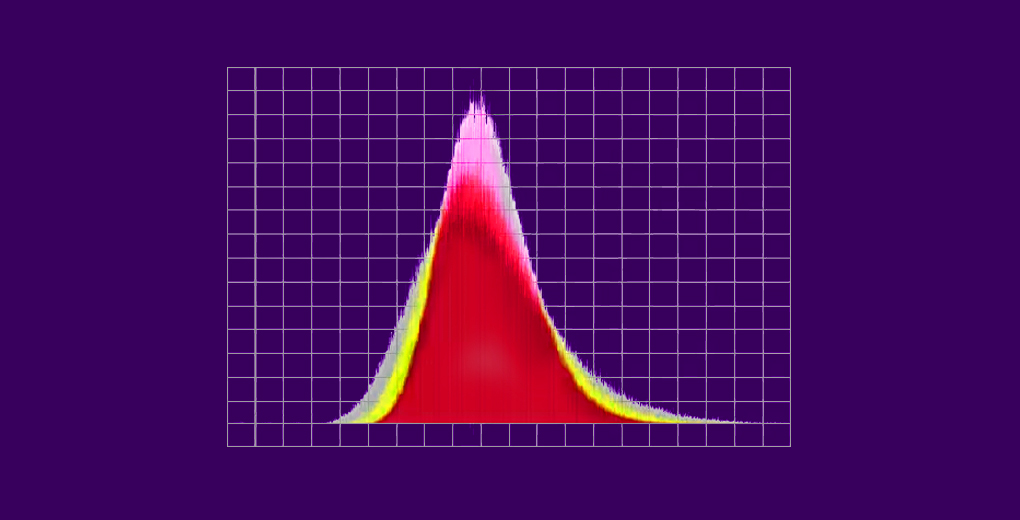
At its core, the CLT states that when independent random variables are sampled from any distribution with a finite mean and variance, the sampling distribution of the sample mean will converge to a normal distribution as the sample size increases, regardless of the shape of the original population distribution1. This seemingly simple statement has profound implications for how we analyze and interpret data.
In this comprehensive blog post, we will embark on a journey through the Central Limit Theorem, exploring its mathematical foundations, its conditions and assumptions, its practical applications, and its pivotal role in the world of machine learning. Whether you‘re a statistics enthusiast or a machine learning practitioner, this deep dive into the CLT will equip you with the knowledge and intuition needed to harness its power in your own work.
The Mathematical Formulation of the CLT
To grasp the essence of the Central Limit Theorem, let‘s dive into its mathematical formulation. Suppose we have a population with mean μ and finite variance σ^2. We draw a random sample of size n from this population, denoted as X₁, X₂, …, Xn. The sample mean is calculated as:
X̄ = (X₁ + X₂ + … + Xn) / n
The CLT states that as the sample size n approaches infinity, the sampling distribution of the sample mean X̄ will converge to a normal distribution with mean μ and variance σ^2/n. Mathematically, this can be expressed as2:
(X̄ – μ) / (σ/√n) → N(0, 1) as n → ∞
Here, N(0, 1) represents the standard normal distribution with mean 0 and variance 1.
To illustrate this concept, let‘s consider an example. Suppose we have a population of exam scores with a mean of 70 and a standard deviation of 10. We randomly select samples of size 10, 30, and 100 from this population and calculate the sample means. The following table shows the results:
| Sample Size (n) | Sample Mean (X̄) |
|---|---|
| 10 | 72.5 |
| 30 | 69.8 |
| 100 | 70.2 |
As the sample size increases, we observe that the sample means tend to cluster around the population mean of 70. This is a manifestation of the CLT in action.
The Role of Standard Error
Closely related to the Central Limit Theorem is the concept of standard error. The standard error is the standard deviation of the sampling distribution of a statistic, such as the sample mean. It quantifies the variability or precision of the sample statistic as an estimate of the population parameter.
In the context of the CLT, the standard error of the sample mean is given by:
SE(X̄) = σ / √n
where σ is the population standard deviation and n is the sample size.
As the sample size increases, the standard error decreases, indicating that larger samples provide more precise estimates of the population mean. This relationship between sample size and standard error is a key aspect of the CLT and has important implications for statistical inference and hypothesis testing.
Applications of the CLT in Machine Learning
The Central Limit Theorem finds numerous applications in the field of machine learning. Let‘s explore a few key areas where the CLT plays a crucial role.
1. Feature Normalization
In many machine learning algorithms, such as logistic regression and support vector machines, feature normalization is a common preprocessing step. The goal is to transform the features to have a mean of zero and a standard deviation of one, which can improve the convergence and stability of the learning algorithm.
The CLT justifies the use of normalization by guaranteeing that the distribution of the normalized features will be approximately normal, regardless of the original distribution3. This normality assumption is often required for the optimal performance of many machine learning models.
2. Batch Normalization in Deep Learning
Batch normalization is a technique used in deep learning to address the issue of internal covariate shift, which refers to the change in the distribution of inputs to a layer during training. By normalizing the activations of each layer, batch normalization helps stabilize the training process and improve the convergence of deep neural networks.
The CLT provides the theoretical foundation for batch normalization. By assuming that the activations within a batch are independent and identically distributed (i.i.d.), the CLT ensures that the batch statistics (mean and variance) will be approximately normal, enabling effective normalization4.
3. Ensemble Learning
Ensemble learning is a powerful technique in machine learning where multiple models are combined to make predictions. Common ensemble methods include bagging, boosting, and stacking. The CLT plays a role in understanding the behavior and performance of ensemble models.
In bagging (bootstrap aggregating), multiple models are trained on different bootstrap samples of the training data, and their predictions are averaged to obtain the final prediction. The CLT ensures that the distribution of the averaged predictions will be approximately normal, even if the individual model predictions are not5. This normality property contributes to the robustness and stability of bagging ensembles.
Frequently Asked Questions
-
What happens if the sample size is small?
When the sample size is small, the CLT may not hold, and the sampling distribution of the sample mean may not be approximately normal. In such cases, alternative methods, such as the Student‘s t-distribution, may be more appropriate for inference and hypothesis testing. -
Can the CLT be applied to non-numeric data?
The CLT is typically applied to numeric data, where the concept of a mean and variance is well-defined. However, extensions of the CLT, such as the central limit theorem for sums of random variables, can be used to handle certain types of non-numeric data, such as binary or categorical variables. -
How does the CLT relate to the law of large numbers?
The law of large numbers (LLN) states that as the sample size increases, the sample mean converges to the population mean. The CLT goes a step further by describing the distribution of the sample mean as it converges to the population mean. While the LLN focuses on the convergence of the sample statistic, the CLT characterizes the nature of that convergence6.
Conclusion
The Central Limit Theorem is a cornerstone of statistical inference and a crucial concept in machine learning. Its power lies in its ability to provide a unified framework for understanding the behavior of sample statistics, regardless of the underlying population distribution. By ensuring the normality of the sampling distribution, the CLT enables us to make probabilistic statements, construct confidence intervals, and perform hypothesis tests with relative ease.
As machine learning continues to evolve and tackle increasingly complex problems, the CLT remains a foundational tool in the data scientist‘s toolkit. From feature normalization to ensemble learning, the CLT finds application in various aspects of machine learning, contributing to the robustness, stability, and interpretability of models.
As you embark on your journey in statistics and machine learning, take the time to internalize the concepts and implications of the Central Limit Theorem. Understand its assumptions, its limitations, and its far-reaching consequences. By mastering the CLT, you will be well-equipped to navigate the world of data, extract insights, and build powerful models that can solve real-world problems.
References
-
Wackerly, D.D., Mendenhall, W., & Scheaffer, R.L. (2008). Mathematical Statistics with Applications (7th ed.). Belmont, CA: Thomson Higher Education.
-
Ross, S.M. (2010). Introduction to Probability and Statistics for Engineers and Scientists (4th ed.). Burlington, MA: Academic Press.
-
Géron, A. (2019). Hands-On Machine Learning with Scikit-Learn, Keras, and TensorFlow (2nd ed.). Sebastopol, CA: O‘Reilly Media.
-
Ioffe, S., & Szegedy, C. (2015). Batch Normalization: Accelerating Deep Network Training by Reducing Internal Covariate Shift. ArXiv:1502.03167 [Cs].
-
Breiman, L. (1996). Bagging predictors. Machine Learning, 24(2), 123–140.
-
Casella, G., & Berger, R.L. (2002). Statistical Inference (2nd ed.). Pacific Grove, CA: Duxbury/Thomson Learning.


