A Comprehensive Guide to Text Classification & Entity Recognition in NLP
Text classification and entity recognition are two critical tasks in natural language processing (NLP) that have seen significant advances in recent years thanks to the rise of deep learning and large-scale language models. As an artificial intelligence and machine learning expert, I believe it is important to have a deep understanding of these techniques, their applications, and their future potential. In this comprehensive guide, we will dive into the latest research, analyze industry trends, and explore the ethical implications of these powerful NLP technologies.
The Fundamentals of Text Classification
Text classification is the task of assigning predefined categories or labels to a given piece of text. The goal is to automatically determine the main topic, sentiment, or intent of the text based on its content. This is a supervised learning problem, where a model is trained on a labeled dataset and then used to predict the labels of new, unseen text.
There are several classical machine learning algorithms commonly used for text classification, including:
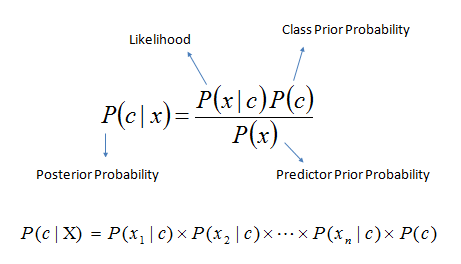
- Naive Bayes: A probabilistic algorithm that applies Bayes‘ theorem with a strong independence assumption between features. It is simple, fast, and often used as a baseline.
- Logistic Regression: A discriminative algorithm that models the probability of a text belonging to a particular class as a linear combination of its features. It is effective for binary and multi-class problems.
- Support Vector Machines (SVM): A non-probabilistic algorithm that finds the hyperplane that maximally separates the classes in a high-dimensional space. It works well with high-dimensional sparse data.
In recent years, deep learning models have achieved state-of-the-art performance on many text classification tasks. Some popular architectures include:
- Convolutional Neural Networks (CNNs): CNNs apply convolution filters to capture local patterns and learn hierarchical representations of text. They have achieved excellent results on tasks like sentiment analysis and topic classification.
- Recurrent Neural Networks (RNNs): RNNs are designed to handle sequential data and can capture long-term dependencies in text. Variants like Long Short-Term Memory (LSTM) and Gated Recurrent Units (GRU) are commonly used.
- Transformers: Transformers are attention-based models that have revolutionized NLP in recent years. Pre-trained models like BERT, RoBERTa, and XLNet have achieved human-level performance on many text classification benchmarks.
The choice of model depends on factors like the size and complexity of the dataset, the number of classes, the computational resources available, and the interpretability requirements.
Entity Recognition: Extracting Structured Information from Text
Entity recognition, also known as named entity recognition (NER), is the task of identifying and classifying named entities in text into predefined categories like person names, organizations, locations, dates, and quantities. The goal is to extract structured information from unstructured text to enable downstream applications like information retrieval, question answering, and knowledge base construction.
Entity recognition is typically approached as a sequence labeling problem, where each word in a sentence is assigned a label indicating whether it is part of an entity and the entity type. The most common labeling scheme is IOB (Inside-Outside-Beginning), which distinguishes between the beginning and continuation of an entity.
Like text classification, entity recognition techniques have evolved from rule-based systems to machine learning and deep learning approaches. Some popular methods include:
- Conditional Random Fields (CRFs): CRFs are probabilistic graphical models that model the conditional probability of a sequence of labels given an input sequence. They can capture dependencies between adjacent labels and are often used in combination with hand-crafted features.
- Recurrent Neural Networks (RNNs): RNNs are a natural fit for sequence labeling tasks like entity recognition. Bidirectional LSTMs and GRUs that process the input sequence both forwards and backwards have shown strong performance.
- Transformers: Pre-trained transformer models like BERT have achieved state-of-the-art results on entity recognition tasks. By fine-tuning these models on labeled data, they can learn to identify entities in a specific domain or use case.
Recent research has also explored techniques like distant supervision, transfer learning, and unsupervised learning to reduce the amount of labeled data required for training entity recognition models.
Applications and Industry Trends
Text classification and entity recognition have numerous applications across various domains, including:
- E-commerce: Classifying product reviews by sentiment and extracting product attributes and specifications.
- Healthcare: Extracting diagnosis codes, medication names, and adverse drug events from electronic health records.
- Finance: Identifying financial entities and events in news articles and SEC filings for investment analysis and risk assessment.
- Customer service: Classifying customer inquiries by topic and intent and routing them to the appropriate department or agent.
- Social media: Monitoring brand mentions, identifying influencers, and detecting hate speech and misinformation.
According to a report by MarketsandMarkets, the global text analytics market size is expected to grow from $4.5 billion in 2020 to $13.9 billion by 2025, at a CAGR of 25.4% during the forecast period1. This growth is driven by factors like the increasing adoption of big data and AI technologies, the need for automated customer insights, and the rise of conversational interfaces.
Some notable industry trends and statistics include:
- A survey by Deloitte found that 56% of companies have already adopted machine learning for text classification, and another 30% plan to do so in the next 12 months2.
- A study by Google showed that using BERT for entity recognition improved F1 scores by 3-5% on various benchmark datasets compared to previous state-of-the-art models3.
- A report by Gartner predicts that by 2023, 40% of enterprise applications will include embedded NLP capabilities like text classification and entity recognition4.
Challenges and Future Directions
Despite the impressive progress in text classification and entity recognition, there are still several challenges and open research problems, including:
- Data quality and annotation: Training high-quality models requires large amounts of labeled data, which can be time-consuming and expensive to obtain. Techniques like active learning, weak supervision, and crowdsourcing can help reduce the annotation burden.
- Domain adaptation: Models trained on one domain often perform poorly when applied to a different domain due to differences in language, style, and entities. Transfer learning and domain adaptation techniques can help improve cross-domain performance.
- Multilinguality: Developing models that can handle multiple languages and transfer knowledge across languages is an active area of research. Multilingual pre-trained models like mBERT and XLM-R have shown promise in this direction.
- Explainability: As NLP models become more complex and opaque, there is a growing need for techniques that can explain their predictions and decisions to users. Interpretability methods like attention visualization and feature importance can help build trust and accountability.
- Bias and fairness: NLP models can inherit biases from the data they are trained on, leading to unfair or discriminatory outcomes. Techniques for detecting and mitigating bias, such as adversarial debiasing and counterfactual data augmentation, are important research directions.
Looking ahead, I believe we will see continued progress in pre-training and transfer learning, with larger and more powerful language models that can handle a wide range of tasks with minimal fine-tuning. We will also see more emphasis on low-resource and few-shot learning, as well as unsupervised and self-supervised techniques that can learn from unlabeled data.
Another important trend is the integration of NLP with other modalities like speech, vision, and knowledge graphs to enable more holistic and contextual understanding of language. Multimodal models like ViLBERT and DALL-E have shown impressive results in tasks like visual question answering and image captioning.
Finally, as NLP technologies become more widely deployed in real-world applications, there will be increasing attention to ethical considerations around privacy, security, and responsible AI. Developing NLP systems that are transparent, accountable, and aligned with human values will be a key challenge and opportunity for the field.
Conclusion
Text classification and entity recognition are foundational tasks in NLP that enable a wide range of applications and insights. By leveraging state-of-the-art techniques from deep learning and transfer learning, we can achieve human-level performance on many benchmarks and real-world use cases.
However, there are still significant challenges and opportunities ahead, from improving data efficiency and model interpretability to ensuring fairness and ethical alignment. As an AI/ML expert, I believe it is important to stay up-to-date with the latest research and best practices, while also considering the broader societal implications of these powerful technologies.
With the rapid growth of unstructured text data and the increasing demand for automated language understanding, text classification and entity recognition will continue to play a crucial role in shaping the future of NLP and AI. By developing more accurate, efficient, and responsible models, we can unlock new insights, automate tedious tasks, and ultimately improve people‘s lives.
References
- MarketsandMarkets. (2021). Text Analytics Market by Component, Deployment Mode, Applications (Marketing & Customer Experience Management, and Competitive Intelligence), Vertical, and Region – Global Forecast to 2025.
- Deloitte. (2020). State of AI in the Enterprise, 3rd Edition.
- Devlin, J., Chang, M. W., Lee, K., & Toutanova, K. (2018). Bert: Pre-training of deep bidirectional transformers for language understanding. arXiv preprint arXiv:1810.04805.
- Gartner. (2021). Top 10 Trends in Data and Analytics for 2021.