The Place of Data Science in the Data Universe

Data science has emerged as one of the most exciting and transformative fields of the 21st century. As the world‘s data continues to grow at an exponential rate, the ability to extract insights and value from that data has become a key source of competitive advantage. At the center of this data revolution is data science – a multidisciplinary field combining statistics, computer science, and domain expertise to turn raw data into actionable intelligence.
In this article, we‘ll take a comprehensive look at the place of data science in the broader data universe. We‘ll explore how data science relates to and enables artificial intelligence and machine learning, dive deep into real-world applications and use cases, and discuss how to navigate the challenges and risks of building data-driven systems. Finally, we‘ll layout a roadmap for getting started with data science and preparing for the future.
The Data Science Universe
To understand the role of data science, let‘s first zoom out and look at the broader data ecosystem it operates within. This "data universe" spans a wide spectrum from raw data generation to business insights and intelligent automation.

At the foundation is the data itself. With the proliferation of ubiquitous computing, mobile devices and IoT sensors, data is now being generated at an unprecedented pace. By 2025, it‘s estimated that global data creation will grow to more than 180 zettabytes (that‘s 180 followed by 21 zeros!). This includes structured data in traditional databases, unstructured data like text, images, and video, as well as real-time streaming data from billions of connected devices.
The next layer in the stack is data engineering. This involves the collection, storage, processing and governance of raw data assets to make them accessible and actionable for analysis. Data engineering leverages big data platforms like Hadoop and Spark, cloud data warehouses, data lakes, and pipelines to create curated, analysis-ready datasets.
Data science then takes this data and applies math, statistics and computer science to extract insights, build predictive models and power data-driven decision making. This includes a wide range of techniques from data mining to machine learning to natural language processing. Ultimately, the goal of data science is to leverage data assets to drive business value – whether it‘s increasing revenue, reducing costs, improving efficiency or creating better products and services.
Data Science in Action
To make this more concrete, let‘s look at some real-world examples of how data science is being applied across industries:
-
Retail: Retailers are using data science to personalize shopping experiences at scale. By analyzing customer behavior across touchpoints (web, mobile, in-store), retailers can micro-segment audiences and deliver targeted product recommendations and promotions. Stitch Fix, an online personal styling service, leverages data science algorithms to analyze customer style profiles, product attributes and feedback to match customers with clothes they love.
-
Sales: Data science is transforming B2B sales by bringing science to the art of selling. Companies are using machine learning to automatically score leads, recommend next best actions to sales reps and forecast revenue. Salesforce‘s Einstein is an AI-powered CRM that delivers over 80 billion predictions daily to help sales teams be more productive.
-
Banking: Banks and fintechs are leveraging data science to assess risk, detect fraud and personalize financial advice. JPMorgan Chase uses machine learning algorithms for chat bots to handle customer inquiries, for account reconciliation to save back office costs, and for credit risk modeling to make smarter lending decisions.
-
Healthcare: Data science has the power to revolutionize healthcare from bench to bedside. Researchers are using ML to accelerate drug discovery by predicting interactions between molecules. Hospitals are applying computer vision to radiology scans to detect tumors and other abnormalities. Wearables are using data science to encourage healthy behavior change and facilitate early diagnosis.
While the possibilities are endless, delivering real impact requires successfully navigating the end-to-end data science process. We‘ll now walk through the key steps and considerations along the way.
The Data Science Process
At a high level, the data science process can be broken down into five key stages:
- Problem definition – Clearly articulating the business problem and how success will be measured
- Data engineering – Collecting, integrating, and preparing the data needed to solve the problem
- Exploratory analysis – Understanding the underlying patterns, trends and relationships in the data
- Modeling – Building and validating predictive models using statistical and machine learning techniques
- Deployment – Integrating data products into business processes to drive measurable impact

Within modeling, which is considered the core of data science, there are a number of key techniques to master:
- Regression for predicting a continuous numerical outcome (e.g. sales demand)
- Classification for predicting a categorical class label (e.g. customer churn)
- Clustering for grouping similar data points based on inherent structures in the data
- Dimensionality reduction for simplifying the feature space while retaining important information
- Anomaly detection for identifying rare events or outliers that deviate from the norm
- Recommendation systems for predicting the preference a user would give to an item
Especially with the rise of big data, a solid understanding of computational techniques is also important. This includes distributed computing frameworks like MapReduce and Spark that allow for processing massive datasets across clusters of machines. It also includes algorithmic concepts like parallel computing, randomized algorithms and locality sensitive hashing.
To implement end-to-end data science workflows, a core toolbox of programming languages and libraries is essential. The most popular programming languages for data science are Python, R and SQL, along with big data tools like Spark and cloud platforms like Amazon Web Services and Google Cloud. Key libraries span data manipulation (Pandas, dplyr), machine learning (scikit-learn, caret), deep learning (TensorFlow, PyTorch), and visualization (Matplotlib, ggplot).
Machine Learning and AI
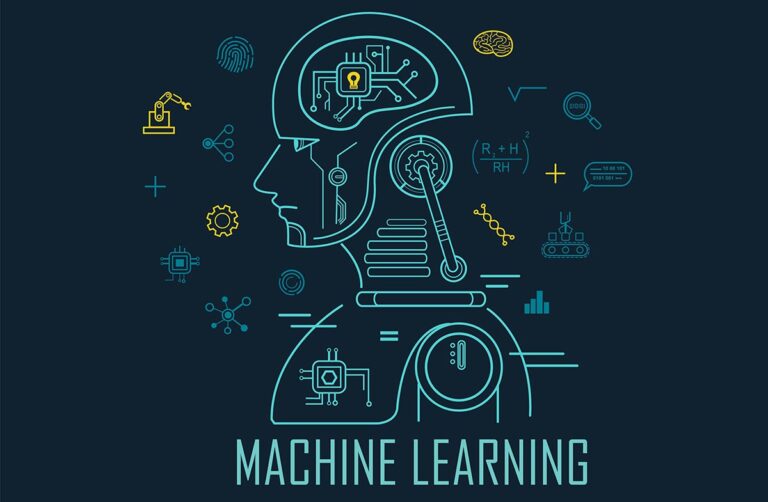
Beyond traditional data science, machine learning and artificial intelligence are pushing the boundaries of what‘s possible with data. Machine learning is a subset of AI that allows systems to automatically learn and improve from experience without being explicitly programmed. Some of the most exciting recent developments in AI are based on a machine learning approach called deep learning.
Deep learning algorithms are designed to process data in ways that mimic the human brain, using many layers of artificial neurons to build increasingly abstract representations of the information. With enough training data and computing power, deep learning models can now match or surpass human level performance on a variety of cognitive tasks like image classification, speech recognition, and language translation.
Some of the major types of machine learning include:
-
Supervised learning – The model learns from labeled training data to predict an output (e.g. future sales) based on input features (historical sales, price, etc.)
-
Unsupervised learning – The model learns patterns and relationships from unlabeled data without a specific prediction task (clustering customer segments)
-
Semi-supervised learning – The model learns from a small amount of labeled data and a large amount of unlabeled data (data augmentation for medical images)
-
Reinforcement learning – The model learns by trial and error, receiving rewards or punishments for its actions in an environment (playing chess or Go)
-
Transfer learning – The model applies knowledge learned from one task to another related task (using a pre-trained image classification model for a new product categorization system)

While the hype around AI has reached a fever pitch, it‘s important to understand the current limitations and risks. Some of the key challenges include:
-
Data quality and bias – ML models are only as good as the data they are trained on. Biased or unrepresentative training data can lead to biased and unfair model predictions.
-
Interpretability – Many high performing ML models are "black boxes" that are difficult to interpret and explain. This lack of transparency can be problematic for high stakes decisions.
-
Robustness – If ML models encounter data that is very different from their training set, they can fail in unexpected and potentially dangerous ways (adversarial attacks on image classifiers).
-
Privacy – Building high quality ML models often requires large amounts of user data, raising concerns around data privacy, security and consent.
As we race to unlock the value of data with increasingly sophisticated ML and AI approaches, it‘s critical that we develop the tools and governance frameworks to do so in a responsible and ethical manner.
Data Science in 2025 and Beyond
Despite the challenges, the future of data science and AI is undoubtedly bright. As data becomes the world‘s most valuable resource, data science will only grow in importance and impact. Here are some of the emerging trends and breakthroughs shaping data science in the coming years:
-
Automated machine learning (AutoML) aims to democratize AI by automating many of the time consuming steps in the data science process like feature engineering, model selection and hyperparameter tuning. Google Cloud AutoML allows developers to train high-quality ML models on image, tabular, text and video data without deep knowledge of algorithms.
-
Explainable AI (XAI) focuses on building AI systems whose decisions and predictions can be easily understood and interpreted by humans. DARPA‘s XAI program is funding research to create "glass box" models that are explainable to a "human in the loop".
-
Federated learning enables ML models to be trained on a distributed network of devices or databases without needing to share raw sensitive data. Google‘s Gboard leverages federated learning to improve mobile keyboard suggestions while keeping personal data on device.
-
Quantum machine learning seeks to harness the power of quantum computing to accelerate ML tasks like optimization, sampling and linear algebra. IBM‘s Qiskit library allows developers to run quantum-enhanced ML models on quantum hardware and simulators.
-
AI for Good initiatives are applying data science and AI to help solve humanity‘s greatest challenges like curing disease, reversing climate change, and reducing poverty. Microsoft‘s AI for Earth program provides grants and resources for researchers and organizations using AI to protect the planet.
Getting Started with Data Science
For aspiring data scientists, there has never been a better time to enter the field. Data science topped LinkedIn‘s Emerging Jobs Report for three years running, with 37% annual growth. A recent O‘Reilly survey found the average salary for a data scientist in the US is $150k.
So what does it take to become a data scientist? At a high level, data science requires a unique blend of math and statistics knowledge, computer science and programming skills, and domain expertise.

Some of the most important technical competencies for data scientists include:
- Mathematics (linear algebra, calculus, statistics, probability)
- Computer science fundamentals (data structures, algorithms)
- Programming languages (Python, R, SQL)
- Big data technologies (Hadoop, Spark, NoSQL)
- Machine learning (supervised, unsupervised, deep learning)
- Data wrangling and preprocessing (ETL, data cleaning, feature engineering)
- Data visualization and communication (plots, dashboards, reports)
Beyond technical prowess, some of the key traits shared by successful data scientists include curiosity, persistence, business acumen, and clear communication. At its core, data science is about problem solving – understanding a business need, creatively analyzing data sources, building predictive models, and communicating insights to stakeholders.
Especially for those pivoting into data science from other fields, it can seem overwhelming to master all these skills at once. The good news is there are now many accessible pathways to gaining data science skills, from free online courses to full-time immersive bootcamps to specialized masters programs.
Some of the best places to start learning include:
- Coursera – Data Science Specialization
- Kaggle – Data Science Courses
- DataCamp – Data Scientist with Python
- fast.ai – Practical Deep Learning for Coders
- Udacity – Data Scientist Nanodegree
Conclusion
We are living in the age of data. As the world‘s data grows exponentially, extracting timely, actionable insights from this data is one of the defining challenges of our time. Enter data science – a field with the tools and techniques to transform raw data into decision making super powers.
From retail to healthcare to government and beyond, data science is reshaping entire industries and rewriting the rules of competition. According to MIT Sloan, companies that excel at data-driven decision making are 3X more likely to report significant improvements in decision making compared to those who rely less on data.
But realizing the full potential of data science and AI will also require us to proactively address the risks, from algorithmic bias to data privacy to AI safety. As Microsoft CEO Satya Nadella put it in the company‘s AI principles: "AI must be designed to assist humanity; be transparent; maximize efficiency without destroying human dignity; provide intelligent privacy and accountability for the unexpected; and be guarded against biases."
For data science leaders and practitioners, this means not only mastering technical skills, but also embracing your role as stewards of responsible AI. The future belongs to those who can wield the power of data science with wisdom and purpose. Here‘s to the next generation of data scientists rising to the challenge.