Tired of Reading Long Articles? Text Summarization in Python Will Make Your Life Easier
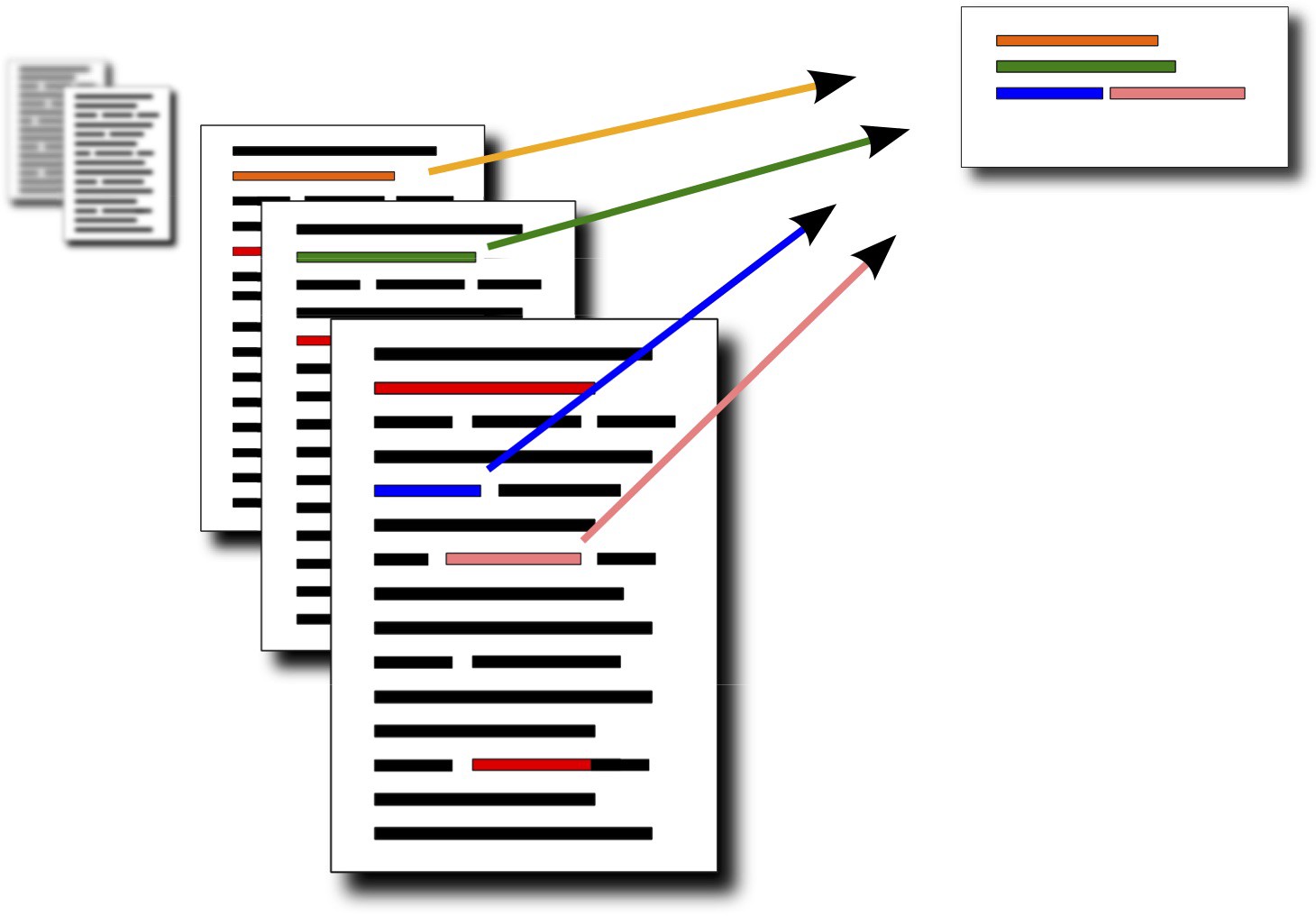
In the era of information overload, we are constantly inundated with vast amounts of textual data from various sources such as news articles, research papers, social media posts, emails, and more. As the volume of information continues to grow exponentially, it becomes increasingly challenging and time-consuming for individuals to keep pace and extract the key points from lengthy pieces of text. This is where the power of text summarization comes into play.
What is Text Summarization?
Text summarization is a subdomain of Natural Language Processing (NLP) that focuses on the task of generating a concise and coherent summary of a longer text document while retaining the most important information. The objective is to create a condensed version of the original text that captures the core ideas and key points, enabling readers to quickly grasp the essence of the content without having to read through the entire document.
There are two primary types of text summarization:
-
Extractive Summarization: This approach involves selecting key sentences or phrases verbatim from the original text and concatenating them to form a summary. The sentences are chosen based on their relevance and importance, determined using various statistical and linguistic features such as word frequency, sentence position, and semantic similarity.
-
Abstractive Summarization: This is a more advanced approach that involves generating entirely new sentences that capture the meaning and essence of the original text. It requires a deeper understanding of the language and the ability to paraphrase, generate coherent sentences, and maintain the semantic integrity of the content.
Benefits of Text Summarization
Text summarization offers numerous benefits across various domains and applications:
-
Time-saving: Summaries enable users to quickly grasp the main points of a document without having to invest significant time and effort in reading through the entire text. This is particularly valuable in scenarios where individuals need to process large volumes of information efficiently.
-
Improved comprehension: By highlighting the most important information and key takeaways, summaries help improve understanding and retention of the content. They provide a concise overview that allows readers to focus on the essential aspects of the text.
-
Enhanced productivity: With the ability to process and absorb more information in less time, text summarization can significantly boost productivity in various domains such as research, journalism, business analysis, and more. It enables individuals to quickly extract insights and make informed decisions based on the summarized content.
-
Personalized content delivery: Text summarization techniques can be leveraged to generate summaries tailored to individual preferences, interests, and needs. This allows for a more personalized and efficient consumption of information, enhancing user engagement and satisfaction.
Text Summarization Techniques and Algorithms
There are several techniques and algorithms commonly used for text summarization. Here are some of the most popular approaches:
-
TextRank: TextRank is an unsupervised graph-based ranking algorithm that leverages the structure of the text to determine the importance of each sentence. It represents the text as a graph, where sentences are nodes, and the edges between them are weighted based on their similarity. The algorithm then uses the PageRank algorithm to calculate the importance scores of each sentence and selects the top-ranked sentences to form the summary.
-
Latent Semantic Analysis (LSA): LSA is a technique that uses singular value decomposition (SVD) to identify the underlying semantic structure of a document. It creates a matrix representation of the text, where each row corresponds to a sentence, and each column represents a word. By applying SVD, LSA captures the latent semantic relationships between words and sentences, allowing it to identify the most important sentences for summarization.
-
TF-IDF (Term Frequency-Inverse Document Frequency): TF-IDF is a numerical statistic that reflects the importance of a word within a document and across a collection of documents. It measures the frequency of a word in a document (term frequency) and weighs it by the inverse frequency of the word across the entire document corpus (inverse document frequency). Sentences containing words with high TF-IDF scores are considered more relevant and are selected for the summary.
-
Sequence-to-Sequence Models: Sequence-to-sequence models, such as the encoder-decoder architecture with attention mechanism, have been widely used for abstractive text summarization. These models learn to generate summaries by encoding the input text into a fixed-length vector representation and then decoding it into a summary sequence. The attention mechanism allows the model to focus on different parts of the input text while generating each word of the summary.
-
BERT (Bidirectional Encoder Representations from Transformers): BERT is a state-of-the-art pre-trained language model that has achieved remarkable results in various NLP tasks, including text summarization. By fine-tuning BERT on a summarization dataset, it can generate high-quality summaries by capturing the contextual information and semantic relationships within the text.
Python Libraries for Text Summarization
Python offers a rich ecosystem of libraries and tools for implementing text summarization. Some popular libraries include:
-
NLTK (Natural Language Toolkit): NLTK is a comprehensive platform for building Python programs to work with human language data. It provides a suite of text processing libraries for tokenization, sentence segmentation, part-of-speech tagging, and more. NLTK also includes modules for text summarization, such as the
summarizepackage, which implements various extractive summarization algorithms. -
Gensim: Gensim is a robust open-source library for unsupervised topic modeling and natural language processing. It provides efficient implementations of several text summarization algorithms, including TextRank and LSA. Gensim integrates well with other Python libraries and can handle large-scale text datasets.
-
spaCy: spaCy is an industrial-strength Natural Language Processing library designed for production use. It offers a wide range of linguistic features and functionalities, including tokenization, named entity recognition, dependency parsing, and more. spaCy also provides a text summarization module based on the TextRank algorithm.
-
Sumy: Sumy is a Python package dedicated to automatic text summarization. It provides a collection of summarization algorithms and methods for extracting summaries from HTML pages or plain text documents. Sumy supports various algorithms such as LexRank, Luhn, LSA, and more, making it a versatile library for text summarization tasks.
Evaluation Metrics for Text Summarization
Evaluating the quality and effectiveness of generated summaries is crucial for assessing the performance of text summarization models. Here are some commonly used evaluation metrics:
-
ROUGE (Recall-Oriented Understudy for Gisting Evaluation): ROUGE is a set of metrics that measures the overlap between an automatically generated summary and one or more reference summaries. It calculates the recall, precision, and F1 scores based on n-gram co-occurrences between the generated summary and the reference summaries. ROUGE has several variants, such as ROUGE-N (based on n-gram overlap), ROUGE-L (based on the longest common subsequence), and ROUGE-S (based on skip-bigram co-occurrence).
-
BLEU (Bilingual Evaluation Understudy): BLEU is a metric originally developed for evaluating machine translation quality but has been adapted for text summarization evaluation. It measures the similarity between the generated summary and reference summaries based on n-gram precision. BLEU calculates the geometric mean of the modified n-gram precisions and applies a brevity penalty to penalize short summaries.
-
Pyramid Score: The Pyramid Score is a manual evaluation metric that assesses the content quality of a summary by comparing it to a set of reference summaries. It involves annotating the reference summaries with Summarization Content Units (SCUs) and then measuring the overlap between the SCUs in the generated summary and the reference summaries. The Pyramid Score provides a more fine-grained evaluation of the summary‘s content coverage and relevance.
-
Human Evaluation: While automated metrics provide a quantitative assessment of summary quality, human evaluation remains an important aspect of evaluating text summarization systems. Human evaluators can assess the coherence, fluency, readability, and overall quality of the generated summaries based on their understanding and judgment. Human evaluation can provide valuable insights and feedback for improving summarization models.
Challenges and Limitations
Despite the advancements in text summarization techniques, there are still several challenges and limitations to be addressed:
-
Semantic Understanding: Capturing the true semantic meaning and coherence of the original text remains a significant challenge in text summarization. Abstractive summarization models struggle to generate summaries that accurately convey the intended meaning and maintain the logical flow of ideas.
-
Domain-Specific Summarization: Different domains and genres of text may require specialized summarization approaches. For example, summarizing legal documents, medical literature, or technical manuals may demand domain-specific knowledge and terminology. Adapting summarization models to handle the intricacies of various domains is an ongoing research challenge.
-
Handling Long Documents: Summarizing extremely long documents, such as books or extensive research papers, poses additional challenges. The summarization models need to effectively capture the global context and key information spread across the entire document while maintaining the summary‘s coherence and conciseness.
-
Evaluation Metrics: While evaluation metrics like ROUGE and BLEU provide a quantitative assessment of summary quality, they have limitations. These metrics rely on surface-level comparisons and may not fully capture the semantic similarity or coherence of the generated summaries. Developing more sophisticated evaluation metrics that align with human judgments remains an open research problem.
Future Directions and Innovations
The field of text summarization continues to evolve, with ongoing research and innovations pushing the boundaries of what is possible. Some exciting future directions and potential developments include:
-
Personalized Summarization: Generating summaries tailored to individual user preferences, interests, and background knowledge is an emerging area of research. By leveraging user profiles, browsing history, and feedback, personalized summarization systems can deliver more relevant and engaging summaries.
-
Multi-Document Summarization: Summarizing information from multiple documents that cover the same topic or event is a challenging task. Future research aims to develop techniques that can effectively aggregate and synthesize information from diverse sources to generate comprehensive and coherent summaries.
-
Multilingual Summarization: With the increasing globalization of information, there is a growing need for multilingual summarization systems. Developing models that can handle multiple languages and generate summaries in the user‘s preferred language is an important direction for future research.
-
Explainable Summarization: As text summarization models become more complex and opaque, there is a growing demand for explainable and interpretable summaries. Future research aims to develop techniques that can provide insights into the reasoning behind the generated summaries, enabling users to understand the key factors influencing the summarization process.
-
Integration with Other AI/ML Techniques: Integrating text summarization with other AI and machine learning techniques, such as sentiment analysis, named entity recognition, and question answering, can lead to more advanced and intelligent summarization systems. By leveraging the strengths of different AI/ML approaches, future summarization models can deliver more comprehensive and context-aware summaries.
Conclusion
Text summarization has emerged as a vital technique in the era of information overload, enabling individuals to efficiently process and comprehend large volumes of textual data. By leveraging the power of Python and its ecosystem of NLP libraries, developers and researchers can build sophisticated text summarization systems that save time, improve comprehension, and enhance productivity across various domains.
As the field of text summarization continues to evolve, we can anticipate the development of more advanced and human-like summarization models that can handle complex linguistic structures, generate coherent and fluent summaries, and adapt to individual user preferences. The potential applications of text summarization are vast, ranging from news aggregation and research to legal document analysis and social media monitoring.
However, text summarization also presents significant challenges and limitations, such as capturing semantic understanding, handling domain-specific summarization, and evaluating summary quality effectively. Ongoing research efforts aim to address these challenges and push the boundaries of what is possible in text summarization.
By staying informed about the latest advancements, best practices, and future directions in text summarization, developers and researchers can harness the full potential of this technology to unlock valuable insights, streamline information processing, and make data-driven decisions in an increasingly information-rich world.