UNet Architecture: Mastering Image Segmentation
Introduction
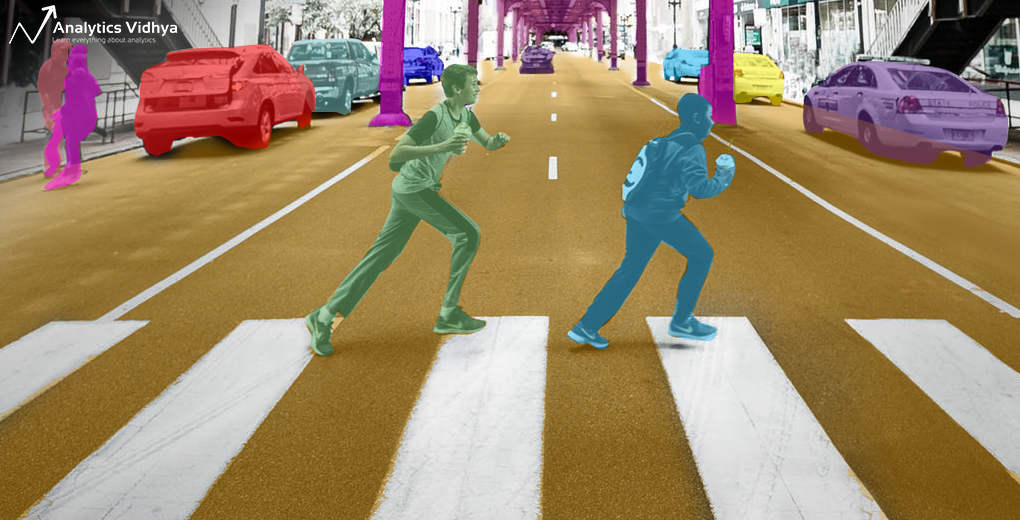
Image segmentation is a fundamental task in computer vision that involves partitioning an image into multiple segments or regions, each corresponding to a different object or part. It plays a crucial role in a wide range of applications, from medical image analysis to autonomous driving and robotics. However, achieving accurate and efficient image segmentation has been a long-standing challenge in the field. Traditional approaches, such as thresholding and region growing, often struggle to handle complex images with intricate structures and variations in appearance.
Enter the UNet architecture, a groundbreaking solution that has revolutionized image segmentation. Developed by Olaf Ronneberger, Philipp Fischer, and Thomas Brox in 2015, UNet has become the go-to architecture for many segmentation tasks due to its exceptional performance and ability to handle limited training data. In this blog post, we will dive deep into the UNet architecture, exploring its key components, advantages, and applications. Whether you are a beginner in computer vision or an experienced practitioner looking to enhance your segmentation skills, this comprehensive guide will equip you with the knowledge and insights to master image segmentation using UNet.
Limitations of Traditional CNN Architectures
Before diving into the UNet architecture, let‘s briefly discuss the limitations of traditional convolutional neural network (CNN) architectures in the context of image segmentation. CNNs have achieved remarkable success in tasks such as image classification and object detection, where the goal is to assign a single label or bounding box to an entire image. However, when it comes to pixel-wise segmentation, traditional CNNs face several challenges:
-
Loss of Spatial Information: As the network goes deeper, the spatial resolution of feature maps decreases due to pooling operations. This loss of spatial information makes it difficult to accurately localize and delineate object boundaries at the pixel level.
-
Limited Receptive Field: CNNs typically have a fixed receptive field, which limits their ability to capture long-range dependencies and global context. This can lead to inconsistencies and errors in segmentation, especially for objects with complex shapes and structures.
-
Lack of Fine-grained Details: CNNs struggle to preserve fine-grained details and small objects during the downsampling process. The loss of high-frequency information can result in blurry or over-smoothed segmentation masks.
-
Inability to Handle Variable-sized Inputs: Traditional CNNs require a fixed input size, which poses challenges when dealing with images of varying dimensions. This limitation hinders the flexibility and scalability of segmentation models.
UNet architecture addresses these limitations by introducing a novel encoder-decoder structure with skip connections, enabling precise and efficient segmentation even with limited training data.
UNet Architecture Overview
The UNet architecture is a fully convolutional network (FCN) that consists of an encoder path (contracting path) and a decoder path (expanding path). The encoder path follows the typical architecture of a convolutional network, gradually reducing the spatial dimensions while increasing the number of feature channels. The decoder path, on the other hand, performs upsampling and concatenation operations to recover the spatial dimensions and generate a high-resolution segmentation mask.
Encoder Path (Contracting Path)
The encoder path of UNet is responsible for capturing context and encoding the input image into a compact representation. It consists of a series of convolutional and max-pooling layers that progressively downsample the spatial dimensions while increasing the number of feature channels. The contracting path typically starts with a large number of feature channels and gradually reduces them as the spatial dimensions decrease. This allows the network to learn hierarchical features at different scales and capture both local and global information.
Decoder Path (Expanding Path)
The decoder path of UNet is responsible for recovering the spatial dimensions and generating the final segmentation mask. It consists of a series of upsampling and concatenation operations that gradually increase the spatial resolution while decreasing the number of feature channels. The expanding path starts with the compact representation learned by the encoder and progressively expands it to the original image size. At each step, the upsampled features are concatenated with the corresponding features from the encoder path through skip connections. This allows the network to combine high-level semantic information with fine-grained spatial details, enabling precise localization of object boundaries.
Skip Connections
One of the key innovations of the UNet architecture is the use of skip connections between the encoder and decoder paths. Skip connections allow the network to combine features from different levels of abstraction, preserving spatial information and enabling precise localization. At each level of the decoder path, the upsampled features are concatenated with the corresponding features from the encoder path. This concatenation operation allows the network to recover fine-grained details that may have been lost during the downsampling process in the encoder. Skip connections also facilitate the flow of gradients during training, mitigating the vanishing gradient problem and enabling faster convergence.
Advantages of UNet Architecture
UNet architecture offers several advantages over traditional CNN architectures for image segmentation tasks:
-
Precise Localization: The combination of encoder and decoder paths with skip connections allows UNet to capture both high-level semantic information and fine-grained spatial details. This enables precise localization of object boundaries and accurate segmentation of complex structures.
-
Handling Limited Training Data: UNet is known for its ability to achieve impressive segmentation results even with limited training data. The architecture‘s design, with its contracting and expanding paths, allows for efficient feature extraction and spatial recovery, reducing the need for vast amounts of annotated data.
-
Flexibility and Scalability: UNet can handle input images of varying dimensions, making it flexible and scalable for different segmentation tasks. The fully convolutional nature of the architecture allows it to process images of arbitrary sizes without the need for fixed input dimensions.
-
Multi-scale Feature Fusion: The skip connections in UNet enable the fusion of features from different scales and levels of abstraction. This multi-scale feature fusion helps in capturing both local and global context, leading to more robust and accurate segmentation results.
-
Fast Inference: UNet architecture is computationally efficient during inference, making it suitable for real-time applications. The fully convolutional design allows for fast parallel processing of multiple image patches, enabling efficient segmentation of large images or video streams.
Variants and Extensions of UNet
Since its introduction, the UNet architecture has inspired various variants and extensions to further improve its performance and adapt it to specific domains. Some notable variants include:
-
U-Net++: This extension introduces a more complex network architecture with additional convolutional layers and dense skip connections. U-Net++ aims to capture more fine-grained details and improve the segmentation accuracy, especially for small objects and intricate structures.
-
Attention U-Net: Attention mechanisms are incorporated into the UNet architecture to focus on relevant regions and suppress irrelevant ones. Attention U-Net enhances the network‘s ability to capture long-range dependencies and improve the segmentation of objects with complex shapes and appearances.
-
Dense U-Net: Dense connections are added between the encoder and decoder paths, allowing for more efficient information flow and feature reuse. Dense U-Net has shown improved performance in tasks such as medical image segmentation, where capturing fine details is crucial.
-
3D U-Net: The UNet architecture is extended to handle volumetric data, such as 3D medical scans. 3D U-Net employs 3D convolutional layers and allows for segmentation of 3D structures, making it suitable for applications like brain tumor segmentation and organ segmentation.
Applications of UNet
UNet architecture has found widespread adoption across various domains, showcasing its versatility and effectiveness in image segmentation tasks. Some notable applications include:
-
Medical Image Analysis: UNet has revolutionized medical image segmentation, enabling accurate delineation of anatomical structures, lesions, and tumors. It has been successfully applied to tasks such as brain tumor segmentation, lung nodule detection, and retinal vessel segmentation, aiding in diagnosis and treatment planning.
-
Satellite Imagery Analysis: UNet has been employed for segmenting and classifying objects in satellite imagery, such as buildings, roads, and land cover types. It has played a crucial role in urban planning, environmental monitoring, and disaster response applications.
-
Autonomous Driving: UNet has been utilized for segmenting road scenes, identifying objects like vehicles, pedestrians, and lane markings. Accurate segmentation is essential for enabling safe and reliable autonomous driving systems.
-
Industrial Quality Control: UNet has been applied to detect and segment defects or anomalies in manufacturing processes, ensuring product quality and reducing manual inspection efforts.
-
Agricultural Monitoring: UNet has been used for segmenting and analyzing plant diseases, crop health, and soil conditions in precision agriculture applications, enabling data-driven decision-making for optimizing crop yields and resource management.
Training UNet Models
Training UNet models effectively requires careful consideration of several factors, including data preparation, hyperparameter tuning, and optimization strategies. Here are some key points to keep in mind:
-
Data Augmentation: Applying data augmentation techniques, such as rotation, flipping, scaling, and elastic deformations, can help increase the diversity of training samples and improve the model‘s robustness to variations in input data.
-
Loss Functions: Choosing an appropriate loss function is crucial for guiding the model‘s learning process. Common loss functions for image segmentation include binary cross-entropy, weighted cross-entropy, and Dice loss, which measure the discrepancy between predicted and ground truth segmentation masks.
-
Optimizer Selection: Selecting a suitable optimizer, such as Adam or SGD with momentum, can impact the convergence speed and stability of the training process. Experimenting with different learning rates and scheduling strategies can help find the optimal configuration for a specific task.
-
Regularization Techniques: Applying regularization techniques, such as L1/L2 regularization or dropout, can help prevent overfitting and improve the model‘s generalization ability. These techniques introduce additional constraints or stochasticity to the model, encouraging it to learn more robust and transferable features.
-
Transfer Learning: Leveraging pre-trained weights from models trained on large-scale datasets, such as ImageNet, can provide a good starting point for training UNet models. Transfer learning allows the model to benefit from the learned features and can speed up convergence, especially when working with limited training data.
Future Directions and Improvements
While UNet has already achieved remarkable success in image segmentation tasks, there is still room for further improvements and advancements. Some potential directions for future research include:
-
Incorporating Attention Mechanisms: Integrating attention mechanisms into the UNet architecture can help the model focus on relevant regions and suppress irrelevant ones. Attention-based UNet variants have shown promising results in capturing long-range dependencies and improving segmentation accuracy.
-
Handling Multi-modal Data: Extending UNet to handle multi-modal data, such as combining imaging modalities (e.g., CT and MRI) or incorporating additional information (e.g., patient metadata), can provide a more comprehensive understanding of the segmentation task and improve performance.
-
Unsupervised and Semi-supervised Learning: Exploring unsupervised and semi-supervised learning approaches for UNet can reduce the reliance on large amounts of annotated data. Techniques like self-supervised learning and contrastive learning have shown potential in leveraging unlabeled data to improve segmentation results.
-
Efficiency Optimization: Developing more efficient variants of UNet, such as lightweight architectures or pruning techniques, can reduce computational complexity and enable deployment on resource-constrained devices, such as mobile phones or embedded systems.
-
Interpretability and Explainability: Enhancing the interpretability and explainability of UNet models can provide insights into the decision-making process and increase trust in the segmentation results. Techniques like attention visualization and feature attribution can help understand the model‘s behavior and identify potential biases or errors.
Conclusion
The UNet architecture has revolutionized image segmentation, offering a powerful and flexible solution for accurately delineating objects and structures in various domains. Its encoder-decoder structure, combined with skip connections, enables precise localization and efficient capture of both local and global context. The ability to handle limited training data and the flexibility to adapt to different segmentation tasks make UNet a go-to choice for many practitioners.
As we continue to explore and improve upon the UNet architecture, we can expect further advancements in segmentation accuracy, efficiency, and interpretability. The potential applications of UNet are vast, ranging from medical image analysis to autonomous driving and beyond. By mastering the UNet architecture and its variants, researchers and practitioners can unlock new possibilities in image segmentation and contribute to the development of more intelligent and reliable computer vision systems.
In conclusion, the UNet architecture has proven to be a game-changer in the field of image segmentation. Its innovative design, coupled with its ability to handle complex segmentation tasks with limited data, has made it a cornerstone in various domains. As we continue to push the boundaries of computer vision, UNet will undoubtedly play a crucial role in shaping the future of image segmentation and enabling groundbreaking applications that improve our lives and advance scientific discoveries.