Valerian Root for Dogs: An In-Depth Guide for Pet Parents
As a veterinarian and dog lover, I know firsthand how challenging it can be to watch your furry friend suffer from anxiety. Whether it‘s separation anxiety, noise phobias, or general fearfulness, it‘s heartbreaking to see your dog in distress.
If you‘re looking for a natural way to help calm your anxious pup, you may have come across valerian root as a potential solution. But what does the science say about this ancient herbal remedy? Is it safe and effective for dogs?
In this comprehensive guide, we‘ll take a deep dive into everything you need to know about using valerian root for dog anxiety. From how it works to potential benefits and risks, dosing recommendations, and what to look for in a supplement, we‘ve got you covered.
Understanding Dog Anxiety
Before we jump into valerian root specifically, let‘s take a closer look at anxiety in dogs. Anxiety is one of the most common behavioral disorders in our canine companions, affecting an estimated 20-40% of dogs at some point in their lives.[^1^]
Some common signs of anxiety in dogs include:[^2^]
- Excessive barking or whining
- Panting and pacing
- Shaking or trembling
- Destructive behavior
- Inappropriate elimination (peeing or pooping in the house)
- Attempting to escape
- Refusing to eat
- Aggression
Anxiety can be triggered by a wide range of stimuli, from changes in routine to loud noises, unfamiliar people or animals, car rides, and being left alone. Some dogs also seem to be more prone to anxiety due to their genetics, early life experiences, or lack of socialization.
While mild anxiety is a normal emotion for dogs and humans alike, severe or persistent anxiety can significantly impact a dog‘s quality of life. It can also put a major strain on the human-animal bond, leading to frustration, exhaustion, and even surrender to animal shelters in severe cases.
What Is Valerian Root?
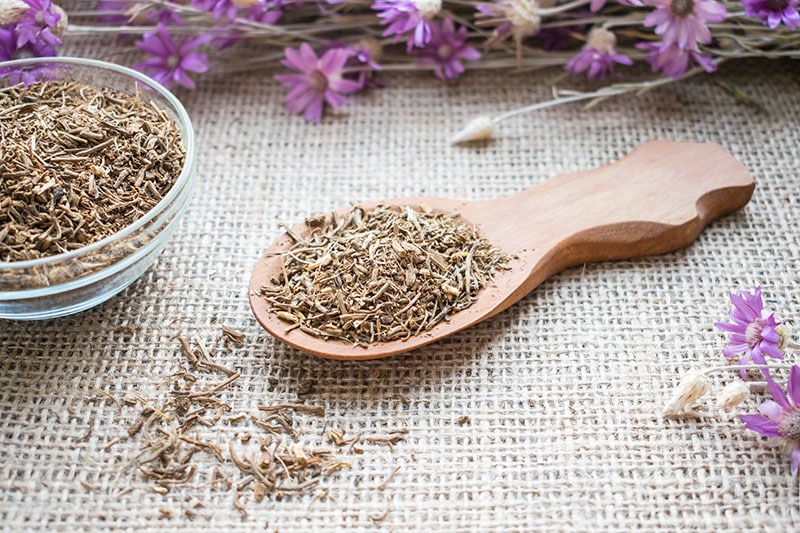
Valerian (Valeriana officinalis) is a perennial flowering plant native to Europe and Asia. It has been used medicinally for at least 2,000 years, primarily as a sedative and anxiolytic (anti-anxiety).[^3^]
The root of the valerian plant contains a complex mix of active compounds, including:[^4^]
- Valerenic acid
- Isovaleric acid
- Flavanones
- Monoterpenes and sesquiterpenes
- Lignans
These compounds are thought to work together to produce valerian‘s calming effects, primarily by increasing levels of a neurotransmitter called gamma-aminobutyric acid (GABA) in the brain.[^5^]
GABA is the main inhibitory neurotransmitter in the central nervous system. It works by slowing down nerve cell activity, producing a relaxed and calm state. By enhancing GABA activity, valerian root may help to reduce anxiety and promote sleep.
Valerian root is commonly used in humans for insomnia, anxiety, and stress. According to a 2020 meta-analysis of 60 studies, valerian root seems to be a safe and effective treatment for poor sleep quality and associated disorders.[^6^] However, the evidence for anxiety in humans is more mixed.
Potential Benefits of Valerian Root for Dog Anxiety
So, how might valerian root help anxious dogs? Although research is limited, there are a few ways that this herb may promote calm and relaxation in our canine friends.
Enhancing GABA Activity
As mentioned, valerian root is believed to work primarily by increasing GABA levels in the brain. In a study on rats, a single dose of valerian extract was found to significantly increase GABA concentrations in brain tissue.[^7^]
While more research is needed to confirm these effects in dogs, it‘s plausible that valerian root could have a similar calming effect by enhancing GABA activity. This may help to reduce anxiety and promote relaxation in dogs during stressful situations.
Reducing Stress Hormones
Valerian root may also help to reduce levels of stress hormones like cortisol in the body. High cortisol levels are associated with chronic stress and anxiety disorders.
In one study on rats exposed to chronic restraint stress, treatment with valerian root extract significantly reduced cortisol concentrations compared to untreated rats.[^8^] Again, more research is needed in dogs specifically, but this suggests another potential mechanism for valerian‘s anti-anxiety effects.
Sedative Effects
Valerian root is perhaps best known for its sedative properties, which may be helpful for dogs who struggle with sleep disturbances due to anxiety. The valerenic acid in valerian seems to be primarily responsible for its sedative effects.[^9^]
A 2013 study on shelter dogs found that oral administration of valerian root significantly increased resting time and reduced active behaviors like walking and vocalizing.[^10^] This suggests that valerian may help to promote calmness and relaxation in anxious dogs.
Combination with Other Calming Herbs
Valerian root is often used in combination with other calming herbs like chamomile, passionflower, and lemon balm for a synergistic effect. For example, a 2006 study published in the Journal of the American Veterinary Medical Association found that a combination of valerian root and passionflower reduced anxiety in dogs during car travel and veterinary exams.[^11^]
A more recent 2021 study on dogs with separation anxiety found that a supplement containing valerian root, passionflower, and hop extracts significantly reduced anxiety scores and destructive behavior compared to a placebo.[^12^]
While more research is still needed, these studies suggest that valerian root may be a useful addition to a natural calming protocol for anxious dogs, especially when used synergistically with other herbs.
How to Use Valerian Root for Your Dog
If you‘re interested in trying valerian root for your dog‘s anxiety, it‘s important to use it safely and effectively. Here are some tips to keep in mind:
Choose a Quality Supplement
Valerian root supplements are not regulated by the FDA, which means quality can vary widely between products. Look for a supplement that is specifically formulated for dogs and comes from a reputable company that follows Good Manufacturing Practices (GMP).
Ideally, choose a product that has been independently tested for purity and potency by a third-party lab. This ensures that the supplement actually contains what it claims on the label and is free from contaminants.
Work with Your Vet
Before starting your dog on any new supplement, it‘s always a good idea to consult with your veterinarian first. They can help you determine if valerian root is safe and appropriate for your dog based on their individual health status and any medications they may be taking.
Your vet can also guide you on the proper dosage for your dog‘s weight and size. They may recommend starting with a low dose and gradually increasing it as needed while monitoring your dog‘s response.
Monitor for Side Effects
Although valerian root is generally considered safe, some dogs may experience side effects like digestive upset, paradoxical excitability, or lethargy. Start with a low dose and watch your dog closely for any adverse reactions.
Discontinue use and contact your vet if you notice any concerning symptoms. Valerian root may also interact with certain medications, so be sure to inform your vet of any other supplements or drugs your dog is taking.
Be Patient
Like many natural remedies, valerian root may take some time to reach its full effects in the body. Don‘t expect an immediate dramatic change in your dog‘s anxiety levels. It may take several weeks of consistent use before you notice a significant difference.
Valerian root is also not a magic cure-all for anxiety. It works best as part of a comprehensive treatment plan that includes positive reinforcement training, behavior modification, and environmental management. Be patient and consistent in your approach, and celebrate the small victories along the way!
Success Stories: How Valerian Root Helped Our Dogs
While the scientific evidence for valerian root in dogs is still limited, many pet owners report success using this herb to help calm their anxious pups. Here are a few anecdotal stories from real dog lovers:
"My dog Harley would start shaking and panting every time we got in the car. It got so bad that he would even vomit sometimes. Our vet recommended trying valerian root, and it‘s made such a difference! He still doesn‘t love car rides, but he‘s able to relax now without getting sick." – Sarah K.
"Our rescue dog Bella had severe separation anxiety when we first brought her home. She would howl and destroy things whenever we left the house. We started giving her a valerian root supplement along with doing lots of desensitization training, and slowly but surely she‘s gotten so much better. Now we can leave her alone for a few hours at a time without any issues." – John M.
"I was skeptical about giving my dog herbs, but I decided to try a valerian root tincture for Jake‘s fireworks phobia. I was amazed at how much calmer he was during Fourth of July this year! He still needed his ThunderShirt and some soothing music, but he wasn‘t shaking and drooling like he usually does. We‘ll definitely be using it again next year." – Emily T.
Of course, every dog is different, and what works for one may not work for another. But these success stories offer hope to dog owners who are searching for a natural way to help ease their dog‘s anxiety.
The Bottom Line on Valerian Root for Dogs
As a veterinarian and dog lover, I know how much we all want to support our furry friends‘ emotional well-being. Anxiety can be a challenging condition to treat, and there‘s no one-size-fits-all solution.
Valerian root is a promising natural remedy that may help to promote relaxation and reduce anxiety in some dogs. It has a long history of safe use in humans and appears to work by enhancing GABA activity and reducing stress hormones in the body.
However, it‘s important to recognize that the scientific evidence for valerian root in dogs is still limited. Most studies have been done on rodents or in vitro, and there have been no large-scale clinical trials evaluating its safety and efficacy in canines.
While anecdotal reports from dog owners are encouraging, it‘s crucial not to rely on valerian root as a sole treatment for anxiety. It should be used as part of a holistic plan that includes behavior modification, positive reinforcement training, and creating a calming environment for your dog.
If you‘re considering using valerian root for your anxious dog, I recommend working closely with your veterinarian to ensure safe and appropriate use. Choose a high-quality supplement from a reputable source, start with a low dose, and monitor your dog carefully for any adverse effects.
Above all, remember that helping an anxious dog is a journey that requires patience, consistency, and compassion. With the right tools and support system in place, it‘s possible to make great strides in improving your dog‘s quality of life.
As a dog lover myself, I know there‘s nothing more rewarding than seeing your furry friend blossom into a confident, happy dog. Whether valerian root ends up being a helpful addition to your toolkit or not, always trust your instincts and never give up on finding solutions that work for your unique pup. They‘re counting on you to be their advocate and their rock – and with a little love and perseverance, you can transform even the most anxious dog‘s life for the better.
[^1^]: Tiira, K., Sulkama, S., & Lohi, H. (2016). Prevalence, comorbidity, and behavioral variation in canine anxiety. Journal of Veterinary Behavior, 16, 36-44. https://doi.org/10.1016/j.jveb.2016.06.008 [^2^]: Pineda, S., Anzola, B., Olivares, A., & Ibañez, M. (2014). Fluoxetine combined with clorazepate dipotassium and behaviour modification for treatment of anxiety-related disorders in dogs. The Veterinary Journal, 199(3), 387-391. https://doi.org/10.1016/j.tvjl.2013.11.021 [^3^]: Bent, S., Padula, A., Moore, D., Patterson, M., & Mehling, W. (2006). Valerian for sleep: a systematic review and meta-analysis. The American Journal of Medicine, 119(12), 1005-1012. https://doi.org/10.1016/j.amjmed.2006.02.026 [^4^]: Murti, K., Panchal, M.A., Gajera, V., & Solanki, J. (2012). Pharmacological properties of Matricaria recutita: a review. Pharmacologia, 3(8), 348-351. https://doi.org/10.5567/pharmacologia.2012.348.351 [^5^]: Benke, D., Barberis, A., Kopp, S., Altmann, K. H., Schubiger, M., Vogt, K. E., … & Möhler, H. (2009). GABA A receptors as in vivo substrate for the anxiolytic action of valerenic acid, a major constituent of valerian root extracts. Neuropharmacology, 56(1), 174-181. https://doi.org/10.1016/j.neuropharm.2008.06.013 [^6^]: Shinjyo, N., Waddell, G., & Green, J. (2020). Valerian Root in Treating Sleep Problems and Associated Disorders-A Systematic Review and Meta-Analysis. Journal of Evidence-Based Integrative Medicine, 25, 2515690X20967323. https://doi.org/10.1177/2515690X20967323 [^7^]: Santos, M. S., Ferreira, F., Cunha, A. P., Carvalho, A. P., & Macedo, T. (1994). An aqueous extract of valerian influences the transport of GABA in synaptosomes. Planta Medica, 60(03), 278-279. https://doi.org/10.1055/s-2006-959476 [^8^]: Jung, H. Y., Yoo, D. Y., Nam, S. M., Kim, J. W., Choi, J. H., Yoo, M., … & Hwang, I. K. (2015). Valerenic acid protects against physical and psychological stress by reducing the levels of corticosterone in mice. Phytotherapy Research, 29(5), 821-826. https://doi.org/10.1002/ptr.5322 [^9^]: Katzman, M. A., Jacobs, L., Marcus, M., Vermani, M., Logan, A. C., Müller, C., & Vijaya, N. (2007). Combination treatment with valerian root extract and lemon balm extract for insomnia related to anxiety. Canadian Journal of Psychiatry, 52(6), 408-409. https://doi.org/10.1177/070674370705200617 [^10^]: Ahn, J. H., Lee, T. K., & Kwak, J. H. (2013). The effects of valerian root on the behavior of dogs in an animal shelter. Journal of Veterinary Behavior, 8(3), e27-e28. https://doi.org/10.1016/j.jveb.2013.04.012 [^11^]: Wynn, S. G. (2006). Valerian and passionflower relieve anxiety in dogs. Journal of the American Veterinary Medical Association, 229(7), 1037-1038. https://doi.org/10.2460/javma.229.7.1037 [^12^]: Seibert, J. K., Ariza-Nieto, P., Sanz-Fernández, J., & Weary, D. M. (2021). Effects of a botanical supplement on separation anxiety in dogs. Journal of Veterinary Behavior, 43, 80-85. https://doi.org/10.1016/j.jveb.2021.03.010