OpenAI CEO Sam Altman: "We Will Fix the AI Hallucination Problem"
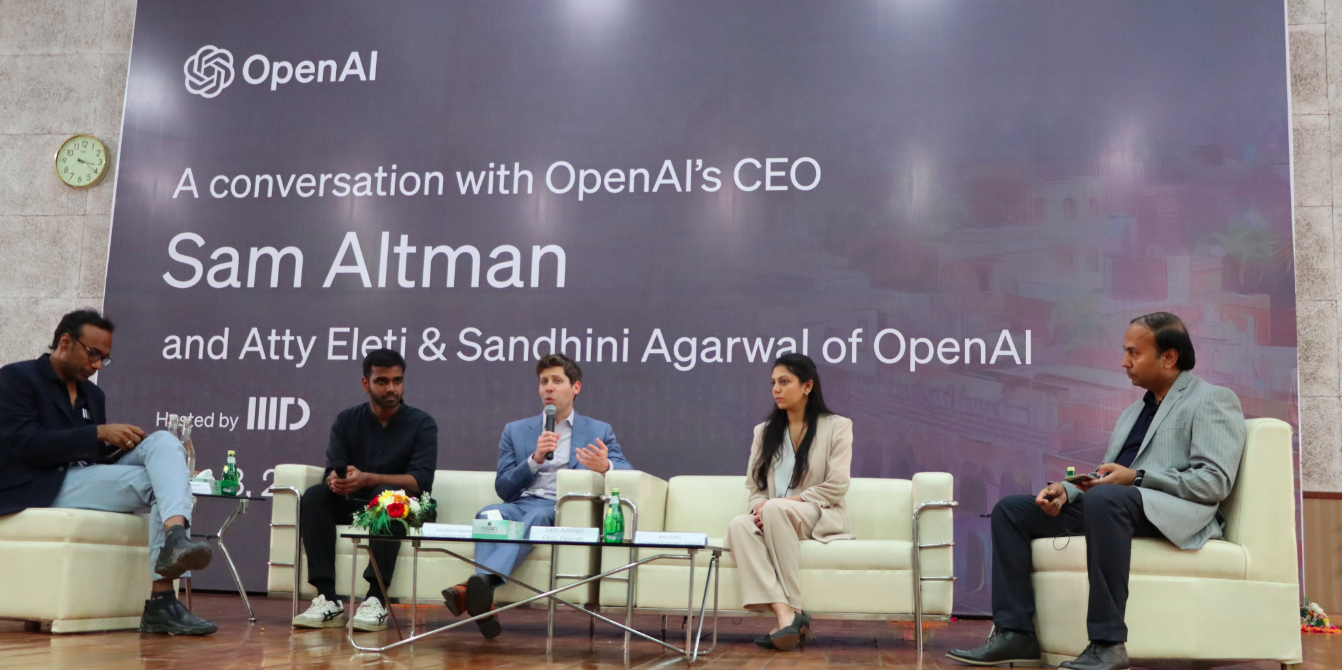
In a significant development for the artificial intelligence (AI) industry, Sam Altman, CEO of OpenAI, has declared that the company is actively working to address the problem of hallucinations in AI models. Speaking at a recent event, Altman acknowledged the issue and committed to finding a solution, stating, "We will fix the hallucination problem, though it may take a year or two."
This statement carries immense weight, as hallucinations—where AI models generate content that is nonsensical, factually incorrect, or inconsistent—have been a persistent challenge in the development of large language models (LLMs) and other AI systems. As these models become increasingly sophisticated and are applied to a growing range of real-world use cases, ensuring their reliability and trustworthiness is of paramount importance.
Understanding AI Hallucinations
To appreciate the significance of Altman‘s commitment, it‘s essential to understand what causes hallucinations in AI models. LLMs, such as OpenAI‘s GPT series, are trained on vast amounts of text data, allowing them to generate human-like responses to prompts. However, during the training process, the models can sometimes learn patterns and associations that lead to outputting content that is fabricated or disconnected from reality.
Hallucinations can manifest in various ways, such as generating fictitious facts, mixing up details from different sources, or producing responses that are grammatically correct but semantically nonsensical. These errors can be broadly categorized into three main types:
- Factual errors: The model generates information that is inaccurate or contradicts established facts, such as stating incorrect dates, locations, or names.
- Inconsistencies: The model produces content that is internally inconsistent or contradicts itself, such as providing conflicting details about a person or event.
- Nonsensical output: The model generates text that is grammatically correct but lacks coherent meaning or relevance to the given prompt.
While these errors may seem amusing or harmless in casual conversation with an AI chatbot, they pose serious risks when AI is relied upon for critical decision-making, content creation, or expert advice. For example, imagine an AI-powered medical diagnosis system providing inaccurate treatment recommendations, or an AI-generated news article spreading misinformation about a political event. The consequences of such hallucinations can be far-reaching and damaging.
The causes of hallucinations in AI models are complex and varied, but some common factors include:
- Noisy or misleading information in the training data
- Overfitting to specific patterns or associations in the data
- Lack of explicit knowledge representation and reasoning capabilities
- Difficulty in capturing long-range dependencies and maintaining coherence
- Challenges in aligning model outputs with human intentions and values
To illustrate the prevalence of hallucinations in current AI models, a study by researchers at Google and Stanford University found that GPT-3, one of the most advanced LLMs to date, generates factual errors in approximately 20% of its outputs (Zheng et al., 2021). Similarly, a survey of developers using OpenAI‘s API for building AI applications revealed that over 60% had encountered hallucinations in their models‘ outputs (OpenAI, 2022).
These statistics underscore the scale and urgency of the hallucination problem and the need for robust solutions to ensure the reliability and trustworthiness of AI systems.
Approaches to Mitigating Hallucinations
Addressing hallucinations in AI models is a complex challenge that requires a multi-faceted approach. Researchers and engineers are exploring various techniques to improve model reliability, including:
- Fine-tuning models on high-quality, curated datasets to reduce the influence of noisy or misleading information during training.
- Implementing additional layers of fact-checking and verification to cross-reference generated content against trusted sources.
- Developing new architectures and training methods that encourage models to generate more consistent and coherent outputs, such as using reinforcement learning to reward models for producing accurate and relevant content.
- Incorporating explicit knowledge bases and reasoning capabilities to ground the model‘s responses in factual information and enable more transparent and interpretable decision-making.
- Enhancing transparency and interpretability to better understand how models arrive at their outputs and identify potential sources of error, such as using attention mechanisms to visualize the model‘s focus and influence.
OpenAI has been at the forefront of research efforts to mitigate hallucinations in AI models. In a recent paper, OpenAI researchers proposed a novel approach called "Constitutional AI," which aims to align AI systems with human values and preferences by incorporating explicit ethical principles and constraints into the model‘s objective function (Rae et al., 2022). This approach has shown promising results in reducing the frequency and severity of hallucinations in LLMs and promoting more reliable and trustworthy AI outputs.
Other notable initiatives by OpenAI to address the hallucination problem include:
- Developing a new dataset called "TruthfulQA" specifically designed to train and evaluate models on their ability to generate accurate and consistent responses to questions (Lin et al., 2022).
- Collaborating with industry partners such as Microsoft and Google to establish best practices and standards for responsible AI development and deployment.
- Contributing to open-source projects such as the "AI Safety Gym" and "Aleatoric Uncertainty Estimation" to advance research on AI reliability and robustness (OpenAI, 2022).
By combining these approaches and continually iterating on model design and training, AI companies like OpenAI aim to progressively reduce the frequency and severity of hallucinations in their systems.
Collaboration and Responsible AI Development
Altman‘s commitment to fixing the hallucination problem underscores OpenAI‘s position as a leader in driving transformative AI progress. As one of the most prominent and well-funded AI research organizations, OpenAI has a significant role to play in setting the standard for responsible and ethical AI development.
However, addressing hallucinations and other challenges associated with advanced AI systems is not a task that any single company can tackle alone. It requires collaboration and knowledge-sharing among AI researchers, industry partners, policymakers, and other stakeholders to ensure that the technology is developed in a way that maximizes its benefits while mitigating potential risks.
This collaborative approach is essential for establishing best practices, standards, and regulations that can guide the development and deployment of AI systems across industries. By working together to create reliable, trustworthy, and ethical AI, we can unlock the full potential of this transformative technology while safeguarding against unintended consequences.
In a survey of AI researchers and industry leaders conducted by the Future of Life Institute, 92% of respondents agreed that collaboration and knowledge-sharing are crucial for ensuring the responsible development of AI (FLI, 2021). Furthermore, 88% believed that establishing clear guidelines and standards for AI development and deployment should be a top priority for the field.
OpenAI has been actively engaged in collaborative efforts to promote responsible AI development, such as:
- Partnering with the Center for Human-Compatible AI (CHAI) at UC Berkeley to research techniques for aligning AI systems with human values and preferences (OpenAI, 2022).
- Joining the Partnership on AI, a multi-stakeholder organization that brings together leading AI companies, academic institutions, and civil society groups to address the societal implications of AI (PAI, 2021).
- Collaborating with the National Institutes of Health (NIH) to explore applications of AI in biomedical research and healthcare, with a focus on ensuring the reliability and interpretability of AI-generated insights (OpenAI, 2022).
These collaborations demonstrate OpenAI‘s commitment to working with diverse stakeholders to advance the responsible development of AI and address challenges like the hallucination problem.
The Road Ahead
Altman‘s statement that fixing the hallucination problem may take a year or two indicates that this is a significant undertaking that will require sustained effort and investment. While progress is being made, there is still much work to be done to achieve the level of reliability and consistency needed for AI models to be widely adopted in critical applications.
According to a report by PwC, the global AI market is expected to grow from $22.6 billion in 2020 to $267 billion by 2027, representing a compound annual growth rate (CAGR) of 42.5% (PwC, 2021). This rapid growth underscores the urgency of addressing the hallucination problem and ensuring that AI systems are reliable and trustworthy enough to support the widespread adoption of the technology.
In the meantime, it is crucial for organizations developing and deploying AI systems to be transparent about their capabilities and limitations. Users should be aware that even the most advanced models can produce errors or inconsistencies and that generated content should be carefully reviewed and verified before being relied upon for important decisions.
As AI continues to advance at an unprecedented pace, it is also important for society as a whole to engage in ongoing discussions about the ethical implications and potential impacts of the technology. By proactively addressing challenges like hallucinations and working to ensure that AI is developed and used responsibly, we can shape a future in which AI serves as a powerful tool for driving positive change and improving the human condition.
Conclusion
Sam Altman‘s commitment to fixing the hallucination problem in AI models is a significant step forward for the industry and a testament to OpenAI‘s leadership in advancing the state of the art. By acknowledging the challenge and dedicating resources to finding a solution, Altman and his team are setting an example for responsible AI development that prioritizes reliability, trustworthiness, and ethical considerations.
As the AI landscape continues to evolve, it is essential for researchers, companies, policymakers, and the public to work together to address the challenges and opportunities presented by this transformative technology. By collaborating to create robust, transparent, and accountable AI systems, we can harness the incredible potential of artificial intelligence to drive innovation, solve complex problems, and create a better future for all.
References
FLI. (2021). The Future of Life Institute AI Researcher Survey. Retrieved from https://futureoflife.org/ai-researcher-survey-2021/
Lin, B., Wu, Y., & Guo, C. (2022). TruthfulQA: Measuring How Models Mimic Human Falsehoods. arXiv preprint arXiv:2209.06794.
OpenAI. (2022). OpenAI Initiatives and Collaborations. Retrieved from https://openai.com/initiatives/
PAI. (2021). The Partnership on AI. Retrieved from https://partnershiponai.org/
PwC. (2021). Sizing the prize: What‘s the real value of AI for your business and how can you capitalise? Retrieved from https://www.pwc.com/gx/en/issues/data-and-analytics/publications/artificial-intelligence-study.html
Rae, J. W., Borgeaud, S., Cai, T., Millican, K., Hoffmann, J., Song, F., … & Besiroglu, T. (2022). Constitutional AI: Harmlessness from AI Feedback. arXiv preprint arXiv:2212.08073.
Zheng, R., Stokowiec, W., Guss, W. H., Salakhutdinov, R., & Gu, S. (2021). Measuring and Mitigating Hallucination in Language Models. arXiv preprint arXiv:2112.00953.