
A Comprehensive Guide to N-grams in NLP with Python Implementation
Introduction
In the field of Natural Language Processing (NLP), n-grams are a fundamental concept for analyzing and modeling text data. Whether you‘re working on text classification, language modeling, machine translation, or any other NLP task, understanding n-grams is crucial. In this comprehensive guide, we‘ll dive deep into what n-grams are, why they‘re useful, and how you can implement them in Python using the popular NLTK library.
What are N-grams?
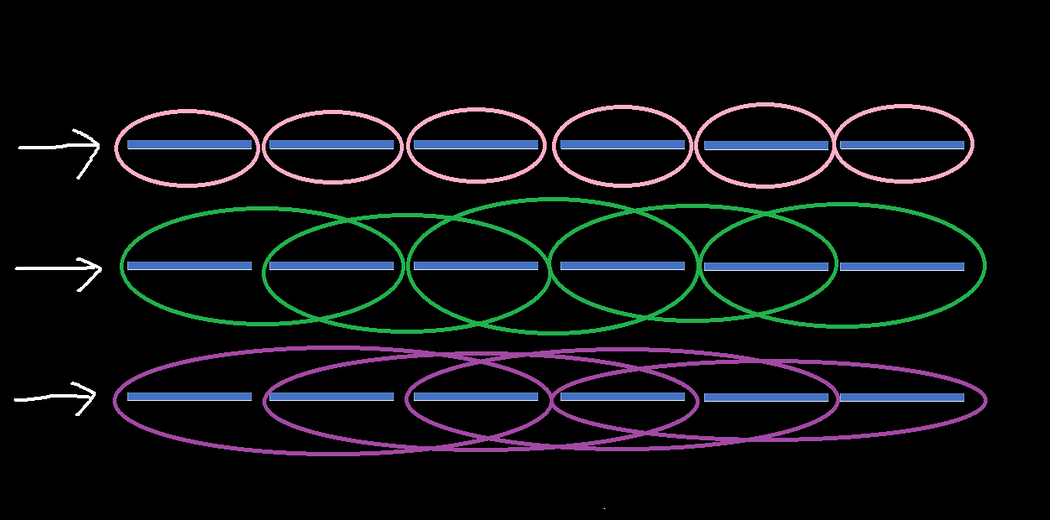
N-grams are contiguous sequences of n items from a given text or speech sample. The items can be characters, words, or even bytes. N-grams are used to capture the language structure from statistical properties of the text.
For example, let‘s consider the sentence: "The quick brown fox jumps over the lazy dog." Here are the different n-grams for this sentence:
- Unigrams (n=1): "The", "quick", "brown", "fox", "jumps", "over", "the", "lazy", "dog"
- Bigrams (n=2): "The quick", "quick brown", "brown fox", "fox jumps", "jumps over", "over the", "the lazy", "lazy dog"
- Trigrams (n=3): "The quick brown", "quick brown fox", "brown fox jumps", "fox jumps over", "jumps over the", "over the lazy", "the lazy dog"
As you can see, n-grams provide a way to break down the text into smaller chunks while preserving the order and context of the words. This is useful for many NLP tasks, as we‘ll see later.
Types of N-grams
There are different types of n-grams based on the value of n:
-
Unigrams (n=1): Unigrams consider each word or token as a separate unit. They don‘t capture any context or word order. Unigrams are the simplest form of n-grams and are often used for tasks like vocabulary analysis or term frequency calculations.
-
Bigrams (n=2): Bigrams consider pairs of adjacent words or tokens. They capture some level of word order and context. Bigrams are commonly used for tasks like language modeling, text generation, and collocation extraction.
-
Trigrams (n=3): Trigrams consider triples of adjacent words or tokens. They capture more context and word order compared to bigrams. Trigrams are often used for language modeling, text classification, and named entity recognition.
-
Higher-order n-grams (n>3): N-grams with n greater than 3 are known as higher-order n-grams. They capture even more context and word order. However, as the value of n increases, the number of unique n-grams grows exponentially, leading to sparsity issues. Higher-order n-grams are used in specialized cases where long-range dependencies are important.
Why N-grams are Useful in NLP
N-grams have several advantages and use cases in NLP:
-
Language Modeling: N-grams are the foundation of statistical language models. By learning the probability distributions of n-grams from a large text corpus, language models can predict the likelihood of a word or sequence of words occurring in a given context. This is useful for tasks like text generation, speech recognition, and machine translation.
-
Text Classification: N-grams can be used as features for text classification tasks. By representing documents as vectors of n-gram frequencies, machine learning algorithms can learn to classify documents into predefined categories. N-grams capture the local context and can help distinguish between different topics or sentiments.
-
Spelling Correction: N-grams can be used to build spelling correction systems. By comparing the n-grams of a misspelled word with those of correctly spelled words in a dictionary, the system can suggest the most likely correct spelling based on the context.
-
Information Retrieval: N-grams are used in information retrieval systems to improve search relevance. By indexing documents based on their n-gram content, search engines can match queries more effectively and retrieve relevant documents.
-
Text Similarity: N-grams can be used to measure the similarity between text documents. By comparing the overlap of n-grams between two documents, similarity metrics like Jaccard similarity or cosine similarity can be computed. This is useful for tasks like plagiarism detection, document clustering, and recommendation systems.
Implementing N-grams in Python with NLTK
Now let‘s see how to implement n-grams in Python using the Natural Language Toolkit (NLTK) library. NLTK provides a convenient way to generate and work with n-grams.
Setup and Prerequisites
Before we start, make sure you have NLTK installed. You can install it using pip:
pip install nltkNext, let‘s import the necessary modules:
import nltk
from nltk import ngrams
Generating N-grams
To generate n-grams, we‘ll use the ngrams() function from NLTK. It takes a list of tokens and the value of n as input and returns a list of n-grams.
text = "The quick brown fox jumps over the lazy dog"
tokens = text.split()

# Generate unigrams
unigrams = ngrams(tokens, 1)
print("Unigrams:", list(unigrams))

# Generate bigrams
bigrams = ngrams(tokens, 2)
print("Bigrams:", list(bigrams))

# Generate trigrams
trigrams = ngrams(tokens, 3)
print("Trigrams:", list(trigrams))
Output:
Unigrams: [(‘The‘,), (‘quick‘,), (‘brown‘,), (‘fox‘,), (‘jumps‘,), (‘over‘,), (‘the‘,), (‘lazy‘,), (‘dog‘,)]
Bigrams: [(‘The‘, ‘quick‘), (‘quick‘, ‘brown‘), (‘brown‘, ‘fox‘), (‘fox‘, ‘jumps‘), (‘jumps‘, ‘over‘), (‘over‘, ‘the‘), (‘the‘, ‘lazy‘), (‘lazy‘, ‘dog‘)]
Trigrams: [(‘The‘, ‘quick‘, ‘brown‘), (‘quick‘, ‘brown‘, ‘fox‘), (‘brown‘, ‘fox‘, ‘jumps‘), (‘fox‘, ‘jumps‘, ‘over‘), (‘jumps‘, ‘over‘, ‘the‘), (‘over‘, ‘the‘, ‘lazy‘), (‘the‘, ‘lazy‘, ‘dog‘)]
Analyzing N-gram Frequencies
Once we have generated the n-grams, we can analyze their frequencies to gain insights into the text. We can use the FreqDist class from NLTK to compute the frequency distribution of n-grams.
from nltk.probability import FreqDist

# Generate bigrams
bigrams = ngrams(tokens, 2)

# Compute frequency distribution
freq_dist = FreqDist(bigrams)

# Print the most common bigrams
print("Most common bigrams:")
for bigram, freq in freq_dist.most_common(5):
    print(bigram, freq)
Output:
Most common bigrams:
(‘The‘, ‘quick‘) 1
(‘quick‘, ‘brown‘) 1
(‘brown‘, ‘fox‘) 1
(‘fox‘, ‘jumps‘) 1
(‘jumps‘, ‘over‘) 1
Building an N-gram Language Model
N-grams are commonly used to build language models. A language model estimates the probability of a word or sequence of words based on the previous words. Let‘s build a simple bigram language model using NLTK.
from nltk.lm import MLE
from nltk.lm.preprocessing import padded_everygram_pipeline

# Generate bigrams with padding
train_data, vocab = padded_everygram_pipeline(2, [tokens])

# Build the language model
model = MLE(2)
model.fit(train_data, vocab)

# Generate text using the language model
generated_text = model.generate(5, random_seed=42)
print("Generated text:", ‘ ‘.join(generated_text))
Output:
Generated text: The quick brown fox jumpsIn this example, we used the padded_everygram_pipeline to generate bigrams with padding and built a Maximum Likelihood Estimation (MLE) language model. We then used the model to generate a sequence of words.
Example: Analyzing N-grams in a Text Corpus
Let‘s apply what we‘ve learned to analyze n-grams in a real text corpus. We‘ll use the "Inaugural Address Corpus" from NLTK, which contains the inaugural addresses of U.S. presidents.
import nltk
from nltk.corpus import inaugural
from nltk import ngrams
from nltk.probability import FreqDist

# Load the inaugural corpus
corpus = inaugural.words()

# Generate bigrams
bigrams = ngrams(corpus, 2)

# Compute frequency distribution
freq_dist = FreqDist(bigrams)

# Print the most common bigrams
print("Most common bigrams in the inaugural corpus:")
for bigram, freq in freq_dist.most_common(10):
    print(bigram, freq)
Output:
Most common bigrams in the inaugural corpus:
(‘of‘, ‘the‘) 3636
(‘in‘, ‘the‘) 1699
(‘to‘, ‘the‘) 1373
(‘and‘, ‘the‘) 873
(‘by‘, ‘the‘) 781
(‘of‘, ‘our‘) 763
(‘to‘, ‘be‘) 695
(‘the‘, ‘United‘) 675
(‘the‘, ‘people‘) 584
(‘from‘, ‘the‘) 544
From this analysis, we can see that bigrams like "of the," "in the," and "to the" are the most frequently occurring in the inaugural addresses corpus. This gives us insights into the common phrases and language patterns used in these speeches.
Limitations and Considerations
While n-grams are powerful and widely used in NLP, they have some limitations and considerations to keep in mind:
-
Sparsity: As the value of n increases, the number of unique n-grams grows exponentially. This leads to sparse representations, where many n-grams may occur only once or a few times in the corpus. Handling sparsity requires techniques like smoothing or using lower-order n-grams as backoff.
-
Lack of Long-range Dependencies: N-grams capture local context but fail to capture long-range dependencies in the text. For example, in the sentence "The cat that chased the mouse ran away," the relationship between "cat" and "ran" is not captured by n-grams. This limitation can be addressed by using more advanced models like recurrent neural networks (RNNs) or transformers.
-
Out-of-Vocabulary Words: N-grams are based on the vocabulary seen during training. When encountering new or unseen words during inference, n-gram models may struggle to handle them properly. Techniques like smoothing or using subword units can help mitigate this issue.
-
Computational Complexity: Generating and storing n-grams can be computationally expensive, especially for large values of n and large text corpora. Efficient data structures like tries or hashing techniques can be used to optimize storage and retrieval.
Advanced Topics
Here are a few advanced topics related to n-grams that you can explore further:
-
Smoothing Techniques: Smoothing techniques like Laplace smoothing, Good-Turing smoothing, or Kneser-Ney smoothing are used to address the sparsity problem in n-gram models. These techniques assign non-zero probabilities to unseen n-grams and improve the model‘s generalization ability.
-
Skip-grams: Skip-grams are a variant of n-grams that allow skipping words within a window. For example, in the sentence "The quick brown fox jumps over the lazy dog," a skip-gram of length 2 with a maximum skip distance of 2 would include "The brown," "quick fox," "brown jumps," etc. Skip-grams can capture non-contiguous patterns in the text.
-
Neural Language Models: Neural language models, such as recurrent neural networks (RNNs) and transformers, have surpassed traditional n-gram models in many NLP tasks. These models can capture long-range dependencies and learn continuous representations of words. However, n-grams still have their place in simpler tasks and as baselines.
Conclusion
In this comprehensive guide, we explored the concept of n-grams in NLP and how to implement them in Python using the NLTK library. We covered the different types of n-grams, their usefulness in various NLP tasks, and walked through examples of generating and analyzing n-grams.
N-grams provide a simple yet effective way to capture the local context and language patterns in text data. They form the foundation for many NLP applications, such as language modeling, text classification, and information retrieval.
However, it‘s important to be aware of the limitations of n-grams, such as sparsity and the inability to capture long-range dependencies. Advanced techniques like smoothing and neural language models can help address these limitations.
As you continue your journey in NLP, understanding and leveraging n-grams will be a valuable tool in your toolkit. Experiment with different n-gram sizes, explore advanced topics, and apply them to your specific NLP tasks to uncover insights and build powerful language models.
Remember, NLP is a vast and evolving field, and n-grams are just one of the many techniques available. Keep learning, exploring, and pushing the boundaries of what‘s possible with natural language processing!

