
What is the Harvard Extension School?
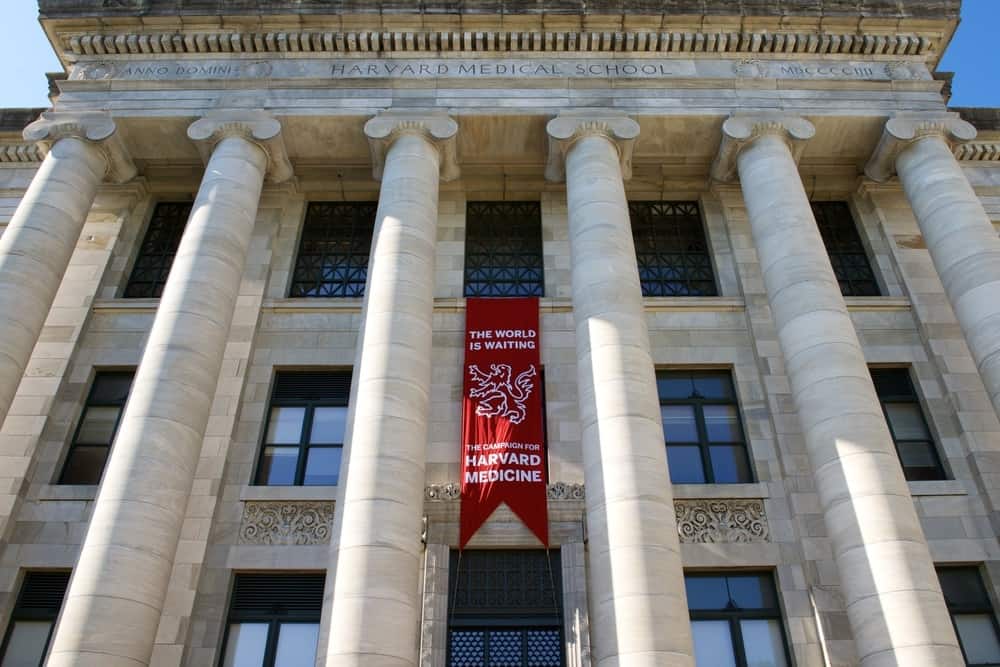
As the open-enrollment continuing education division of the world‘s most prestigious university, the Harvard Extension School expands access to exceptional higher learning beyond exclusionary on-campus programs. By pioneering flexible, affordable models of quality education, it redefines who can belong in an Ivy League academic community.
A Progressive History of Academic Inclusion
The Extension School’s founding in 1910 embodied Harvard University’s early progressivism around educational accessibility. Newly appointed President A. Lawrence Lowell established the school to formalize Harvard’s existing extension courses – popular public lectures opened to local non-students.
Lowell’s vision was an inclusive model whereby anyone interested could benefit from the institution’s exceptional academic resources. This democratic outreach was considered radical amongst Ivys, though it attracted enthusiastic local reception.
Another driver issue was women’s exclusion from Harvard College during that era based on gender, though many were hungry for serious continuing education opportunities. The new school’s coeducational evening courses provided an early portal, helping catalyze shifting social norms pressuring Harvard College to eventually admit female candidates in the late 1940s.
Over decades, the Extension School continued trailblazing flexible learning pathways diverging from higher education’s traditional structure of exclusionary, full-time residential programs. Their enrollments swelled as new groups accessed Harvard-quality liberal arts enrichment – local graduates, commuting schoolteachers, returning servicemen and more.
Distance education was formalized in the 1950s-60s through paper-based correspondence courses meeting escalating demand. Innovations expanded through the 1980s-90s internet revolution with early eLearning pilots. Now further catalyzed by post-pandemic remote technology, the Extension School leads hybrid learning models blending online convenience with campus immersion for diverse lifelong learners.
National Model & Awards
Today, the Extension School stands amongst Harvard’s most demographically diverse schools as an equity model for elite universities and adult education programs nationally.
Its quality distance offerings also counterbalances the flood of unaccredited direct-to-consumer edtech products critiqued for prioritizing profits over positive outcomes. Rigorous oversight and Harvard-accountability helps avoid these pitfalls.
Ongoing pioneering of inclusive education ecosystems earns external recognition. For 2022-2023, the Extension School ranked #16 in US News & World Report’s Best Online Bachelor’s Programs – the lone Ivy League entrant besides Cornell. The school frequently receives Online Learning Consortium awards including 2021’s Best Practices distinction for pandemic response ensuring academic continuity.
Such honors validate the Extension School’s meaningful impact as a national leader modernizing higher education access since its trailblazing origins.
Enrollment Facts Reflecting Diversity
- 13,000+ annual enrollments
- 3,700 degree candidates
- Average age – 36 years old
- 147 countries represented
- All 50 US states represented
- 53% of students identify as racial or ethnic minorities
This distributed body reflects America’s true diversity unlike the homogeneous demographic profiles found at elite residential colleges. Support systems foster inclusive excellence for non-traditional enrollees.
Onsite requirements prioritize face-to-face community building, learning adjustment skills and forming professional networks prizing this diversity. Student clubs, conferences and social events further connectivity. Robust career services support transitions or advancements post-study.
Harvard upholds identical academic expectations and standards for Extension degrees as residential ones. But its open admissions welcomes those barred from entering Harvard College today based on test scores or grades from their youth. Lifelong learning opportunities acknowledge that intellectual potential takes varied paths.
Academic Programming
Undergraduate Degrees
The Extension School’s Bachelor of Liberal Arts (ALB) offers acclaimed interdisciplinary concentrations across diverse majors. Students craft customized curricula integrating required liberal arts breadth with specialized departmental depth.
Degree requirements include stringent writing and language studies, quantitative/computational coursework, historical context and hands-on laboratory science meeting distribution criteria equivalent to residential college expectations.
The 128-credit open curriculum mirrors Harvard College‘s classic model concluded by a capstone thesis project consolidating sharpened skills. Students work closely with Harvard advisors and faculty mentors when developing sophisticated research questions and methodologies applying accumulated knowledge.
Subjects span 75+ areas from traditional humanities and social sciences to pre-professional tracks. Several structured ALB concentrations channel specific career pipelines:
- ALB in Politics, Philosophy, and Economics (PPE)
- ALB in Data Science
- Associate degrees facilitating intermediate progress like A.S. in Computer Science
Graduation rates for extension bachelors hover around 75% for those enrolled full-time, a strong metric amidst the recognized challenges of adult education programs juggling complex life priorities.
Graduate Degrees
At the postgraduate level, the Extension School offers both a Master of Liberal Arts (ALM) in 17 fields and an MEd Concentration tailored for seasoned educators studying pedagogical specialties.
Like sister Harvard graduate schools, ALM candidates complete yearlong thesis projects cementing research excellence under an appointed three-person faculty committee. This academic gold-standard reinforces parity in outcomes versus residential master‘s programs.
Certificates
For targeted vocational development, the Extension School provides Undergraduate and Graduate Certificates developed in consultation with industry leaders on current skills demands. Offerings focus in technology, business, health, public policy and more.
These concentrated credentials act as academic stepping stones toward related degrees. But many students enrich intellectual capital and career prospects without pursuing full bachelor’s or master‘s study.
Certificate applications require less formal admissions requirements like test scores. However, curricular standards remain consistent after matriculating with Harvard-vetted interdisciplinary content and faculty oversight.
Teaching Model
Extension School courses access the same Harvard caliber instruction and research-driven pedagogy which earned the residential college its #2 US News National University ranking for 2023. Core faculty holds appointments across Harvard‘s schools.
Many instructors are award-winning luminaries like Pulitzer nominee Professor Louis Menand (ALM Academic Director) or mathematics legend Professor Shing-Tung Yau. Yau’s graduate course teaching computational techniques draws computer science students from across every Harvard school given his renown.
A wider adjunct lecturer cohort brings applied professional expertise from industries like government, law, technology, business and medicine. These external positions range from CEOs like Patrick J. McGovern (IDG Chairman) to public intellectuals like Henry Louis Gates Jr. Their insiders’ perspective keeps content timely and skills-applicable.
Case-based instruction is heavily utilized connecting conceptual learning to real-world problem-solving. This pedagogy trains critical thinking and hands-on abilities valued by employers. Certificate programs in fields like data analytics, software engineering and finance leverage a high proportion of case studies in developing career-oriented competencies.
Academic Resources
Extension students access the same scholarly infrastructure enabling residential college talent. This includes Harvard’s 109 library branches containing 24 million print and digital items.
Centers like the Data Science Initiative, Cybersecurity Institute, Laboratory for Innovation Science and School of Engineering/Applied Sciences share knowledge cross-school including extension participation. Extracurricular events at renowned Harvard museums, theaters and laboratories further enrich cultural exposure.
Resources make remote learning more robust. All recorded lectures and late-night assignments utilize Harvard‘s state-of-the-art CANVAS LMS system. Zoom/webcast tools enable two-way dialogue during virtual lessons. Support teams troubleshoot technical issues rapidly to prevent disrupted studies, protecting investment for distance learners.
Cost & Affordability
The Extension School utilizes an affordable pay-per-course model averaging $3,144 tuition per 4-credit class. This self-paced approach scales total expenses based on individuals’ timelines for completion rather than residential flat rates. No generalized fees getting bundled indiscriminately drive costs up further.
Despite economy versus Harvard College, accessing elite credentials still requires significant motivation and financing. Sixty percent of enrolled degree candidates utilize Federal Student Aid programs alongside external scholarships and loans. Family savings also contribute for some.
Those supported accumulate manageable student debt given strong career outcomes post-study. Average federal borrowing limits align closer to public universities for extension students given capped annual award allowances.
Repayment plans remain contingent on earning enough income to shoulder minimums, unlike undergraduate aid sometimes converted to burdensome private loans. So motivation, accountability and some sacrifice make Harvard‘s return-on-investment accessible if not easy.
Culture Contrasts
The Extension School learning culture diverges from stereotypical residential Ivys environments with their cloistered campuses, privileged student bodies and party scenes. Most extension students blend richer life experience, professional ambitions and outside responsibilities while commuting to night and weekend courses, not holing up in dorms or libraries obsessing over grades.
Customized curricula get crafted around individual goals across diverse ages and backgrounds far from the homogeny of elite residential admissions funnels. Support systems land more professionally-oriented than narrowly academic given adult priorities balancing mortgage payments, kids and careers amidst complex studies.
In other words, the Extension School nurtures serious scholars, not carefree undergrads at Spring Break. This platform enables transformed livelihoods, not just vibrant social lives.
Careers Outcomes
A 2021 Gallup survey of Harvard Extension School graduates found an incredible 97% considered their credentials “worth the cost” thanks to career and personal growth catalyzed.
Quantifiable metrics back such glowing perceptions. Average salaries jumped 44%, nearly $30,000 higher post-study. Sixty percent of formerly underemployed participants secured full employment with better occupational positioning. Equal percentages report positive job or business advancements thanks to newly secured skills and credentials.
Such dramatic returns validate investments of time and money for those who recognizing education’s power to build better futures without limitations like age or prior academics hampering elite opportunities.
Conclusion: A Model for Higher Ed Reform
The Extension School’s mission remains as pioneering as during its 1910 founding under President Lowell’s vision for inclusive education – deliver the life-changing opportunities of Harvard academics based on desire to learn, not outdated barriers around testing or selectivity demographics.
Its continuum of offerings skillfully blends professional certificates, liberal arts degrees and graduate study for self-directed learners at varied stages rather than one-size models. Carefully scaffolded supports empower newcomers to advanced scholarly research.
Low-cost course credits, need-based aid and career networking smooth transitions for non-traditional students enriching intellectual capital through Harvard’s esteemed resources. Outstanding instruction, facilities and job placement uphold standards while academic oversight prevents unscrupulous edtech gamification quality issues.
If fundamental higher education reform ought to center access and student-focused outcomes aligned with workplace advancement, then the Extension School provides an accountably proven model of excellence for national replication.

