Bull Terrier vs Mini Bull Terrier: A Comprehensive Comparison
Are you torn between the charismatic Bull Terrier and its pint-sized counterpart, the Mini Bull Terrier? While these two breeds share a common ancestry and many endearing qualities, they also have distinct differences that may make one a better fit for your lifestyle than the other. In this article, we‘ll dive deep into the world of Bull Terriers and Mini Bull Terriers, exploring their history, characteristics, and unique traits to help you make an informed decision.
Breed History and Origins
The Bull Terrier‘s journey began in the early 19th century when breeders in England started crossing Bulldogs with various terrier breeds. The goal was to create a dog that combined the strength and tenacity of the Bulldog with the agility and prey drive of terriers. These early Bull Terriers were larger and more aggressive than their modern counterparts, often used in dogfighting and bear-baiting.
As dogfighting became illegal and the breed‘s popularity grew, breeders focused on refining the Bull Terrier‘s temperament and appearance. James Hinks, a well-known breeder, played a crucial role in standardizing the breed and introducing the iconic egg-shaped head that we associate with Bull Terriers today. In 1885, the Bull Terrier Club was formed in England, and the breed standard was officially recognized by the Kennel Club in 1933.
The Mini Bull Terrier, on the other hand, was developed in the 1930s by crossing Bull Terriers with smaller breeds like the Toy Manchester Terrier and the English White Terrier. The aim was to create a more compact version of the Bull Terrier that would retain the breed‘s signature traits while being more suitable for smaller homes and urban living. The Miniature Bull Terrier Club was established in England in 1939, and the breed was officially recognized by the Kennel Club in 1992.
Interesting fact: Did you know that the Bull Terrier was originally called the "White Cavalier" due to its all-white coat? It wasn‘t until the 1900s that colored Bull Terriers became more popular and were accepted in the show ring.
Physical Characteristics and Size Differences
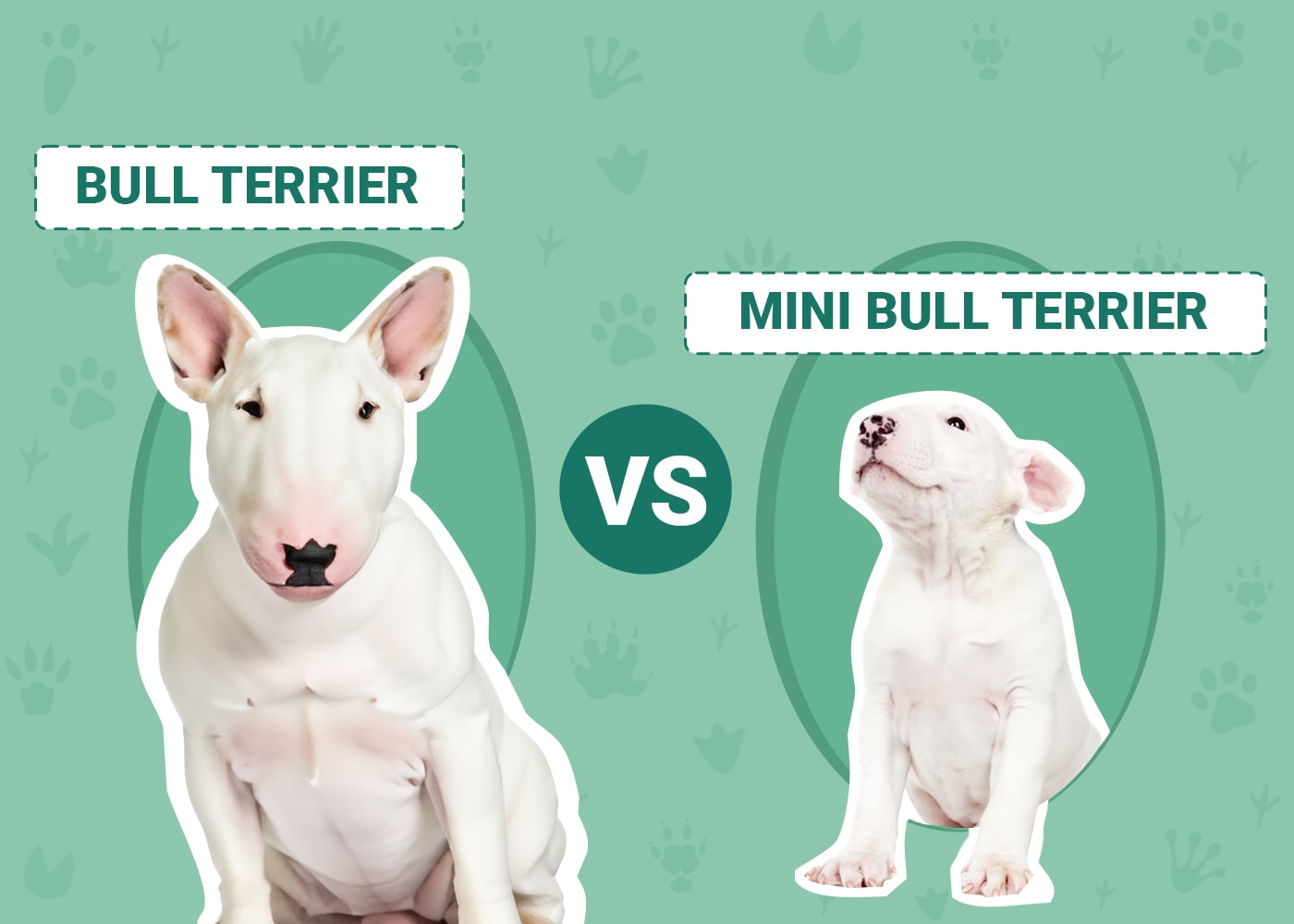
One of the most striking differences between the Bull Terrier and the Mini Bull Terrier is their size. The standard Bull Terrier stands 21 to 22 inches tall at the shoulder and weighs between 50 and 70 pounds. In contrast, the Mini Bull Terrier measures just 10 to 14 inches tall and weighs between 18 and 28 pounds, making it a more compact and portable companion.
Despite their size difference, both breeds share the same distinctive egg-shaped head, which is longer than it is wide and free from wrinkles. They have small, triangular eyes that are deeply set, and their ears are erect and pointed. Bull Terriers and Mini Bull Terriers have strong, muscular bodies with deep chests and short, tapering tails.
Both breeds come in a variety of coat colors, including white, brindle, red, fawn, and tri-color. White is the most common color, and many Bull Terriers and Mini Bull Terriers have striking black or brindle markings on their heads and bodies.
| Characteristic | Bull Terrier | Mini Bull Terrier |
|---|---|---|
| Height | 21-22 inches | 10-14 inches |
| Weight | 50-70 pounds | 18-28 pounds |
| Head Shape | Egg-shaped | Egg-shaped |
| Eye Shape | Triangular | Triangular |
| Ear Shape | Erect | Erect |
| Coat Colors | White, brindle, red, fawn, tri-color | White, brindle, red, fawn, tri-color |
Temperament and Personality Traits
Bull Terriers and Mini Bull Terriers are known for their lively, mischievous, and sometimes stubborn personalities. They are loyal and affectionate towards their families but can be reserved or even aggressive towards strangers if not properly socialized. Early and consistent socialization is crucial for both breeds to ensure they develop into well-rounded, friendly dogs.
While both breeds are energetic and playful, the Mini Bull Terrier tends to be more adaptable to apartment living and can thrive with shorter bouts of intense activity. The standard Bull Terrier, on the other hand, requires more space to run and play and may not be as well-suited to small homes or urban environments.
Both breeds can be good with children if raised with them from a young age, but their exuberant nature and strong jaws may make them better suited to homes with older children who can handle their rough-and-tumble play style. They can also get along with other dogs if socialized early, but their prey drive may make them unsuitable for homes with smaller pets like cats or rabbits.
Real-life example: Milo, a Bull Terrier from California, became an internet sensation for his unique skateboarding skills. His owner, Eric, taught him to ride a skateboard as a way to channel his high energy and provide mental stimulation. Milo‘s story showcases the breed‘s intelligence, trainability, and love for adventure.
Training and Exercise Requirements
Bull Terriers and Mini Bull Terriers are intelligent breeds, but their independent streak and stubborn nature can make training a challenge. Consistency, patience, and positive reinforcement are key when working with these strong-willed dogs. Short, frequent training sessions that keep them engaged and motivated are more effective than long, repetitive drills.
According to professional dog trainer Victoria Stilwell, "Bull Terriers respond best to positive, reward-based training methods. They need consistent leadership and clear boundaries, but harsh corrections or punishment can damage their trust and lead to aggression."
Both breeds require daily exercise to stay physically and mentally stimulated. The standard Bull Terrier needs at least an hour of vigorous activity each day, such as brisk walks, runs, or playtime in a securely fenced yard. The Mini Bull Terrier can get by with shorter walks and play sessions, but still needs regular opportunities to burn off energy.
Without enough physical and mental stimulation, both breeds may develop destructive behaviors like chewing, digging, or excessive barking. Providing them with plenty of tough, durable toys and engaging them in interactive play can help keep boredom at bay and channel their energy in positive ways.
Training tip: Bull Terriers and Mini Bull Terriers excel in dog sports like agility, obedience, and rally. Participating in these activities can provide a great outlet for their energy and strengthen the bond between dog and owner.
Health Concerns and Lifespan
Like many purebred dogs, Bull Terriers and Mini Bull Terriers are prone to certain health issues. Some of the most common health concerns for both breeds include:
-
Heart disease: Bull Terriers are prone to a condition called pulmonic stenosis, which is a narrowing of the valve that separates the right ventricle of the heart from the pulmonary artery. Mini Bull Terriers may be at risk for mitral valve disease, which affects the valve between the left atrium and left ventricle. Regular heart screenings and echocardiograms can help detect these conditions early.
-
Skin allergies: Both breeds can be prone to skin allergies, which may cause itching, redness, and hair loss. Regular grooming and a high-quality diet can help keep their skin and coat healthy. In some cases, allergy tests and medication may be necessary to manage symptoms.
-
Deafness: White Bull Terriers and Mini Bull Terriers are at a higher risk of congenital deafness due to the piebald gene that causes their white coat color. Responsible breeders should have their breeding stock tested for hearing loss using the BAER (Brainstem Auditory Evoked Response) test before breeding.
-
Knee problems: Mini Bull Terriers may be prone to patellar luxation, a condition in which the kneecap slips out of place, causing pain and lameness. Surgery may be necessary in severe cases, but maintaining a healthy weight and providing joint supplements can help prevent or manage the condition.
The average lifespan for a Bull Terrier is 12 to 13 years, while Mini Bull Terriers tend to live slightly shorter lives, averaging 11 to 13 years. Regular veterinary check-ups, a balanced diet, and an active lifestyle can help both breeds maintain good health and potentially extend their lifespans.
According to a study by the Kennel Club in the UK, the leading causes of death in Bull Terriers were old age (23.1%), cardiac conditions (16.7%), and cancer (11.5%). In Mini Bull Terriers, the leading causes were old age (28.6%), cardiac conditions (14.3%), and urologic conditions (10.7%).
Grooming and Maintenance
One of the advantages of owning a Bull Terrier or Mini Bull Terrier is their relatively low-maintenance grooming needs. Both breeds have short, smooth coats that require minimal brushing to keep them looking shiny and healthy. Weekly brushing with a soft-bristled brush or rubber grooming mitt can help remove loose hair and distribute natural oils throughout their coat.
Despite their short coats, both breeds shed moderately throughout the year, with heavier shedding during seasonal changes. Regular brushing can help minimize shedding and keep loose hair under control.
Both breeds should have their ears checked and cleaned regularly to prevent wax buildup and infections, especially if they have erect ears that don‘t allow for natural airflow. Their nails should be trimmed every few weeks to prevent overgrowth and discomfort, and their teeth should be brushed daily or at least a few times a week to maintain good oral health.
Grooming tip: Using a damp cloth or baby wipe to clean your Bull Terrier or Mini Bull Terrier‘s face and wrinkles can help prevent skin irritation and bacterial growth.
Popularity and Availability
The Bull Terrier and the Mini Bull Terrier are both recognized by major kennel clubs, including the American Kennel Club (AKC) and the United Kennel Club (UKC). The Bull Terrier is currently ranked 61st out of 195 breeds in popularity by the AKC, while the Mini Bull Terrier is ranked 131st.
When looking for a Bull Terrier or Mini Bull Terrier puppy, it‘s essential to choose a reputable breeder who follows ethical breeding practices and prioritizes the health and temperament of their dogs. Responsible breeders should be able to provide health certificates for the parents and puppies, as well as answer any questions you may have about the breed and their breeding program.
Adopting a Bull Terrier or Mini Bull Terrier from a rescue organization is another option for those looking to give a loving home to a dog in need. Many breed-specific rescue groups specialize in placing Bull Terriers and Mini Bull Terriers with compatible families, and they can provide valuable insight into the dog‘s personality, health, and training needs.
Famous Bull Terriers and Mini Bull Terriers:
- Patsy Ann, a Bull Terrier from Alaska, was known as the "official greeter of Juneau" in the 1930s. She would meet every ship that docked in the city and was loved by locals and tourists alike.
- Bud, a Bull Terrier, was one of the first dogs to travel across the United States by car in 1903. He accompanied his owner, Horatio Nelson Jackson, on a 63-day journey from San Francisco to New York City.
- Rufus, a colored Bull Terrier, made history in 2006 by becoming the first colored Bull Terrier to win Best in Show at the Westminster Kennel Club Dog Show.
Bull Terriers and Mini Bull Terriers as Service Dogs and Emotional Support Animals
While Bull Terriers and Mini Bull Terriers are not the most common breeds used for service work, their intelligence, loyalty, and trainability make them potentially well-suited for certain roles. Some Bull Terriers and Mini Bull Terriers have been trained as emotional support animals, providing comfort and companionship to individuals with mental health conditions such as anxiety or depression.
In a study published in the Journal of Veterinary Behavior, researchers found that Bull Terriers scored highly on measures of affection, trainability, and attention-seeking behavior, making them potentially good candidates for therapy work. However, their strong prey drive and tendency towards aggression if not properly socialized may limit their suitability for certain service roles.
If you are considering a Bull Terrier or Mini Bull Terrier as a service dog or emotional support animal, it‘s essential to work with a reputable trainer who has experience with the breed and can assess the individual dog‘s temperament and suitability for the job.
Costs of Owning a Bull Terrier or Mini Bull Terrier
Owning a Bull Terrier or Mini Bull Terrier can be a significant financial commitment. In addition to the initial purchase price, which can range from $1,000 to $3,500 depending on the breeder and the dog‘s pedigree, there are ongoing costs to consider.
According to a survey by the American Pet Products Association, the average annual cost of owning a dog in the United States is $1,480. This includes expenses such as food, veterinary care, grooming, toys, and other supplies.
For Bull Terriers and Mini Bull Terriers specifically, potential costs may include:
- High-quality dog food: $30-$60 per month
- Annual veterinary check-ups and vaccinations: $200-$800
- Flea, tick, and heartworm prevention: $150-$300 per year
- Grooming supplies and occasional professional grooming: $50-$200 per year
- Training classes or private lessons: $100-$1,000 or more
- Emergency veterinary care: $500-$5,000 or more
It‘s important to budget for these expenses and have a plan in place for unexpected veterinary emergencies. Pet insurance can help mitigate some of the costs of medical care, but it‘s essential to research policies carefully and understand what is and isn‘t covered.
Conclusion
Bull Terriers and Mini Bull Terriers are both charming, loyal, and energetic breeds that can make wonderful companions for the right owners. While they share many similarities, their size difference and slightly varying exercise needs may make one breed a better fit for your lifestyle than the other.
Regardless of which breed you choose, it‘s crucial to provide them with early socialization, consistent training, and plenty of love and attention to help them thrive. With their endearing personalities and unique looks, a Bull Terrier or Mini Bull Terrier can bring joy and laughter to your life for many years to come.
When deciding between a Bull Terrier and a Mini Bull Terrier, consider your living situation, activity level, and experience with dogs. If you have a larger home and plenty of time for exercise and training, a Bull Terrier may be a good fit. If you live in an apartment or have a more relaxed lifestyle, a Mini Bull Terrier may be a better choice.
Regardless of which breed you choose, be prepared to provide them with the care, attention, and resources they need to thrive. By doing your research and working with reputable breeders or rescue organizations, you can find the perfect Bull Terrier or Mini Bull Terrier to join your family.