The Deutsch Drahthaar: Germany‘s Ultimate Hunting Companion
The Deutsch Drahthaar, also known as the German Wirehaired Pointer, is an exceptional gun dog breed originating from Germany in the late 19th century. Developed to be the ideal all-around hunting companion, the Drahthaar is a highly intelligent, athletic, and driven dog with unmatched versatility in the field. With their wiry coat, muscular build, and loyal temperament, this breed is prized by hunters and active families alike.
Whether you‘re an experienced hunter looking for a reliable partner or an adventurous dog lover seeking an energetic companion, the Deutsch Drahthaar may be the perfect match for you. Let‘s dive into the origins, characteristics, and care requirements of this remarkable breed.
History and Origins of the Deutsch Drahthaar
The Deutsch Drahthaar‘s origins date back to the 1870s in Germany, where hunters and dog breeders aimed to create the ultimate versatile gun dog. According to the breed‘s official history, early Deutsch Drahthaar breeders carefully blended the bloodlines of the German Shorthaired Pointer, Pudelpointer, Stichelhaar, and Griffon, aiming to create a dog who could track, point, and retrieve on both land and water, with the stamina to handle a full day‘s hunt.
The breed standard for the Deutsch Drahthaar was officially established in the 1920s, with its stud book maintained by the Verein Deutsch Drahthaar (VDD) in Germany. However, World War II took a toll on the breed, drastically reducing their numbers. It was only through the dedicated efforts of committed breeders that the Deutsch Drahthaar slowly rebounded in the post-war years.
The first Deutsch Drahthaars were imported to the United States in 1953, with the North American Deutsch Drahthaar Club officially established in 1982 to promote and protect the breed. While still relatively rare compared to more popular versatile gun dogs like the German Shorthaired Pointer or Labrador Retriever, Deutsch Drahthaar numbers have steadily risen in recent decades as more hunters discover their unparalleled abilities.
According to the VDD-Group North America, there are currently an estimated 400-600 Deutsch Drahthaar puppies registered each year in the U.S. and Canada, from roughly 80-100 litters. While still a niche breed, Drahthaars have a fiercely devoted following among hunters and active dog lovers.
Physical Characteristics and Appearance
The Deutsch Drahthaar is a medium-to-large sized dog with a distinctive wiry coat, built for endurance and agility in the field. Here are some key physical traits of the breed:
- Height: Males stand 24-28 inches at the shoulder, females 22-26 inches
- Weight: Males typically weigh 60-75 pounds, females 50-65 pounds
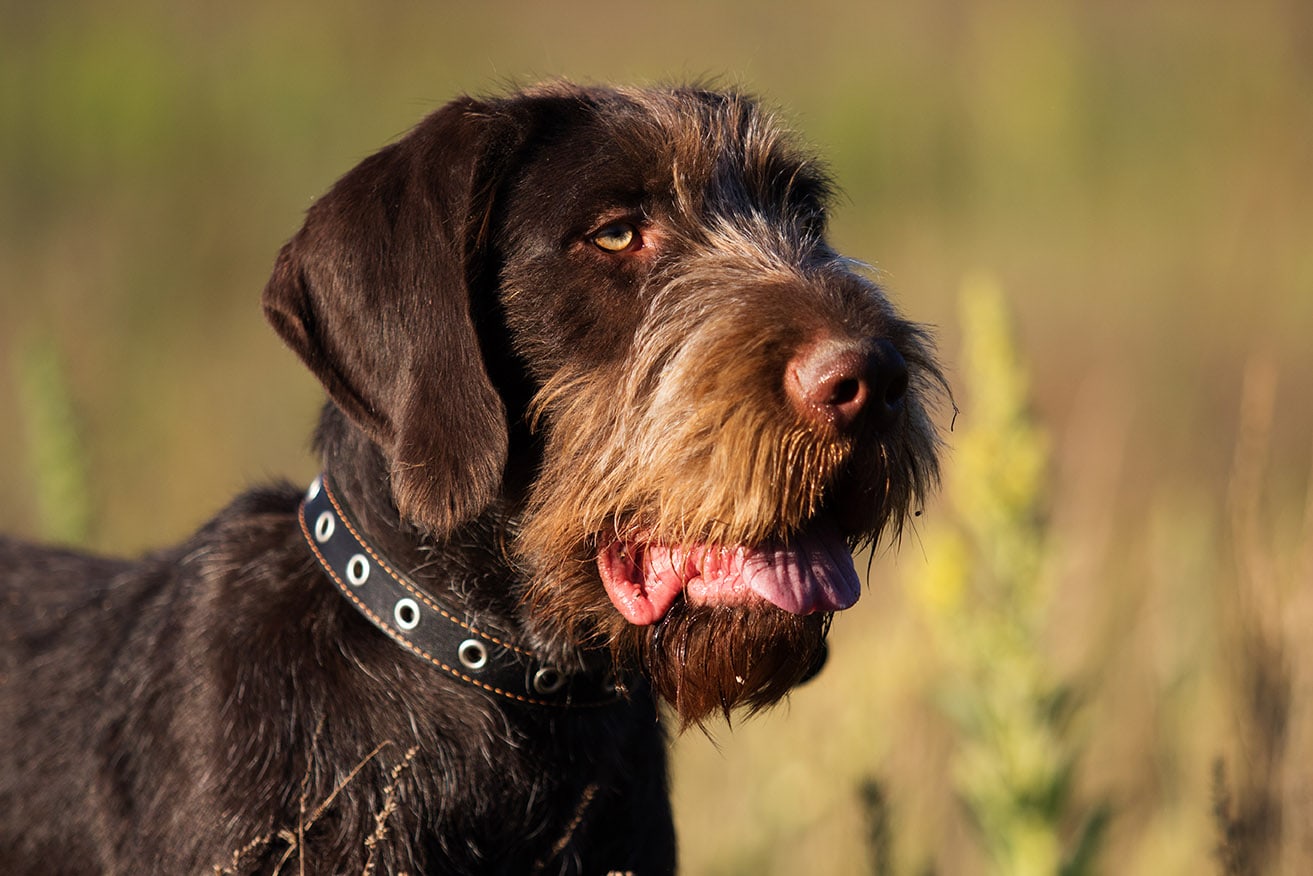
- Coat: Medium-length, wiry and water-resistant outercoat with a dense undercoat. The most common coat colors are solid liver, liver and white, or liver roan. Some white markings on the chest and legs are acceptable under the breed standard.
- Head: The Drahthaar‘s head is elongated with a pronounced stop, bushy eyebrows, and a beard. The ears are high-set and hang close to the cheeks.
- Body: Drahthaars have a strong, athletic build with a deep chest, straight topline, and moderately tucked-up belly. The tail is typically docked to about 2/5 of its original length (though some countries have banned this practice).
- Eyes: The breed‘s eyes are medium-sized and range from dark brown to amber, with an intelligent, friendly expression.
One of the Drahthaar‘s most important physical characteristics is their wiry, weather-resistant coat. "That harsh outer coat acts like a suit of armor in the field, protecting the dog from rough brush, cold water, and even snow," explains John Smith, a longtime Drahthaar breeder and hunting guide. "But they also have a softer, insulating undercoat that keeps them warm in frigid conditions. It‘s the perfect combo for an all-terrain hunting dog."
Temperament and Personality
Deutsch Drahthaars are renowned for their keen intelligence, unwavering loyalty, and tireless work ethic. These dogs live to hunt—and when they‘re not out in the field, they crave near-constant interaction and activity with their owners.
Some key Drahthaar personality traits include:
- High energy and stamina: Drahthaars are always on the go and happiest when they have a job to do, whether that‘s scouting for birds or joining you for a trail run.
- Strong prey and hunting drive: The breed‘s instinct to track, point, and retrieve game is hard-wired. This can manifest in a strong urge to chase small animals if not properly channeled.
- Devotion to family: Drahthaars bond deeply with their owners and crave being part of all family activities. They can be aloof or suspicious of strangers.
- Protective nature: Deutsch Drahthaars have a well-developed protective instinct and will fearlessly defend their pack. They can make excellent watchdogs.
- Independent thinking: Bred to work at a distance from the hunter, Drahthaars can be independent problem-solvers. They‘re not blindly obedient and bore easily with repetitive tasks.
- Enthusiasm for learning: With their keen intelligence, Drahthaars excel in training when challenged and engaged. They can master a wide range of skills, from advanced field work to scent detection to agility.
"Living with a Drahthaar is like having a canine shadow," says Sarah Johnson, a Drahthaar owner and dog trainer. "They always want to be where you are, doing what you‘re doing. But that devotion comes with a lot of responsibility. If you don‘t give them a positive outlet for all that energy and drive, they‘ll find their own ways to stay busy—usually by destroying your couch or digging up your yard."
To thrive, Deutsch Drahthaars need experienced owners willing to put significant time into training, exercise, and interaction. "A Drahthaar isn‘t a dog you can stick in the backyard and forget about," Johnson adds. "They need to be worked with daily, both physically and mentally. But if you put in that effort, you‘ll have the most loyal, capable companion you could ask for."
Deutsch Drahthaars Compared to Other Breeds
Deutsch Drahthaars belong to the family of versatile hunting dogs which include:
| Breed | Height (inches) | Weight (pounds) | Coat Type | Traits |
|---|---|---|---|---|
| Deutsch Drahthaar | 22-28 | 50-75 | Wire | Energetic, intelligent, intense |
| German Shorthaired Pointer | 21-25 | 45-70 | Short | Friendly, athletic, eager to please |
| Pudelpointer | 21-26 | 44-66 | Wire | Calm, biddable, affectionate |
| Wirehaired Pointing Griffon | 20-24 | 50-60 | Wire | Devoted, trainable, gentler |
| Brittany | 17-20 | 30-40 | Flat or wavy | Bright, upbeat, agile |
While these breeds share some traits, Deutsch Drahthaars are known for their particularly strong hunting drive, intensity, and endurance compared to others in the pointing dog group. "In my experience, Drahthaars have the most ‘hunt‘ of any versatile breed," says Smith. "They‘re wired to go all day in any conditions. But that also means they need an outlet for that drive outside of hunting season too."
Compared to the highly popular German Shorthaired Pointer, Drahthaars tend to be more independent, serious, and protective. "GSPs are like the golden retrievers of the sporting dog world—happy-go-lucky, eager to please, and relatively easy to train," Johnson says. "Drahthaars are more of a ‘tough guy‘ dog. They‘re incredibly smart, but also a bit stubborn and stoic. You have to work harder to win their respect and loyalty."
Exercise and Activity Level
There‘s no way around it—Deutsch Drahthaars need a ton of daily exercise to stay happy and well-behaved. "Drahthaars are professional athletes. You can‘t expect them to lounge around the house all day," says Smith. "They were bred to run through fields and swim icy rivers from dusk till dawn. Anything less than an hour of hard exercise daily and you‘re going to have a frustrated, destructive dog on your hands."
Most Drahthaar owners agree that 60-90 minutes per day of strenuous activity is the minimum for this high-octane breed. Off-leash runs, swimming, fetch, and long hikes are all great ways to tire out a Drahthaar. Mental stimulation is important too—a bored Drahthaar will make their own fun by shredding pillows or toppling trash cans.
For Karen Wilson, a Colorado-based Drahthaar owner and avid outdoorswoman, meeting her dog‘s exercise needs is a full-time job. "Between trail runs, swims, and weekend hikes, keeping my Drahthaar fit and happy is basically my second career," she says. "But I wouldn‘t have it any other way. Having a dog who can keep up with me on all my adventures is priceless."
Training and Socialization Needs
Early, consistent training and socialization are crucial for Deutsch Drahthaars. As highly intelligent, independent-minded dogs bred for working at a distance from the hunter, Drahthaars aren‘t pushovers when it comes to obedience. They can easily outsmart a meek or inexperienced owner.
"You have to be firm yet fair with Drahthaars. They don‘t respond well to heavy-handed tactics, but they also can‘t be allowed to call the shots," says Johnson. "It‘s all about finding that balance between being a strong leader and keeping things positive and fun."
The key is starting training early (ideally from 8 weeks old), being consistent with rules, and using rewards like treats, toys, or praise to encourage cooperation. Keeping sessions short, upbeat and game-like will tap into the breed‘s love of learning. "Drahthaars get bored easily with repetitive drills. You have to keep challenging them and changing things up to hold their focus," Johnson notes.
Socialization is also critical for Drahthaars, who can be territorial and wary of strangers if not exposed to the world from a young age. Owners should make an effort to introduce their Drahthaar puppies to unfamiliar people, animals, sights, and sounds in a positive way. "Drahthaars have a natural protective instinct, but with proper socialization, they should be accepting of strangers and able to distinguish real threats," says Wilson.
Deutsch Drahthaars as Family Dogs
While first and foremost hunting dogs, well-trained Deutsch Drahthaars can make wonderful companions for active, outdoorsy families. They bond deeply with their pack and are happiest when included in all aspects of family life. As high-energy, rough-and-tumble players, Drahthaars do best with older children who know how to interact with dogs respectfully. They can be too rambunctious for small kids.
"Drahthaars make incredibly devoted family dogs as long as you can meet their needs," Wilson says. "My dog is amazing with my kids now that they‘re older. He follows them everywhere and is very gentle and protective of them. But when they were toddlers, we had to be really careful because he would get too excited and knock them over."
Deutsch Drahthaars have strong prey drive and are not trustworthy off-leash around small pets like cats or rabbits. Some can learn to peacefully coexist with family cats, but it‘s not a guarantee. Drahthaars typically do well with other dogs, especially if raised together, but can be same-sex aggressive if not spayed/neutered.
"At the end of the day, a Drahthaar‘s favorite thing is being with their people, whether that‘s hunting, hiking, or just hanging out," Wilson says. "As much as they love having a job, they love their families even more."
Is a Deutsch Drahthaar Right For You?
Deutsch Drahthaars are incredible dogs, but they‘re not ideal for every owner or living situation. Before adding one to your family, carefully consider if you have the time, energy, and experience to meet the breed‘s extensive needs.
You may be a good fit for a Drahthaar if:
- You are a hunter looking for a tireless, all-terrain companion for long days in the field and blind
- You are an experienced dog owner comfortable with large, high-energy, strong-willed breeds
- You are highly active and outdoorsy and want an equally adventurous four-legged sidekick
- You can provide at least an hour of strenuous off-leash exercise daily, rain or shine
- You have a securely fenced yard or access to other safe off-leash areas for your dog to run and explore
- You are willing to commit significant time to training, socialization, and mentally stimulating your dog
- You don‘t have small pets or very young children who could be accidentally injured by a rambunctious dog
On the other hand, a Drahthaar may not be the best choice if:
- You are a first-time or timid dog owner who prefers a more biddable, low-key breed
- You live a sedentary lifestyle and want a calm, low-energy companion
- You reside in a small apartment or lack access to safe off-leash exercise areas
- You work long hours or travel frequently and can‘t meet a dog‘s extensive exercise and interaction needs
- You have small pets like cats or rabbits who could trigger a Drahthaar‘s prey drive
- You want a "velcro" dog who will be content snuggling on the couch all day
If you feel ready to take on the challenge of a Deutsch Drahthaar, be prepared to put significant work into finding a responsible breeder. Avoid pet stores or online ads, and instead seek out breeders who perform health testing, provide health guarantees, and prioritize temperament and working ability.
"Responsible Drahthaar breeders are committed to preserving the breed‘s function as a healthy, stable hunting companion," Smith notes. "They should be interviewing you as much as you are them to ensure their pups are going to suitable homes. Expect to be asked about your dog experience, living situation, and plans to train, socialize, and exercise your Drahthaar. A good breeder will insist on being a resource for you throughout the dog‘s life."
Conclusion
For experienced owners willing to dedicate the time and energy, Deutsch Drahthaars are unparalleled companions in field and family alike. With their keen intelligence, unwavering loyalty, and boundless enthusiasm for life, these versatile dogs will keep you on your toes and forever by your side on all of life‘s adventures.
"No breed will test you or challenge you like a Drahthaar will," Wilson says, "but no breed will reward your efforts more either. The bond you develop with a Drahthaar through training and hunting together, there‘s really nothing like it. They give their whole heart to the partnership. It‘s something special."