The Bloodhound Rottweiler Mix: A Comprehensive Guide for Dog Lovers
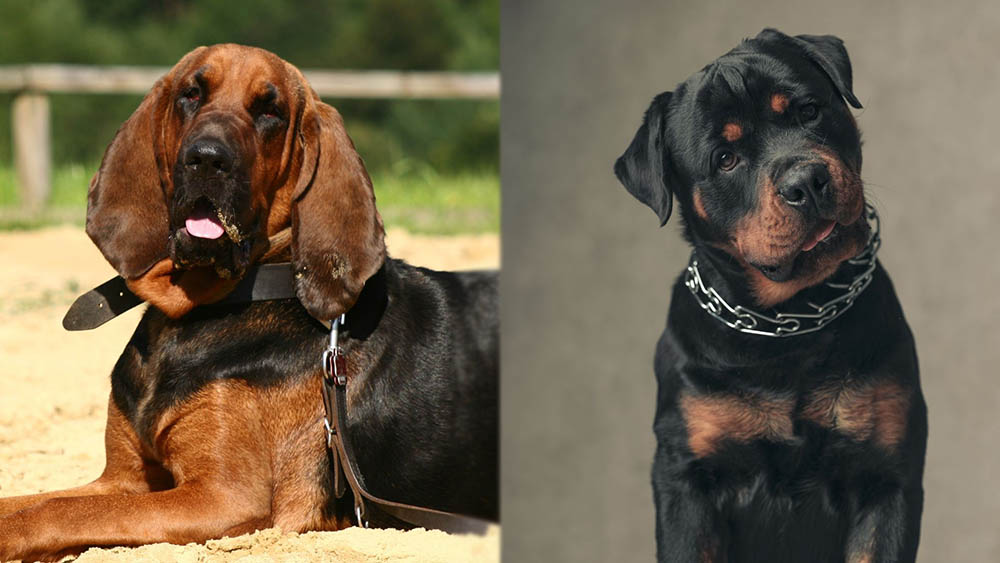
Are you fascinated by the idea of a dog that combines the incredible scenting abilities of a Bloodhound with the strength, loyalty, and protective instincts of a Rottweiler? If so, the Bloodhound Rottweiler Mix, also known as the "Bloodweiler," might just be the perfect breed for you. In this comprehensive guide, we‘ll dive deep into the history, characteristics, care requirements, and fascinating facts about this unique hybrid breed, providing you with all the information you need to determine if a Bloodweiler is the right fit for your family.
The Best of Both Worlds: Tracing the Bloodweiler‘s Roots
To truly appreciate the Bloodhound Rottweiler Mix, it‘s essential to understand the history and qualities of both parent breeds. Bloodhounds are an ancient breed, with a lineage that can be traced back to medieval Europe. These dogs were prized for their unparalleled scenting abilities, which made them invaluable for tracking game and people. In fact, Bloodhounds have been used for centuries in law enforcement and search and rescue operations, thanks to their keen noses and tenacious tracking instincts.
Rottweilers, meanwhile, have a rich history as versatile working dogs. Originally bred in Germany for herding and guarding livestock, these powerful, intelligent dogs later found their niche in various roles, including police work, military service, and personal protection. Rottweilers are known for their unwavering loyalty, courage, and natural protective instincts, making them excellent guardians and family companions.
When you combine these two remarkable breeds, you get the Bloodhound Rottweiler Mix – a dog that inherits the best qualities of both parent breeds. Bloodweilers are powerful, intelligent, and deeply devoted to their families, with an exceptional sense of smell and a strong work ethic. They are truly a unique and fascinating breed that has captured the hearts of dog lovers around the world.
Understanding the Bloodweiler‘s Temperament and Personality
One of the most important considerations when choosing a dog breed is temperament, and the Bloodhound Rottweiler Mix has a lot to offer in this regard. Bloodweilers are known for their even-tempered, affectionate nature, and their strong desire to please their owners. They are intelligent dogs that thrive on human companionship and form deep, lasting bonds with their families.
However, it‘s important to note that Bloodweilers can also be quite independent and stubborn at times, thanks to their Bloodhound heritage. They may have a tendency to follow their noses and become single-mindedly focused on a scent, which can lead to a strong prey drive and a tendency to wander if not properly trained and supervised. As such, early socialization and consistent, positive training are crucial for ensuring that your Bloodweiler grows up to be a well-adjusted, obedient companion.
When it comes to interacting with children and other pets, Bloodweilers can be gentle and patient playmates, but their large size and exuberant nature mean that playtime should always be supervised. They are generally good with other dogs and animals, especially if they are raised with them from puppyhood, but their strong prey drive may lead them to chase smaller pets if not properly socialized.
Caring for Your Bloodhound Rottweiler Mix: A Comprehensive Guide
As with any dog breed, caring for a Bloodhound Rottweiler Mix requires a significant commitment of time, energy, and resources. These are large, active dogs that need plenty of exercise, mental stimulation, and attention to thrive. Here‘s what you need to know about meeting your Bloodweiler‘s needs:
Diet and Nutrition
Bloodweilers are big, muscular dogs with high energy levels, which means they require a diet that is rich in protein and other essential nutrients. Look for a high-quality, age-appropriate dog food that is formulated for large breeds, and be sure to follow the feeding guidelines on the package to ensure that your dog maintains a healthy weight.
It‘s also important to avoid overfeeding your Bloodweiler, as obesity can lead to a host of health problems, including joint issues, diabetes, and heart disease. Consult with your veterinarian to determine the right amount of food for your individual dog, based on their age, size, and activity level.
Exercise and Mental Stimulation
As a high-energy breed, Bloodweilers require plenty of daily exercise to stay physically and mentally healthy. A minimum of 60 to 90 minutes of vigorous exercise per day is recommended, which can include walks, runs, hikes, and playtime in a securely fenced yard.
In addition to physical exercise, Bloodweilers also need plenty of mental stimulation to keep their intelligent minds engaged. Puzzle toys, interactive games, and scent work activities can all be great ways to challenge your dog‘s brain and prevent boredom-related behavior problems.
Training and Socialization
Early socialization and consistent, positive training are essential for ensuring that your Bloodweiler grows up to be a well-behaved, well-adjusted companion. Start socializing your puppy from a young age, exposing them to a wide variety of people, animals, and environments in a safe and controlled way.
When it comes to training, focus on positive reinforcement techniques, such as praise, treats, and play, to encourage good behavior and build a strong bond with your dog. Avoid harsh or punitive methods, as these can damage your dog‘s trust and confidence.
Some key training areas to focus on with your Bloodweiler include:
- Basic obedience commands, such as sit, stay, come, and heel
- Leash manners and loose-leash walking
- Impulse control and self-control exercises
- Recall and emergency stop commands
- Socialization with people and other animals
Grooming and Hygiene
Bloodweilers have a short, dense coat that is relatively easy to maintain, but they do shed moderately throughout the year. Regular brushing with a slicker brush or hound glove can help to remove loose hair and keep your dog‘s coat looking shiny and healthy.
Other grooming needs include regular nail trims, ear cleaning, and dental care. Be sure to check your dog‘s ears regularly for signs of infection, such as redness, odor, or discharge, and clean them with a gentle, dog-safe ear cleaner as needed.
Like many large breeds, Bloodweilers are also prone to drooling, so it‘s a good idea to keep a clean towel or cloth on hand to wipe their face and mouth as needed.
Health Concerns and Preventive Care
As a hybrid breed, Bloodweilers can be prone to some of the same health issues that affect their parent breeds. Some common health concerns to be aware of include:
- Hip and elbow dysplasia
- Bloat (gastric dilatation-volvulus)
- Eye problems, such as cherry eye or entropion
- Ear infections
- Skin allergies
- Heart disease
To help prevent these and other health problems, it‘s important to work closely with your veterinarian to develop a comprehensive preventive care plan for your Bloodweiler. This should include regular check-ups, vaccinations, parasite control, and screenings for common health issues.
You can also help to support your dog‘s health by feeding them a high-quality diet, keeping them at a healthy weight, and providing plenty of exercise and mental stimulation. By staying proactive about your Bloodweiler‘s health and well-being, you can help them to live a long, happy, and healthy life by your side.
Fascinating Facts and Trivia About Bloodhound Rottweiler Mixes
- Bloodweilers have an incredible sense of smell, with some experts estimating that their noses are up to 100,000 times more sensitive than a human‘s. This makes them excellent candidates for scent work and tracking jobs, such as search and rescue or detecting drugs and explosives.
- The wrinkles and folds on a Bloodweiler‘s face serve a specific purpose – they help to trap and hold scent particles, allowing the dog to follow a trail even in challenging conditions.
- Bloodweilers are a relatively rare breed, with only a handful of dedicated breeders around the world. This can make them difficult to find and may contribute to their high price tag.
- Some famous Bloodhounds in history include Nick Carter, a Bloodhound who helped to track down over 650 criminals in the early 20th century, and Trumpet, a Bloodhound who won Best in Show at the 2022 Westminster Kennel Club Dog Show.
- Rottweilers have a long and storied history as working dogs, with evidence of their use dating back to ancient Rome. They were originally bred to herd and guard livestock, but later found work as police and military dogs, as well as personal protection animals.
- Despite their intimidating appearance, Rottweilers are actually quite sensitive and emotionally attuned to their owners. They are known for their "Velcro dog" tendencies, often following their favorite people from room to room and seeking out physical affection and attention.
| Sex | Height | Weight |
|---|---|---|
| Male | 26-28 inches | 90-130 pounds |
| Female | 24-26 inches | 80-120 pounds |
Is a Bloodhound Rottweiler Mix the Right Dog for You?
If you‘re considering adding a Bloodhound Rottweiler Mix to your family, it‘s important to carefully consider your lifestyle, living situation, and experience level with dogs. These are large, powerful dogs that require plenty of space, exercise, and attention, and may not be the best fit for first-time dog owners or those with very busy schedules.
However, if you have the time, energy, and resources to dedicate to your dog‘s care and training, a Bloodweiler can make a wonderful companion. These dogs are intelligent, loyal, and deeply devoted to their families, and will reward your efforts with a lifetime of love and companionship.
Some key factors to consider when deciding if a Bloodweiler is the right fit for your family include:
- Do you have experience with large, high-energy breeds?
- Can you provide plenty of daily exercise and mental stimulation?
- Do you have a securely fenced yard or access to safe, off-leash areas for playtime?
- Are you committed to ongoing training and socialization throughout your dog‘s life?
- Can you afford the costs of food, veterinary care, and other expenses associated with owning a large dog?
If you can answer "yes" to these questions and feel confident in your ability to provide a loving, stable home for a Bloodweiler, then this unique and fascinating breed may be the perfect match for you.
Conclusion
The Bloodhound Rottweiler Mix is a truly one-of-a-kind breed that combines the best qualities of two remarkable parent breeds. With their keen sense of smell, powerful build, and loyal, protective nature, these dogs are sure to impress and delight anyone who has the privilege of knowing them.
As with any dog breed, owning a Bloodweiler is a significant responsibility that requires careful consideration and preparation. By educating yourself about the breed‘s needs and characteristics, and working closely with a reputable breeder or rescue organization, you can set yourself and your dog up for a lifetime of happiness and success.
We hope that this comprehensive guide has given you a deeper understanding and appreciation of the Bloodhound Rottweiler Mix, and has helped you to determine if this amazing breed might be the right fit for your family. Remember, owning a dog is a long-term commitment, but the rewards of sharing your life with a loyal, loving companion like a Bloodweiler are truly priceless.
Sources
- American Kennel Club. (2021). Bloodhound. Retrieved from https://www.akc.org/dog-breeds/bloodhound/
- American Kennel Club. (2021). Rottweiler. Retrieved from https://www.akc.org/dog-breeds/rottweiler/
- Biniok, J. (2019). The Complete Guide to Bloodhounds. Murrieta, CA: LP Media Inc.
- Coile, D. C. (2015). Rottweilers: Everything about Purchase, Care, Nutrition, Breeding, Behavior, and Training. Hauppauge, NY: Barron‘s Educational Series.
- Hartnagle-Taylor, J., & Taylor, S. (2010). Stockdog Savvy. Alpine Publications.
- Mehus-Roe, K. (Ed.). (2009). The Dog Bible: The Definitive Source for All Things Dog. Irvine, CA: I-5 Press.
- O‘Neil, D. G., et al. (2021). Life expectancy and mortality risk of dogs in England. Scientific Reports, 11(1), 1-12.
- Parker, H. G., et al. (2017). Genomic analyses reveal the influence of geographic origin, migration, and hybridization on modern dog breed development. Cell Reports, 19(4), 697-708.
- vonHoldt, B. M., et al. (2010). Genome-wide SNP and haplotype analyses reveal a rich history underlying dog domestication. Nature, 464(7290), 898-902.