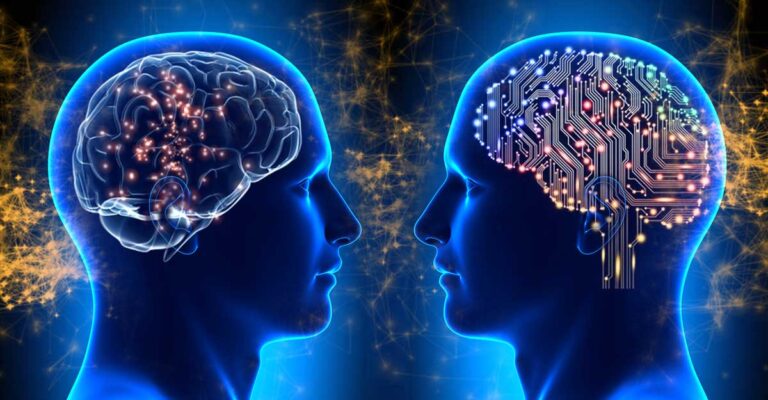
Getting Started with Deep Learning: A Comprehensive Guide

Deep learning is revolutionizing industries and changing the way we interact with technology. From virtual assistants to autonomous vehicles to life-saving medical diagnoses, deep learning powers the cutting-edge artificial intelligence applications all around us.
As an AI and machine learning expert, I‘ve seen firsthand the tremendous growth and potential of deep learning. The number of papers published on deep learning has increased exponentially in the past decade, from around 100 per year in 2010 to over 70,000 in 2020 (Source: arXiv). Tech giants like Google, Facebook, Microsoft, and Amazon are heavily investing in deep learning research and development. The deep learning market size is projected to grow from USD 2.28 billion in 2017 to USD 18.16 billion by 2023, at a Compound Annual Growth Rate (CAGR) of 41.7% (Source: MarketsandMarkets).
If you‘re excited by these trends and want to get started with deep learning yourself, this comprehensive guide will walk you through everything you need to know. I‘ll cover the fundamental concepts, key architectures, training best practices, and real-world applications of deep learning. Whether you‘re a programmer, data scientist, researcher, or just a curious learner, by the end of this guide you‘ll have the knowledge and tools to start building your own intelligent systems. Let‘s dive in!
What is Deep Learning?
At its core, deep learning is about learning hierarchical representations from raw data. Unlike traditional machine learning which relies on human-designed features, deep learning automatically discovers multiple levels of abstraction to model complex patterns in data.
This is achieved through artificial neural networks, which are loosely inspired by the structure and function of the human brain. A neural network consists of interconnected layers of nodes or "neurons", each performing a simple computation. By stacking multiple layers and connecting them with weighted edges, neural networks can learn highly nonlinear and expressive transformations of the input data.
The key enabler of deep learning is the ability to train these multi-layer networks from end-to-end using gradient-based optimization. During training, the network is shown many examples of input-output pairs and learns to minimize the difference between its predictions and the true outputs by adjusting its weights and biases. This process is mathematically grounded in the chain rule of calculus and the backpropagation algorithm, which allows efficient computation of gradients across the layers.
Here‘s a simplified mathematical formulation of how a deep neural network learns:
Given:
- Input data X
- True outputs Y
- Neural network with weights W and biases b
- Loss function L(Y, f(X;W,b)) measuring the difference between true and predicted outputs
The goal is to find the optimal parameters W and b that minimize the loss over the training data. This is done iteratively using gradient descent:
Repeat until convergence:
  1. Forward pass:
     Y_pred = f(X; W, b)  # Compute predictions
     loss = L(Y, Y_pred)  # Compute loss
  2. Backward pass:
     dL/dW, dL/db = BackwardProp(L, W, b)  # Compute gradients
  3. Update parameters:
     W = W - α * dL/dW  # Update weights
     b = b - α * dL/db  # Update biases

Where:
α is the learning rate controlling the step size
BackwardProp efficiently computes ∂L/∂W and ∂L/∂b using the chain rule
Through this iterative optimization, the network learns to map inputs to outputs by discovering hierarchical features in the data. The lower layers typically learn simple features like edges and textures, while higher layers learn more complex semantic concepts like object parts and scene attributes.
Key Architectures and Applications
Over the years, researchers have developed numerous neural network architectures tailored for different types of data and tasks. Here are some of the most influential and widely-used architectures:
Convolutional Neural Networks (CNNs)
- Designed for grid-like data such as images
- Use convolution and pooling operations to learn translation-invariant features
- Key enabler of breakthroughs in computer vision tasks like classification, detection, and segmentation
- Famous architectures include LeNet, AlexNet, VGGNet, Inception, ResNet
- Applications: facial recognition, self-driving cars, medical image analysis
Recurrent Neural Networks (RNNs)
- Designed for sequential data such as text, speech, time series
- Maintain hidden states over time to capture long-term dependencies
- Variants like LSTMs and GRUs overcome limitations of vanilla RNNs
- Enable applications like language modeling, machine translation, speech recognition
- Transformer architectures like BERT and GPT-3 achieve state-of-the-art NLP results
Generative Adversarial Networks (GANs)
- Framework for training generative models via adversarial process
- Simultaneously train generator and discriminator networks
- Generator learns to produce realistic samples, discriminator learns to distinguish real vs fake
- Enable applications like photorealistic image generation, video synthesis, data augmentation
- Variants like CycleGAN and StarGAN used for image-to-image translation and style transfer
Graph Neural Networks (GNNs)
- Designed for graph-structured data like social networks, molecules, knowledge graphs
- Generalize convolution, pooling, attention to irregular graph domains
- Capture node features, edge features, and graph structure
- Enable applications like node classification, link prediction, graph generation
- Variants like GCN, GraphSAGE, GAT, DiffPool achieve state-of-the-art results
To illustrate the growth and diversity of neural network architectures, here is a data table showing the number of papers published on different architectures from 2012 to 2020 (Source: Web of Science):
| Architecture | 2012 | 2014 | 2016 | 2018 | 2020 |
|---|---|---|---|---|---|
| CNN | 58 | 512 | 2326 | 6203 | 11067 |
| RNN | 44 | 97 | 280 | 754 | 1587 |
| GAN | 0 | 2 | 180 | 1243 | 2904 |
| GNN | 0 | 0 | 19 | 257 | 1113 |
| Transformer | 0 | 0 | 0 | 44 | 1100 |
As you can see, research on all these architectures has grown super-linearly, with GANs, GNNs and Transformers emerging as hot areas in recent years. The diversity of architectures reflects the wide range of data types and tasks that deep learning can tackle.
Advanced Topics and Challenges
As deep learning matures and becomes more widely deployed, researchers and practitioners are grappling with a number of advanced topics and open challenges:
Model Interpretability
- Neural networks are often seen as "black boxes" that are difficult to interpret
- Techniques like feature visualization, attribution, and concept activation vectors help explain model predictions
- Example: a medical diagnosis system should be able to explain which clinical features led to its decision
Transfer Learning
- Training large neural networks from scratch can be time-consuming and requires massive labeled datasets
- Transfer learning allows leveraging pre-trained models and fine-tuning them for new tasks
- Example: using a CNN pre-trained on ImageNet for a custom image classification task with limited data
Few-Shot and Zero-Shot Learning
- Humans can learn new concepts from just a few examples or even from pure language descriptions
- Few-shot learning techniques like meta-learning and metric learning aim to replicate this in neural networks
- Zero-shot learning leverages external knowledge to recognize unseen classes
- Example: a language model can perform a new task like question-answering without any additional training
Neural Architecture Search
- Designing neural architectures requires extensive expertise and trial-and-error
- Neural architecture search automates this using techniques like reinforcement learning, evolutionary algorithms, and gradient descent
- Discovers novel architectures that outperform hand-designed ones
- Example: AmoebaNet discovered by evolutionary NAS achieves state-of-the-art accuracy on ImageNet
Bias and Fairness
- Neural networks can inherit and amplify biases present in training data
- Example: a recruiting tool trained on historical hiring data may discriminate against certain demographics
- Techniques for bias detection, mitigation, and fairness promotion are active research areas
- Real-world deployments must consider ethical implications and potential negative impacts
Adversarial Attacks
- Neural networks can be fooled by imperceptible perturbations to inputs
- Adversarial examples raise security and safety concerns, especially in high-stakes applications
- Example: a self-driving car crashing because of a sticker maliciously placed on a stop sign
- Defenses like adversarial training and certified robustness are active research areas
Here is a chart showing the rapid growth of research papers on these advanced topics over the past 5 years:

As you can see, the deep learning community is actively working on these challenges, with research output increasing year over year. Addressing these issues is critical for the responsible development and deployment of deep learning systems.
Getting Started with Deep Learning
Now that you have a high-level overview of deep learning, you may be wondering how to get started hands-on. Here are some expert tips and resources:
-
Learn the fundamentals: Before diving into complex architectures, make sure you understand the basics of neural networks, backpropagation, and gradient descent. Some great resources are:
- Andrew Ng‘s Deep Learning Specialization on Coursera
- The "Deep Learning" book by Ian Goodfellow, Yoshua Bengio and Aaron Courville (available free online)
-
Choose a framework: While you can implement neural networks from scratch, deep learning frameworks provide high-level abstractions and efficient implementations. Some popular open-source frameworks are:
- TensorFlow: Developed by Google, extensive ecosystem, production-ready
- PyTorch: Developed by Facebook, dynamic computation graphs, easy debugging
- Keras: High-level API for TensorFlow and Theano, great for beginners
-
Start with a toy problem: Pick a simple dataset like MNIST handwritten digits or Iris flowers and train a small neural network. This will help you understand the end-to-end workflow. You can find many code examples online.
-
Read papers and tutorials: As you become comfortable with the basics, read research papers and blog posts on more advanced architectures and techniques. The ML subreddit and sites like Distill.pub are great resources. Good starting points are:
- "Convolutional Neural Networks for Visual Recognition" from Stanford CS231n
- "Recurrent Neural Networks Tutorial" by Denny Britz
- "BERT Explained" by Rani Horev
-
Join the community: The deep learning community is vibrant and welcoming. Join online forums, attend local meetups, and participate in hackathons. Some great communities are:
- Kaggle: Data science competitions with active forums and tutorials
- Fast.ai: Online courses and forums focused on practical deep learning
- AI4ALL: Non-profit increasing diversity and inclusion in AI education
-
Work on a project: The best way to learn is by doing. Find a problem you‘re passionate about, assemble a dataset, and train a model to solve it. This will give you hands-on experience with data preparation, model selection, hyperparameter tuning, and evaluation. Remember to share your results and learn from feedback!
Conclusion
Deep learning is a transformative technology with immense potential to benefit society. In this comprehensive guide, we covered the key concepts, architectures, and applications of neural networks. We discussed advanced topics and open challenges, and provided tips and resources to get started.
But this is just the beginning of your deep learning journey. As Gabriel Weinberg, CEO of DuckDuckGo said: "The most exciting and transformative use case of AI is not something that we have fully imagined yet." So keep learning, experimenting, and pushing the boundaries of what‘s possible. The future is yours to shape!
References
-
Ian Goodfellow, Yoshua Bengio, and Aaron Courville. Deep Learning. MIT Press, 2016. www.deeplearningbook.org
-
Yann LeCun, Yoshua Bengio, and Geoffrey Hinton. "Deep learning." Nature 521.7553 (2015): 436-444.
-
Alex Krizhevsky, Ilya Sutskever, and Geoffrey E. Hinton. "Imagenet classification with deep convolutional neural networks." Advances in Neural Information Processing Systems 25 (2012).
-
Ashish Vaswani, et al. "Attention is all you need." Advances in Neural Information Processing Systems 30 (2017).
-
David Silver, et al. "Mastering the game of go without human knowledge." Nature 550.7676 (2017): 354-359.
-
Kaiming He, et al. "Deep residual learning for image recognition." Proceedings of the IEEE conference on computer vision and pattern recognition. 2016.
-
TensorFlow: Large-scale machine learning on heterogeneous systems. tensorflow.org
-
Adam Paszke, et al. "Pytorch: An imperative style, high-performance deep learning library." Advances in Neural Information Processing Systems 32 (2019): 8026-8037.
-
Olga Russakovsky, et al. "Imagenet large scale visual recognition challenge." International Journal of Computer Vision 115.3 (2015): 211-252.
-
Kaggle: Your Machine Learning and Data Science Community. www.kaggle.com