The Top 5 Skills You Need to Become a Deep Learning Engineer in 2026
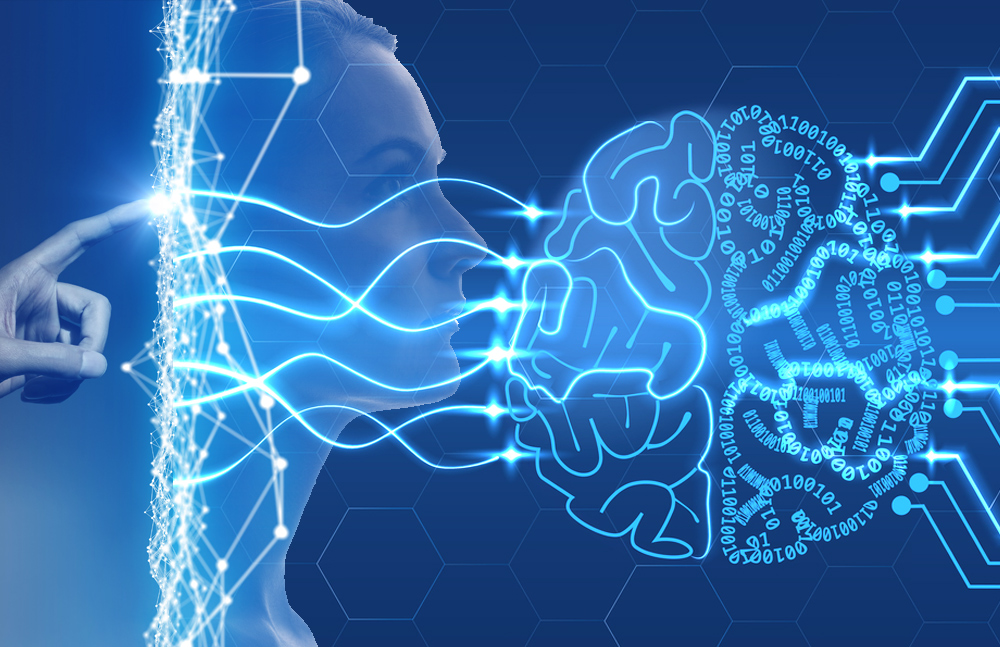
Deep learning has revolutionized the field of artificial intelligence over the past decade. By training multi-layered neural networks on massive datasets, deep learning enables computers to learn complex patterns and make highly accurate predictions. Deep learning powers everything from the virtual assistants in our smartphones to self-driving cars to cancer detection algorithms.
As more industries look to harness the power of deep learning, demand for skilled practitioners has skyrocketed. The deep learning market is expected to grow from $2.28 billion in 2019 to $18.16 billion by 2024, at a Compound Annual Growth Rate (CAGR) of 41.7% during the forecast period ^1. LinkedIn‘s 2020 Emerging Jobs Report ranked AI specialist as the #1 job with an annual growth of 74% ^2.
But what exactly does it take to become a deep learning engineer? In this article, we‘ll dive into the top 5 skills you need to master to succeed in this exciting and fast-growing field.
1. Programming Expertise
At its core, deep learning involves writing code to build and train neural networks. Therefore, strong programming skills are an absolute must for any aspiring deep learning engineer.
Python has emerged as the clear favorite language within the AI community due to its simplicity and extensive ecosystem of deep learning libraries. According to the 2020 Kaggle Machine Learning & Data Science Survey, 86% of data scientists and ML developers use Python ^3. Key libraries include:
- NumPy for numerical computing
- Pandas for data manipulation
- Matplotlib and Seaborn for data visualization
- Scikit-learn for traditional machine learning models
- Deep learning frameworks like TensorFlow, Keras, and PyTorch for building neural networks
As Francois Chollet, creator of Keras, puts it: "Python has become the dominant language for machine learning and artificial intelligence research and application development, due to its simplicity, flexibility, and its fast-growing ecosystem of powerful libraries for data processing, math, and machine learning." ^4
But Python is not the only game in town. Familiarity with other programming languages like R, C++, and Java can be valuable to give you more flexibility. R in particular has a rich ecosystem for statistical modeling. And don‘t forget about data query languages like SQL for working with massive databases.
In addition to picking up the syntax, top-notch coding skills, clean software engineering practices, and the ability to implement complex algorithms efficiently are crucial. Andrej Karpathy, Director of AI at Tesla, stresses the importance of good code: "A lot of people entering the field are more excited about the machine learning aspects but don‘t realize how much systematic engineering is needed to make production systems work reliably." ^5
2. Mathematics and Statistics Foundation
While programming forms the practical skill set, deep learning is fundamentally a mathematical field. A strong grasp of linear algebra, calculus, probability, and statistics is essential to understand the inner workings of deep learning algorithms.
Linear algebra is the bedrock of deep learning, as vectors and matrices are the language neural networks speak. Concepts like eigenvectors, matrix multiplication, and norms come up frequently. Gilbert Strang, a professor of mathematics at MIT, calls linear algebra "the language of deep learning, and it will become as fundamental in the future as arithmetic." ^6
Multivariate calculus comes into play during the training process, where gradients must be calculated to optimize the neural network parameters and minimize the chosen loss function. Techniques like backpropagation and gradient descent rely on the chain rule and partial derivatives.
Probability distributions, summary statistics, hypothesis testing, and other statistical methods are crucial for all stages of a deep learning project – from initial data exploration to model evaluation and fine-tuning. Understanding concepts like Bayesian inference and information theory provides a unified perspective on machine learning.
While it‘s not necessary to have a PhD in mathematics to be a deep learning engineer, a strong foundation will help you understand research papers, implement models efficiently, debug tricky issues, and devise novel architectures. Reviewing resources like the widely acclaimed book "Mathematics for Machine Learning" ^7 can get you up to speed.
3. Domain Knowledge
One common misconception is that deep learning is a monolithic field. In reality, deep learning encompasses many subdomains which each come with their own unique challenges and specialized techniques. Focusing your skills within a particular application area can help you go from a generalist to an expert.
Within computer vision, convolutional neural networks (CNNs) have been revolutionary for tasks like image classification, object detection, and segmentation. Understanding CNN architectures like ResNet and YOLO and techniques like data augmentation, transfer learning and autoencoders is key. Medical image analysis in particular is a booming area, with deep learning enabling major advances in diagnosing conditions like diabetic retinopathy and skin cancer ^8.
For natural language processing (NLP), the rise of the transformer architecture and models like BERT have enabled powerful language understanding and generation capabilities. Attention mechanisms, embeddings, and tokenization methods are important concepts. Deep learning is powering major advances in machine translation, text summarization, sentiment analysis and chatbot development ^9.
Recommender systems are another major application area, with deep learning enabling powerful personalization of content and products. Techniques like matrix factorization, autoencoder-based collaborative filtering, and sequence models are behind the uncannily relevant recommendations we get from the likes of Netflix, Spotify, and Amazon ^10.
Other major areas where deep learning is making waves include speech recognition, graph mining, time series forecasting, generative modeling, and reinforcement learning for robotics. The key is to match your deep learning skills to problems you are passionate about solving.
4. Software Engineering & Big Data
While it‘s easy to get caught up in the hype around algorithms, the unglamorous work of data preparation and infrastructure engineering is equally important for the success of deep learning projects. Machine learning code represents only a small fraction of the code in production ML systems ^11.
Data is the fuel that powers deep learning, and with the rise of big data, deep learning engineers must be skilled at manipulating massive datasets that may not fit in memory. Data pipeline tools like Apache Spark and Dask allow you to extract, clean, and transform data at massive scale. Cloud platforms like AWS, GCP, and Azure also offer powerful tools for distributed data storage and processing.
In the modeling phase, running experiments and tracking results quickly becomes unwieldy without good tooling. Experiment tracking tools like Weights & Biases and MLflow make it easy to monitor model performance, reproduce past runs, and collaborate with a team ^12. Visualization is also key for intuiting model behavior – tools like TensorBoard and HiPlot allow you to peer inside the black box.
Finally, deploying deep learning models into production is an art of its own. Frameworks like TensorFlow Serving and platforms like AWS SageMaker aim to simplify the deployment process, but careful system design is still required. Monitoring tools like Evidently and Fiddler AI help engineers ensure models continue performing as expected in the face of shifting real-world data ^13.
5. Research Skills & Continuous Learning
With all the rapid advances happening in deep learning, perhaps the most important skill is the ability to continually learn and adapt. Influential deep learning researcher Sebastian Ruder estimates that it would take 80 hours a week just to keep up with new research in the field ^14. While that‘s unrealistic for those not pursuing research full time, all practitioners should aim to stay up to date on the latest techniques.
Reading research papers is a key skill to build. Browsing preprint servers like arXiv and conferences like NeurIPS, ICML, ICLR, and CVPR is a great way to stay at the forefront of the field. When diving into a new topic, publishing company Distill‘s interactive articles are a great starting point ^15. Following influential researchers on Twitter and subscribing to newsletters like Jack Clark‘s ImportAI and Denny Britz‘s WildML are great ways to get a curated feed of deep learning news.
Hands-on learning is also critical to solidify new knowledge. Participating in Kaggle competitions and reproducing state-of-the-art models from Github are great ways to sharpen your skills. Fast.ai‘s courses are another excellent hands-on resource – as co-founder Jeremy Howard says, "The key to success in deep learning is practice. Reading papers and watching tutorials can only take you so far." ^16
Another aspect of research skills is critically evaluating model performance. It‘s easy to be misled by a single performance metric like accuracy. But a more nuanced understanding of precision, recall, and AUC is important, as is analyzing performance across demographic segments. Visualization techniques like confusion matrices and SHAP value plots lead to more robust evaluation ^17.
Challenges & Future Directions
Despite the immense progress made by deep learning in the past decade, significant challenges remain. Models are still largely "narrow AI" systems that can only solve the specific problem they were trained for. We‘ve seen the rise of larger and larger language models like GPT-3, but these models still lack true understanding and can be misused to generate misinformation ^18.
Achieving artificial general intelligence (AGI) that matches the fluid intelligence of humans remains the grand challenge of AI. Approaches like multi-task learning, meta-learning, and neurosymbolic AI offer promising directions, but we are likely still decades away from AGI ^19.
Another major challenge is the "black box" nature of deep learning. Understanding how models arrive at their predictions and ensuring they are reliable and unbiased is crucial as AI systems are deployed in high-stakes domains like healthcare, finance, and criminal justice ^20. Techniques like feature visualization, model distillation, and counterfactual explanations are active areas of research in AI explainability.
Privacy and security are also major concerns as deep learning is applied to sensitive domains. Federated learning techniques allow models to be trained on decentralized data, while differential privacy can give mathematical guarantees on what can be learned about individuals ^21.
Embracing the Deep Learning Revolution
Deep learning is a revolutionary technology that will transform almost every industry in the coming years. By building expertise in programming, mathematics, big data, research, and domain-specific techniques, you can become a leader in this exciting field.
But beyond just technical skills, it‘s important for deep learning engineers to consider the societal implications of their work. As deep learning is applied to sensitive domains like healthcare, criminal justice, and surveillance, engineers must prioritize fairness, accountability, and transparency ^22.
Ultimately, the goal of deep learning should be to empower humanity and make the world a better place. By wielding the power of deep learning with wisdom and care, we can unlock incredible possibilities. Will you be part of the revolution?