A Deep Dive into Deep Learning: Concepts, Techniques, and Applications
Deep learning has emerged as one of the most transformative technologies of our time, revolutionizing fields from computer vision and natural language processing to healthcare and scientific discovery. In the past decade, we‘ve seen deep learning models achieve human-level performance on tasks like image classification, speech recognition, and language translation, powering applications like self-driving cars, virtual assistants, and cancer detection.
But what exactly is deep learning, and how does it work? In this in-depth guide, we‘ll explore the key concepts and techniques behind this powerful approach to machine learning, from the basics of neural networks to the latest advances in architectures and algorithms. Whether you‘re a beginner looking to get started with deep learning or an experienced practitioner seeking to deepen your understanding, this article will provide you with the foundation you need to harness the power of deep learning in your own projects and research.
The Biological Inspiration Behind Deep Learning
At its core, deep learning is an approach to artificial intelligence that is inspired by the structure and function of the human brain. Just as the brain consists of billions of interconnected neurons that learn from experience and adapt to new situations, deep learning models are based on artificial neural networks that can learn complex patterns and representations from data.
The idea of artificial neural networks dates back to the 1940s, when researchers like Warren McCulloch and Walter Pitts proposed simple models of neurons as logical threshold units. In the 1950s and 60s, Frank Rosenblatt developed the perceptron, a single-layer neural network that could learn to classify patterns. However, these early neural networks were limited in their expressiveness and faced challenges in learning from large, high-dimensional datasets.
It wasn‘t until the 1980s and 90s that researchers like Geoffrey Hinton, Yann LeCun, and Yoshua Bengio began to develop deeper, more powerful neural network architectures that could learn hierarchical representations from data. These deep learning models, such as convolutional neural networks (CNNs) and recurrent neural networks (RNNs), have since achieved breakthrough results on a wide range of perception and prediction tasks.
So what makes deep learning so powerful? One key advantage is the ability to learn representations directly from raw data, without the need for manual feature engineering. Traditional machine learning approaches rely on domain experts to design handcrafted features that capture the relevant patterns in the data. In contrast, deep learning models can automatically discover the salient features and representations needed for a task, by learning a hierarchy of increasingly abstract representations from the input data.
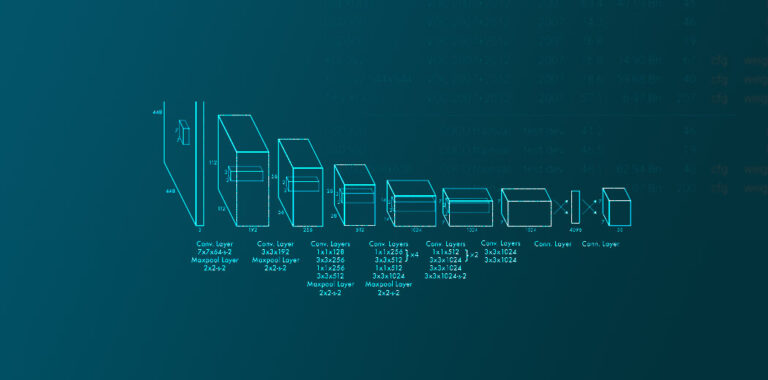
For example, consider the task of recognizing objects in images. A traditional computer vision pipeline might involve manually designing features like edges, textures, and shapes, and then training a classifier on top of these features. A deep learning approach, on the other hand, would feed the raw pixel values directly into a CNN, which would learn a hierarchy of features from low-level edges and textures to high-level object parts and scene semantics, all in an end-to-end fashion.
This ability to learn rich, layered representations from data has enabled deep learning models to achieve remarkable performance on a wide range of tasks, from image and speech recognition to natural language understanding and game playing. As Andrew Ng, a leading AI researcher and educator, puts it: "Deep learning is a superpower. With it, you can make a computer see, synthesize novel art, translate languages, render a medical diagnosis, or build pieces of a car that can drive itself. If that isn‘t a superpower, I don‘t know what is."
The Mathematical Foundations of Deep Learning
While the biological inspiration behind deep learning is fascinating, it‘s also important to understand the mathematical principles that underlie these models. At its core, a neural network is a mathematical function that maps inputs to outputs, parameterized by a set of weights and biases. The goal of training a neural network is to find the optimal values for these parameters that minimize a loss function on a given dataset.
Mathematically, a feedforward neural network with L layers can be expressed as a composition of functions:
$f(x) = f_L(…f_2(f_1(x; W_1, b_1); W_2, b_2)…; W_L, b_L)$
where $x$ is the input, $W_i$ and $b_i$ are the weights and biases of the i-th layer, and $f_i$ is the activation function applied at each layer. Common activation functions include the sigmoid, hyperbolic tangent (tanh), and rectified linear unit (ReLU).
During training, the network is shown a set of input-output pairs $(x, y)$ from the training data, and the weights and biases are updated to minimize a loss function that measures the discrepancy between the predicted outputs $\hat{y} = f(x)$ and the true outputs $y$. This is typically done using an optimization algorithm like stochastic gradient descent (SGD), which computes the gradient of the loss function with respect to each parameter and updates the parameters in the direction that reduces the loss.
The backpropagation algorithm, developed by researchers like Geoffrey Hinton and David Rumelhart in the 1980s, provides an efficient way to compute these gradients by recursively applying the chain rule of calculus from the output layer back to the input layer. Specifically, the gradient of the loss $L$ with respect to the weights $W_i$ in layer $i$ can be expressed as:
$\frac{\partial L}{\partial W_i} = \frac{\partial L}{\partial a_i} \frac{\partial a_i}{\partial z_i} \frac{\partial z_i}{\partial W_i}$
where $a_i$ is the activation of layer $i$, $z_i$ is the pre-activation (i.e. the weighted sum of inputs before applying the activation function), and the partial derivatives are computed using the chain rule.
By iteratively applying this update rule over multiple epochs of training, the network gradually learns to map inputs to outputs in a way that minimizes the loss function. However, training deep neural networks is a complex optimization problem that requires careful choice of hyperparameters, such as the learning rate, batch size, and regularization strength, as well as techniques like momentum, adaptive learning rates, and batch normalization to stabilize and accelerate learning.
The Rise of Deep Learning
While the basic principles behind neural networks have been around for decades, it is only in the past decade that deep learning has truly taken off and achieved breakthrough results in a wide range of domains. This is due to a convergence of several factors, including:
- The availability of large, labeled datasets like ImageNet, which provide the fuel for training deep models
- The development of powerful GPU hardware and distributed training frameworks like TensorFlow and PyTorch, which enable training models with billions of parameters on massive datasets
- The invention of new architectures and techniques like CNNs, RNNs, attention, and unsupervised pre-training, which allow learning rich, hierarchical representations from data
- The engagement of a vibrant research community in both academia and industry, with major tech companies like Google, Facebook, and Microsoft investing heavily in AI research
To give a sense of the rapid growth of deep learning, consider the following statistics:
- The number of papers published on deep learning has grown exponentially, from around 100 per year in the early 2000s to over 20,000 per year in 2020 (Source: arXiv)
- The ImageNet Challenge, a benchmark for object recognition, has seen top-5 error rates drop from over 25% in 2011 to less than 3% in 2017, surpassing human-level performance (Source: Papers With Code)
- The global deep learning market size is expected to grow from $2.28 billion in 2020 to $18.16 billion by 2027, at a compound annual growth rate of 41.4% (Source: Grand View Research)
These numbers underscore the incredible progress and impact of deep learning in recent years, as well as its enormous potential for the future.
Conclusion
As we‘ve seen in this guide, deep learning is a powerful and versatile approach to machine learning that has achieved remarkable breakthroughs in a wide range of domains, from computer vision and speech recognition to natural language processing and robotics. By learning rich, hierarchical representations from data, deep neural networks can automatically discover the complex patterns and abstractions needed to solve difficult perception and prediction tasks.
At the same time, deep learning is still a rapidly evolving field with many open challenges and opportunities. Some of the key frontiers in deep learning research include:
- Developing more interpretable and robust models that can provide explanations for their predictions and handle out-of-distribution inputs
- Improving the sample efficiency and transferability of deep learning models, enabling learning from small datasets and adaptation to new tasks and domains
- Integrating deep learning with other forms of reasoning and knowledge representation, such as symbolic logic, causal inference, and commonsense reasoning
- Advancing unsupervised and self-supervised learning methods that can learn meaningful representations from unlabeled data
- Ensuring the safety, fairness, and ethical alignment of deep learning systems as they become more powerful and widely deployed
As Yann LeCun, recipient of the 2018 Turing Award for his contributions to deep learning, said in his award lecture: "Our goal is to build intelligent machines. That‘s a tall order. We are very far from having machines that can learn the most basic things about the world in the way humans and animals can do. We are very far from having machines that have common sense, that can learn to reason in the way that humans do. We are very far from having machines that can perceive the world as well as humans or animals. The next few decades are going to be very exciting."
Indeed, the coming years and decades will likely see even more transformative advances in deep learning and AI, as we work towards the grand challenge of building truly intelligent machines. As practitioners and researchers in this field, it is up to us to push the boundaries of what is possible with deep learning, while also grappling with the profound implications and responsibilities that come with developing such powerful technologies.
I hope this guide has given you a comprehensive overview of the key concepts, techniques, and applications of deep learning, as well as a sense of the exciting frontiers and challenges ahead. Whether you are just starting out on your deep learning journey or are a seasoned practitioner, I encourage you to dive deeper into this fascinating field, stay curious, and never stop learning. The future of AI is in our hands, and I can‘t wait to see what breakthroughs and innovations the deep learning community will achieve in the years to come.