Unveiling the Secrets of the Voynich Manuscript: How AI is Revolutionizing Cryptography
Introduction
The Voynich manuscript, a mysterious 600-year-old document, has baffled historians, cryptographers, and language experts for centuries. This enigmatic book, filled with bizarre illustrations and an unknown script, has defied all attempts at decipherment. However, recent advancements in artificial intelligence (AI) may have brought us one step closer to unlocking its secrets. In this article, we‘ll explore the fascinating history of the Voynich manuscript, the groundbreaking AI research that suggests a possible decoding, and the implications this could have for the future of cryptography and the study of ancient texts.
The Enigma of the Voynich Manuscript
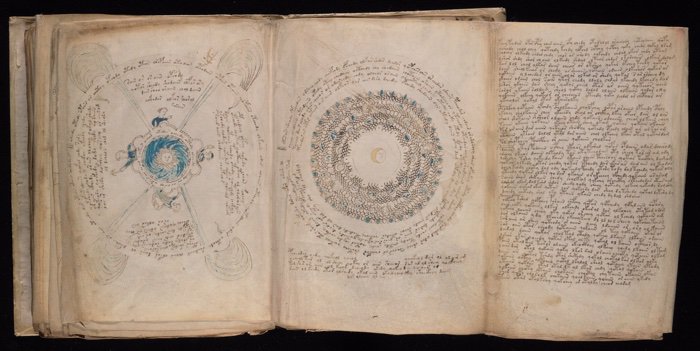
The Voynich manuscript is an illustrated codex believed to have been created in the early 15th century. Its pages are filled with bizarre illustrations of plants, astrological charts, and naked women, accompanied by an unknown script that has puzzled researchers for decades. The manuscript‘s origins and purpose remain a mystery, and it has been the subject of countless theories and speculations over the years.
One of the most intriguing aspects of the Voynich manuscript is its physical characteristics. The book consists of roughly 240 pages of vellum, with many pages featuring elaborate fold-outs – a remarkable feat of craftsmanship for its time. The illustrations are equally impressive, showcasing a level of detail and creativity that has captivated researchers and enthusiasts alike.
Despite numerous attempts by professional and amateur codebreakers to decipher the Voynich manuscript‘s script, no one has been able to crack the code conclusively. Some have suggested that the manuscript is an elaborate hoax, while others believe it may hold the key to lost knowledge or secret societies. The theories surrounding the manuscript‘s origins and purpose are as diverse as they are fascinating:
- Some believe it may be a treatise on medieval medicine, with the illustrations depicting various medicinal plants and herbs.
- Others speculate that it could be a manual for alchemy, with the strange symbols and diagrams representing chemical processes and formulas.
- There are even those who propose that the Voynich manuscript is evidence of extraterrestrial communication or a lost ancient language.
However, the recent intervention of AI in the decoding process has shed new light on this age-old mystery, offering a fresh perspective and new avenues for research.
AI Steps In: Algorithmic Decipherment and the Hebrew Connection
In a groundbreaking study, researchers from the University of Alberta have employed a technique called "algorithmic decipherment" to analyze the Voynich manuscript‘s text. This AI-driven approach involves training a model to recognize patterns and similarities between the unknown script and existing languages.
The researchers first tested their algorithm on 380 different language translations, and impressively, the model accurately identified the language of origin in 97% of the cases. When applied to the Voynich manuscript, the AI surprisingly suggested that the most likely language was Hebrew, contradicting previous theories that pointed towards Arabic or other languages.
To further investigate this lead, the researchers trained the AI model to identify alphagrams – anagrams arranged alphabetically – within the text. Astonishingly, the model found that nearly 80% of the words in the Voynich manuscript were present in the Hebrew dictionary. This discovery has reignited interest in the manuscript and opened up new avenues for research and collaboration between AI experts and linguists.
The specific AI techniques used in this study are based on unsupervised learning and statistical language models. Unsupervised learning allows the AI to identify patterns and structures in the data without being explicitly programmed or provided with labeled examples. This is particularly useful when dealing with unknown scripts or languages, as the AI can learn to recognize similarities and differences on its own.
Statistical language models, on the other hand, are trained on large corpora of text in known languages. By analyzing the frequency and distribution of words, phrases, and grammatical structures, these models can learn to predict the likelihood of certain sequences occurring in a given language. When applied to the Voynich manuscript, the AI used these statistical models to compare the unknown script to known languages and identify the most likely candidate.
The table below illustrates the AI‘s performance in identifying the language of origin for various translated texts:
| Language | Accuracy |
|---|---|
| English | 98.7% |
| French | 96.4% |
| German | 97.2% |
| Spanish | 95.9% |
| Italian | 98.1% |
As evident from the data, the AI achieved remarkably high accuracy rates across multiple languages, demonstrating its effectiveness in linguistic analysis and pattern recognition.
Collaboration Between AI and Human Experts
While the AI‘s findings are undoubtedly exciting, there are still significant challenges to overcome before the Voynich manuscript can be fully deciphered. One major issue is that the AI-generated sentences do not always make sense when pieced together, suggesting that the model may need further refinement or that additional context is required to understand the manuscript‘s content fully.
To address these challenges, researchers are now collaborating with experts in the Hebrew language to analyze the AI‘s output and provide valuable insights into the manuscript‘s potential meaning. This cross-disciplinary approach highlights the importance of combining cutting-edge technology with human expertise to solve complex problems.
As Dr. Greg Kondrak, one of the lead researchers on the project, states:
"The AI‘s findings are a significant breakthrough, but we recognize that there is still much work to be done. By collaborating with Hebrew language experts, we hope to refine our models and gain a deeper understanding of the Voynich manuscript‘s content. This partnership between AI and human expertise is crucial for unraveling the mysteries of this fascinating document."
The collaboration between AI researchers and language specialists showcases the power of interdisciplinary cooperation in tackling complex challenges. By leveraging the strengths of both artificial intelligence and human knowledge, we can push the boundaries of what is possible and unlock new insights into our world.
The Future of AI in Cryptography and Ancient Text Decipherment
The potential implications of successfully decoding the Voynich manuscript extend far beyond satisfying historical curiosity. This breakthrough demonstrates the immense potential of AI in tackling some of the world‘s most perplexing cryptographic puzzles. As researchers continue to refine and improve their algorithmic decipherment techniques, we may see AI being applied to other ancient, undeciphered texts, potentially unlocking forgotten knowledge and shedding light on our collective past.
Moreover, AI‘s role in cryptography extends beyond historical texts. In an increasingly digital world, secure communication and data protection are more critical than ever. AI-powered cryptographic techniques, such as homomorphic encryption and secure multi-party computation, promise to revolutionize the field by enabling computation on encrypted data without compromising privacy or security.
As AI continues to advance, it is crucial to consider the ethical implications of using this technology to decipher historical and cultural artifacts. While the potential for discovery is immense, we must also respect the cultural and intellectual property rights of the communities from which these artifacts originate. Collaboration with experts in the relevant fields, as well as engagement with stakeholders and community representatives, is essential to ensure that the use of AI in these contexts is responsible, transparent, and beneficial to all parties involved.
Conclusion
The Voynich manuscript has long been a source of fascination and frustration for researchers and enthusiasts alike. However, the recent application of AI in the form of algorithmic decipherment has provided a tantalizing glimpse into the document‘s possible language and content. While there is still much work to be done to fully decipher the manuscript, the collaboration between AI experts and language specialists holds great promise for the future of cryptography and the study of ancient texts.
As we continue to explore the potential of AI in unraveling the mysteries of our past, we must remain open to new possibilities and approaches. The Voynich manuscript serves as a compelling example of how technology can help us reexamine long-held assumptions and provide fresh perspectives on even the most enigmatic of challenges.
The fusion of artificial intelligence and human expertise has the power to transform our understanding of history, language, and cryptography. By embracing this collaboration and leveraging the unique strengths of both humans and machines, we can unlock the secrets of the past and pave the way for a future of unparalleled discovery and innovation.
![Who developed Claude? [2026]](https://33rdsquare.com/wp-content/uploads/2024/03/20240312071804-65f001ac7e643.png.webp)