Hyperopt: The Alternative Hyperparameter Optimization Technique You Need to Know
Introduction
When building machine learning models, finding the right hyperparameter values is crucial for achieving optimal performance. Traditionally, techniques like grid search and random search have been used for hyperparameter tuning. However, these methods have limitations in terms of efficiency and effectiveness, especially when dealing with large search spaces.
This is where Hyperopt comes in – a powerful Python library that offers an alternative approach to hyperparameter optimization. Developed by James Bergstra, Hyperopt leverages Bayesian optimization to intelligently search for the best hyperparameter configurations, making it a valuable tool in any data scientist‘s toolkit.
In this article, we‘ll dive deep into Hyperopt, exploring its key features, advantages, and practical usage. Whether you‘re new to hyperparameter optimization or looking to level up your skills, this guide will equip you with the knowledge you need to harness the power of Hyperopt in your projects. Let‘s get started!
Understanding Hyperparameter Optimization
Before we delve into Hyperopt, let‘s take a step back and understand what hyperparameter optimization is and why it matters.
Hyperparameters are the variables that govern the behavior of a machine learning algorithm. These are not learned from the data but are set by the user before training. Examples include the learning rate, regularization strength, number of hidden layers in a neural network, etc. The choice of hyperparameter values can significantly impact a model‘s performance.
Hyperparameter optimization is the process of finding the optimal combination of hyperparameter values that maximizes a model‘s performance on a given task. It involves systematically searching through the hyperparameter space and evaluating different configurations to identify the best one.
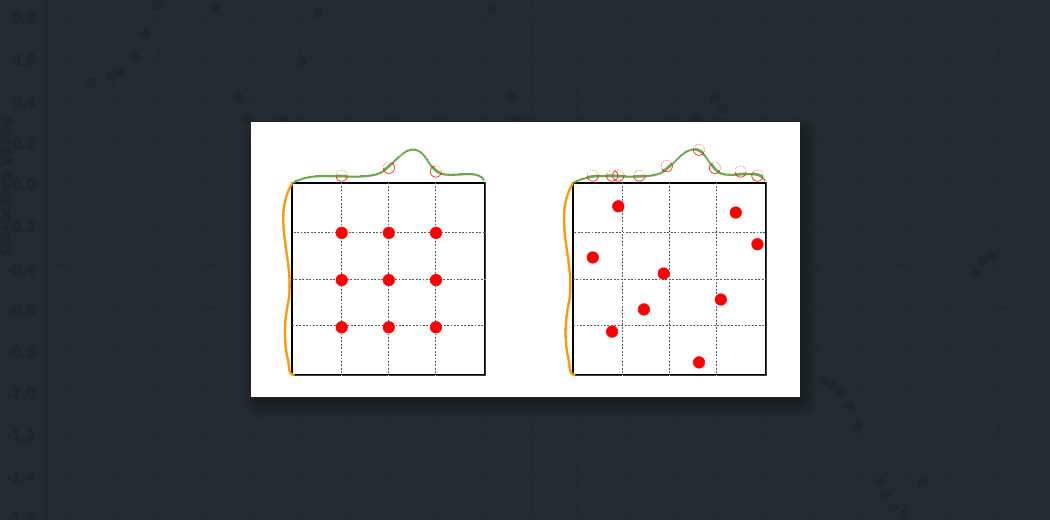
Traditional methods like grid search and random search have been widely used for hyperparameter tuning. Grid search exhaustively evaluates all possible combinations of hyperparameter values from a predefined set. While thorough, it becomes computationally expensive as the number of hyperparameters and their ranges increase.
Random search, on the other hand, randomly samples hyperparameter values from specified distributions. It can often find good solutions faster than grid search but may miss important regions of the search space.
These limitations have led to the development of more advanced optimization techniques, such as Bayesian optimization, which is at the core of Hyperopt.
Introducing Hyperopt
Hyperopt is an open-source Python library for hyperparameter optimization that utilizes Bayesian optimization under the hood. It provides a flexible and efficient way to search for optimal hyperparameters across a wide range of machine learning algorithms and models.
The key idea behind Bayesian optimization is to construct a probabilistic model of the objective function (the performance metric we want to optimize) and use this model to guide the search process. Hyperopt uses the Tree-structured Parzen Estimator (TPE) algorithm as its default optimization algorithm.
Here are the main components of Hyperopt:
-
Search Spaces: Hyperopt allows you to define the hyperparameter search space using various probability distributions. You can specify ranges for numeric parameters, choices for categorical parameters, and even nested search spaces for more complex configurations.
-
Objective Function: The objective function is the performance metric you want to optimize, such as accuracy, F1-score, or loss. You define a function that takes hyperparameter values as input, trains and evaluates the model, and returns the metric to be minimized.
-
fmin: The fmin function is the core optimization routine in Hyperopt. It takes the objective function, search space, and other configuration parameters as input and performs the optimization process. fmin returns the best hyperparameter configuration found.
-
Trials: The Trials object keeps track of all the hyperparameter configurations evaluated during the optimization process. It stores information such as the hyperparameter values, the corresponding objective function value, and the status of each trial.
One of the key advantages of Hyperopt is its ability to handle a wide variety of hyperparameter types, including continuous, discrete, and categorical variables. It can optimize not only individual hyperparameters but also entire pipelines or nested configurations.
Hyperopt also provides various features to customize and control the optimization process. You can specify the number of evaluations, choose different optimization algorithms, parallelize the search, and even use prunning to early stop unpromising trials.
Hyperopt in Practice
To illustrate the usage of Hyperopt, let‘s walk through a practical example. We‘ll use the popular Random Forest algorithm and optimize its hyperparameters using Hyperopt on a classification task.
from hyperopt import tpe, hp, fmin, STATUS_OK, Trials
from sklearn.datasets import load_iris
from sklearn.ensemble import RandomForestClassifier
from sklearn.model_selection import cross_val_score

# Load the Iris dataset
iris = load_iris()
X, y = iris.data, iris.target

# Define the objective function
def objective(params):
    clf = RandomForestClassifier(**params)
    score = cross_val_score(clf, X, y, cv=5).mean()
    return {‘loss‘: -score, ‘status‘: STATUS_OK}

# Define the search space
space = {
    ‘n_estimators‘: hp.choice(‘n_estimators‘, range(10, 200)),
    ‘max_depth‘: hp.choice(‘max_depth‘, range(1, 20)),
    ‘criterion‘: hp.choice(‘criterion‘, [‘gini‘, ‘entropy‘])
}

# Initialize the trials object
trials = Trials()

# Run the optimization
best = fmin(fn=objective, space=space, algo=tpe.suggest, max_evals=100, trials=trials)

print(f"Best hyperparameters: {best}")
In this example:
-
We load the Iris dataset and define the objective function. The objective function takes hyperparameter values as input, creates a Random Forest classifier with those hyperparameters, evaluates its performance using cross-validation, and returns the negative mean score as the loss to be minimized.
-
We define the search space for the hyperparameters. Here, we specify the range of values for
n_estimatorsandmax_depth, and the choices for thecriterion. -
We initialize a Trials object to store the optimization history.
-
We run the optimization using the
fminfunction, specifying the objective function, search space, optimization algorithm (TPE), and the maximum number of evaluations. The best hyperparameter configuration is returned.
After running the optimization, you can access the best hyperparameters found and use them to train your final model.
Hyperopt vs. Hyperopt-sklearn
While Hyperopt is a general-purpose hyperparameter optimization library, there is also a wrapper called Hyperopt-sklearn specifically designed for scikit-learn models.
Hyperopt-sklearn provides a simplified interface to use Hyperopt with scikit-learn estimators and pipelines. It offers a more concise way to define the search space and objective function, making it easier to integrate hyperparameter optimization into your existing scikit-learn workflow.
However, Hyperopt-sklearn has some limitations compared to using Hyperopt directly. It is less flexible and may not support all the advanced features and customization options available in Hyperopt.
When deciding between Hyperopt and Hyperopt-sklearn, consider your specific needs and the complexity of your optimization task. If you require more control and flexibility, or if you are working with non-scikit-learn models, Hyperopt is the way to go. On the other hand, if you are primarily using scikit-learn and prefer a simpler interface, Hyperopt-sklearn can be a convenient choice.
Frequently Asked Questions
-
Q: How does the
random_stateparameter impact Hyperopt‘s optimization process?
A: Therandom_stateparameter controls the randomness in Hyperopt‘s optimization process. Setting a fixed value ensures reproducibility by generating the same sequence of random numbers across different runs. This is useful for comparing results and debugging. -
Q: Can Hyperopt handle categorical hyperparameters?
A: Yes, Hyperopt supports categorical hyperparameters through thehp.choicefunction. You can specify a list of possible values for a categorical hyperparameter, and Hyperopt will optimize over those choices. -
Q: How can I parallelize the hyperparameter search in Hyperopt?
A: Hyperopt provides a parallel optimization feature through thefminfunction‘smax_queue_lenargument. By settingmax_queue_lento a value greater than 1, Hyperopt will evaluate multiple hyperparameter configurations in parallel, utilizing multiple CPU cores or even distributed computing resources. -
Q: Can Hyperopt be used for neural architecture search (NAS)?
A: Yes, Hyperopt can be used for neural architecture search by defining a search space that includes architectural choices such as the number of layers, layer types, activation functions, etc. The objective function would involve training and evaluating the neural network with the given architecture. -
Q: How does Hyperopt compare to other hyperparameter optimization libraries?
A: Hyperopt is a popular choice for hyperparameter optimization due to its flexibility, support for various search spaces, and Bayesian optimization capabilities. It compares favorably to other libraries like Optuna and Scikit-Optimize in terms of performance and ease of use. However, the choice of library depends on factors such as the specific problem, available resources, and personal preferences.
Conclusion
Hyperparameter optimization is a crucial step in building high-performing machine learning models. Hyperopt offers a powerful and flexible alternative to traditional methods, leveraging Bayesian optimization to efficiently search for optimal hyperparameter configurations.
By understanding the key components of Hyperopt, such as search spaces, objective functions, and the fmin optimization routine, you can effectively incorporate hyperparameter tuning into your machine learning pipeline.
Whether you choose to use Hyperopt directly or through the Hyperopt-sklearn wrapper, the library provides a robust framework for automating and optimizing the hyperparameter search process.
As you embark on your own hyperparameter optimization journey, remember to experiment with different search spaces, objective functions, and optimization algorithms to find the best approach for your specific problem. With Hyperopt as your guide, you can unlock the full potential of your models and take your machine learning projects to new heights.
Happy optimizing!