Load pre-trained model
Introduction
Image clustering is the task of automatically discovering natural groupings or categories in a collection of unlabeled images. It involves dividing a set of images into clusters such that images within a cluster are more similar to each other than to those in other clusters. Image clustering enables us to discover hidden structures and patterns in visual data without any annotated training examples.
This unsupervised learning problem is challenging because it requires a high-level semantic understanding of the visual content in images. Traditional computer vision techniques that rely on hand-engineered features often fail to capture the complex patterns necessary for accurate image clustering. However, in recent years, deep learning models known as convolutional neural networks (CNNs) have revolutionized computer vision by learning powerful, hierarchical image representations from data. It turns out that the features extracted by deep CNNs trained for supervised image classification tasks can also be highly effective for unsupervised image clustering.
In this post, we‘ll explore an approach to image clustering that leverages a pre-trained CNN as a feature extractor. We‘ll walk through the technical details of this approach and demonstrate how it can be implemented in practice using Python deep learning libraries. Furthermore, we‘ll discuss some exciting applications of image clustering and how it can provide value in real-world scenarios.
Background on Image Clustering
The goal of image clustering is to partition a set of unlabeled images into coherent groups, where each group contains visually similar images. For example, given a collection of animal images, an ideal image clustering algorithm would be able to automatically discover clusters corresponding to different animal categories like "cat", "dog", "bird", etc. without any prior knowledge of these categories.
Some key challenges in image clustering include:
- Defining an appropriate similarity or distance metric between images
- Extracting meaningful features that capture the relevant content of images
- Determining the optimal number of clusters
- Dealing with outliers and noise in the data
Many traditional approaches to image clustering rely on simple visual features like color histograms, textures, or shapes. These low-level features are usually not sufficient to capture the high-level semantic concepts necessary for accurate clustering. Additionally, metrics like Euclidean distance are often not meaningful in the high-dimensional space of raw images.
In contrast, modern deep learning based approaches aim to learn a feature representation directly from data using neural networks. By training on large datasets of labeled images, deep models can learn to extract highly abstract and semantically meaningful features. These learned features can then be used as a basis for more accurate image clustering.
Neural Networks for Feature Extraction
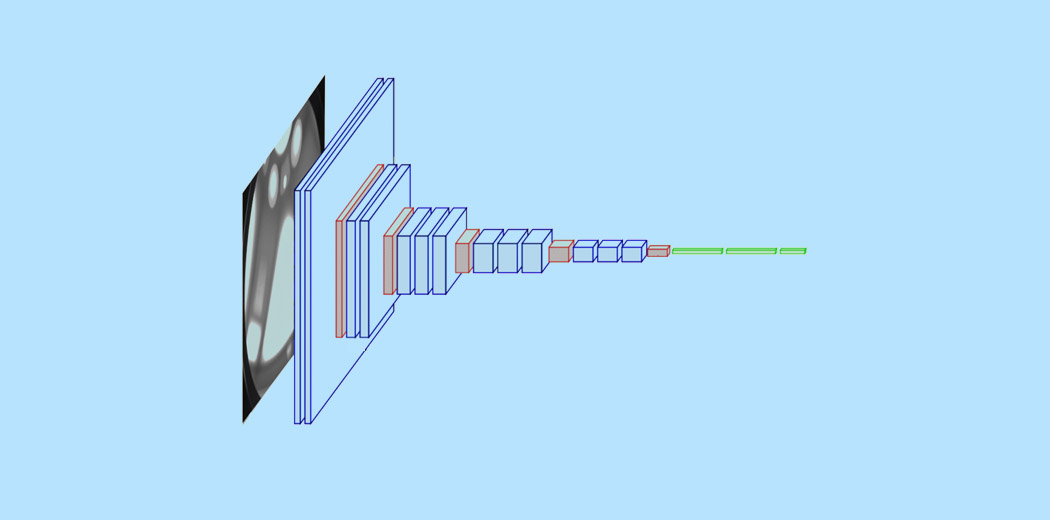
Convolutional neural networks (CNNs) have become the dominant approach for visual recognition tasks. Through the use of convolution and pooling layers, CNNs are able to learn translation-invariant, hierarchical features from images. While CNNs are most commonly trained in a supervised fashion on labeled data, the features they learn can also be used for unsupervised tasks like clustering.
The key idea is to use a CNN pre-trained for image classification as a feature extractor. We input an image to the CNN and take the activations of one of the higher convolutional layers as a feature vector representing that image. These high-level features encode abstract concepts and are typically of much lower dimensionality than the original image.
Some popular CNN architectures commonly used for feature extraction include:
- VGG16
- ResNet
- Inception
- MobileNet
The layer to use for feature extraction is usually one of the last convolutional layers before the fully-connected classification layers. These layers have the richest semantic representations.
For example, consider a VGG16 model pre-trained on the ImageNet dataset. We can input an image and extract the activations of the last pooling layer (named ‘block5_pool‘) as a 25088-dimensional feature vector:
from tensorflow.keras.preprocessing import image
from tensorflow.keras.applications.vgg16 import VGG16, preprocess_input
from tensorflow.keras.models import Model
model = VGG16(weights=‘imagenet‘, include_top=False)
feature_extractor = Model(inputs=model.inputs, outputs=model.get_layer(‘block5_pool‘).output)
img_path = ‘cat.jpg‘
img = image.load_img(img_path, target_size=(224, 224))
x = image.img_to_array(img)
x = np.expand_dims(x, axis=0)
x = preprocess_input(x)
features = feature_extractor.predict(x)
We can visualize what the different convolutional layers of the CNN are learning by plotting their activations:
from tensorflow.keras import backend as Klayer_names = [layer.name for layer in model.layers]
for layer_name in layer_names: if ‘conv‘ in layer_name: layer_output = model.get_layer(layer_name).output intermediate_model = Model(inputs=model.input, outputs=layer_output)
intermediate_prediction = intermediate_model.predict(x) plt.matshow(intermediate_prediction[0, :, :, 0], cmap=‘viridis‘) plt.title(layer_name) plt.tight_layout() plt.show()This reveals how the earlier layers learn to detect simple features like edges and textures while the deeper layers capture more complex, higher-level concepts.
Implementing Image Clustering with a CNN
Now that we can extract meaningful feature representations of images using a CNN, we can apply traditional clustering algorithms to these features to group similar images together.
A simple pipeline for CNN based image clustering looks like:
- Load a pre-trained CNN model and remove the classification layer(s)
- Extract features for each image in the dataset using the pre-trained CNN
- Cluster the extracted features using a clustering algorithm like K-means
Here‘s an example implementation in Python:
import os import numpy as np import matplotlib.pyplot as plt from tensorflow.keras.preprocessing import image from tensorflow.keras.applications.vgg16 import VGG16, preprocess_input from tensorflow.keras.models import Model from sklearn.cluster import KMeansmodel = VGG16(weights=‘imagenet‘, include_top=False) feature_extractor = Model(inputs=model.inputs, outputs=model.get_layer(‘block5_pool‘).output)
root_dir = ‘images/‘ img_paths = [os.path.join(root_dir, f) for f in os.listdir(root_dir) if f.endswith(‘.jpg‘)]
features = [] for img_path in img_paths: img = image.load_img(img_path, target_size=(224, 224)) x = image.img_to_array(img) x = np.expand_dims(x, axis=0) x = preprocess_input(x) feat = feature_extractor.predict(x) features.append(feat.flatten())
features = np.array(features)
k = 5 kmeans = KMeans(n_clusters=k, random_state=22) kmeans.fit(features)
for cluster in range(k): plt.figure(figsize=(10,10)) clusteridxs = np.where(kmeans.labels == cluster)[0] for i, cluster_idx in enumerate(cluster_idxs[:25]): plt.subplot(5, 5, i+1) plt.imshow(image.load_img(img_paths[cluster_idx])) plt.axis(‘off‘)
plt.suptitle(‘Cluster %d‘ % cluster) plt.tight_layout() plt.show()
This code assumes a directory
images/containing the set of images you want to cluster. It extracts VGG16 features for each image, clusters the features using k-means, and then visualizes example images from each discovered cluster.The optimal number of clusters k is a hyperparameter that depends on the data. It can be tuned based on domain knowledge or through more principled methods like the elbow method which looks at the within-cluster sum of squared distances as a function of k.
Some potential improvements to this basic pipeline include:
- Using a custom CNN architecture or different pre-trained model for feature extraction
- Applying dimensionality reduction (e.g. PCA) to the extracted features before clustering
- Using a different clustering algorithm (e.g. Gaussian mixture models, DBSCAN, agglomerative clustering)
Applications and Benefits
Image clustering using deep learning has numerous applications and benefits, including:
-
Content-based image retrieval: Image clustering can help organize and index large image databases to enable efficient content-based retrieval. Given a query image, similar images from the same cluster can be quickly retrieved.
-
Anomaly detection: Clustering can uncover unusual or anomalous images that don‘t fit into any of the discovered groupings. This has applications in detecting defective products, medical abnormalities, or security threats.
-
Data summarization and compression: Clustering provides a compact summary of a large image dataset in terms of a small number of representative clusters. This form of lossy compression can significantly reduce storage and computation requirements while preserving the main patterns in the data.
-
Automatic image organization: Clustering can automatically organize personal photo collections or massive online image databases into meaningful groups for easier browsing and management.
-
Initializing supervised models: The discovered clusters can serve as pseudo-labels for pre-training or initializing supervised deep learning models when ground-truth annotations are scarce or expensive to obtain.
-
Interactive data exploration: Visualizing image clusters can help uncover hidden structures in the data and generate new hypotheses for further investigation.
-
Recommendation systems: Clusters of similar images can improve the relevance and diversity of image recommendations in search engines, social media platforms, or online marketplaces.
Image clustering is part of the broader fields of computer vision and unsupervised learning, which encompass many other innovative techniques and exciting applications at the cutting edge of AI research.
Conclusion
In this post, we saw how deep convolutional neural networks can be used as feature extractors to enable effective image clustering. By levering the powerful, hierarchical visual representations learned by CNNs pre-trained for supervised image recognition, we can discover meaningful groupings in unlabeled image collections.
The proposed approach of combining a pre-trained CNN with a traditional clustering algorithm offers several benefits. It can handle the semantic complexities of image data, scale to large datasets, and be easily implemented using popular deep learning libraries. We discussed some important applications of image clustering and how it can provide value in various domains.
However, there are also some limitations and challenges to consider. The clustering performance depends heavily on the quality of the features extracted by the CNN. Not all pre-trained CNNs are suitable for the target domain, especially if it differs significantly from the dataset used for pre-training (e.g. ImageNet). In some cases, fine-tuning the CNN on domain-specific data or training it from scratch may be necessary. The choice of clustering algorithm and similarity measure also plays a key role and needs to be carefully validated. Finally, the evaluation of clustering results is inherently difficult and subjective since there may be many equally valid ways of partitioning the data.
Some interesting directions for future work include exploring the use of generative models (e.g. GANs) for image clustering, developing specialized clustering algorithms that can exploit the structure of CNN feature spaces, and applying image clustering to more complex data like multi-view or multi-modal images. As unsupervised learning continues to advance, we can expect to see even more powerful and flexible approaches to visual data mining.
References
1. Caron, M., Bojanowski, P., Joulin, A., & Douze, M. (2018). Deep clustering for unsupervised learning of visual features. In Proceedings of the European Conference on Computer Vision (ECCV) (pp. 132-149).
-
Guo, X., Liu, X., Zhu, E., & Yin, J. (2017). Deep clustering with convolutional autoencoders. In International conference on neural information processing (pp. 373-382). Springer, Cham.
-
Krizhevsky, A., Sutskever, I., & Hinton, G. E. (2012). Imagenet classification with deep convolutional neural networks. In Advances in neural information processing systems (pp. 1097-1105).
-
Yang, J., Parikh, D., & Batra, D. (2016). Joint unsupervised learning of deep representations and image clusters. In Proceedings of the IEEE conference on computer vision and pattern recognition (pp. 5147-5156).