Apple‘s Next Frontier: AI-Powered Health Tracking and Personalized Wellness Coaching
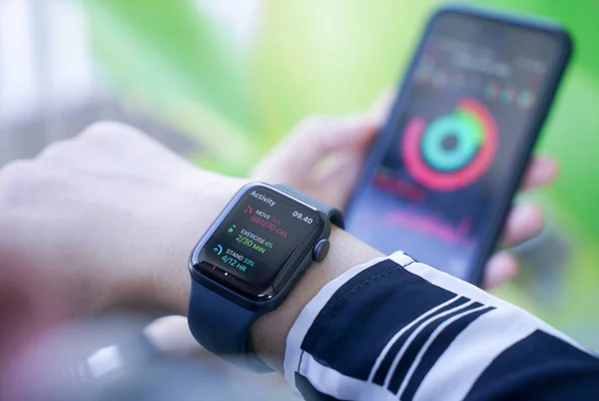
Apple has long been a leader in weaving health and wellness capabilities into its massively popular consumer devices. Features like the ECG app, fall detection, activity tracking, and sleep monitoring have made the Apple Watch an invaluable tool for millions. But the tech giant‘s upcoming slate of intelligent health features, powered by advanced artificial intelligence (AI) and machine learning (ML), could take things to a whole new level.
Quartz: The AI Health Coach in Your Pocket
The centerpiece of Apple‘s new health push is Quartz, a subscription-based app that aims to be a personal health coach, nutritionist, and sleep guru all rolled into one. Leveraging the power of AI and ML, Quartz will analyze data from users‘ Apple Watches and iPhones to provide hyper-personalized wellness suggestions and programs.
For example, Quartz might notice that your resting heart rate has been trending upward and your sleep patterns have been erratic. Using this data, it could suggest a tailored program of breathing exercises, relaxation techniques, and sleep hygiene tips to get you back on track.
On the nutrition front, Quartz could analyze your meal tracking data to identify nutrient gaps and suggest dietary changes. And when it comes to exercise, the app could create personalized workout routines optimized for your fitness level, schedule, and goals.
Under the hood, Quartz will likely leverage techniques like neural networks, deep learning, and reinforcement learning to find patterns in user data and generate intelligent recommendations. By training on the anonymized health data of millions of Apple users who opt in, Quartz‘s AI models could achieve a level of personalization and effectiveness that no human coach could match.
Of course, entrusting sensitive health data to an AI system raises valid concerns about privacy and security. Apple has stated that it will use techniques like differential privacy and on-device processing to protect user information and give individuals granular control over what data is used. But the company will need to be fully transparent about its data practices to build trust.
Emotional Wellbeing, Quantified
Perhaps the most intriguing and controversial of Apple‘s planned features is emotion tracking. The company will soon allow users to log their mood in the Health app and track emotional patterns over time. In the future, it hopes to use AI to infer emotional states automatically based on data points like tone of voice, typing speed, and daily routines.
The potential benefits of emotion tracking are significant. According to the National Alliance on Mental Illness, 1 in 5 U.S. adults experience mental illness each year, and 1 in 20 experience serious mental illness [1]. Many struggle in silence due to stigma or lack of access to care.
If Apple can create an engaging, easy-to-use tool for monitoring mental well-being, it could help millions spot issues early and seek support. AI-powered analytics could identify worrisome patterns and suggest personalized coping strategies or point users to appropriate resources.
However, using AI to infer mental states based on device usage is fraught territory. There are risks of AI systems reinforcing biases, making inaccurate predictions, or being misused to manipulate emotions. Apple will need to work closely with mental health experts and advocacy groups to ensure its emotion tracking tools are clinically valid, respect privacy, and avoid unintended consequences.
A New Era of Proactive Health Monitoring
Diabetes and hypertension are two of the most prevalent chronic health conditions, affecting millions worldwide. According to the CDC, more than 37 million Americans have diabetes, and 1 in 5 don‘t know they have it [2]. Nearly half of adults in the U.S. (47%, or 116 million people) have hypertension [3].
These conditions can lead to serious complications like heart disease, stroke, kidney failure, and vision loss if not managed properly. But many people are unaware they have them until symptoms appear.
This is where Apple‘s research into noninvasive glucose monitoring and blood pressure tracking could be game-changing. By miniaturizing advanced sensor technology and weaving it seamlessly into devices like the Apple Watch, the company could make screening for these conditions as easy as checking the time.
Imagine if your Apple Watch could continuously monitor your blood sugar levels without the need for finger pricks or implanted sensors. It could alert you when your levels are trending too high or low, suggest dietary changes or insulin adjustments in real-time, and share data with your doctor for remote monitoring. For the 422 million people worldwide with diabetes [4], this would be life-altering.
Similarly, a future Apple Watch with blood pressure monitoring could analyze pulse wave patterns to detect signs of hypertension early. It could prompt wearers to confirm readings with a cuff and nudge them to make lifestyle changes or discuss medication with their doctor. Catching high blood pressure early is critical, as it often has no symptoms but raises risks for heart attack, stroke, and other serious issues.
To bring these innovations to life, Apple will likely leverage techniques from the fields of photoplethysmography (using light to measure blood flow), spectroscopy (analyzing light absorption patterns), and advanced signal processing. Miniaturized optical sensors, tuned to detect specific blood markers, could be paired with ML algorithms to enable unobtrusive, continuous monitoring.
But while the potential benefits are immense, the technical challenges are formidable. Accurately measuring glucose and blood pressure without invasive instruments is a complex problem that researchers have grappled with for decades. Even tech giants like Google and Microsoft have poured resources into this area with limited success.
Apple will need to prove that its sensor technology is not only sufficiently miniaturized to fit in a sleek watch but accurate and reliable enough to meet the FDA‘s stringent standards for medical devices. The company is famously secretive about its research, but some reports suggest it has made significant strides in shrinking optical sensor arrays and boosting signal processing power.
If Apple can deliver trustworthy, user-friendly glucose and blood pressure tracking in the next few years, it could spark a sea change in how we screen for and manage these chronic conditions. By enabling early detection and continuous monitoring, Apple‘s innovations could keep countless people healthier for longer.
The Ecosystem Play
Apple‘s new health tracking features are noteworthy on their own but become even more potent when viewed as part of the company‘s broader ecosystem strategy.
By integrating features like emotion tracking, glucose monitoring, and blood pressure measurement across the iPhone, Apple Watch, and even future mixed reality devices, Apple is weaving itself deeper into every aspect of our health and wellness routines. The more the company can establish itself as a trusted, go-to resource for health insights, the harder it becomes for users to switch to a competitor.
This sticky ecosystem dynamic has played out in other domains like fitness, where the combination of the Apple Watch, Fitness+ content, and integrations with third-party workout apps has made Apple a formidable player. The company‘s health moves could create a similar flywheel effect, fueling growth across hardware, services, and partnerships.
Moreover, by providing a unified platform for diverse health and wellness needs, Apple has an opportunity to reshape how we interact with the healthcare system itself. The company is already partnering with leading health systems and insurers on programs that blend at-home monitoring with clinic-based care, aiming to improve outcomes and lower costs.
For example, Apple recently teamed up with the NHS and UK startup Huma on an innovative remote patient monitoring program. Using Huma‘s app and an Apple Watch, patients with long-term conditions can continuously share health data like heart rate, activity levels, and blood oxygen with their care teams, enabling more proactive, personalized care [5].
As Apple‘s health tracking capabilities become more sophisticated, we could see this model expand to encompass a wider range of conditions and use cases. Imagine a future where your doctor could prescribe an Apple Watch app that monitors your blood pressure, coaches you through medication changes, and alerts your care team if readings become concerning.
Of course, Apple isn‘t the only tech giant making moves in this space. Google, Amazon, and a host of startups are all racing to develop AI-powered health tracking tools and platforms. But with its unrivaled brand loyalty, track record of health innovation, and commitment to privacy, Apple is perhaps uniquely positioned to bring intelligent, proactive health monitoring to the masses.
Looking Ahead
As remarkable as Apple‘s health ambitions are, it‘s important to temper expectations and consider the challenges ahead. Noninvasive glucose and blood pressure monitoring have proven thorny problems for decades, and there‘s no guarantee Apple will crack the code anytime soon. The company will need to invest heavily in research and clinical validation to bring these features to market responsibly.
Even for tools closer on the horizon, like Quartz and emotion tracking, Apple will need to strike a delicate balance between personalization and privacy, utility and user agency. As the company wades deeper into the intimate details of our health and well-being, it will face increased scrutiny from regulators, watchdogs, and consumers.
But if Apple can navigate these challenges thoughtfully and deliver on its vision, the impact could be profound. By making proactive health monitoring as accessible and intuitive as checking your notifications, Apple could empower millions to take charge of their well-being and seek care earlier.
For those already living with chronic conditions, Apple‘s ecosystem of intelligent tracking tools could provide a new level of insight, control, and peace of mind. And for the healthcare system as a whole, the data generated by millions of sensor-laden devices could fuel breakthroughs in precision medicine, population health, and care delivery.
As a leader in consumer technology and digital health innovation, Apple has a unique opportunity to accelerate progress toward a future where health is something we continuously nurture, not just something we troubleshoot when issues arise. The road ahead is long and winding, but if Apple succeeds, the destination will be well worth the journey.
References
- Mental Health By the Numbers. National Alliance on Mental Illness. https://www.nami.org/mhstats
- National Diabetes Statistics Report. Centers for Disease Control and Prevention. https://www.cdc.gov/diabetes/data/statistics-report/index.html
- Facts About Hypertension. Centers for Disease Control and Prevention. https://www.cdc.gov/bloodpressure/facts.htm
- Diabetes. World Health Organization. https://www.who.int/news-room/fact-sheets/detail/diabetes
- Huma and NHS Greater Glasgow and Clyde Sign 5-Year Partnership to Deliver Hospital at Home Services. Huma. https://www.huma.com/news/huma-and-nhs-greater-glasgow-and-clyde-sign-5-year-partnership