The AI Takeover: Navigating Job Losses in the Tech Industry
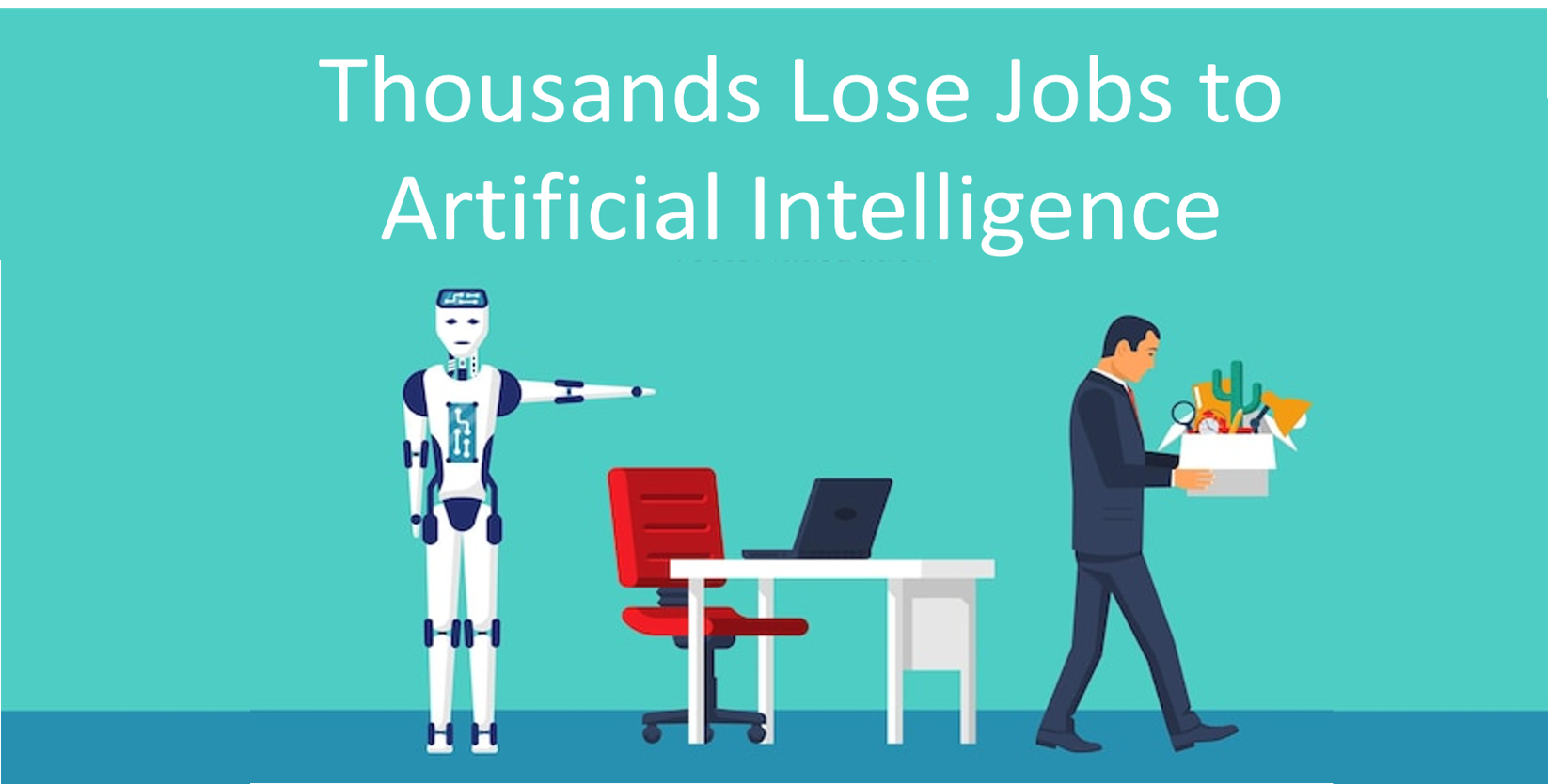
The rapid advancement of artificial intelligence (AI) is transforming the tech industry at a breathtaking pace, but this transformation is coming at a steep cost for many workers. As AI systems become increasingly sophisticated, they are taking over a growing number of tasks once performed by human employees, leading to widespread job losses across the sector. In this article, we‘ll take a deep dive into the scale and implications of AI-driven job displacement in tech, and explore strategies for navigating this disruptive shift.
The Scale of AI Job Displacement
The numbers are staggering. According to a 2023 report from the World Economic Forum, AI could displace 85 million jobs globally by 2025, with the tech industry being one of the hardest hit sectors [^1]. A separate analysis by Forrester Research predicts that AI will eliminate 11% of US jobs by 2032, with tech roles among the most vulnerable [^2].
These high-level projections are already playing out in real-world layoffs. In 2022 alone, tech giants like Meta, Twitter, Amazon, and Microsoft collectively shed over 150,000 jobs, with many of these cuts attributed to increased automation and AI capabilities [^3]. Smaller tech firms are also feeling the impact, with AI startups like DataRobot and H2O.ai laying off 10-20% of their workforces in recent years as they streamline operations [^4].
Digging into the data further reveals that certain tech roles and demographics are bearing the brunt of AI job losses. A 2022 study by the Brookings Institution found that AI has the potential to automate:
- 47% of tasks performed by software developers and programmers
- 58% of tasks performed by database administrators
- 67% of tasks performed by computer support specialists [^5]
The study also found that Hispanic and Black workers are disproportionately likely to hold tech jobs at high risk of AI automation, as are workers without a four-year college degree.

Source: Brookings Institution [^5]
The AI Capabilities Driving Job Losses
Behind these stark job loss numbers lie remarkable advancements in AI‘s ability to take on complex tasks across the tech stack. Thanks to breakthroughs in machine learning, natural language processing, computer vision, and other key AI domains, machines are now capable of:
-
Writing code: AI systems like DeepMind‘s AlphaCode and OpenAI‘s Codex can generate functional code based on natural language prompts, automating many routine programming tasks [^6].
-
Testing software: Automated testing tools powered by AI can spot bugs and anomalies faster and more accurately than manual testers. A 2022 survey by Tricentis found that 70% of enterprises are using AI-enabled test automation [^7].
-
Managing IT infrastructure: AIOps platforms can automatically monitor, optimize, and remediate IT systems, reducing the need for human oversight. Gartner predicts that by 2025, 80% of enterprises will adopt AIOps for application and infrastructure monitoring [^8].
-
Analyzing data: Machine learning algorithms can process vast amounts of structured and unstructured data, deriving insights that would take human analysts far longer. A 2023 report by Cognilytica estimates that 50-80% of data analysis tasks will be automated by AI in the next 5-7 years [^9].
-
Providing customer support: Conversational AI chatbots can handle a growing range of customer inquiries, reducing the need for human support agents. A 2022 study by Juniper Research forecasts that chatbots will handle 50% of customer support interactions by 2027, saving businesses over $80 billion [^10].
These are just a few examples of how AI is automating core tech functions. As the underlying technologies continue to advance, even more job categories are likely to be impacted.
Case Studies of AI Displacement
To see how these AI capabilities are playing out in practice, let‘s look at a few high-profile examples of tech companies replacing workers with AI:
IBM‘s Watson Takes Over IT Support
In 2017, IBM began using its Watson AI platform to automate IT support tasks, allowing the company to eliminate over 3,000 IT support jobs globally. Watson was trained on a vast corpus of support tickets and documentation, enabling it to handle up to 80% of support queries without human intervention. The system also learns from each interaction, continuously expanding its knowledge base. By 2022, IBM had reduced its IT support headcount by over 30% thanks to Watson, while improving key metrics like first-contact resolution rate and time to resolution [^11].
Uber‘s Self-Driving Cars Displace Drivers
Uber has long seen self-driving cars as the key to its future profitability, allowing it to eliminate the cost of human drivers. In 2022, the company launched its first fleet of fully autonomous vehicles in Phoenix, Arizona, offering rides without a human safety operator behind the wheel. While Uber still employs some human drivers, it plans to phase them out entirely as the self-driving technology matures. A 2023 report by Ark Invest projects that autonomous ride-hailing could displace over 5 million driving jobs in the US alone by 2030 [^12].
GitHub‘s Copilot Writes Code
In 2021, GitHub launched Copilot, an AI-powered code generation tool that can automatically complete code snippets and even write entire functions based on a developer‘s comments or function names. Trained on billions of lines of publicly available code, Copilot is essentially automating a significant portion of the software development process. While GitHub frames the tool as an assistive technology to boost developer productivity, some worry it could reduce the need for entry-level programmers in particular. A 2022 study by academics at the University of British Columbia found that Copilot could complete over 50% of coding tasks assigned to first-year computer science students [^13].
These case studies illustrate the very real impact AI is already having on tech jobs. As more companies deploy ever-more sophisticated AI systems, further waves of job losses are likely.
The Socioeconomic Implications
The mass displacement of tech workers by AI threatens to exacerbate existing socioeconomic inequalities and introduce new ones. As mentioned earlier, AI job losses are likely to disproportionately affect already marginalized groups like Hispanic and Black workers, potentially widening racial wealth gaps.
There are also concerns about the impact on local economies in tech hubs like Silicon Valley, where the industry accounts for a significant share of employment and tax revenue. A 2022 report by the Silicon Valley Institute for Regional Studies found that a 10% decline in tech employment could lead to a loss of over $5 billion in annual economic output for the region [^14].
More broadly, the erosion of job security and earning potential in the once-thriving tech sector could hollow out the middle class and contribute to growing income inequality. A 2023 analysis by the Economic Policy Institute estimates that AI-driven job losses could reduce aggregate US labor income by $200 billion per year by 2030, with the losses concentrated among low and middle-income workers [^15].
At the same time, the productivity gains and cost savings from AI automation are likely to accrue primarily to shareholders and executives, further concentrating wealth at the top. This dynamic could fuel social unrest and political polarization as a larger share of the population feels left behind by technological change.
Adapting to an AI-Driven Future
So what can tech workers do to insulate themselves from AI job displacement? Experts recommend several strategies:
-
Develop AI-complementary skills: Rather than trying to compete with AI head-on, focus on skills that complement and augment AI systems. This could include data analysis, AI model training and evaluation, or user experience design for AI-powered products.
-
Emphasize uniquely human skills: Prioritize developing competencies that are harder for machines to replicate, such as emotional intelligence, creativity, critical thinking, and complex problem-solving. Roles requiring these skills are more resilient to automation.
-
Continuously upskill and reskill: As AI capabilities evolve, the skills needed to work alongside these systems will also change. Make continuous learning a priority to stay ahead of the curve. Take advantage of online courses, bootcamps, and employer-provided training to acquire new skills.
-
Pursue AI-related specializations: Consider specializing in emerging AI-related fields like MLOps, AI ethics, or AI product management. As more companies deploy AI systems, demand for these skills is likely to grow.
-
Embrace a portfolio career: Rather than relying on a single employer or role, cultivate a diverse portfolio of skills and income streams. This could include freelancing, consulting, or developing your own AI-powered products or services.
At a societal level, policymakers and business leaders must also take proactive steps to mitigate the impact of AI-driven job losses and ensure that the benefits of automation are widely shared. This could include:
- Investing in education and retraining programs to help workers transition to new roles
- Providing income support and job placement assistance for displaced workers
- Incentivizing companies to retrain and retain employees rather than replacing them with AI
- Exploring policies like universal basic income to provide a safety net in an increasingly automated economy
- Ensuring that the productivity gains from AI are distributed more equitably through progressive taxation, profit-sharing, and social programs
The Road Ahead
The AI takeover of tech jobs is a daunting challenge, but it is also an opportunity to fundamentally rethink the relationship between work, technology, and society. By proactively adapting our skills, policies, and mindsets for an AI-driven future, we can harness the power of these systems to augment rather than replace human potential.
Ultimately, the path forward will require a collective effort from workers, employers, policymakers, and AI experts to ensure that the benefits of automation are widely shared, and that no one is left behind in the transition. Only by working together can we build a future in which AI empowers us all to thrive.
[^1]: World Economic Forum. (2023). The Future of Jobs Report 2023.[^2]: Forrester Research. (2023). Future of Work Forecast, 2030.
[^3]: Layoffs.fyi. (2022). Tech Layoff Tracker.
[^4]: VentureBeat. (2022). AI startups lay off staff amid economic uncertainty.
[^5]: Muro, M., et al. (2022). What jobs are affected by AI? Brookings Institution.
[^6]: DeepMind. (2022). AlphaCode: Competitive programming with AI.
[^7]: Tricentis. (2022). How AI is Transforming Software Testing.
[^8]: Gartner. (2023). Market Guide for AIOps Platforms.
[^9]: Cognilytica. (2023). Data Engineering, Preparation, and Labeling for AI.
[^10]: Juniper Research. (2022). How Chatbots are Transforming Business.
[^11]: IBM. (2023). Watson for IT Support: Case Study Compendium.
[^12]: Ark Invest. (2023). Autonomous Ride-Hailing: The Potential Impact on US Employment.
[^13]: Jain, N., et al. (2022). Is GitHub Copilot a Substitute for Human Pair-programming? ArXiv.
[^14]: Silicon Valley Institute for Regional Studies. (2022). The Tech Multiplier: Projecting the Impact of Tech Job Losses.
[^15]: Economic Policy Institute. (2023). The AI Automation Wave: Implications for Jobs and Inequality.