Bulldogs: Gentle Giants with Hearts of Gold
Introduction
With their unmistakable wrinkled faces, stocky builds, and charming underbites, bulldogs are one of the most iconic and beloved dog breeds in the world. Originally bred for the cruel sport of bull-baiting, these courageous canines have evolved over centuries to become the gentle, loving family companions we know today. Whether serving as loyal sidekicks, goofy charmers, or steadfast protectors, bulldogs capture hearts with their endearing personalities.
As a lifelong dog lover and bulldog enthusiast, I have been enchanted by this breed‘s unique blend of strength, devotion, and whimsy. With their soulful eyes, amusing snorts, and endless cuddles, bulldogs never fail to brighten my day. It‘s impossible not to smile with a jowly bulldog grin beaming up at you! Let‘s take a closer look at what makes this incredible breed so special.
History and Origins
The history of bulldogs can be traced back to ancient Greece and Rome, where broad-mouthed molossian dogs resembling modern bulldogs were used for hunting and guarding. However, it was in England during the 1500s that the bulldog breed truly began to take shape. Unfortunately, bulldogs were originally bred for the barbaric "sport" of bull-baiting, in which a pack of dogs was set upon a tethered bull for the entertainment of spectators.
Bulldogs were prized for their muscular strength, fearlessness, high pain tolerance, and tenacious "bite and hold" style – all qualities that made them formidable bull-baiters. According to a 1631 account by Spanish traveler Duarte Nunez do Leao, the English bulldog had "a stature not very tall, but robust; a large and short snout, big-lipped; the lower jaw protruding beyond the upper, rendering its fangs more visible." When bull-baiting was outlawed in England in 1835, bulldogs faced potential extinction as their original purpose was lost.
Thankfully, devoted breeders like Bill George stepped in and began selectively breeding the dogs to enhance their gentle and affectionate traits while softening their appearance. Through their efforts, the fierce bull-baiting gladiator was transformed into a mild-mannered, good-natured companion. In 1886, the first Bulldog Club was formed in England, and the breed standard was written to preserve the bulldog‘s unique physical traits and temperament.
Bulldog Characteristics and Appearance
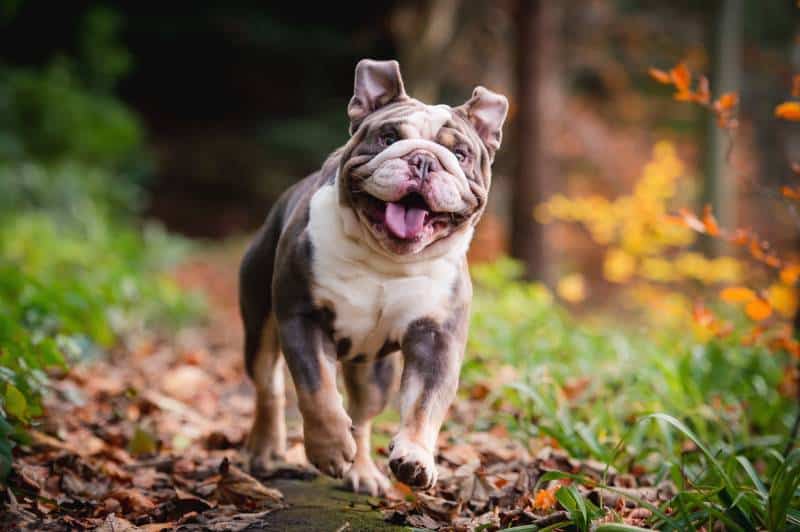
The bulldog‘s distinctive appearance makes them instantly recognizable. Their iconic wrinkled faces feature a short, broad snout, an underbite with an upturned jaw, loose jowls, and a slightly upturned nose. Their small, thin ears are folded back like a rose. Bulldogs have compact, muscular bodies with broad shoulders, deep chests, short legs, and either straight or screwed (corkscrew) tails.
According to the American Kennel Club breed standard, the ideal bulldog‘s "general appearance and attitude should suggest great stability, vigor and strength." Most bulldogs stand between 12-16 inches tall and weigh between 40-55 pounds, with males slightly larger than females. Their short, smooth coats come in a variety of colors, including brindle, fawn, white, red, fallow, and piebald.
This table shows the detailed bulldog breed standard:
| Characteristic | Description |
|---|---|
| Head | Large, square, broad between ears |
| Muzzle | Short, broad, turned upward |
| Jaws | Undershot with lower jaw projecting beyond upper |
| Nose | Large, wide, color black |
| Eyes | Round, dark, set far apart |
| Ears | Small, thin, folded back like a rose |
| Neck | Short, thick, slightly arched |
| Body | Short, broad, deep chest |
| Shoulders | Broad, sloping, muscular |
| Legs | Short, stout, muscular |
| Feet | Compact, round |
| Tail | Short, low set, straight or screwed |
| Coat | Straight, short, smooth, glossy |
Their unique physical features like the shortened snout and wrinkled skin are what make bulldogs so adorable, but these traits also predispose them to certain health issues (which we‘ll discuss more later). It‘s important for potential bulldog owners to understand the breed‘s special care needs.
Temperament and Personality
One of the most endearing qualities of bulldogs is their sweet, gentle disposition. Dr. Jim Thompson, a veterinarian specializing in bulldogs for over 30 years, describes them as "great family companions due to their patience, playfulness, and even temperament." Despite their tough exterior, bulldogs are known for being one of the most loving, dependable, and easygoing breeds around.
These affectionate pups live to love their humans and form incredibly strong bonds with their families, especially children. Bulldogs are renowned for their patience and friendly demeanor with kids of all ages. They tend to be calm, mellow, and adaptable, content with relaxing by your side or engaging in silly antics to entertain you. Studies have shown that simply petting a dog can significantly reduce stress and anxiety in humans, and cuddling with a bulldog is sure to melt your worries away.
While bulldogs may not be the most energetic or athletic breed, they still relish opportunities to have fun with their favorite humans. Most bulldogs would much rather snuggle up with you for a Netflix binge than go for a cross-country hike. They also tend to get along well with other dogs and pets, especially if socialized from a young age. Early socialization and training are key to helping bulldogs develop into well-mannered, confident companions.
This chart summarizes the typical bulldog temperament:
| Trait | Rating |
|---|---|
| Affectionate with family | 5 |
| Good with children | 5 |
| Good with other dogs | 4 |
| Good with strangers | 4 |
| Playfulness | 3 |
| Adaptability | 4 |
| Trainability | 3 |
| Watchdog ability | 2 |
(Scale: 1 = low, 5 = high)
The bulldog‘s courageous and protective nature will still shine through if they sense a threat to their loved ones, but they are not typically aggressive. With their goofy grins and clownish personalities, most bulldogs would much rather kill you with kisses than attack an intruder. These gentle giants just want to love and be loved.
Bulldog Breeds and Variations
While the term "bulldog" typically refers to the English or British bulldog, there are several other bulldog breeds with their own unique characteristics:
-
French Bulldog: Affectionately known as "Frenchies", French bulldogs are smaller than their English cousins, weighing under 28 pounds. They have distinctive "bat ears" and come in a variety of colors including brindle, fawn, and cream. Frenchies are adaptable, playful companions that thrive in urban environments.
-
American Bulldog: Taller and more athletic than the English bulldog, American bulldogs were bred as working farm dogs. They are loyal guardians and require plenty of exercise. American bulldogs come in two varieties: the stockier, mastiff-like Bully type and the leaner, taller Standard type.
-
Olde English Bulldogge: This breed is a recreation of the original working bulldog of the 17th century, with a taller, more muscular build than modern English bulldogs. Olde English Bulldogges are intelligent, confident, and even-tempered, suitable for a more active lifestyle.
While each of these bulldog breeds has their own distinct features, they all share the core bulldog qualities of courage, devotion, and charm. No matter the variety, a bulldog will steal your heart with their larger-than-life personalities in endearingly compact packages.
Bulldog Health and Care
As with any breed, bulldogs have certain health issues that owners need to be aware of. Due to their brachycephalic (flat-faced) anatomy, bulldogs are prone to respiratory problems, especially in hot or humid weather. The bulldog‘s compressed airway, elongated soft palate, and narrow nostrils can cause snoring, snorting, and difficulty breathing, a condition known as brachycephalic airway syndrome.
According to a study by the Universities Federation for Animal Welfare, bulldogs are 11 times more likely to suffer from respiratory disorders compared to other breeds. Signs of respiratory distress include heavy panting, gasping, wheezing, and fainting. To minimize the risk of breathing problems, it‘s crucial to keep bulldogs at a healthy weight, avoid over-exercising them in hot weather, and ensure they have access to shade and fresh water.
Other health issues that bulldogs are genetically predisposed to include:
- Hip dysplasia
- Elbow dysplasia
- Cherry eye
- Skin allergies and infections
- Cardiac disorders
- Bladder stones
- Heat intolerance
This table shows the percentage of bulldogs affected by common health issues according to a survey by the Bulldog Club of America:
| Health Issue | Percentage Affected |
|---|---|
| Cherry eye | 26.6% |
| Hip dysplasia | 25.9% |
| Skin allergies | 20.3% |
| Brachycephalic syndrome | 19.6% |
| Elbow dysplasia | 16.8% |
| Cardiac disorders | 6.3% |
While these statistics may seem alarming, most of these health problems can be managed with proper veterinary care, diet, and lifestyle. Choosing a bulldog puppy from a responsible breeder who health tests their breeding stock can help minimize the risk of inherited disorders. Regular vet check-ups, keeping your bulldog at a healthy weight, and providing them with a nutritious diet and daily exercise are key to keeping them healthy.
With proper care, the average bulldog lifespan is between 8-10 years according to a study by the Kennel Club of the UK. While this may be shorter than some other breeds, the love, loyalty, and laughter that bulldogs bring to your life is immeasurable. As Dr. Thompson puts it, "Bulldogs may have numerous health issues, but I‘m yet to meet one that doesn‘t enrich their family‘s life in countless ways."
Grooming and Maintenance
Don‘t let the bulldog‘s short, smooth coat fool you – these wrinkly pups still need regular grooming to keep their skin healthy and odor-free. Bulldogs shed moderately year-round, so weekly brushing with a soft bristle brush or grooming mitt is recommended to remove loose fur and distribute the natural skin oils that keep their coat shiny.
The bulldog‘s signature facial wrinkles and skin folds are adorable, but they are also a breeding ground for bacteria if not kept clean and dry. It‘s essential to clean your bulldog‘s wrinkles daily with a damp cloth or canine wipes, making sure to dry the skin thoroughly afterwards to prevent irritation and infection. Applying a bit of cornstarch can help absorb excess moisture and prevent skin fold dermatitis.
Other grooming needs include regular nail trims (typically every 2 weeks), ear cleaning (weekly to prevent infection), and dental care (daily brushing and veterinary cleanings). Bulldogs are also prone to flatulence, so feeding them a high-quality, easily digestible diet can help minimize gassiness. Avoid overfeeding as this breed is prone to obesity.
While bulldogs are a low-maintenance breed in terms of exercise needs, they do require moderate daily activity and plenty of mental stimulation to stay happy and healthy. A few short walks and play sessions throughout the day are usually sufficient. Puzzle toys and interactive games are great for keeping their clever minds engaged.
Famous Bulldogs in History and Pop Culture
Throughout history, bulldogs have captured the public‘s imagination with their unique looks and larger-than-life personalities. Here are just a few famous bulldogs that have made their mark:
-
Handsome Dan: Since 1889, a series of bulldogs named Handsome Dan have served as the official mascot of Yale University. The original Handsome Dan was a particularly feisty and courageous pup who even bit the Harvard mascot during a football game!
-
Uga: The University of Georgia‘s beloved bulldog mascot, Uga, has been a fixture at football games since 1956. Each successive Uga is descended from the original and is known for wearing a custom-made jersey and spiked collar.
-
Tillman: This skateboarding, surfing bulldog became an internet sensation in the early 2000s. Tillman held the Guinness World Record for being the fastest skateboarding dog, rolling 100 meters in under 20 seconds!
-
Gamin: General James Harbord‘s bulldog Gamin served alongside him in WWI and went on to become the first bulldog mascot of the US Marine Corps in 1922. Gamin‘s likeness is still used as the official Marine Corps mascot today.
-
Marc Antony and Pawnee: Renowned bulldog breeder John Johnson‘s dogs Marc Antony and Pawnee became canine celebrities in the 1940s, starring in several Hollywood films and TV shows. They even received fan mail from adoring viewers.
-
Gidget: This sassy bulldog starred in a series of Taco Bell commercials in the 1990s with the catchphrase "Yo quiero Taco Bell!" (I want Taco Bell). Gidget‘s popularity helped boost Taco Bell‘s sales and made her a pop culture icon.
These are just a few examples of how bulldogs have charmed their way into our hearts and pop culture over the years. From mascots to movie stars, these charismatic canines have a way of stealing the spotlight with their unforgettable faces and personalities.
Conclusion
Bulldogs may have had a tough start as bull-baiting gladiators, but through the efforts of dedicated breeders and dog lovers, they have evolved into the devoted, good-humored companions we know and love today. With their endearingly wrinkled faces, stocky builds, and hearts of gold, it‘s no wonder that bulldogs consistently rank among the most popular breeds in the world.
Living with a bulldog is a constant source of joy, love, and laughter. From their silly snorts and grunts to their endless cuddles and clownish antics, bulldogs have a way of brightening even the darkest of days. While they may require some extra care and attention due to their unique physical traits and health predispositions, the unconditional love and loyalty that bulldogs give in return is priceless.
As a lifelong dog lover and bulldog aficionado, I can attest to the special place that these gentle giants hold in my heart. Their sweet, soulful eyes and goofy grins never fail to melt my worries away. With a bulldog by your side, you always have a steadfast friend, a courageous protector, and a source of endless entertainment and affection.
If you‘re looking for a devoted companion to share your life with, consider opening your heart and home to a bulldog. These charming, lovable pups may just be the perfect match for you. As French poet Colette once wrote, "Our perfect companions never have fewer than four feet." And with a bulldog, you‘ll have four of the most loving, loyal feet around.