
Cane Corso vs Doberman: The Differences (With Pictures)
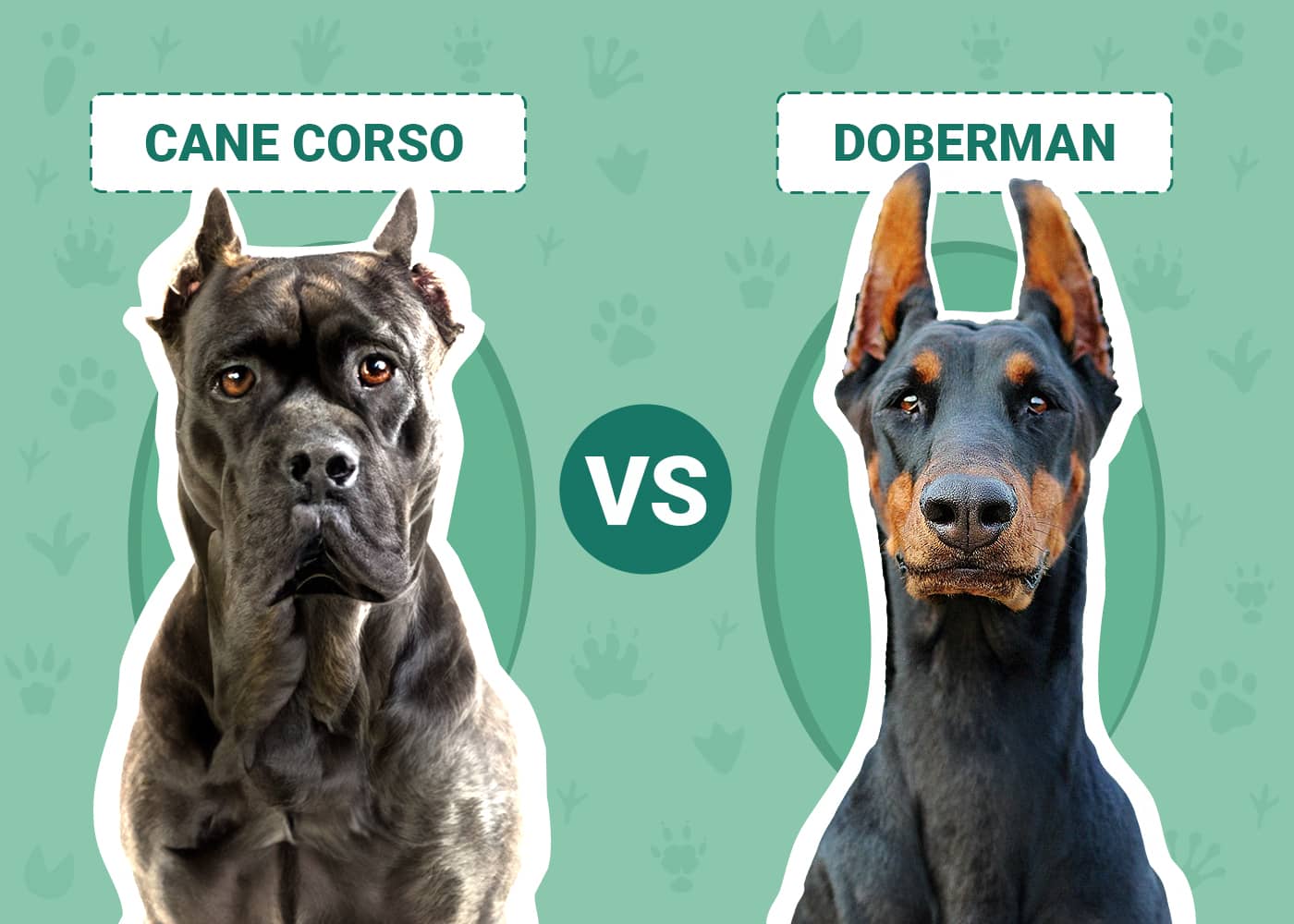
Cane Corso vs Doberman: A Comprehensive Comparison for Prospective Owners
Introduction
If you‘re drawn to large, loyal, protective dogs, you may find yourself trying to decide between the Cane Corso and the Doberman Pinscher. While they‘re distinct breeds with their own unique traits, these impressive canines have quite a bit in common. Both tend to appeal to experienced owners seeking a watchful, trainable companion capable of guarding home and family.
As a veterinarian and lifelong dog lover, I‘ve worked with many Cane Corsos and Dobermans over the years. I‘m always struck by their intelligence, work ethic, and intense devotion to their people. However, I‘ve also seen how their natural guarding instincts, strength, and energy can become difficult to manage without proper training and socialization.
Deciding which of these awe-inspiring breeds is right for you requires carefully evaluating your lifestyle and what you‘re looking for in a canine companion. In this article, we‘ll dive deep into the similarities and differences between the Cane Corso and the Doberman Pinscher to help you determine which might be the ideal match. Let‘s start by looking at the fascinating histories behind these two breeds.
Breed Histories and Origins
The Cane Corso‘s roots trace back to ancient Italy, where their ancestors served as war dogs for the Roman legions. After the fall of the Roman Empire, the Corsos transitioned into all-purpose farm dogs responsible for guarding livestock, hunting game, and protecting property. The name "Cane Corso" translates to "bodyguard dog."
Centuries later, as farming became more mechanized and rural lifestyles declined, the Cane Corso population dwindled. The breed nearly vanished before dedicated breeders revived it in the 1970s. The first Cane Corsos arrived in the United States in 1988, and the AKC recognized the breed in 2010.
The Doberman‘s history is more recent, dating back to the 1890s in Germany. A tax collector named Karl Friedrich Louis Dobermann wanted a formidable guard dog to accompany him on his rounds. He mixed various breeds, likely including the Rottweiler, German Pinscher, and German Shepherd Dog, to develop the Doberman Pinscher.
Dobermanns rapidly gained popularity due to their intelligence, trainability, and noble appearance. They found work as police and military K9s, excelling in obedience and protection sports like Schutzhund. The Doberman arrived in the US in the early 1900s and the AKC recognized the breed in 1908.
While both breeds have guarding heritage in their DNA, modern Cane Corsos and Dobermans are more likely to be companion animals than working dogs. Still, those instincts remain, making proactive training and socialization absolutely essential.
Appearance and Physical Characteristics
One of the most obvious differences between Cane Corsos and Dobermans is their size. Corsos are larger and heavier-boned, with males standing 25-27.5 inches at the shoulder and weighing 99-110 pounds. Females typically stand 23.5-26 inches and weigh 88-99 pounds. They have large, rectangular heads with powerful jaws.
Dobermans have a sleeker, more athletic build. Males stand 26-28 inches and weigh 75-100 pounds, while females are 24-26 inches and 60-90 pounds. They have long, muscular necks and wedge-shaped heads. Traditionally, Dobermans had docked tails and cropped ears, but these practices are becoming less common.
Both breeds have short, shiny coats that shed moderately. The Cane Corso‘s coat comes in black, gray, fawn, and red, with or without brindling. White patches are allowed on the chest and toes. The Doberman‘s coat is classically black with rust-colored markings, but blues, fawns, and reds also occur.
Temperament and Personality Traits
Cane Corsos and Dobermans share many positive qualities: intelligence, confidence, loyalty, and protectiveness towards family. They bond deeply with their people and have strong instincts to guard home and loved ones from perceived threats. Socialization is crucial to prevent that natural wariness from becoming fearful aggression.
Corsos tend to be calmer and more serious-minded than Dobermans. They have a steady, unflappable presence and more of an "aloof dignity." While not typically cuddly, they show affection in subtle ways and thrive on being near their humans. They can be a bit more stubborn and domineering than Dobermans.
Dobermans are famously dedicated to their owners, almost to the point of being "Velcro dogs." They‘re sensitive and attuned to human emotions, with a goofy side that contrasts their intimidating reputation. Extremely smart and eager to work, Dobies excel in canine sports and service roles. They‘re more demonstrative than Corsos.
Neither of these breeds could be called low-maintenance. They require abundant physical exercise, mental stimulation, consistent training, and lots of human companionship to be happy, well-mannered pets. Corsos and Dobies left alone too much can become destructive and prone to behavioral issues.
Training and Trainability
What Cane Corsos and Dobermans lack in being "easy" pets, they make up for in trainability. Both breeds are extremely smart, observant, and tuned-in to their owners. They love learning new things and thrive on the mental stimulation of training. Positive reinforcement methods tend to work best.
Despite their willingness to please, Corsos and Dobies are strong-willed dogs who require a confident handler. They‘ll quickly take advantage if they sense their human is wishy-washy or inconsistent. First-time owners may find them challenging. Enrolling in obedience classes is always a good idea.
Early and ongoing socialization is arguably even more important than obedience training for these breeds. Exposing them to new people, animals, places, and situations from puppyhood helps them develop into well-adjusted, flexible adults. Inadequate socialization can result in fearfulness or aggression.
Firm, fair leadership is a must, but Corsos and Dobies don‘t respond well to heavy-handed training techniques. Building a relationship based on trust and respect is key. Many enjoy learning tricks, practicing agility, and participating in protection sports like IGP. Tracking and scent work are also great ways to exercise their noses and brains.
Exercise Needs
With their athletic builds and working heritage, Cane Corsos and Doberman Pinschers need more than just a daily walk around the block. They require at least an hour of vigorous exercise each day, preferably split between two sessions. Think running, hiking, swimming, fetching, and playing with other dogs.
In addition to physical workouts, these brainy breeds need plenty of mental exercise. Food puzzles, nose work games, and obedience training help keep their minds sharp and stave off boredom. A bored Corso or Dobie can be a destructive Corso or Dobie – and they have the size and strength to do some serious damage.
A securely fenced yard is ideal for giving these dogs room to run, but it‘s no substitute for interactive playtime and structured exercise. Both breeds have strong prey drives, so visiting the dog park requires caution. Dobermans have more endurance and "go" than Cane Corsos, but neither belongs in a sedentary home.
Grooming and Care Requirements
One perk of the Cane Corso and the Doberman is their low-maintenance grooming needs. Both have short, slick, close-lying coats that are easy to care for. Weekly brushing keeps shedding under control, and they only need occasional baths. However, they can be heavy seasonal shedders, so investing in a quality vacuum is a must.
Other grooming needs include regular nail trims, ear cleaning, and dental care. It‘s best to start these routines early so your dog learns to accept handling. Doberman ears can be especially prone to infections, so check them weekly and clean as needed. Your veterinarian can demonstrate proper techniques.
Like all purebred dogs, Cane Corsos and Dobermans have some health issues to be aware of. Responsible breeders screen their dogs for hip dysplasia, elbow dysplasia, eye disorders, heart disease, and other heritable conditions. Dilated cardiomyopathy is a major concern in Dobies, while bloat and eyelid abnormalities affect many Corsos.
Working with a reputable breeder, keeping your dog fit and lean, and scheduling regular vet check-ups can help minimize health risks. Corso and Doberman owners should also familiarize themselves with the signs of bloat, a life-threatening condition requiring immediate emergency care.
Suitability for Families and Homes
Cane Corsos and Dobermans can make wonderful family companions in the right circumstances. They‘re playful and endlessly devoted to their humans, with the vigilance to be excellent watchdogs. But they‘re not the easiest breeds, especially for novice owners or those with very young children.
Corsos and Dobies demand more time, training, and attention than many people can provide. They need space to move, but they‘re not ideal for outdoor-only life – these are dogs who want to be with their people. Combining their strength and protectiveness with a lack of socialization and inconsistent boundaries is a recipe for problems.
For experienced, committed owners who understand working breeds and enjoy being active with their dogs, Cane Corsos and Dobermans can be immensely rewarding. They form powerful bonds with their humans and would do anything to keep them safe. But they‘re not for busy families, frequent travelers, or anyone unable to give them abundant daily exercise and interaction.
If there are other pets in the home, it‘s best to raise a Corso or Dobie with them from puppyhood. Some can have same-sex aggression (especially males) or view smaller animals as prey. However, a well-socialized Corso or Dobe can certainly learn to coexist peacefully with the family cat or a housemate dog.
Conclusion
As we‘ve seen, Cane Corsos and Doberman Pinschers are more alike than different. Both are loyal, trainable, protective companions originally developed as working guard dogs. They share similar grooming and health needs, and unfortunately also similar reputations as "aggressive breeds" in the eyes of the ill-informed.
Choosing between these noble breeds is largely a matter of personal preference. If you like a larger, calmer dog with a slightly more independent spirit, the Cane Corso might be your match. If you prefer a sleeker, more energetic and handler-focused dog, the Doberman could be your ideal companion.
Whichever breed you‘re drawn to, research is essential. Visit dog shows to meet breeders and their dogs. Ask for the contact info of other owners so you can see Corsos and Dobies in their home environments. Spend time with adults of both breeds to get a feel for their personalities.
When you‘ve settled on either a Cane Corso or a Doberman Pinscher, choose a responsible breeder committed to health testing and temperament screening. Prepare to be patient, as waitlists are common. Then get ready to welcome an intelligent, devoted, and diligent new best friend into your life.





)