Caucasian Shepherd vs Tibetan Mastiff: A Comprehensive Comparison
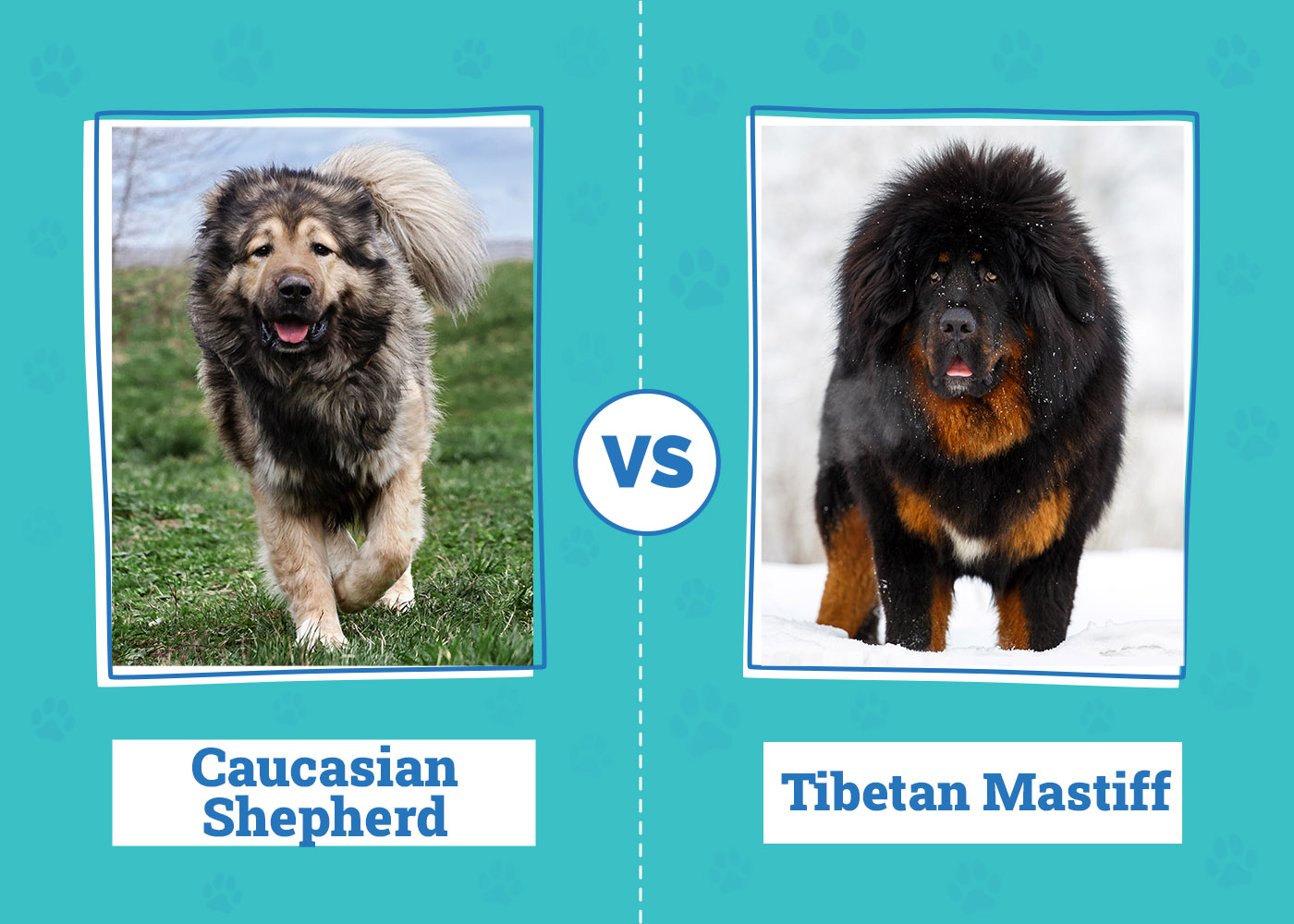
The Caucasian Shepherd and Tibetan Mastiff are two of the world‘s most ancient and impressive dog breeds. Descending from legendary guardian dogs in the harsh Caucasus Mountains and Himalayan plateaus respectively, these powerful canines were bred to protect livestock and property in some of the most forbidding environments on Earth. While they share many similarities as mastiff-type dogs with a long history of working alongside humans, the Caucasian Shepherd and Tibetan Mastiff also have unique characteristics that set them apart.
In this in-depth comparison, we‘ll examine the key traits of the Caucasian Shepherd Dog and Tibetan Mastiff, from their physical appearance and temperament to special considerations for training, grooming, and health. Whether you‘re trying to choose between these two majestic breeds or simply want to learn more about them, this guide will provide expert insights to help inform your understanding.
Origins and History
To understand the Caucasian Shepherd and Tibetan Mastiff of today, it helps to examine their long and storied past as ancient working dogs:
Caucasian Shepherd
The Caucasian Shepherd Dog, also known as the Caucasian Ovcharka, emerged as a distinct breed in the Caucasus Mountain region encompassing parts of Russia, Georgia, Armenia, and Azerbaijan. For hundreds of years, these rugged, bear-like dogs served as livestock guardians and protectors, defending sheep and cattle against predators like wolves and bears in the harsh mountain climate.
Caucasian Shepherd Dogs were also used in military roles by Armenian armies as far back as the 1st century BC. Their development into the modern breed began in the 1920s in the Soviet Union, where they gained popularity as guard dogs and companions. The first breed standard was published in 1931.
Tibetan Mastiff
The Tibetan Mastiff originated in the Himalayan mountains of Tibet, where for millennia they served as guardians of herds, flocks, tents, villages, monasteries, and palaces. With their thick double coats and hardy constitutions, they were well-equipped to work in the extreme climate and high altitudes of the Tibetan Plateau.
In Tibetan culture, Tibetan Mastiffs were considered sacred and believed to bring good fortune. They were often kept in pairs at the entrances of homes and monasteries. These noble dogs were so highly prized that they were used as gifts and tribute between Tibetan nobility and the ruling Chinese emperors.
Many experts consider the Tibetan Mastiff to be an ancestor of all modern mastiff breeds. In recent years, the Tibetan Mastiff‘s popularity has surged in China, with some specimens fetching millions of dollars, though most are still prized as protective family companions rather than status symbols.
Physical Characteristics
With their thick fur, muscular builds, and massive heads, the Caucasian Shepherd and Tibetan Mastiff can appear quite similar at first glance. However, a closer look reveals some key differences between these behemoth breeds.
Caucasian Shepherd
A male Caucasian Shepherd typically stands 25-30 inches at the shoulder and weighs 110-170 pounds, while females are somewhat smaller at 23-28 inches and 100-150 pounds. They have large, muscular frames with powerful legs, a deep chest, and a broad head. The ears are high-set, triangular, and hanging. The tail is long, thick and carried low.
The Caucasian Shepherd‘s coat is a thick double coat with a dense, soft undercoat and coarse, long outercoat that is straight or slightly wavy. Coat colors include gray, fawn, tan, reddish-brown, agouti, brindle and piebald, often with white markings. The face and muzzle usually have a darker mask.
Tibetan Mastiff
Male Tibetan Mastiffs stand at least 26 inches at the shoulder and weigh 100-160 pounds or more, with females being somewhat smaller at a minimum of 24 inches and 75-125 pounds. They have a heavy, muscular build similar to the Caucasian Shepherd but are typically a bit leaner and less bulky. The head is broad and heavy with a strong muzzle, giving it a lion-like appearance. The ears are medium-sized, triangular and pendant, and the tail is long and bushy.
The Tibetan Mastiff‘s thick double coat consists of a heavy, wooly undercoat and an outer coat that is straight and coarse, forming a mane around the neck and shoulders, especially in males. Coat colors include black, brown, blue-gray and gold, often with white markings on the chest and feet. Some Tibetan Mastiffs have a blue or black tongue.
Temperament and Personality
As guardian breeds with strong protective instincts, both the Caucasian Shepherd and Tibetan Mastiff are known for their courage, loyalty, and wariness towards strangers. However, there are some general differences when it comes to their personalities:
Caucasian Shepherd
Caucasian Shepherds are highly territorial and can be aggressive towards people and animals they perceive as threats. They have a very strong guarding instinct and will fearlessly defend their family and property. At the same time, they are usually gentle and affectionate with their own family, including children, if raised and socialized properly.
Caucasian Shepherds are known for being independent, willful, and somewhat aloof. They are not typically outgoing or eager to please like some breeds. Their serious, dignified demeanor and suspicion of strangers means they are better suited to experienced owners than first-time dog owners.
Tibetan Mastiff
Tibetan Mastiffs are also deeply loyal and protective of their families while being reserved and distrustful of strangers. However, they are said to be somewhat less aggressive and more easygoing with visitors than Caucasian Shepherds if properly trained and socialized.
With their loved ones, Tibetan Mastiffs are calm, patient, and affectionate. They can be good with children when raised with them and properly supervised. They are independent thinkers but often form very deep bonds with their owners and are emotionally sensitive.
Like the Caucasian Shepherd, the Tibetan Mastiff‘s strong guarding instincts mean that training and socialization from an early age are a must. Tibetan Mastiffs are not recommended for novice owners and should never be left unsupervised with children or other dogs.
Training and Exercise Needs
Given their size, strength, and guardian heritage, both the Caucasian Shepherd and Tibetan Mastiff require knowledgeable training and plenty of daily exercise to be safe and well-behaved companions:
Caucasian Shepherd
The Caucasian Shepherd is a highly intelligent breed but also has a stubborn, independent streak that can make training a challenge. They need consistent, firm training starting from puppyhood using positive reinforcement methods. Harsh corrections will only make them shut down.
Proper socialization to a variety of people, places, and situations is crucial for this territorial breed. Teaching a Caucasian Shepherd to differentiate between real threats and normal life is key to having a stable, discerning dog. With their size and guarding instinct, an out-of-control Caucasian Shepherd can be very dangerous.
Caucasian Shepherds have moderate exercise needs but still require at least an hour of physical activity daily, along with plenty of mental stimulation. A securely fenced yard is a must, as they can be escape artists. This breed is not well-suited for apartment living.
Tibetan Mastiff
Tibetan Mastiffs are highly intelligent and pick up on new commands quickly. However, their independent nature means they can be strong-willed and stubborn. They require a confident, consistent owner who will establish clear rules and expectations without resorting to harsh punishments. Tibetan Mastiffs respond best to positive reinforcement and reward-based training.
Early, extensive socialization is key to raising a well-mannered Tibetan Mastiff that can distinguish between legitimate threats and harmless strangers. Without proper socialization, this breed‘s protective instincts can lead to excessive suspicion and even aggression.
Tibetan Mastiffs have relatively low energy levels but still need a good hour of exercise daily to stay physically and mentally fit. They enjoy hikes, romps in a securely fenced yard, and playing with their owners. This breed is not suited for living in small spaces and does best with room to roam.
Grooming and Care
With their thick double coats, both the Caucasian Shepherd and Tibetan Mastiff have significant grooming needs, especially during shedding season:
Caucasian Shepherd
Caucasian Shepherds have a long, dense coat that requires regular brushing, at least 2-3 times per week or more often during heavy shedding periods. They shed moderately year-round and more heavily in the spring and fall. Regular baths every few months can help keep their coat and skin healthy.
Tibetan Mastiff
Tibetan Mastiffs are double-coated with a thick, woolly undercoat and heavy outercoat. They shed fairly constantly with a heavier shed once or twice a year. Weekly brushing is needed to remove loose fur and prevent matting and tangling. More frequent grooming will be necessary during the seasonal coat blow.
For both breeds, regular nail trims, ear cleaning, and dental care are also important. Starting these maintenance habits early will help your giant guardian dog stay comfortable with handling.
Health Concerns
As large breeds, both the Caucasian Shepherd and Tibetan Mastiff are prone to certain health issues that potential owners should be aware of:
Caucasian Shepherd
- Hip and elbow dysplasia
- Obesity
- Bloat (gastric dilatation volvulus)
- Eye problems like entropion and ectropion
- Hypothyroidism
- Skin problems like hot spots
Tibetan Mastiff
- Hip and elbow dysplasia
- Eye problems like entropion, ectropion and progressive retinal atrophy
- Hypothyroidism
- Heart problems like dilated cardiomyopathy
- Autoimmune thyroiditis
- Skin problems like demodectic mange
Choosing a responsible breeder who health tests their breeding stock can help minimize the risk of genetic disorders. Providing your Caucasian Shepherd or Tibetan Mastiff with a healthy diet, regular exercise, and preventive vet care can help them lead a long, healthy life. The average lifespan for both breeds is around 10-12 years.
Ideal Home and Owner
Given their size, strength, and strong guarding instincts, both the Caucasian Shepherd and Tibetan Mastiff need experienced owners who can provide confident, consistent leadership and are committed to proper training and socialization.
These breeds are not suited for first-time dog owners, apartment dwellers, or those who want a gregarious, eager-to-please dog. Caucasian Shepherds and Tibetan Mastiffs are best for homes with a large, securely fenced yard where they can patrol and protect their territory. They should never be left alone with children or other pets.
Owners must be prepared to put in the time and effort to train, socialize and exercise their Caucasian Shepherd or Tibetan Mastiff to help them become a safe, stable guardian. While they are not the most affectionate or outgoing breeds, they bond deeply with their families and are steadfast, courageous protectors for those they love.
Final Thoughts
The Caucasian Shepherd and Tibetan Mastiff are two formidable yet magnificent breeds with a long history as guardian dogs in some of the world‘s harshest environments. While they share many characteristics like their large size, thick coats, protective instincts and wariness of strangers, they also have unique traits that may make one a better fit than another for a particular home.
The Caucasian Shepherd tends to be somewhat more aloof and territorial, requiring an owner with experience handling strong-willed, independent dogs. The Tibetan Mastiff is often described as a bit calmer and more discriminating as a watchdog, though still requiring plenty of training and socialization.
Ultimately, the best way to choose between a Caucasian Shepherd and Tibetan Mastiff is to research breeders, meet adult dogs of both breeds if possible, and honestly evaluate what you can provide in terms of training, socialization, exercise and care. Proper breeding, raising and handling can make a bigger difference than breed when it comes to a guardian dog‘s temperament and manageability.
If you are prepared for the commitment of owning a giant, protective breed, either a well-bred Caucasian Shepherd or Tibetan Mastiff can be a noble, majestic companion capable of deep devotion and courage in guarding those they love. These ancient breeds may not be for everyone, but for the right owners, they are unmatched in their loyalty, strength and beauty.