Essential Tools for the Modern Data Scientist: A Comprehensive Guide
Introduction
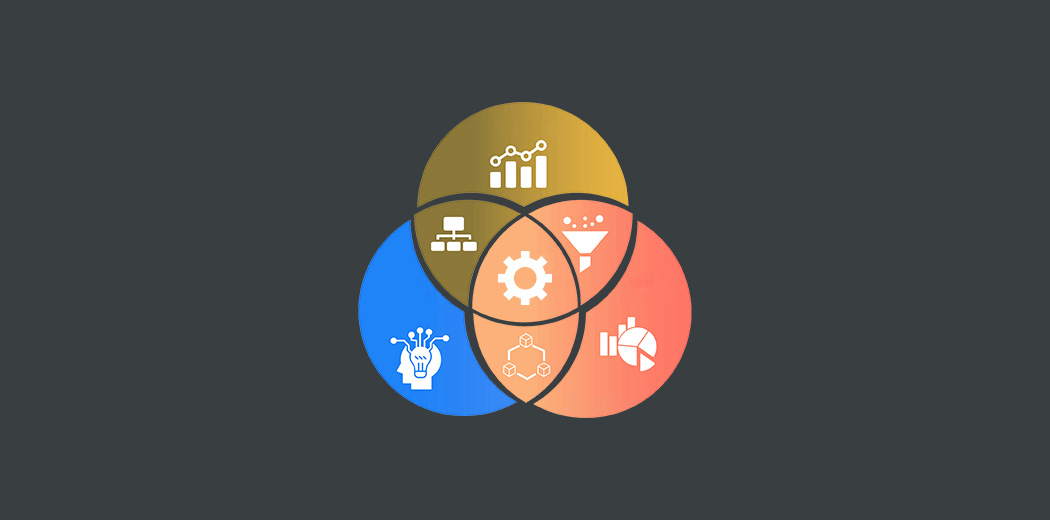
Data science has emerged as one of the most in-demand and exciting fields in the past decade. At its core, data science involves using scientific methods, processes, algorithms and systems to extract knowledge and insights from structured and unstructured data. The data science spectrum encompasses a wide range of tasks and roles, from data analysis and visualization to machine learning and artificial intelligence.
To be effective in this rapidly evolving field, data scientists need to be proficient in a variety of tools and technologies. In this comprehensive guide, we‘ll explore the essential tools that every data scientist should know, from programming languages and libraries to cloud platforms and specialized tools. Whether you‘re a beginner looking to break into the field or an experienced practitioner looking to expand your toolkit, this guide will provide you with a solid foundation in the tools of the trade.
Programming Languages for Data Science
At the heart of data science is programming. Data scientists use programming languages to manipulate, analyze, and visualize data, as well as to build and deploy machine learning models. While there are many programming languages used in data science, three of the most popular are Python, R, and SQL.
Python
Python is a high-level, general-purpose programming language that has become the lingua franca of data science. Its simple, readable syntax and vast ecosystem of libraries and frameworks make it an ideal choice for data manipulation, analysis, and machine learning. Some of the most popular Python libraries for data science include:
- NumPy: A library for working with large, multi-dimensional arrays and matrices of numerical data
- pandas: A library for data manipulation and analysis, providing data structures and functions for working with structured data
- Matplotlib: A plotting library for creating static, animated, and interactive visualizations in Python
- scikit-learn: A machine learning library featuring various classification, regression and clustering algorithms
Python‘s popularity in data science has led to the development of many specialized IDEs and development environments, such as Jupyter Notebook and JupyterLab, which provide an interactive, web-based interface for working with Python code and data.
R
R is a programming language and environment specifically designed for statistical computing and graphics. It provides a wide variety of statistical and graphical techniques, including linear and nonlinear modeling, classical statistical tests, time-series analysis, classification, clustering, and more. R has a large and active community of users and developers, who have created thousands of packages for various data science tasks.
Some of the most popular R packages for data science include:
- dplyr: A grammar of data manipulation, providing a consistent set of functions that help you solve the most common data manipulation challenges
- ggplot2: A system for creating graphics based on the Grammar of Graphics, allowing you to create complex, publication-quality plots with just a few lines of code
- caret: A set of functions that attempt to streamline the process of creating predictive models, featuring tools for data splitting, pre-processing, feature selection, model tuning, and variable importance estimation
Like Python, R has its own specialized IDEs and development environments, such as RStudio, which provide an integrated environment for working with R code, data, and visualizations.
SQL
SQL (Structured Query Language) is a domain-specific language used for managing and manipulating relational databases. While not a general-purpose programming language like Python or R, SQL is an essential tool for data scientists working with large, structured datasets stored in databases. SQL allows you to extract, filter, and aggregate data from databases, as well as to perform complex joins and subqueries.
Some of the most popular relational database management systems (RDBMS) used in data science include:
- MySQL: An open-source RDBMS that is widely used for web applications and data warehousing
- PostgreSQL: A powerful, open-source object-relational database system with strong support for extensibility and standards compliance
- Microsoft SQL Server: A proprietary RDBMS developed by Microsoft, featuring strong support for business intelligence and data warehousing
Data Science Libraries and Frameworks
In addition to programming languages, data scientists rely on a variety of libraries and frameworks to perform common tasks and accelerate their workflow. Here are some of the most popular libraries and frameworks used in data science:
NumPy
NumPy is a fundamental package for scientific computing in Python. It provides support for large, multi-dimensional arrays and matrices, along with a large collection of mathematical functions to operate on these arrays efficiently. NumPy is the foundation upon which many other Python data science libraries are built.
pandas
pandas is a powerful data manipulation and analysis library for Python. It provides high-performance, easy-to-use data structures and data analysis tools, including the DataFrame, a 2-dimensional labeled data structure with columns of potentially different types. pandas is an essential tool for data cleaning, transformation, and analysis.
scikit-learn
scikit-learn is a machine learning library for Python, featuring various classification, regression and clustering algorithms, as well as tools for model selection and evaluation. scikit-learn is built on top of NumPy, SciPy, and matplotlib, and is designed to interoperate with the Python numerical and scientific libraries.
TensorFlow
TensorFlow is an open-source software library for dataflow and differentiable programming across a range of tasks, developed by Google. It is commonly used for machine learning and deep learning applications, such as neural networks and natural language processing. TensorFlow provides a flexible ecosystem of tools, libraries and community resources that lets researchers push the state-of-the-art in ML and developers easily build and deploy ML powered applications.
PyTorch
PyTorch is an open-source machine learning library based on Torch, used for applications such as computer vision and natural language processing, primarily developed by Facebook‘s AI Research lab. It is known for its ease of use and flexibility, as well as its strong support for GPU acceleration. PyTorch has gained popularity in the research community due to its dynamic computation graphs and strong support for custom neural network architectures.
Cloud Platforms for Data Science
Cloud computing has revolutionized the field of data science by providing researchers and practitioners with access to virtually unlimited compute resources and storage. The three major cloud providers – Amazon Web Services (AWS), Microsoft Azure, and Google Cloud Platform (GCP) – all offer a wide range of services and tools specifically designed for data science and machine learning workloads.
Amazon Web Services (AWS)
AWS offers a comprehensive suite of data science tools and services, including:
- Amazon SageMaker: A fully-managed platform that enables developers and data scientists to quickly and easily build, train, and deploy machine learning models at any scale
- Amazon EMR: A web service that makes it easy to process vast amounts of data using open source tools such as Apache Spark, Hadoop, HBase, Hive, and Presto
- Amazon Redshift: A fast, fully managed, petabyte-scale data warehouse that makes it simple and cost-effective to analyze all your data using standard SQL and your existing business intelligence tools
Microsoft Azure
Microsoft Azure provides a range of data science tools and services, including:
- Azure Machine Learning: A cloud-based environment you can use to train, deploy, automate, manage, and track machine learning models
- Azure Databricks: A fast, easy, and collaborative Apache Spark-based analytics platform optimized for Azure
- Azure Synapse Analytics: A limitless analytics service that brings together enterprise data warehousing and big data analytics
Google Cloud Platform (GCP)
GCP offers a variety of data science tools and services, including:
- AI Platform: A suite of machine learning tools and services that enable data scientists and developers to build, deploy, and manage ML models at scale
- BigQuery: A fully-managed, serverless data warehouse that enables scalable analysis over petabytes of data
- Dataproc: A fully-managed cloud service for running Apache Spark and Hadoop clusters
Automated Machine Learning (AutoML)
Automated Machine Learning (AutoML) is an emerging field that aims to automate the end-to-end process of applying machine learning to real-world problems. AutoML tools and platforms offer a way for non-experts to build and deploy ML models without extensive programming or data science knowledge. Some popular AutoML tools and platforms include:
- Google Cloud AutoML: A suite of machine learning products that enables developers with limited machine learning expertise to train high-quality models specific to their business needs
- H2O Driverless AI: An artificial intelligence (AI) platform that automates machine learning workflows, enabling data scientists, data engineers, mathematicians, physicists, and other data workers to develop highly accurate and scalable predictive models
- DataRobot: An enterprise AI platform that automates the end-to-end process of building, deploying, and maintaining AI applications
Data Visualization and Business Intelligence Tools
Data visualization and business intelligence (BI) tools enable data scientists and analysts to explore, analyze, and communicate insights from data. These tools allow users to create interactive dashboards, reports, and visualizations that help stakeholders make data-driven decisions. Some popular data visualization and BI tools include:
- Tableau: A powerful and intuitive platform for visual analytics that allows users to create interactive dashboards, worksheets, and storyboards
- Microsoft Power BI: A collection of software services, apps, and connectors that work together to turn unrelated sources of data into coherent, visually immersive, and interactive insights
- Qlik: An end-to-end data integration and analytics platform that allows organizations to access, transform, analyze, and visualize their data
IDEs and Development Environments
Integrated Development Environments (IDEs) and development environments are essential tools for data scientists, providing a centralized interface for writing, testing, and debugging code. Some popular IDEs and development environments for data science include:
- Jupyter Notebook: An open-source web application that allows you to create and share documents that contain live code, equations, visualizations and narrative text
- JupyterLab: The next-generation web-based user interface for Project Jupyter, providing a flexible and extensible environment for interactive and reproducible computing
- RStudio: An integrated development environment (IDE) for R, providing a powerful and productive user interface for R programming
- Visual Studio Code: A lightweight but powerful source code editor which runs on your desktop and is available for Windows, macOS and Linux
Specialized Data Science Tools
In addition to general-purpose programming languages, libraries, and frameworks, data scientists often rely on specialized tools for specific tasks and workloads. Here are a few examples:
- Apache Spark: A fast and general-purpose cluster computing system that provides APIs for Java, Scala, Python and R, as well as an optimized engine that supports general execution graphs
- Apache Hadoop: A framework that allows for the distributed processing of large data sets across clusters of computers using simple programming models
- MongoDB: A cross-platform document-oriented NoSQL database program that uses JSON-like documents with schema
- Talend: An open source data integration platform that provides tools to access, transform, and integrate data from various sources
Version Control and Collaboration
Version control is an essential practice for data scientists, enabling them to track changes to their code, collaborate with others, and revert to previous versions if needed. Git is the most popular version control system used by data scientists, and GitHub is the most popular hosting platform for Git repositories.
Using Git and GitHub, data scientists can:
- Track changes to code, data, and other project files over time
- Collaborate with others by sharing code and data through repositories
- Create branches to experiment with new features or bug fixes without affecting the main codebase
- Merge branches back into the main codebase when changes are complete
- Revert to previous versions of code or data if needed
Future Trends in Data Science Tools and Platforms
The field of data science is rapidly evolving, and new tools and platforms are emerging all the time. Here are a few trends to watch in the coming years:
- Automated machine learning (AutoML) will continue to gain popularity, enabling non-experts to build and deploy ML models with minimal programming or data science knowledge
- Cloud-based platforms will become even more important, providing data scientists with access to virtually unlimited compute resources and storage
- Open source tools and libraries will continue to dominate the data science landscape, with new projects emerging to address specific challenges and use cases
- Data science will become increasingly specialized, with tools and platforms emerging for specific domains such as healthcare, finance, and logistics
- Collaboration and reproducibility will become even more important, with tools and platforms emerging to support team-based workflows and reproducible research
Conclusion
Data science is a complex and rapidly evolving field, requiring proficiency in a wide range of tools and technologies. From programming languages and libraries to cloud platforms and specialized tools, data scientists need to be able to choose the right tool for the job and adapt to new technologies as they emerge.
By mastering the essential tools covered in this guide, data scientists can unlock the full potential of their data and gain valuable insights that drive business decisions. Whether you‘re a beginner just starting out in the field or an experienced practitioner looking to expand your toolkit, staying up-to-date with the latest tools and trends is essential for success in data science.