
Creating an Artificial Artist: Colorizing Photos with Neural Networks
Introduction
Imagine taking a old black-and-white photograph and transforming it into vibrant color, as if by magic. In recent years, this fantasy has become reality thanks to rapid progress in artificial intelligence. By training neural networks on millions of images, researchers have taught algorithms to recognize patterns and intelligently add color to grayscale pictures.
The results are often stunning, bringing historic images to life in a completely new way. But the technology isn‘t limited to restoring old photos. It can also be used to recolor existing pictures or even generate original artwork in novel styles.
In this post, we‘ll dive into the fascinating world of neural network art and automatic image colorization. I‘ll explain how it works on a technical level and showcase some of the most exciting applications. By the end, you‘ll have a solid understanding of this rapidly evolving field and even learn how to colorize your own photos using deep learning. Let‘s get started!
A Brief History of Neural Network Art
The idea of using neural networks to generate and manipulate images has been around for decades. As early as the 1980s, researchers experimented with simple networks to create basic patterns and textures. However, progress was limited by the available computing power and the difficulty of training complex models.
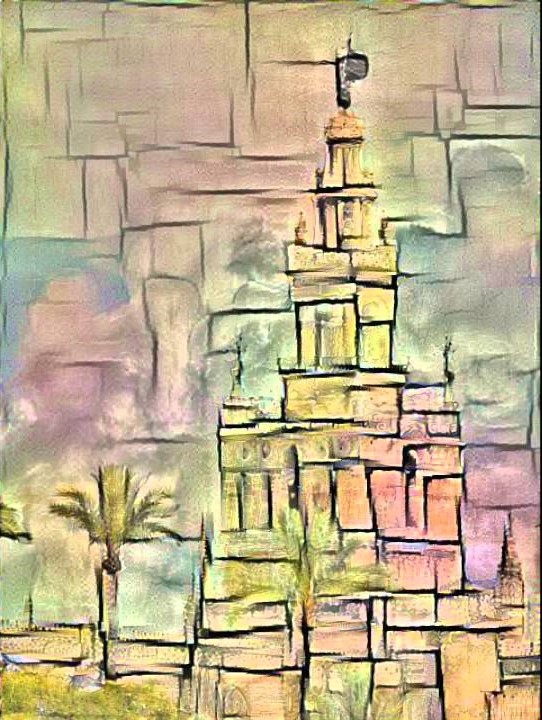
The field took a major leap forward in 2015 with the publication of the influential paper "A Neural Algorithm of Artistic Style" by Leon Gatys and colleagues. They showed how deep convolutional neural networks (CNNs) could be used to merge the content of one image with the artistic style of another, producing novel and often striking results.
This kicked off a wave of new research into neural style transfer and other forms of AI-generated art. At the same time, the development of more powerful hardware and training techniques opened the door to increasingly sophisticated neural network architectures.
One particularly important innovation was the introduction of generative adversarial networks (GANs) by Ian Goodfellow in 2014. GANs consist of two dueling networks – a generator that creates new images and a discriminator that tries to spot the difference between real and fake examples. By iteratively improving through competition, GANs are able to produce highly realistic outputs, including colorized photos.
Today, neural network art is a thriving field with a growing community of researchers, engineers, and creatives pushing the boundaries of what‘s possible. From style transfer to text-to-image generation to virtual try-on for clothing, the applications seem endless. And at the heart of many of these systems is the challenge of intelligent image colorization.
How Neural Networks Learn to Colorize
So how exactly does a neural network learn to add realistic color to black-and-white images? The key is to train the model on a large dataset of color photos so that it can recognize patterns and make intelligent predictions.
The most common approach is to use a CNN architecture with an encoder-decoder structure. The encoder network takes the grayscale image as input and progressively downsamples it through a series of convolutional and pooling layers. This allows the model to learn a compressed representation of the key features and textures.
The decoder network then takes this compact encoding and upsamples it back to the original resolution, applying additional convolutional layers to generate a color output. By minimizing the difference between the predicted and actual colors on the training set, the model learns to make increasingly accurate colorizations.
However, image colorization is an inherently ambiguous problem – there are often multiple plausible color versions of the same grayscale photo. This can lead to desaturated or inconsistent results as the model averages together different possibilities.
To address this challenge, researchers have developed several techniques to help control and guide the colorization process:
-
Providing user hints: By marking specific regions with desired colors, a human can help narrow down the possibilities and ensure more accurate results. The neural network is trained to take these hints as additional inputs.
-
Transferring style: Similar to Gatys‘ original work, the color information can be borrowed from a reference image with the desired aesthetic. This allows for more creative and artistic colorizations.
-
Enforcing consistency: Additional loss terms can be introduced to encourage smooth and consistent coloring, such as ensuring that neighboring pixels have similar chroma values.
-
Predicting distributions: Rather than outputting a single color at each pixel, the model can be trained to predict a probability distribution over possible colors. This allows for more diverse and nuanced colorizations.
By combining these techniques, modern colorization networks are able to produce increasingly realistic and compelling results. Some of the most popular architectures include pix2pix, ColorizationGAN, and ChromaGAN.
Applications and Examples
The potential applications of automatic colorization are vast and varied. Some of the most exciting use cases include:
-
Restoring historical photos and footage: By adding color to old black-and-white images, we can bring the past to life in a new way and make it feel more relatable to modern viewers. This has potential applications in education, journalism, and entertainment.
-
Enhancing scientific imaging: Many scientific disciplines rely on grayscale imaging techniques like electron microscopy or X-ray crystallography. Colorization can make these images easier to interpret and analyze.
-
Assisting artists and designers: Automatic colorization can be used as a starting point for creative projects, providing a base that can be further refined and customized. It can also help with tasks like color matching and consistency.
-
Accessibility: For individuals with color vision deficiencies, automatic colorization could potentially be used to enhance their perception of images and videos.
Some of the most impressive examples of the technology in action include:
-
Marina Amaral‘s colorizations of historical photos: Using a combination of AI tools and manual editing, Amaral has brought new life to iconic images like the portrait of Abraham Lincoln and the Migrant Mother photograph from the Great Depression.
-
The restoration of old movies: Companies like Legend3D have used neural networks to colorize and enhance classic films like "She" from 1935.
-
DeOldify: An open-source project that provides easy-to-use tools for colorizing images and videos, developed by Jason Antic and Dana Kelley.
-
Style transfer apps: Mobile apps like Prisma and DeepArt allow users to apply the artistic styles of famous painters to their own photos, powered by neural networks.
As the technology continues to improve, we can expect to see even more impressive and diverse applications in the future.
Challenges and Future Directions
While automatic colorization has made remarkable progress in recent years, there are still many challenges and open problems to be addressed. Some of the key issues include:
-
Dealing with complex textures and patterns: Neural networks can struggle to accurately colorize images with intricate details like lace or embroidery. Improving the ability to handle these textures is an active area of research.
-
Ensuring consistency: Colorized videos can sometimes suffer from flickering or inconsistencies between frames. Developing techniques to enforce temporal coherence is important for many applications.
-
Increasing resolution: Most current models are limited to relatively low-resolution outputs due to memory and computational constraints. Scaling up to higher resolutions is a major challenge.
-
Incorporating semantic understanding: To truly match human-level colorization, models will need to develop a deeper understanding of the objects and scenes they are processing. This may require advances in areas like object detection and segmentation.
-
Evaluating quality: Measuring the "goodness" of a colorization is a subjective and difficult task. Developing better metrics and evaluation procedures is crucial for comparing different models and tracking progress.
Despite these challenges, the future of neural network colorization looks bright. As computer hardware continues to improve and training datasets grow ever larger, we can expect to see even more impressive results in the coming years. Some exciting avenues for future research include:
-
Combining colorization with other tasks: By jointly training models for colorization and related tasks like super-resolution or inpainting, it may be possible to achieve even better results.
-
Incorporating physics-based models: By leveraging knowledge of how light interacts with different materials and surfaces, it may be possible to develop more physically-realistic colorizations.
-
Exploring creative applications: Beyond realism, neural networks have the potential to generate entirely new artistic styles and aesthetics. We may see more projects that push the boundaries of traditional image manipulation.
-
Improving interpretability: Developing methods to better understand and visualize what neural networks are learning could help us improve their performance and trustworthiness.
As research continues to advance, it‘s exciting to think about how these technologies will shape the future of art, design, and visual media as a whole.
Getting Started with Neural Colorization
If you‘re interested in trying out image colorization yourself, there are many great resources available online. Some popular open-source implementations include:
- DeOldify: A PyTorch-based project that provides pre-trained models and easy-to-use scripts for colorizing images and videos.
- Colorful Image Colorization: A TensorFlow implementation of the paper "Colorful Image Colorization" by Richard Zhang, Phillip Isola, and Alexei A. Efros.
- Automatic Colorization: A TensorFlow implementation of the paper "Automatic Colorization" by Satoshi Iizuka, Edgar Simo-Serra, and Hiroshi Ishikawa.
To get started, you‘ll need a basic understanding of deep learning frameworks like TensorFlow or PyTorch and access to a GPU for training. There are also many online tutorials and courses that can help you get up to speed.
For those looking for a more user-friendly experience, there are several web-based tools and mobile apps that allow you to colorize your own photos with just a few clicks. Some popular options include:
- MyHeritage In Color: A free online tool that uses deep learning to colorize historical photos.
- Algorithmia: A platform that provides an API for automatic colorization and other AI-powered image processing tasks.
- Colourise.sg: A website that allows you to upload your own photos and colorize them using a deep learning model.
Whether you‘re a researcher, artist, or just curious about the technology, there‘s never been a better time to explore the exciting world of neural network colorization.
Conclusion
From its early beginnings in the 1980s to the cutting-edge GANs and style transfer models of today, neural network art has come a long way in a short time. Automatic colorization, in particular, has emerged as one of the most compelling applications of this technology, allowing us to breathe new life into historical images and create stunning artistic effects.
As we‘ve seen in this post, the process of training a neural network to colorize images is a complex and multifaceted one, involving careful architecture design, loss function engineering, and data curation. But the results speak for themselves – with the right techniques and enough computing power, it‘s possible to achieve colorizations that are virtually indistinguishable from reality.
Of course, there are still many challenges and open questions in the field, from improving the consistency and resolution of the outputs to incorporating higher-level semantic understanding. But with the rapid pace of progress in deep learning and computer vision, it seems likely that we‘ll continue to see even more impressive and diverse applications in the years to come.
Whether you‘re a professional artist, a history buff, or just someone who loves tinkering with cutting-edge technology, I encourage you to dive in and start exploring the possibilities of neural network colorization for yourself. With the wealth of open-source tools and online resources available today, there‘s never been a better time to get started.
As always, if you have any questions or thoughts on the topic, feel free to leave a comment below. I‘m always eager to hear from readers and learn about your own experiences and perspectives.
Until next time, happy colorizing!


