Dog Breeds with the Best Sense of Smell: A Dog Lover‘s Guide
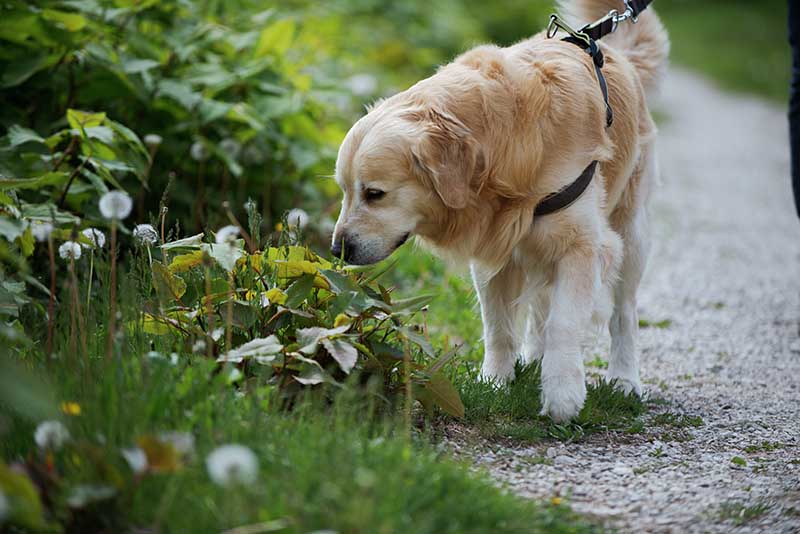
As a lifelong dog lover and veterinarian, I never cease to be amazed by our canine companions‘ incredible sense of smell. Dogs‘ noses are truly superpowered compared to our own. While we humans have a mere 5-6 million olfactory receptors, dogs boast a whopping 125-300 million, depending on the breed. This gives them a sense of smell 10,000 to 100,000 times more acute than ours!
But even among dogs, certain breeds stand out for their sniffing prowess. Let‘s dive nose-first into the fascinating world of the top dog breeds with the best sense of smell.
The Bloodhound: King of the Canine Nose
When it comes to olfactory excellence, the Bloodhound reigns supreme. These gentle giants possess an astonishing 300 million scent receptors in their noses, the highest of any breed. This, combined with their large, droopy ears that sweep scents towards the nose and their wrinkled skin that traps odors close to the face, make the Bloodhound a scenting machine.
Bloodhounds have been used for centuries to track lost individuals and fugitives. Their noses are so reliable that Bloodhound evidence has even been admissible in court. Bloodhounds are tireless trackers, capable of following a scent trail for miles over difficult terrain and even days-old trails. My friend‘s Bloodhound once tracked down a lost child deep in a forest, heroically saving the day.
Scent Hounds: Basset Hounds and Beagles
Other scent hound breeds also possess noses that are nothing to sniff at. The short-statured Basset Hound packs about 220 million olfactory receptors in its long, velvety nose. Bassets may be low to the ground, but their sense of smell is sky-high.
Beagles, America‘s favorite pint-sized hound, also boast an impressive sniffer, with around 225 million scent receptors. These energetic and friendly dogs were bred to hunt in packs, using their noses to track down rabbits and other small prey. Today, many Beagles channel their nose work into careers as detection dogs for agencies like the USDA.
Working Dog Wonders: German Shepherds and Labs
Outside of the hound group, several working breeds are renowned for their olfactory abilities. German Shepherds and Labrador Retrievers, both popular choices for families and working roles, have about 225 million scent receptors apiece. These intelligent, trainable breeds excel in scent-focused jobs like contraband detection, search and rescue, and as service dogs for individuals with medical conditions like diabetes.
I‘ve had the privilege of working with detection dog teams, and it‘s awe-inspiring to see these dogs in action. With just a few weeks of training, a German Shepherd can learn to accurately sniff out explosives, drugs, or even invasive species. Their drive to work and inherent body awareness makes them a top pick for this demanding role.
The Nose Knows: How Dogs Perceive the World
For dogs, olfaction is the primary way they take in information about the world around them. While we humans are visual creatures, dogs "see" the world through scent. This is reflected in the structure of their brains – the olfactory bulb, which processes scent signals, takes up a much larger portion of a dog‘s brain compared to a human‘s.
When a dog sniffs, it‘s not just a casual action – it‘s a full-body experience. Dogs have a special olfactory organ called Jacobson‘s organ that allows them to "taste" smells in addition to detecting them nasally. You may notice your dog licking its nose or even "smiling" with an open mouth when it catches an especially enticing scent. This Flehmen response helps channel odors to the Jacobson‘s organ for extra analysis.
Sniffing Out Disease: Medical Detection Dogs
One of the most exciting frontiers in canine scent work is medical detection. Researchers have found that dogs can be trained to detect the volatile organic compounds associated with certain diseases, including various cancers, diabetes, and Parkinson‘s disease, often at early stages when other tests may miss them.
In one groundbreaking study, a specially trained Labrador Retriever was able to correctly identify 91% of lung cancer samples and 97% of colorectal cancer samples just by sniffing patients‘ breath (Elliker et al, 2014). Similar studies have shown dogs‘ ability to detect breast, ovarian, and prostate cancers from biological samples.
While more research is needed to fully harness this diagnostic potential, medical detection dogs offer a promising tool for non-invasive early disease screening. As a veterinarian and dog enthusiast, I‘m excited to see how dogs‘ incredible noses may one day revolutionize human medicine.
The Dog Nose Knows Best: Living with a Super Sniffer
Living with a scent-obsessed breed can be an adventure. My Basset Hound, Rosie, lives to sniff. A walk around the block is a leisurely affair, as she insists on thoroughly investigating every fire hydrant, blade of grass, and discarded food wrapper. Mealtimes require a special snuffle mat to turn dinner into a stimulating foraging activity. And heaven forbid I try to push her off the scent of a freshly grilled steak!
But for all the challenges, there‘s something truly special about sharing your life with a nose-driven dog. Watching Rosie work a scent trail in the yard, completely absorbed in the messages only she can detect, gives me a glimpse into how she experiences the world. It‘s a reminder to slow down and appreciate the small details I might otherwise miss.
Engaging a scent-loving dog‘s nose is also key to their mental enrichment and happiness. In addition to sniffing walks and food puzzles, nose work classes and scent-based games can provide a satisfying outlet for their natural drives. Even a round of hide-and-seek with treats or a favorite toy can put your dog‘s nose to good use.
The Future of Dog Noses: Sniffing Out New Frontiers
From their origins as hunters and guardians to their modern roles as detectives, doctors, and devoted companions, dogs‘ sense of smell has been integral to their partnership with humans. As we continue to unravel the secrets of canine olfaction, the potential applications are endless.
Could a better understanding of dogs‘ scent-processing lead to the development of more sensitive artificial noses for medical diagnosis and security screening? Might we someday harness dogs‘ abilities to detect environmental toxins or invasive species before they wreak havoc on ecosystems? Can we tap into the connection between smell and memory to enrich the lives of senior dogs?
As a dog lover, I‘m excited to see where our furry friends‘ noses will lead us next. One thing is for certain – the power of the canine nose knows no bounds. So the next time your dog stops to sniff a patch of grass or a stranger‘s pant leg, take a moment to marvel at the invisible world they‘re exploring. And maybe even take a deep breath and join in – just don‘t blame me if you don‘t smell anything special!
References
- Elliker, K. R., Sommerville, B. A., Broom, D. M., Neal, D. E., Armstrong, S., & Williams, H. C. (2014). Key considerations for the experimental training and evaluation of cancer odour detection dogs: lessons learnt from a double-blind, controlled trial of prostate cancer detection. BMC Urology, 14(1), 22.
- Gadbois, S., & Reeve, C. (2016). The semiotic canine: scent processing dogs as research assistants in biomedical and environmental research. Dog Behavior, 2(3), 26-32.
- Hall, N. J., Glenn, K., Smith, D. W., & Wynne, C. D. L. (2015). Performance of Pugs, German Shepherds, and Greyhounds (Canis lupus familiaris) on an odor-discrimination task. Journal of Comparative Psychology, 129(3), 237–246.
- Horowitz, A. (2016). Being a dog: Following the dog into a world of smell. Simon and Schuster.