
European vs. American Basset Hound: Main Differences (With Pictures)
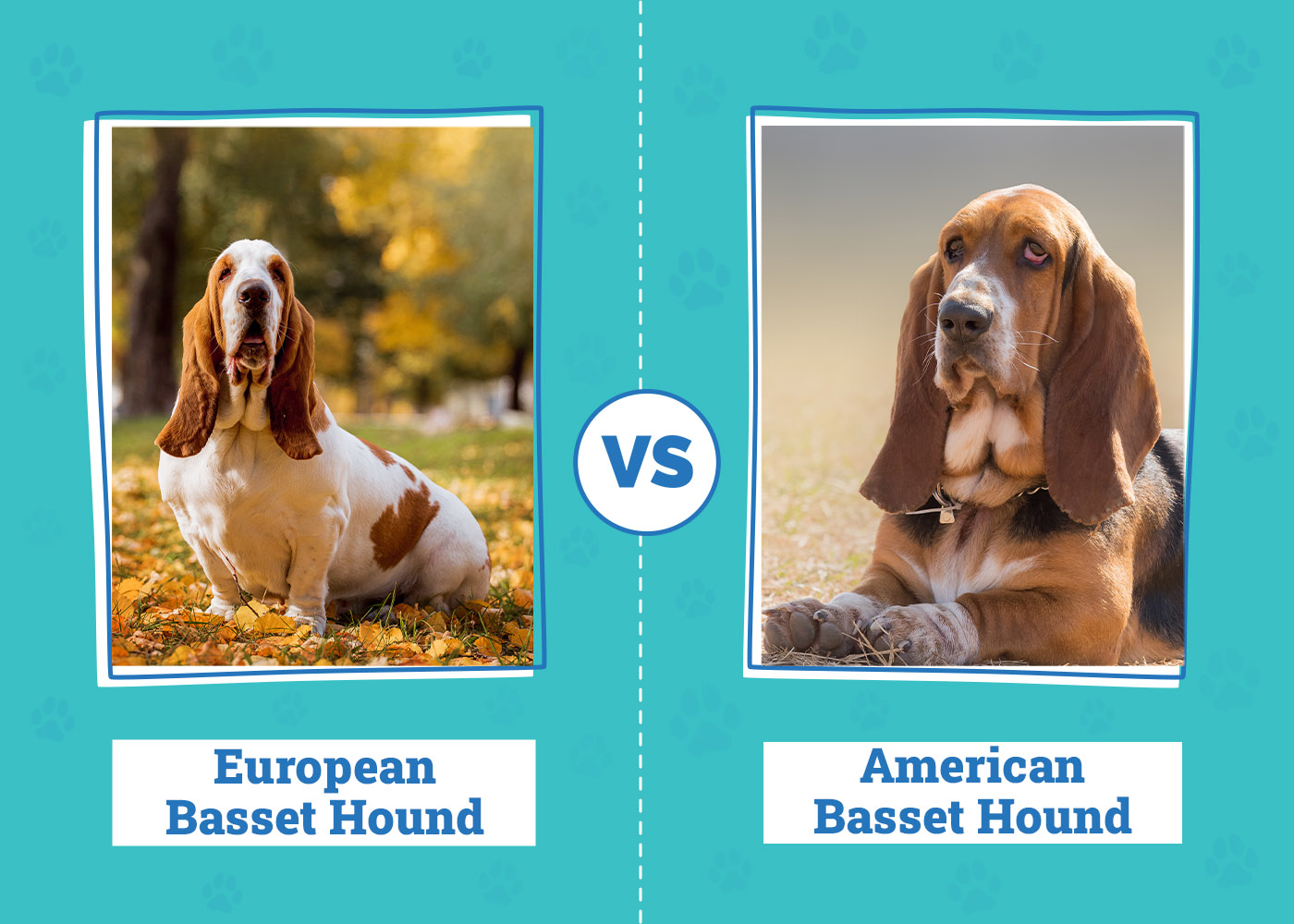
When it comes to the charming, low-slung Basset Hound, did you know there are actually two distinct varieties – the European and the American? While these two breeds share many similarities, there are some key differences that set them apart.
The noble European Basset Hound has a particularly long and fascinating history. First developed in 6th century France as a badger and rabbit hunting dog, the Basset‘s short, heavy legs and keen nose made it adept at following scent trails. Friars at the St. Hubert monastery played a large role in selectively breeding these low-built scent hounds.
In physical appearance, the European Basset is slightly shorter and heavier than the American, with adult males standing 12-15 inches (30-38 cm) and weighing 40-65 pounds (18-30 kg). But the most noticeable difference is in their skin – the European has an abundance of loose skin and wrinkles, especially around the large, domed head.
Those adorable skin folds, along with the European‘s long, velvety ears, give them an almost comically sad expression. But don‘t let that fool you – these dogs are as friendly and easy-going as they come. They love being around their people and make wonderful family pets.
One thing owners need to be prepared for with European Bassets is the extra care those wrinkles and ears require. The skin folds can trap moisture and bacteria, leading to irritation and infection if not cleaned regularly. And those long ear flaps need frequent checking and cleaning to avoid painful ear infections.
The European Basset‘s short, smooth coat is low maintenance, needing just a quick brushing a few times a week. But that short coat and low-slung body don‘t offer much protection from the cold, so these dogs are best suited to indoor living with access to soft, warm beds.
While generally a healthy breed with a lifespan of 10-12 years, European Bassets are prone to certain issues like hip and elbow dysplasia, eye problems, and obesity. Keeping them lean and fit with daily exercise and a controlled diet is crucial for their joint health and overall longevity.
The scenting ability of these dogs is truly remarkable. Bred for generations to follow their nose above all else, European Bassets can be easily distracted by an interesting scent and will track it for miles if given the chance. Teaching a solid recall and keeping them on leash or in a securely fenced yard is a must for these determined scenthounds.
That single-minded focus also factors into training a European Basset Hound. They can be charmingly stubborn, with an uncanny knack for ignoring commands that don‘t suit their agenda. Early training and socialization using positive methods and tasty treats is important to instill good manners and obedience.
Despite their independent nature, European Bassets bond strongly to their owners and don‘t like being left alone for long periods. If you work long hours, consider getting your Basset a canine companion or arranging for a dog walker. Otherwise that lonely hound may resort to destructive chewing, digging, or howling the blues.
If you can deal with a little stubborness, moderate exercise needs, and some extra grooming, the European Basset Hound makes a delightful companion. Their gentle, laid-back nature and silly antics will keep you entertained, while their loyal affection will melt your heart. For country and suburban homes with room to roam, the noble European Basset Hound is hard to beat.




)