
Giant Schnauzer vs. Great Dane – Which Should I Choose? (With Pictures)
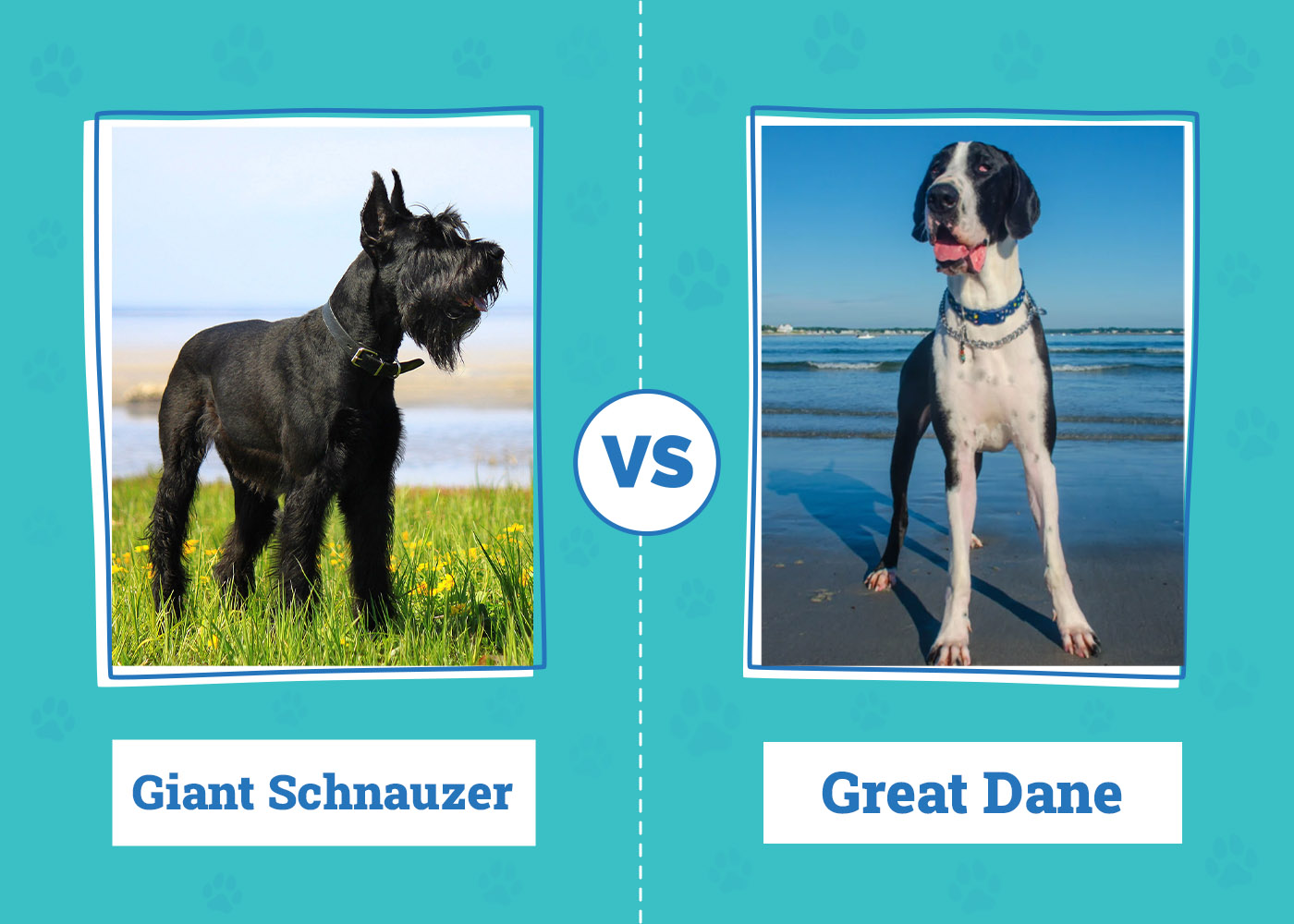
Choosing the right dog breed for your family is an important decision that requires careful consideration of factors like size, temperament, energy levels, and grooming needs. If you‘re drawn to large dog breeds, you may find yourself deciding between the Giant Schnauzer vs Great Dane. While both make loyal and loving companions, there are some key differences to be aware of. As a veterinarian and lifelong dog lover, I‘m here to give you an in-depth comparison of these two majestic breeds to help you determine which one is the ideal fit for your lifestyle.
Size is one of the most obvious distinctions between Giant Schnauzers and Great Danes. Standing up to 28 inches tall at the shoulder and weighing 60-100 pounds, the Giant Schnauzer is undoubtedly a big dog. However, they are dwarfed in comparison to the Great Dane, which holds the record as the tallest dog breed. Male Great Danes tower at an impressive 30-34 inches and tip the scales at 140-175 pounds on average. Some individuals can even exceed 200 pounds! If you live in a smaller home or apartment, a Giant Schnauzer may be the more sensible choice simply because they take up less space. It‘s also important to consider that the bigger the dog, the more expensive they are to care for in terms of food, supplies, medications, and medical care.
When it comes to temperament, both the Giant Schnauzer and Great Dane are devoted to their families and make exceptional companions. They are affectionate, patient, and protective of their loved ones. However, the Giant Schnauzer tends to have a more aloof and reserved personality, especially when it comes to strangers. They were originally bred to be guard dogs, so they are naturally more suspicious and take their watchdog duties seriously. Early and ongoing socialization is a must to prevent unwarranted aggression.
In contrast, the Great Dane is a gentle giant that is characteristically more outgoing and welcoming to new people, despite their intimidating size. They are known as the "Apollo of dogs" because of their sweet, friendly nature. That‘s not to say a Great Dane won‘t step in to defend their family if needed – their size alone is enough to deter most threats. But overall, they aren‘t as high-strung or territorial as the Giant Schnauzer.
The Giant Schnauzer is also the more energetic and athletic of the two breeds. Bred to be an all-purpose working farm dog, they need plenty of daily exercise and mental stimulation to stay happy and well-behaved. At minimum, expect to provide a Giant Schnauzer with a 30-60 minute walk/jog plus some vigorous playtime every day. They excel at canine sports like obedience, tracking, herding, and carting. Without enough activity outlet, a bored Giant Schnauzer may become anxious, hyperactive, and destructive.
While Great Danes certainly need their share of exercise to stay fit, they have lower overall activity levels than the Giant Schnauzer. A moderate 20-40 minute walk once or twice daily is usually sufficient, along with some playtime to burn off any zoomies. They are more of a laid-back, indoor lounge dog that is content to rest at your feet (or on the couch if allowed). This lower energy level combined with their patient, even-keeled demeanor is why Great Danes can adapt quite well to apartment living, as long as potty breaks and exercise are provided. Just be prepared that everything will need to be sized up, from their bed to their food bowls to their toy box!
Grooming is another aspect where these two breeds differ. The Giant Schnauzer has a dense, wiry double coat that requires diligent upkeep to maintain its characteristic appearance. They will need brushing several times a week plus regular stripping or clipping every few months. Those trademark bushy eyebrows and beard also need cleaning and trimming to prevent eye irritation and smelliness. The good news is that Giant Schnauzers shed very minimally, which is a perk for neat freaks. Some even consider the breed to be hypoallergenic, although no dog is truly 100% allergen-free.
Great Danes, on the other hand, have a short, smooth single coat that is a breeze to maintain. Weekly brushing and the occasional bath is typically sufficient to keep a Dane‘s coat healthy and glossy. During shedding season you may need to brush more frequently, but Great Danes are still average shedders compared to many breeds. A good vacuuming routine and lint roller use will help contain the hair tumbleweeds. However, what Great Danes lack in coat care they more than make up for in drool production. If you can‘t stand slobber, a Dane probably isn‘t the breed for you!
Both breeds are very trainable due to their intelligence and eagerness to please their owners. Giant Schnauzers are especially quick learners that need a job to do, so training is an excellent way to put their brainpower to use. They can have a mind of their own at times, so a firm and consistent approach with positive reinforcement works best. Giant Schnauzers also need early socialization to curb any over-protectiveness stemming from their guardian roots.
Great Danes are also quite responsive to training but can occasionally display some stubborn, independent qualities. Start training and socialization from puppyhood, keep sessions upbeat and reward-based, and be patient yet persistent. With their extreme size, teaching a Great Dane good leash manners from a young age is imperative for everyone‘s safety. Fortunately, most Danes have an inherently gentle, non-aggressive nature which makes them a pleasure to train.
Sadly, both breeds are predisposed to various health problems, some of which overlap. Hip dysplasia and gastric torsion are the two most common concerns. Giant Schnauzers may also be prone to hypothyroidism, eye disorders like progressive retinal atrophy, and certain cancers. Great Danes have heightened risk for cardiomyopathy and bone disorders like hypertrophic osteodystrophy and osteosarcoma. Choosing a puppy from a reputable breeder who performs genetic health testing on the parents can help minimize inherited disease risks. Providing your dog with a high-quality diet, keeping them at a healthy weight, and scheduling regular vet check-ups will also promote lifelong health and wellness. Just know that giant breeds like Great Danes have shorter than average lifespans, typically living 8-10 years.
Last but not least, both the Giant Schnauzer and Great Dane generally do well with children when raised together. They are patient, tolerant playmates that watch over their young charges devotedly. However, the Giant Schnauzer‘s heritage as a guard dog means they may be a little less forbearing of children‘s antics, so supervision is wise. A Great Dane puppy or adolescent can also accidentally knock a small child over with their unintentional clumsiness, so vigilance is still warranted. Teaching kids to treat dogs with respect is always advisable too, regardless of breed. When it comes to other pets, both breeds usually cohabitate peacefully with family cats and dogs. The Giant Schnauzer may have more prey drive towards small furry pets like rabbits, so use caution there.
In summary, the Giant Schnauzer and Great Dane are both wonderful choices for experienced big dog lovers. The Giant Schnauzer may be better suited for an active family in search of a devoted protector that will keep watch over the home front. The Great Dane is ideal for a more easy-going household that doesn‘t mind some slobber in exchange for a larger-than-life affectionate goofball. Whichever breed you decide on, do your research to find a responsible breeder, and be prepared for a decade or so of outsized love and companionship.



)