Sheepadoodle vs. Goldendoodle: The Ultimate Guide for Dog Lovers
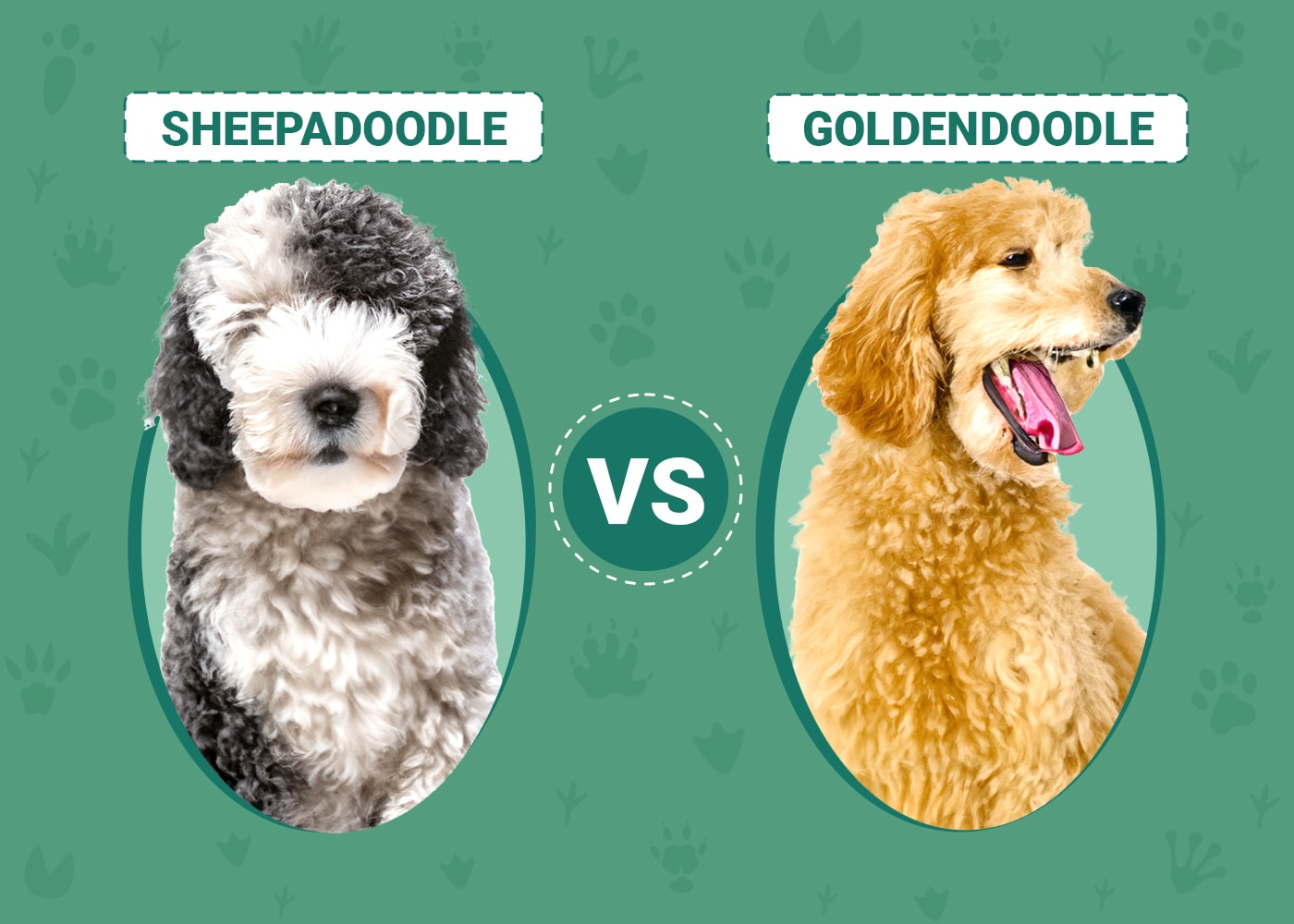
Cute, cuddly, and clever, it‘s no wonder doodle breeds have captured the hearts of dog lovers worldwide. Countless adoring owners will tell you that bringing home a sheepadoodle or goldendoodle was one of the best decisions they‘ve ever made. But what exactly makes these teddy bear dogs so irresistible? And how do you choose between two breeds that seem so similar at first glance?
As a proud doodle owner myself, I know firsthand the joy these dogs bring to your life. That‘s why I‘ve put together the ultimate guide comparing sheepadoodles and goldendoodles – so you can decide which adorable breed is perfect for your family. I‘ll take you through their history, appearance, temperament, care needs, and more, sharing personal anecdotes and expert knowledge along the way. By the end, you‘ll be well equipped to find your own perfect doodle match. Let‘s dive in!
Doodle Breeds: A History of Hybrid Vigor
To truly appreciate sheepadoodles and goldendoodles, it helps to understand a bit about their history and the rise of designer dogs. The idea behind crossbreeding purebreds is to combine the best traits of each parent breed while minimizing health issues through hybrid vigor. Essentially, dogs of mixed ancestry tend to be healthier than those from a limited gene pool.
While the concept of hybrid vigor has been around for centuries, the popularity of doodle breeds exploded in the 1990s with the introduction of the labradoodle and goldendoodle. The goal was to create guide dogs suitable for people with allergies by crossing poodles with Labrador retrievers and golden retrievers. Not only were the resulting puppies hypoallergenic, but their friendly, trainable temperaments made them excellent service dogs and family companions alike.
Sheepadoodles followed a similar path, with breeders hoping to blend the old English sheepdog‘s gentle, protective nature with the poodle‘s intelligence and low-shedding coat. The combination was another resounding success, and today both goldendoodles and sheepadoodles are consistently ranked among the most popular doodle breeds worldwide.
Size Comparison
One of the most noticeable differences between sheepadoodles and goldendoodles is their size. To help you visualize, here‘s a quick comparison chart:
| Breed | Height Range | Weight Range |
|---|---|---|
| Sheepadoodle | 13-27 inches | 25-80 lbs |
| Goldendoodle | 13-24 inches | 15-90 lbs |
Sources: American Kennel Club, International Designer Canine Registry
As you can see, sheepadoodles tend to be slightly larger on average than goldendoodles. They‘re also more likely to fall into the standard size range, while goldendoodles have more variety with their mini, medium, and standard options.
Of course, these are just averages – individual dogs can fall above or below these ranges. When I was searching for my own doodle, I met an adorable mini sheepadoodle who clocked in at just 15 pounds and a standard goldendoodle who easily weighed 85!
Size is important to consider when choosing a dog because it impacts everything from the amount of space they need to the cost of food and supplies. As a general rule, larger dogs will eat more, need bigger beds and crates, and may require more room to run and play.
Coat Types and Grooming
All doodle owners quickly become experts on caring for those gorgeous, teddy bear coats! Both sheepadoodles and goldendoodles can have wavy or curly fur that grows long if not kept trimmed. The main difference is that sheepadoodles tend to have a denser, shaggier coat more reminiscent of their old English sheepdog parent.
Regardless of coat type, regular grooming is a must to prevent painful mats and keep your doodle looking its best. Most owners quickly learn that brushing at home multiple times a week is much easier than trying to tackle a month‘s worth of tangles all at once.
Personally, I‘ve found that line brushing works wonders on my doodle‘s thick, curly locks. By separating the hair into small sections and brushing from root to tip, you can be sure no sneaky knots are hiding underneath. It takes some time and patience, but it‘s so worth it when you see your pup‘s coat shining with health.
Of course, you‘ll still want to schedule professional grooming every 2-3 months for a full haircut, bath, nail trim, and ear cleaning. I book my appointments well in advance so my doodle never gets too shaggy. Plus, it‘s a nice bonding experience to take a special salon trip together!
In terms of coloring, goldendoodles have more variety thanks to the range of shades seen in golden retrievers. Expect anything from cream to apricot to deep red. Sheepadoodles are more often a solid black or white, though multi-colored coats are possible.
Temperament and Trainability
Loyal, loving, and infinitely friendly, it‘s hard to find a better family dog than a doodle. Both sheepadoodles and goldendoodles bond closely with their owners and are wonderful with children. They‘re also highly intelligent and eager to please, which makes training a breeze compared to more stubborn breeds.
That said, there are some general personality differences to note. Sheepadoodles tend to be more reserved with strangers at first, a trait passed down from their herding dog ancestors. My sheepadoodle takes a minute to warm up to new people, observing from a protective stance by my side. Once he decides someone is trustworthy though, he‘ll gladly flop over for a belly rub and snuggle.
Goldendoodles, on the other hand, have never met a stranger. They inherited the golden retriever‘s famously friendly demeanor and assume everyone wants to be their new best friend. My neighbor‘s goldendoodle will be wagging his tail and trying to climb into your lap approximately 0.5 seconds after meeting you. It‘s hard to resist that kind of instant adoration!
Socialization from a young age is important for both breeds to nurture their confidence and adaptability. Positive training methods work wonders on these sensitive souls – there‘s no need for harsh corrections when they‘re so willing to work for praise and treats. With consistency and kindness, both breeds pick up new skills impressively fast.
One thing sheepadoodle and goldendoodle owners have to watch out for is separation anxiety. These affectionate dogs can become distressed when left alone too long, leading to problem behaviors like excessive barking or destructive chewing. Crate training and lots of interactive toys can help them feel more secure, but these are not dogs well suited to being left for a full work day without any breaks.
Exercise Needs and Favorite Activities
If you‘re looking for a hiking buddy, camping companion, or all-around adventure dog, you can‘t go wrong with a sheepadoodle or goldendoodle. Both breeds have moderate to high exercise needs and love being active with their owners.
At minimum, expect to provide an hour of exercise daily through walks, backyard play, trips to the dog park, or structured training sessions. For my energetic doodle, I find that splitting this up into a couple 30 minute sessions works well to keep him happy without getting overstimulated.
Mental stimulation is just as important as physical for these curious, clever dogs. We spend a lot of time working on obedience drills, puzzle toys, scent games, and fun new tricks. Not only does this engage his mind, but it also enhances our bond and gives him a sense of purpose.
While every dog is an individual, many doodles excel at dog sports like agility, obedience, and even weaving poles. It never fails to amaze me how focused they can be on the task at hand! If you‘re feeling creative, you can even set up small agility courses in your own backyard with some DIY jumps and tunnels.
With their webbed feet and water-resistant coats, many doodles are also natural swimmers. My pup goes absolutely wild whenever he sees a body of water. Lakes, rivers, oceans – he‘ll happily paddle anywhere. I swear this dog is part mermaid with how much he loves the water!
Of course, not every day has to be filled with grand adventures. Both sheepadoodles and goldendoodles make excellent Netflix snuggle buddies too. At the end of a long day, there‘s nothing better than a soft, warm doodle curled up at your feet or sprawled across your lap. That unconditional love and comfort is truly priceless.
Health and Longevity
Sheepadoodles and goldendoodles are generally healthy dogs with lifespans averaging 10-15 years. As mentioned earlier, hybrid vigor plays a role in minimizing genetic disorders. However, responsible breeding is still crucial for producing the healthiest possible puppies.
Picking a breeder who performs genetic testing on prospective parents and can discuss the health history of dogs in their line is one of the most important steps in choosing your doodle. At minimum, look for the following tests:
Sheepadoodles:
- Hip and elbow dysplasia
- Eye exams
- von Willebrand‘s disease
- Exercise induced collapse (EIC)
Goldendoodles:
- Hip and elbow dysplasia
- Eye exams
- von Willebrand‘s disease
- Progressive retinal atrophy (PRA)
- Ichthyosis
Source: Paw Print Genetics
While not all of these disorders have tests available, breeders should be upfront about any history and prevalence in their lines. Avoid anyone who brushes off health questions or claims their dogs have no issues at all – every breed can be prone to something.
Common ailments that may pop up in doodles include:
| Condition | Signs | Treatment |
|---|---|---|
| Hip & elbow dysplasia | Lameness, difficulty getting up, bunny hopping gait | Pain meds, joint supplements, corrective surgery |
| Eye disorders (PRA, cataracts, glaucoma) | Cloudy eyes, vision loss, squinting, pawing at face | Varies; may include meds, surgery, or lifestyle changes |
| Allergies | Itching, redness, ear infections, gastrointestinal upset | Allergy testing, dietary changes, meds |
| Hypothyroidism | Weight gain, lethargy, hair loss, dry skin | Thyroid hormone replacement |
| Addison‘s disease | Vomiting, diarrhea, lethargy, shaking | Hormone replacement, electrolyte correction |
Source: American Kennel Club, Merck Veterinary Manual
The best prevention for these issues is a combination of thoughtful breeding, regular vet checkups, and providing your doodle with a healthy diet, plenty of exercise, and a low-stress environment. Pet insurance is also becoming more popular as a safeguard against unexpected medical costs.
Costs of Doodle Ownership
There‘s no denying that owning a dog is a significant financial commitment. Between the initial purchase price, vet bills, food, supplies, grooming, and training, those fluffy bundles of joy can really add up!
According to a survey from the National Pet Owners Survey, the first year cost of owning a dog can range from $1,500 to $4,500 depending on size and breed. Here‘s a ballpark breakdown of what to expect for a doodle‘s first year:
- Puppy price: $2,000 – $5,000
- Vet checkups & vaccines: $300 – $800
- Spay/neuter: $250 – $500
- Food & treats: $300 – $700
- Supplies (bed, crate, leash, etc.): $300 – $800
- Grooming: $300 – $500
- Training classes: $150 – $350
- Miscellaneous: $200 – $500
Total: $3,800 – $9,150
Keep in mind that these are just estimates – you may find ways to save in some areas by making your own treats, buying secondhand supplies, or grooming at home when possible. Senior doodles may also have higher medical expenses that can easily creep into the $1,000+ range for diagnostics and treatment.
Ultimately, the best way to budget is to have a frank discussion with your breeder and vet about projected costs, then create a savings plan that suits your lifestyle. While dogs are never cheap, the joy and love they provide is truly immeasurable. With proper planning and a commitment to your doodle‘s well being, you‘ll be enjoying many years of priceless companionship.
Conclusion
At the end of the day, you can‘t make a wrong choice between sheepadoodles and goldendoodles. Both breeds are the embodiment of why we love dogs so deeply. They‘re goofy, cuddly, endlessly fascinating friends who light up our lives with their presence.
I often joke that owning a doodle is like having a living teddy bear – one that occasionally raids the trash and rolls in stinky stuff at the park. Their mischievous antics keep me laughing, even while I‘m chasing them down for a bath. And nothing compares to seeing that fluffy face smiling up at me with pure adoration, thrilled to be by my side no matter what we‘re doing.
That‘s the real secret behind doodles‘ meteoric rise. It‘s not just their cute looks or trending popularity. It‘s the fact that these wonderful, quirky, brilliant dogs seem to have an endless capacity for love. They open their hearts fully and joyfully to their families in a way that‘s both humbling and exciting.
So while I‘ve done my best to discuss all the practical aspects of doodle ownership here, I know the decision ultimately comes from the heart. When you meet your perfect pup for the first time and feel that spark of connection, you‘ll understand on a deep level why doodles are so special.
If you take one thing away from this guide, let it be permission to get excited about falling in love with your new best friend. Yes, raising a doodle is a big responsibility. Yes, there will be challenges along with the tail wags and snuggles. But diving into doodle ownership is also a beautiful opportunity to grow your heart in ways you never expected.
And that, I think, is the most compelling argument for choosing a sheepadoodle or goldendoodle as your next canine companion. No matter which adorable breed steals your heart, your life will be forever enriched by sharing it with a doodle. So here‘s to many joyful years of fluffy hugs, silly nicknames, and unconditional love – the stuff that makes life worth wagging about.