Google Races to Develop AI-Powered Search with Project Magi as Threats Mount
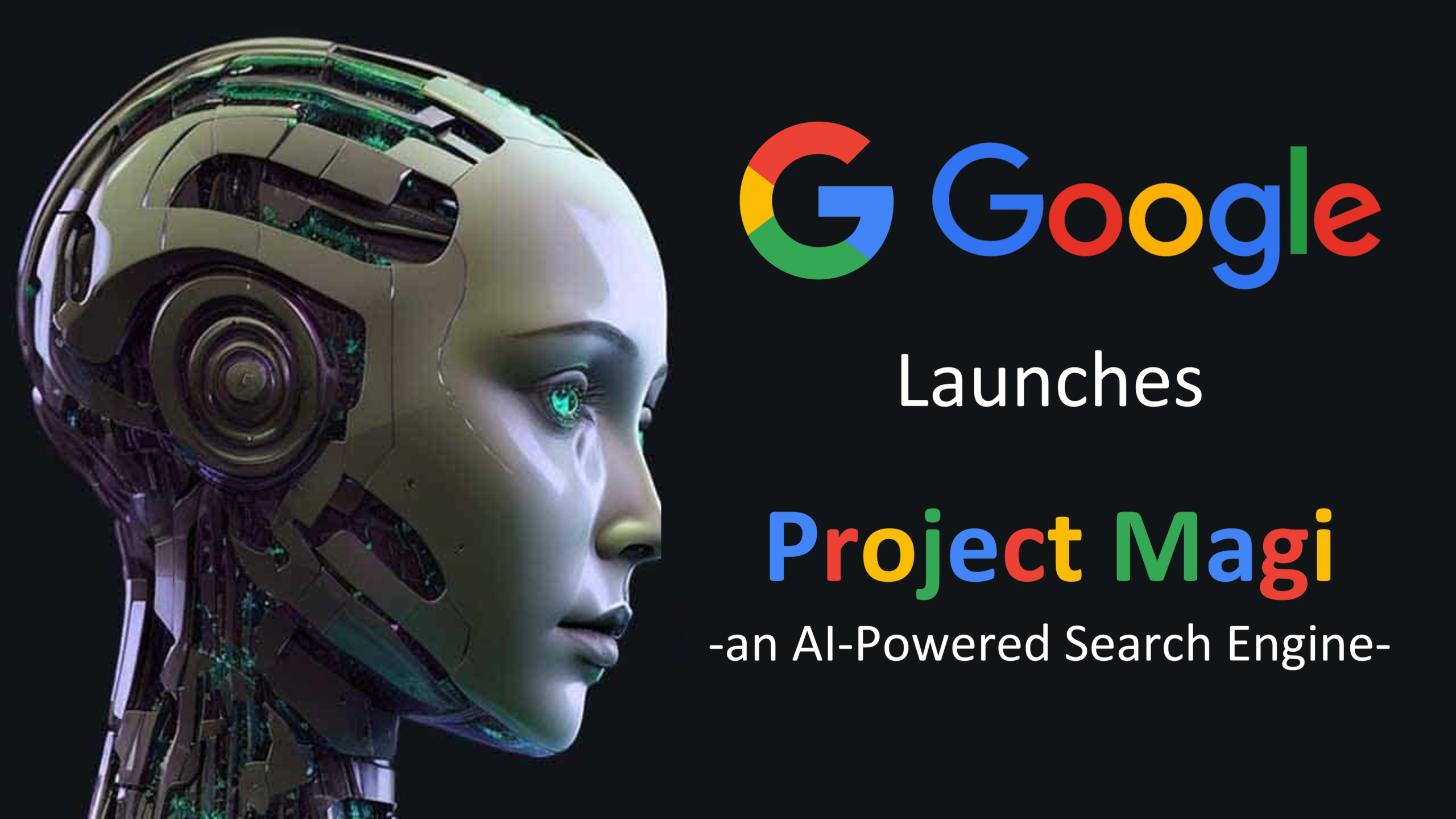
The race to dominate the future of search is heating up. With the explosive popularity of OpenAI‘s ChatGPT chatbot and Microsoft‘s integration of the technology into its Bing search engine, Google faces the most serious competitive threat in its history. In response, the search giant has launched an internal initiative called Project Magi to accelerate development of its own AI-powered search capabilities.
At stake is control over the primary gateway to information and services on the internet. Google has dominated this domain for more than two decades, with over 90% market share globally and an advertising business generating more than $200 billion in annual revenue. But the rise of large language models (LLMs) and AI chatbots like ChatGPT has raised the possibility that a more conversational, personalized search experience could supplant Google‘s traditional list of links and text snippets.
Microsoft in particular smells blood in the water. By leveraging its close partnership with OpenAI and rapidly integrating the GPT-4 language model into Bing, the software giant aims to chip away at Google‘s lead. "Every 1% of share gain in the search advertising market is a $2 billion revenue opportunity," said Microsoft CEO Satya Nadella on a recent earnings call. Bing has already seen a 25% increase in monthly page visits since launching its AI chatbot.
Google, for its part, is not standing still. Project Magi represents an urgent effort to infuse the company‘s search engine with the latest AI technologies and maintain its competitive edge. But the transition poses significant challenges for Google, both technical and reputational.
The Technical Prowess and Potential Pitfalls of Magi
So what do we know about Project Magi? While Google has revealed few specifics, the initiative appears to focus on making search more conversational, contextual and predictive through the use of large language models and other AI architectures. The goal is to provide a ChatGPT-like experience directly within Google‘s interface, allowing users to engage in dialogue, ask followup questions and receive personalized recommendations.
Delivering these capabilities reliably for billions of searches per day is a enormous technical challenge. It requires re-architecting Google‘s core ranking and retrieval systems to incorporate AI at massive scale while maintaining speed, quality and safety. Even a company with Google‘s vast resources and AI expertise will need time to pull off this feat.
"Shifting search to an AI-first model is not just a matter of plugging in a chatbot," said Raghavan Srinivasan, a machine learning engineer who previously worked on search ranking at Google. "It means fundamentally rethinking how information is indexed, retrieved and presented to users based on their intent and context. There are major challenges around latency, scalability, interpretability and controllability that need to be solved."
Indeed, the risks of an AI-powered search engine are significant. LLMs are notoriously prone to "hallucinations" – generating plausible-sounding but factually incorrect information. They can also amplify biases and blind spots in their training data, potentially leading to skewed or discriminatory results. And their lack of transparency makes it difficult to audit and debug problems.
Google learned these lessons the hard way earlier this year with the botched demo of its Bard chatbot. The system made a factual error in its very first demo, causing the company‘s stock price to plummet and raising concerns about AI‘s readiness for primetime.
As a result, Google is taking a measured approach with Magi. The company plans to roll out new AI search features gradually, starting with a limited beta test of around 1 million users in the US. The features will initially focus on making Google‘s existing search results more conversational and visually engaging, such as by providing contextual followup questions and multimedia elements alongside links.
Over time, Google aims to expand Magi to cover more complex search tasks and allow for open-ended dialogue. But this will require substantial progress in fundamental AI capabilities like reasoning, knowledge grounding and value alignment. Many experts believe we are still years away from chatbots and search engines that can reliably engage in human-level conversation and task completion.
"I think there‘s a lot of hype and exaggeration about the capabilities of current language models," said Emily Bender, a professor of computational linguistics at the University of Washington. "They are very good at producing fluent, convincing language. But they don‘t really understand the world the way humans do. They don‘t have common sense reasoning or the ability to gather and validate new information. We need to be cautious about putting them in charge of high-stakes decisions and interactions."
The AI Arms Race Powering the Future of Search
Of course, Google is not the only tech giant investing heavily in AI for search. Microsoft‘s partnership with OpenAI has given it a powerful head start, with CEO Satya Nadella declaring that "a new race starts today" in search. By combining OpenAI‘s state-of-the-art language models with Microsoft‘s engineering resources and enterprise customer base, Bing has rapidly gained capabilities that rival or even exceed Google‘s.
Other contenders include Anthropic, which has developed a novel AI architecture called "constitutional AI" aimed at making chatbots more reliable and aligned with human values. Anthropic recently launched its own ChatGPT competitor called Claude, which is being trialed by companies like Notion, Quora and DuckDuckGo.
Meanwhile, Meta/Facebook continues to invest in AI for content understanding and generation across its apps – though its primary focus is on creative expression and recommendations rather than traditional search. And Apple, while relatively quiet about its AI efforts, is rumored to be developing a Siri chatbot powered by its in-house LLMs.
But perhaps the most formidable challengers to Google are its own sister companies under the Alphabet umbrella. DeepMind, the UK-based AI research lab behind breakthroughs like AlphaFold and AlphaGo, is increasingly applying its technology to language and knowledge tasks. Some of its recent work, like the Retrieval-Augmented Generation model, shows promise for synthesizing information from multiple sources into coherent outputs.
there‘s the "Google Brain" team led by Jeff Dean and Demis Hassabis, which has been responsible for many of Google‘s core AI innovations over the years. With Dean taking on a larger role overseeing Google‘s AI strategy, including search, it‘s likely Brain‘s work on areas like few-shot learning, multimodal models and AI safety will find its way into products sooner than later.
SEO in the Age of AI-First Search
As Google and others race to build the next generation of search engines, the implications for the web ecosystem are profound. One area likely to see major disruption is search engine optimization (SEO). With traditional keyword-based results giving way to AI-generated answers and conversational interfaces, the old playbook of link building and on-page optimization may become less relevant.
"I think we‘re going to see a shift from an ‘indexing‘ model of search to more of an ‘intelligence‘ model," said Rand Fishkin, co-founder of SEO software company Moz. "Rather than just ranking pages based on keywords and backlinks, search engines will use AI to deeply understand user intent, summarize relevant information and provide direct answers. This means less focus on traditional ranking factors and more on creating high-quality, authoritative content that addresses user needs."
At the same time, the rise of AI search could create new opportunities for businesses and content creators to reach audiences. Chatbots and virtual assistants powered by LLMs could become major new channels for discovery and engagement, similar to voice search and featured snippets today. And AI‘s ability to personalize results based on user preferences and behavior could lead to more diverse and niche content being surfaced.
However, there are also risks of AI search amplifying existing issues like bias, filter bubbles and the spread of misinformation. If not carefully designed and audited, AI systems could reinforce societal inequities and blind spots by selectively presenting information aligned with users‘ existing beliefs and interests. They could also be gamed by bad actors looking to manipulate search rankings and public opinion.
Ensuring that AI search engines are transparent, accountable and aligned with human values will be a critical challenge going forward. Some have called for the creation of independent oversight boards and "AI constitutions" to guide the development and deployment of these systems in the public interest. Others emphasize the need for diversity and inclusion in the teams building AI to mitigate bias.
"With great power comes great responsibility," said Timnit Gebru, a prominent AI ethics researcher and founder of the Distributed AI Research Institute. "As we rush to integrate AI into every aspect of our information ecosystem, we need to hit the pause button and really scrutinize these systems. What are their capabilities and limitations? Whose values and interests do they reflect? How can we ensure they are benefiting society as a whole, not just the bottom lines of tech giants? These are crucial questions we need to grapple with."
Imagining the Search Experience of 2030
Looking ahead, it‘s clear that AI will reshape the way we search for and interact with information in profound ways. While the specifics are uncertain, we can imagine a future where search is a fluid, omnipresent conversation rather than a series of discrete queries and results.
In this world, you might start your day by asking your AI assistant to brief you on the latest news and updates tailored to your interests – no typing or scrolling required. As you go about your work, the AI would proactively surface relevant information and insights based on the context of your conversations and activities, seamlessly blending search and productivity.
Queries themselves would become more open-ended and exploratory, with the AI engaging in multi-turn dialogue to understand your intent and provide personalized recommendations. Rather than just spitting out facts, the AI would use its knowledge to offer analysis, opinions and creative ideas – while always being transparent about its level of confidence and the sources of its information.
Multimodal search spanning text, images, video and audio would become the norm, with the AI able to fluidly synthesize and navigate between different media formats. And search would increasingly happen in the background as you go about your daily life, with intelligent agents working behind the scenes to anticipate your needs and connect you with relevant people, places and resources.
Of course, realizing this vision will require significant breakthroughs in AI capabilities, as well as careful consideration of the ethical and societal implications. We will need AI systems that can engage in genuine understanding and reasoning, not just language modeling and pattern matching. And we will need to find ways to align these systems with human values and priorities, while preserving privacy, autonomy and the diversity of our information landscape.
As Google, Microsoft and others race to build the next generation of search engines, these are the challenges and opportunities that lie ahead. The stakes could not be higher – not just for the future of these companies, but for the future of how we make sense of the world around us. Whoever wins the AI search race will play an outsized role in shaping that future. And the decisions we make today will reverberate for generations to come.
"Search is not just about finding information, it‘s about making sense of reality," said Demis Hassabis, co-founder of DeepMind. "Augmenting search with AI capabilities is going to change the world in ways we can barely begin to imagine. It‘s an exciting time, but also a daunting one. We need to proceed with great care and foresight."
Only time will tell how this new chapter in the history of search unfolds. But one thing is clear: AI is poised to redefine our relationship with information in fundamental ways. And the race to lead that transformation is only just beginning.