How AI is Revolutionizing Game Testing in 2026

The global gaming industry is expected to surpass $300 billion in revenue by 2027, with over 3 billion gamers worldwide. As the market continues its rapid growth and games become more complex, thorough testing is critical to releasing high-quality, bug-free products. However, manual game testing is time-consuming, expensive, and prone to human error and oversights.
This is where artificial intelligence (AI) comes in. In recent years, AI and machine learning have emerged as game-changers for testing, helping studios release better games faster and more efficiently. A recent survey found that 69% of game developers are now using AI in some form.
In this article, we‘ll dive into how AI is revolutionizing the game testing process in 2023, the key benefits, popular AI techniques and tools being adopted, challenges and limitations, and what the future holds. Whether you‘re a gamer, game developer, or just interested in tech, read on to learn about this fascinating intersection of two booming industries.
The Challenges of Manual Game Testing
First, let‘s look at the traditional game testing process and its pain points. In most studios, quality assurance (QA) testers spend long hours manually playing through games to spot bugs, glitches, and other issues. Testers methodically try to break the game in every way imaginable – clipping through walls, falling through floors, crashing the game, and so on.
While manual testing is important for evaluating the real player experience, it has major drawbacks:
- It‘s slow and labor-intensive, as testers can only go through a limited number of scenarios
- Bugs are easily missed since testers can‘t possibly cover every potential scenario
- It‘s costly, as testing can eat up to 30-40% of a game‘s development budget
- Testers can introduce human errors and biases
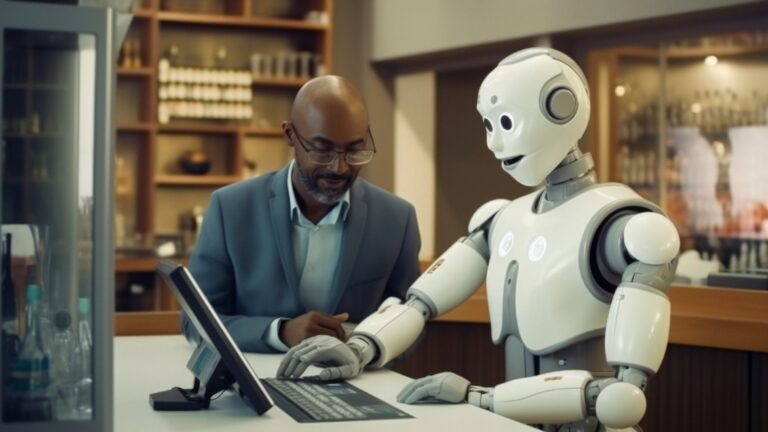
This is where AI-powered automation comes in to complement manual testing efforts. By leveraging machine learning models trained on large datasets, game developers can automatically test significantly more scenarios and find bugs faster than humanly possible.
How AI is Being Applied in Game Testing
Now let‘s look at the key ways artificial intelligence and machine learning are being used to revolutionize game testing:
Automated Gameplay Testing
One of the primary applications is using AI agents to automatically play through games and find bugs. Platforms like Qamcom use computer vision and deep learning to understand gameplay and simulate human-like playtests at a much larger scale. This helps surface bugs that manual testers would likely miss.
Visual Testing
Another major area is visual testing – using computer vision AI to automatically detect visual glitches and anomalies. Solutions like Applitoos Visual AI analyze large volumes of screenshots and replay videos to spot issues like text overflows, texture issues, color distortions, and more that would be tedious for human testers to find.
Audio Testing
Audio bugs like distortion, unexpected sounds, and missing effects are another common but often overlooked issue. AI-based audio testing tools like Audio Analizr use machine learning to process game audio and automatically identify problems that manual testers might not catch.
Localization Testing
For games released in multiple languages, localization testing ensures the quality of translated text and voice-overs. AI-powered localization testing tools use natural language processing (NLP) to automatically check for issues like truncation, overlaps, inconsistencies, profanity, and more, significantly reducing the time and cost of manual testing.
Balancing and Difficulty Testing
AI can also help test game balance and difficulty levels. By training machine learning models on player data, developers can predict optimal game parameters like level layouts, item drops, enemy attributes, etc. for different player skill levels and automate the testing of those scenarios. This improves the player experience while reducing balancing time.
Playtesting and User Feedback Analysis
Finally, AI is being used to automatically analyze user playtest sessions and feedback. Computer vision models can detect player emotions and reactions to find areas of frustration or boredom, while NLP models can parse written feedback and reviews to identify common praises and complaints. This provides richer insights to improve games post-launch.
Benefits of AI-Powered Game Testing
As these examples illustrate, AI brings major benefits to game testing:
-
Increased test coverage and reduced time and cost – AI can test magnitudes more scenarios in a fraction of the time, allowing smaller QA teams to spot more bugs faster.
-
Improved accuracy and reduced human error – AI is not subject to the oversights and mistakes human testers can make when testing repetitive scenarios.
-
Ability to test earlier in development – With AI, testing can start much sooner, as game builds don‘t need to be as complete and stable for human playtesters.
-
More focus on creativity and strategy – By automating rote testing tasks, AI allows human testers to focus on subjective aspects of quality like fun factor, creativeness, and storyline.
-
Player-centric balancing and personalization – AI can analyze tester and player behaviors to optimize game difficulty and settings, as well as enable personalized game experiences.
Limitations and Challenges
Of course, AI game testing is not a silver bullet. There are still limitations and challenges to be aware of:
-
Requires significant data – To work well, AI testing tools require large datasets of labeled gameplay videos, screenshots, logs, etc. to train on. Smaller studios may lack this data.
-
Can‘t understand subjective aspects of quality – AI is not yet advanced enough to evaluate creative and artistic elements of a game that impact the player experience like graphics, storyline, and character development.
-
Explainability challenges – Many AI models are "black boxes" in which it‘s difficult to understand why they flagged certain behaviors as bugs. This lack of explainability can hinder debugging efforts.
-
Performance and compute requirements – Running AI testing tools requires high-end hardware which can be costly, although cloud solutions are making this more accessible.
-
Potential for bias – If training data is biased, AI testing tools can inherit those biases and miss or misclassify issues. Careful model training and human oversight is still needed.
Future Outlook
Looking ahead, AI will likely become even more integrated into game development and testing workflows. We can expect to see:
-
Smarter AI game testing agents that behave more like human players and can test complex open-world scenarios
-
More advanced ML techniques like reinforcement learning to improve playtesting and balancing
-
Wider adoption of AI testing tools among small and mid-sized studios as solutions become more accessible
-
Further integration of AI testing into game development pipelines and tools for seamless workflows
-
AI-generated game assets and scenarios for faster iteration and testing
However, AI is unlikely to completely replace manual testing and human judgment anytime soon. The ideal approach is an augmented process – leveraging AI to automate repetitive tasks and expand test coverage while human testers focus on subjective quality and user experience.
Conclusion
The use of artificial intelligence in game testing has rapidly accelerated in recent years and will only continue to grow. Studios that embrace AI-powered tools and techniques can develop better games faster and more efficiently while reducing costs and human errors.
However, leveraging AI for testing still requires an upfront investment in tools, infrastructure, and machine learning expertise. It‘s important to have realistic expectations on its capabilities and limitations.
When used strategically, AI and human testers can form a power combo that enables game studios to deliver the high-quality, innovative, and personalized experiences players expect. We‘re excited to see how this convergence of AI and gaming will evolve to push the industry forward in 2023 and beyond.