How Much Do Beagles Shed? A Dog Lover‘s Guide to Managing Beagle Shedding
As a dog lover and beagle enthusiast, I know firsthand the joys and challenges of living with these lively, loving hounds. One of the most common questions I hear from prospective beagle owners is: how much do beagles actually shed? The answer is quite a bit, but with an understanding of the beagle coat and some strategic grooming and home management, it‘s possible to keep beagle shedding under control.
Understanding the Beagle Coat
Beagles have a distinct double coat that sheds moderately year-round and heavily seasonally. The outer coat is made up of short, dense, hard guard hairs that protect the dog from the elements, while the undercoat is soft, thick, and wooly for insulation. This combination allows beagles to spend lots of time outdoors without getting too hot or cold, making them well-suited for hunting and tracking.
Beagles come in a variety of color combinations, including:
- Lemon & white
- Red & white
- Tan & white
- Black, tan & white (tricolor)
Some beagles may have ticking (freckles), a small patch of white on the chest (called a shirt front), or a white tip on the tail (called a flag). All of these coat color variations shed the same amount.
The Hair Growth Cycle and Shedding
Like all dogs, beagles go through a natural hair growth cycle that includes periods of active growth, transition, rest, and shedding. Here‘s how it works:
- Anagen phase (active growth): Hair is actively growing from the follicle. This phase lasts for several weeks to months. About 85-90% of hair is in this phase at any given time.
- Catagen phase (transition): Hair stops growing and the follicle shrinks. This phase lasts 1-2 weeks.
- Telogen phase (rest): Hair is no longer growing but is still attached to the follicle. This phase lasts for several weeks to months. About 10-15% of hair is in this phase at any given time.
- Exogen phase (shedding): The old hair sheds out as a new hair starts growing from the same follicle, starting the cycle over again.
For beagles, the full hair growth cycle takes around 4-6 months on average. However, the exact timeline can vary based on factors like age, health, diet, and environment. Puppies, for example, may shed their puppy coat and grow in their adult coat anywhere from 4-12 months of age.
In addition to this normal hair turnover, beagles "blow coat" twice per year, usually in the spring and fall, as they lose their undercoat in preparation for the coming season. During these heavy sheds, beagles can lose handfuls of downy undercoat hair at a time for several weeks.
Beagle Shedding by the Numbers
So just how much do beagles shed compared to other dogs? While it‘s hard to quantify shedding precisely, beagles are generally considered moderate to heavy shedders. Here are some estimates:
- The average beagle sheds around 30-40 hairs per square inch of skin per day during normal shedding periods. This adds up to over 14,000 hairs per day for a 30-pound beagle!
- During seasonal shedding, beagles may lose up to 3 times more hair than normal, or around 100 hairs per square inch per day.
- In comparison, a low-shedding breed like a poodle loses only around 5-10 hairs per square inch per day, while a very heavy shedder like an Akita can lose over 100 hairs per square inch per day year-round.
Of course, these are just averages and individual beagles may shed more or less based on their specific coat type, health, and environment.
Why Do Beagles Shed?
Shedding is a normal, necessary process for beagles and all dogs. According to Dr. Jerry Klein, Chief Veterinary Officer for the American Kennel Club, dogs shed to remove old, damaged hair and make room for a new, healthy coat. Shedding also helps dogs regulate their body temperature by allowing air to circulate near the skin.
From an evolutionary perspective, a dog‘s shedding patterns are influenced by changes in daylight. Longer days in the spring signal dogs to shed their heavy winter undercoat, while shorter days in the fall trigger the growth of a thicker coat for warmth. This is why many double-coated breeds like beagles have two major sheds per year that correspond with the changing seasons.
Managing Beagle Shedding
As a beagle owner, dealing with shed hair is simply a fact of life. However, there are several things you can do to manage shedding and keep loose hair under control:
Brush regularly
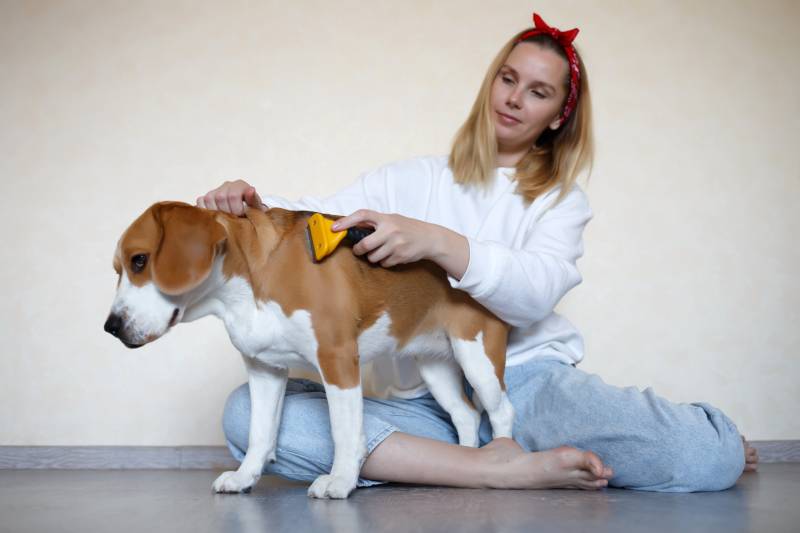
The single most important thing you can do to reduce shed hair in your home is to brush your beagle regularly, ideally at least 2-3 times per week. Use a slicker brush or hound mitt to remove loose hair, stimulate circulation, and distribute natural skin oils. Brush in the direction of hair growth using gentle strokes.
During heavy seasonal sheds, brush your beagle daily to keep up with the extra hair loss. You may also want to use an undercoat rake to help lift out the dense wooly undercoat.
"Regular brushing is key to managing shedding in double-coated breeds like beagles," says professional groomer Jackie Johnson. "It helps remove the dead hair before it has a chance to fall out on its own, and it keeps the coat and skin healthy."
Bathe strategically
Bathing your beagle every 4-6 weeks, or whenever they get especially dirty, will help loosen and wash away dead hair. Use a gentle, moisturizing dog shampoo and massage it through the coat to the skin. Rinse thoroughly and follow up with a light conditioner if your beagle‘s coat seems dry.
Avoid bathing too frequently, as this can strip the coat of natural oils and lead to dryness and irritation which may actually increase shedding. Always brush your beagle before bathing to remove tangles and prevent matting.
Feed a healthy diet
The quality of your beagle‘s diet can have a big impact on their coat health and the amount they shed. Feed a balanced, complete diet that meets AAFCO standards and includes high-quality protein, essential fatty acids, and vitamins and minerals. Omega-3 and omega-6 fatty acids are particularly important for skin and coat condition.
Avoid cheap, low-quality foods with fillers, byproducts, and artificial ingredients which can contribute to dry, flaky skin and excess shedding. If your beagle has sensitivities, consider a limited-ingredient or hypoallergenic diet.
Manage fleas and parasites
External parasites like fleas, ticks, and mites can cause skin irritation and excessive shedding in beagles. Keep your beagle on year-round preventatives as recommended by your veterinarian and check them regularly for any signs of infestation, like scratching, hair loss, or visible bugs.
Watch for signs of illness
Excessive shedding or hair loss, especially in patches, can be a sign of an underlying health issue in beagles. Hormonal imbalances, allergies, infections, and certain diseases like Cushing‘s disease can all cause hair loss. If you notice any bald spots, skin irritation, or significant changes in your beagle‘s coat, make an appointment with your veterinarian.
Try supplements
If your beagle‘s coat seems dull or dry, talk to your veterinarian about adding an omega-3 fatty acid supplement to their diet. These supplements, usually in the form of fish oil, can help improve coat condition and reduce shedding. Other supplements like biotin and zinc may also be beneficial for some dogs.
Tips for Keeping Your Home Hair-Free
In addition to regular grooming, there are several things you can do to minimize loose hair in your home:
- Vacuum frequently with a pet-specific vacuum or attachment
- Use washable slipcovers or throws on furniture
- Keep lint rollers handy for quick touch-ups
- Try an air purifier with a HEPA filter to trap airborne hair and dander
- Designate a specific spot for grooming and keep supplies nearby
- Consider investing in pet-specific cleaning products designed to lift hair from surfaces
As a beagle lover myself, I‘ve found that a combination of regular grooming, strategic home cleaning, and a healthy dose of patience and acceptance is the key to living harmoniously with a shedding hound. While it may sometimes feel like a losing battle against the endless hair, the unconditional love and joy that beagles bring to our lives is more than worth a little extra vacuuming. With some time and effort, it‘s possible to manage your beagle‘s shedding and still maintain a (relatively) hair-free home.