In Search of the Perfect Lab-Like Companion: 13 Similar Breeds to Consider
As a lifelong dog lover and veterinary expert, I‘ve had the pleasure of working with countless Labrador Retrievers over the years. It‘s no surprise to me that Labs consistently rank as the most popular breed in America, beloved for their friendly, outgoing personalities and eager-to-please attitudes.
But while Labs are a great fit for many households, they‘re not the perfect match for everyone. Some people may be looking for a smaller or larger size, a different coat type, or slightly different temperament. The good news is, there are many other breeds that share key traits with Labs and can make wonderful companions in their own right.
What Makes a Lab a Lab?
First, let‘s examine what makes Labrador Retrievers so special. Most Labs share the following characteristics:
- Friendly, outgoing personalities
- Eager to please and highly trainable
- Energetic and athletic, requiring daily exercise
- Gentle and patient with children
- Generally good with other dogs and pets
- Medium-large size, weighing 55-80 pounds
- Short, dense coat in black, chocolate, or yellow
- Broad head, drop ears, and "otter" tail
Of course, every dog is an individual, and not all Labs will perfectly match this description. But in general, these traits are what draw many people to the breed.
13 Dog Breeds Similar to Labs
If you love Labs but are open to other options, consider these breeds that share some key similarities:
1. Golden Retriever
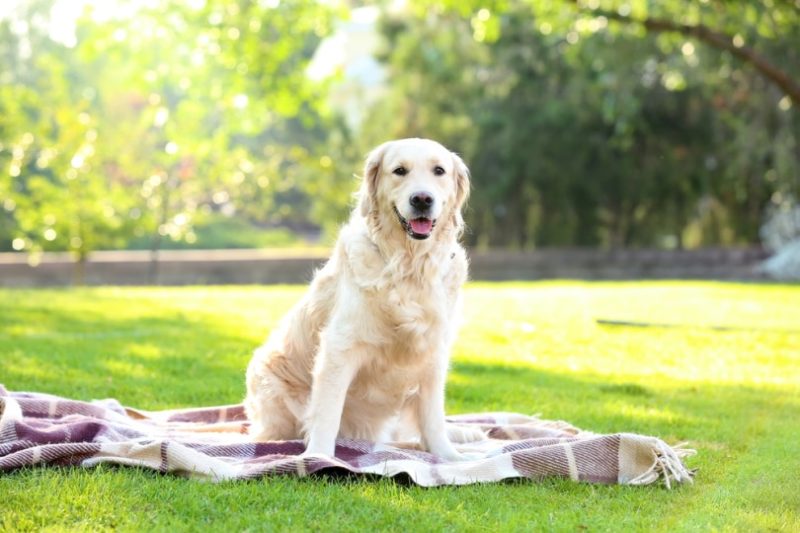
It‘s no surprise that the Golden Retriever is often compared to the Lab. These friendly, intelligent, and trainable dogs consistently rank just behind Labs in popularity. Goldens are similarly active and athletic, requiring daily exercise. The main physical difference is their longer, wavy golden coat.
2. Flat-Coated Retriever
Sometimes described as a cross between a Golden and a Lab, the Flat-Coated Retriever shares many of the same friendly, outgoing traits. "Flatties" are known for being especially good-humored and optimistic, making excellent companions. They tend to be slightly more energetic and slower to mature than Labs.
3. Chesapeake Bay Retriever
Chessies were bred to hunt and retrieve waterfowowl in the rough, icy waters of the Chesapeake Bay. Like Labs, they are intelligent, trainable, and energetic. However, Chessies tend to be more protective and less outgoing with strangers, bonding closely with their families. They have wavy, waterproof coats that equip them for swimming in cold conditions.
4. Standard Poodle
Though often associated with show rings and fancy haircuts, Poodles were originally bred as hunting dogs and are quite athletic. Like Labs, they are playful, trainable, and generally friendly, though they tend to bond more closely with their immediate families. Poodles have curly, low-shedding coats that can make them a good choice for allergy sufferers.
5. Bernese Mountain Dog
Gentle giants, Bernese Mountain Dogs are known for their calm, patient, and sweet dispositions. They make excellent family companions, though they tend to be a bit more laidback than Labs. Daily moderate exercise is still important for these large dogs. Bernese have striking tri-colored coats and typically weigh 70-120 pounds, with males on the larger end.
6. Great Pyrenees
Another gentle giant, the Great Pyrenees is known for its calm, loyal, and affectionate temperament. Pyrs were originally bred to guard livestock and have a more independent, somewhat stubborn nature that can make training a challenge. They can weigh up to 160 pounds and have thick, white coats that shed heavily.
7. Pointer
The Pointer is an athletic, energetic breed that shares the Lab‘s friendly, eager-to-please attitude. Originally bred for hunting, Pointers require plenty of daily exercise and do best with active owners. They tend to be good with children and other dogs. Pointers have short, smooth coats that come in various colors and patterns.
8. Basset Hound
With their short, long bodies and droopy ears and expressions, Basset Hounds may seem like an odd comparison to Labs at first glance. But in terms of temperament, Bassets are known for being playful, patient, and friendly, getting along well with children and other pets. They do have a strong prey drive and a stubborn streak that can make training challenging. Bassets also tend to be low-energy, prone to drooling, and heavy shedders.
9. English Springer Spaniel
Bred as hunting companions, English Springer Spaniels share many of the Lab‘s friendly, energetic, and eager-to-please traits. They‘re intelligent and trainable, though they can be more sensitive than Labs. Springers have medium-length coats with feathering and long, droopy ears that require regular grooming.
10. Bloodhound
Gentle and even-tempered, Bloodhounds tend to get along well with people and other animals. They are famous for their keen sense of smell and unmatched scent tracking abilities. Bloodhounds have loose skin, long ears, and a strong, independent streak which can make training a challenge. They are also prone to drooling and can be stubborn.
11. Spinone Italiano
This rare breed is known for its good nature, patience, and affectionate personality – much like the Lab. Spinoni tend to be calmer than Labs but still require plenty of daily exercise. Their wiry coats are well-suited for tough terrain and can be a good choice for allergy sufferers. Spinoni do shed moderately and are prone to drooling.
12. Cane Corso
The Cane Corso is a large, muscular breed that can weigh up to 120 pounds. Though they tend to be more protective and less outgoing than Labs, Corsi share the breed‘s intelligence, trainability, and even temperament. They are loyal, affectionate companions but may be more aloof with strangers. Cane Corsi have short coats, furrowed brows, and cropped ears that give them an imposing appearance.
13. Labrador Mixes
If a purebred dog isn‘t a must, you might consider a Labrador mix. Breeds like the Labradoodle (Lab/Poodle cross), Goldador (Golden/Lab), Boxador (Boxer/Lab), or Huskador (Husky/Lab) can combine many of the Lab‘s desirable traits with characteristics of the other breed.
It‘s important to do your research, as the traits and care needs of mixed breeds can vary widely. In general, aim to understand the common characteristics of both parent breeds to get a sense of what to expect.
Choosing the Right Dog for You
As a veterinary expert and dog lover, I always stress that while certain breeds tend to have common characteristics, every dog is unique. Even within a litter, puppies can have distinctly different personalities. It‘s crucial to consider your lifestyle and what you‘re looking for in a canine companion, rather than choosing a dog based solely on breed.
If possible, arrange to meet the individual dog and spend some time interacting. Ask the breeder or rescue organization about the dog‘s energy level, personality, and any specific needs. For purebred dogs, familiarize yourself with the breed standards and care requirements. With mixes, research the general traits of the parent breeds to understand what to expect.
Most importantly, remember that all dogs need positive reinforcement training, socialization, exercise, mental stimulation, and lots of love. By meeting your dog‘s individual needs, you‘ll be on your way to a happy, fulfilling relationship – no matter what breed or mix you ultimately choose.
Purebred Lab vs. Similar Breed Comparison
To summarize, here is a quick comparison of key traits of Labrador Retrievers versus similar dog breeds:
| Breed | Size | Coat Type | Grooming | Trainability | Energy Level | Kid-Friendly |
|---|---|---|---|---|---|---|
| Labrador Retriever | Medium-Large | Short, dense | Minimal | High | High | Yes |
| Golden Retriever | Medium-Large | Medium-long, wavy | Moderate | High | High | Yes |
| Flat-Coated Retriever | Medium-Large | Medium-long, flat | Moderate | High | High | Yes |
| Chesapeake Bay | Medium-Large | Medium-short, wavy | Moderate | High | High | Better |
| Standard Poodle | Medium-Large | Long, curly | High | High | Moderate | Yes |
| Bernese Mountain Dog | Large-XL | Medium-long, thick | Moderate | Moderate | Moderate | Yes |
| Great Pyrenees | XL | Long, thick | High | Low | Low-Moderate | Yes |
| Pointer | Medium-Large | Short, smooth | Minimal | High | High | Yes |
| Basset Hound | Medium | Short-Medium, smooth | Moderate | Low | Low | Yes |
| Springer Spaniel | Medium | Medium-long, feathered | Moderate | High | High | Yes |
| Bloodhound | Large | Short, smooth | Moderate | Low | Moderate | Yes |
| Spinone Italiano | Large | Medium-long, wiry | Moderate | Moderate | Moderate | Yes |
| Cane Corso | Large-XL | Short, smooth | Minimal | High | Moderate | Better |
Of course, these are generalizations, and individual dogs within a breed can vary. But this offers a helpful comparison of size, coat type, grooming needs, trainability, energy level, and kid-friendliness compared to the Labrador Retriever.
A Dog Lover‘s Perspective
As someone who has owned and worked with a variety of dogs, including several Labrador Retrievers, I can attest that Labs are truly special. Their friendly, eager-to-please personalities and goofy sense of humor never fail to bring a smile.
That said, not every Lab is the perfect fit for every household. I‘ve met some Labs who were quite high-strung and needed a lot of exercise and mental stimulation to stay happy. Others were more laid back and content to cuddle on the couch.
My sister‘s family recently adopted a Labradoodle, and he‘s been a fantastic fit for their busy household with two young kids and a cat. He has the Lab‘s friendly, outgoing personality but is a bit calmer and has the bonus of a low-shedding coat.
I also have a good friend who adopted a Flat-Coated Retriever after falling in love with the breed‘s goofy, optimistic personality. Her Flattie is always up for a game of fetch or a swim, and his zest for life is truly contagious.
The key is taking the time to find the right dog for your unique situation. Meeting dogs in person, asking lots of questions, and working with responsible breeders or rescue organizations can help you find the perfect match.
Finding Your New Best Friend
If you‘re ready to add a Lab or similar breed to your life, here are a few tips:
- Research breed characteristics and care requirements
- Decide whether a purebred or mix is right for you
- Find a responsible breeder or reputable rescue organization
- Ask for health certifications and meet the puppy‘s parents if possible
- Spend time with individual dogs to get a sense of personality and energy level
- Be prepared for the time, energy, and financial commitment of dog ownership
- Sign up for positive reinforcement training classes
- Be patient during the puppy stages and provide plenty of socialization
With the right preparation and commitment, a Lab or similar breed can be a wonderful addition to your family. As a long-time dog lover, I can attest that the unconditional love and joy a dog brings to your life is truly priceless.