
Kaggle Grandmaster Series: Exclusive Interview with Philip Margolis, Rank #47 Competitions Grandmaster
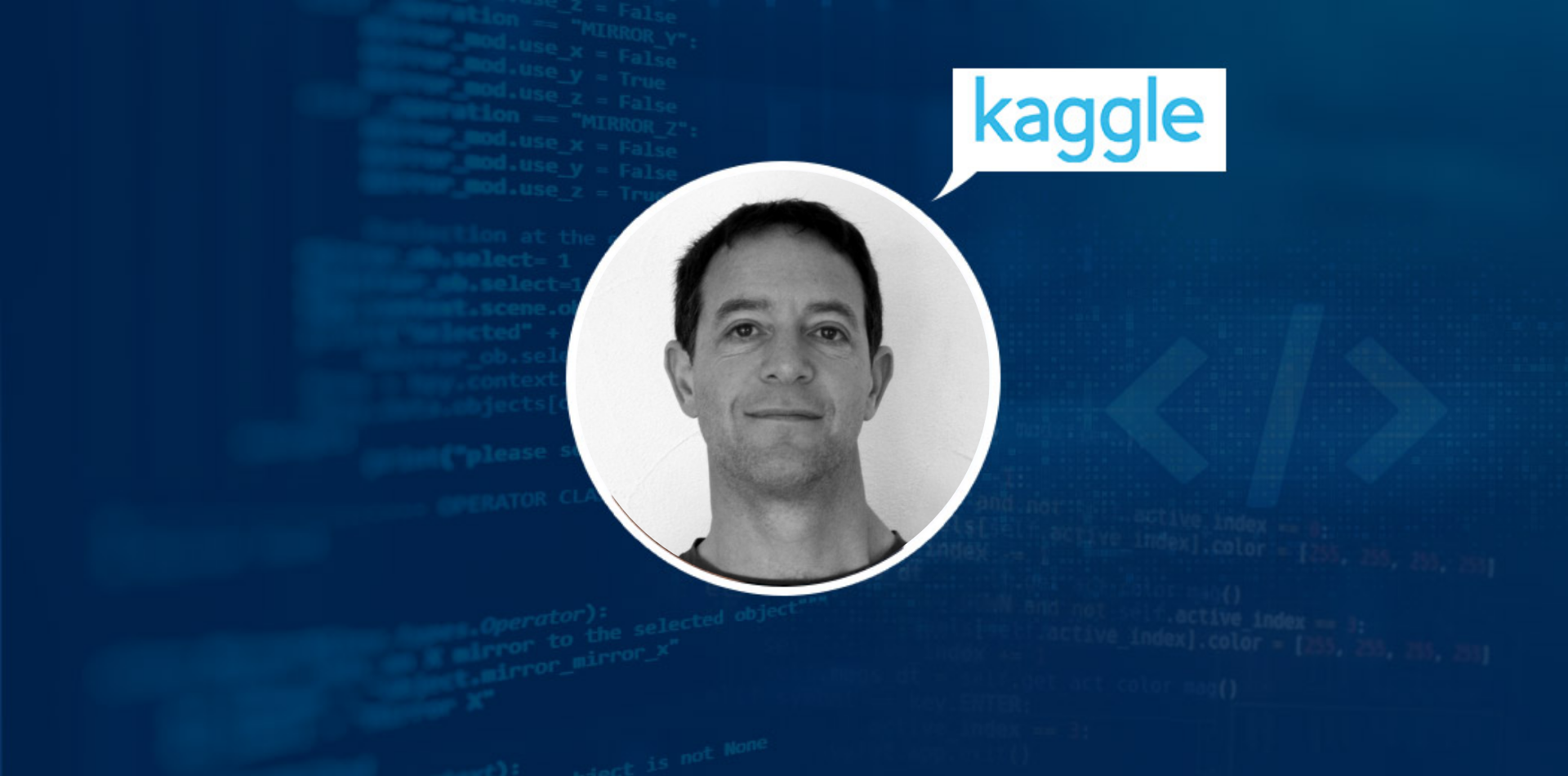
"I just followed my interests and focused on learning machine learning as much as I could." – Philip Margolis
When it comes to picking up new skills or changing careers, age is truly just a number. With enough curiosity and dedication, it‘s never too late to dive into a field you‘re passionate about – even one as complex and rapidly evolving as data science.
Philip Margolis embodies this spirit perfectly. Philip currently holds the impressive title of Kaggle Competitions Grandmaster, ranked #47 worldwide. With 17 gold medals, 12 silver, and 6 bronze across 84 total completed competitions, his consistent performance has earned him a spot among the world‘s elite data scientists. He‘s also highly active in the Discussions category with over 130 posts.
But machine learning wasn‘t always the focus of Philip‘s career. He actually started out studying journalism as an undergrad before working as a technical writer for 15 years. He then pivoted into entrepreneurship, co-founding several data-driven web publishing and search technology companies over the next two decades.
It wasn‘t until 2012, after selling his latest startup, that Philip stumbled upon Kaggle and became captivated by the possibilities of ML. He threw himself into learning the techniques and mathematics he had forgotten since college, determined to master this powerful toolkit for solving real-world problems.
I recently had the pleasure of chatting with Philip to learn more about his unconventional path into data science, the strategies behind his Kaggle success, and his advice for anyone else considering a mid-career transition into the field.
Combining Passions into a Multifaceted Career
As Philip shared with me, his interest in computers and programming stretches all the way back to his teenage years. Even while pursuing a journalism degree, he found himself drawn to technical writing roles that allowed him to explore the inner workings of software and break it down for a general audience.
After 15 years though, the entrepreneurial itch became too strong to resist. Philip transitioned into launching data-focused startups, serving as founder or co-founder for companies working on everything from violin appraisals to search algorithms. He credits his communication skills for helping him effectively lead technical teams and sell the value of their work to clients and investors.
"Looking back, I realize how much my writing background and business experiences have shaped my approach to data science," Philip reflects. "Clear communication is so crucial, whether you‘re explaining a complex model to a CEO or convincing a Kaggle competitor to team up with you. You have to meet people where they‘re at and translate the insights that matter to them."
This is just one of many ways Philip has leveraged his unique professional background to excel in data science. His diverse experiences allow him to see each project through multiple lenses: as a storyteller, strategist, technician, and end user.
Diving into Data Science and AI/ML
By the time Philip discovered Kaggle in 2012, the site was already well-established as a hub for data science collaboration and competition. But the field of artificial intelligence and machine learning was on the cusp of a new boom, with groundbreaking research papers, open source tools, and industry applications appearing at a dizzying pace.
For someone who hadn‘t flexed their math or programming muscles in quite some time, diving into this world was both exhilarating and daunting. Philip poured himself into foundational AI/ML courses like Andrew Ng‘s famous Coursera offering and the StatLearning MOOC from Stanford.
"I knew I had a lot of catching up to do, especially on the theoretical side," says Philip. "But I was determined to put in the work. The beauty of the internet is the sheer wealth of learning resources available – often for free! There‘s really no excuse not to get up to speed if you‘re passionate and persistent enough."
Over time, Philip developed a solid understanding of essential machine learning concepts and techniques like:
- Supervised learning (regression, classification, etc.)
- Unsupervised learning (clustering, dimensionality reduction, etc.)
- Model selection and evaluation (cross-validation, hyperparameter tuning, etc.)
- Algorithm trade-offs (bias vs variance, model complexity, etc.)
He experimented with a variety of tools and frameworks, but eventually settled on Python‘s data science ecosystem as his go-to for most projects. Libraries like scikit-learn, XGBoost, Keras, PyTorch, and fastai became indispensable parts of his workflow.
Of course, the field never stands still for long. Philip had to (and still does) work hard to stay on top of the latest advances, best practices, and trends – whether it‘s a new neural network architecture, AutoML technique, or compute infrastructure.
"The learning curve in AI/ML can feel relentless, but that‘s also what makes it so engaging," he explains. "I try to carve out time each week to read academic papers, blog posts, and social media discussions from top researchers and practitioners. It‘s an ongoing investment, but one that has paid off immensely in keeping my skills sharp and sparking new ideas."
Hitting the Kaggle Big Leagues
Kaggle‘s public leaderboards and competitions provided Philip with the perfect proving ground for his burgeoning data science abilities. They also introduced him to an incredible community of collaborators and friends who pushed his learning even further.
I asked Philip if he could share any specifics on his most challenging or memorable contests. He immediately pointed to the $1 million Zillow Prize, which tasked participants with building a model to predict home sales prices across the US.
"That one was a monster," Philip recalls with a chuckle. "You had this giant, messy dataset covering real estate transactions in thousands of counties. Plus some of the most talented data scientists and engineers in the world all gunning for that prize money. I put in crazy hours trying to come up with novel ways to extract signal from the noise."
His hard work paid off: after dozens of late nights feature engineering, fine-tuning his cross-validation scheme, and ensembling models, Philip managed to snag 2nd place and $50,000. The winning solution blended several LightGBM models together into one powerful (and profitable) predictor.
So what advice would he give to Kagglers trying to make their own climb up the rankings? Philip offered a few key tips:
-
Always try tackling the problem solo first, before peeking at the discussion boards or kernels, to build your intuition and test your own abilities. You can learn a ton that way.
-
Get in early! The longer you wait to enter a competition, the harder it is to catch up with all the great ideas flowing. Even if your first few submissions aren‘t that strong, you‘ll pick up valuable context.
-
Read, upvote, and contribute to the forums. The collective knowledge there is staggering. Some of my biggest breakthroughs came from a single comment sparking a new approach. Don‘t be afraid to ask "dumb" questions either.
-
Team up! Kaggle is a fantastic place to meet other data scientists from all walks of life. I‘ve been blown away by what people can accomplish when they combine skills and perspectives. You‘ll often see diverse teams topping the private leaderboard.
-
Focus on learning above all else, even if that means a temporary hit to your ranking. The latest tricks might win you a quick gold, but they won‘t necessarily transfer to real-world data challenges. Prioritize techniques with the widest potential applications.
Philip noted that many of his biggest competition breakthroughs actually came from taking the time to really understand the data itself, rather than just throwing a bunch of complex models at the wall. Domain expertise, solid EDA (exploratory data analysis), and careful feature engineering often beat out fancier algorithms and architectures.
Embracing the Never-Ending Learning Curve
For anyone considering a transition into data science themselves, Philip has nothing but encouragement:
"If I could go from journalism major to Kaggle GM, I promise you can do it too. But you have to be ready to embrace the field‘s never-ending learning curve. Some of the most important skills to cultivate are creativity, open-mindedness, and grit."
He emphasized that model building is just one part of the larger data science picture. Successful practitioners also need to be able to:
- Gather, clean, and wrangle data from diverse sources
- Visualize and communicate insights to different audiences
- Collaborate cross-functionally to implement models in production
- Consider the ethical implications and potential pitfalls of their work (bias, privacy, fairness, robustness, etc.)
- Stay curious and adaptable as new tools and techniques emerge
The rapid pace of progress in AI/ML can feel overwhelming at times, but Philip sees it as a tremendously exciting opportunity to keep stretching his knowledge and tackling more ambitious problems. He‘s especially optimistic about applications in healthcare, education, sustainability, and scientific research – areas where smarter systems could dramatically improve quality of life for millions.
To stay on the cutting edge, Philip recommends setting up a strong "information diet" from a variety of expert sources. Some of his favorites include:
- Academic publications like JMLR, NeurIPS, ICML, etc.
- Industry tech blogs from Google, Facebook, OpenAI, DeepMind, etc.
- Niche communities like Reddit‘s r/MachineLearning and the FastAI forums
- Influential social accounts and newsletters (Andrej Karpathy, HuggingFace, Sebastian Raschka, Data Science Weekly, etc.)
He also tries to attend at least one top conference per year, like KDD or ICLR, to absorb the latest research firsthand and connect with other practitioners face-to-face. For those who can‘t travel, many events now offer virtual attendance options or post public videos after the fact.
At the end of the day, what keeps Philip engaged with data science is that core sense of fascination with using data to better understand and shape our world. Kaggle competitions tap into that same motivation, challenging participants to extract meaningful insights from mountains of raw information.
"The most important lesson I‘ve learned is to let your curiosity and passion drive you," he reflects. "That intrinsic motivation is what will sustain you through the ups and downs of studying, model iterations, paper rejections, and everything in between. If you can hold on to your sense of wonder about what‘s possible, you‘ll have an incredible ride – no matter what age you get started at."
Words of wisdom from a true grandmaster. Here‘s to the next generation of aspiring Kagglers and data scientists taking them to heart.


