Kaggle Grandmaster Series – Exclusive Interview with Kaggle Notebooks Grandmaster Kostiantyn Isaienkov (#Rank 8)
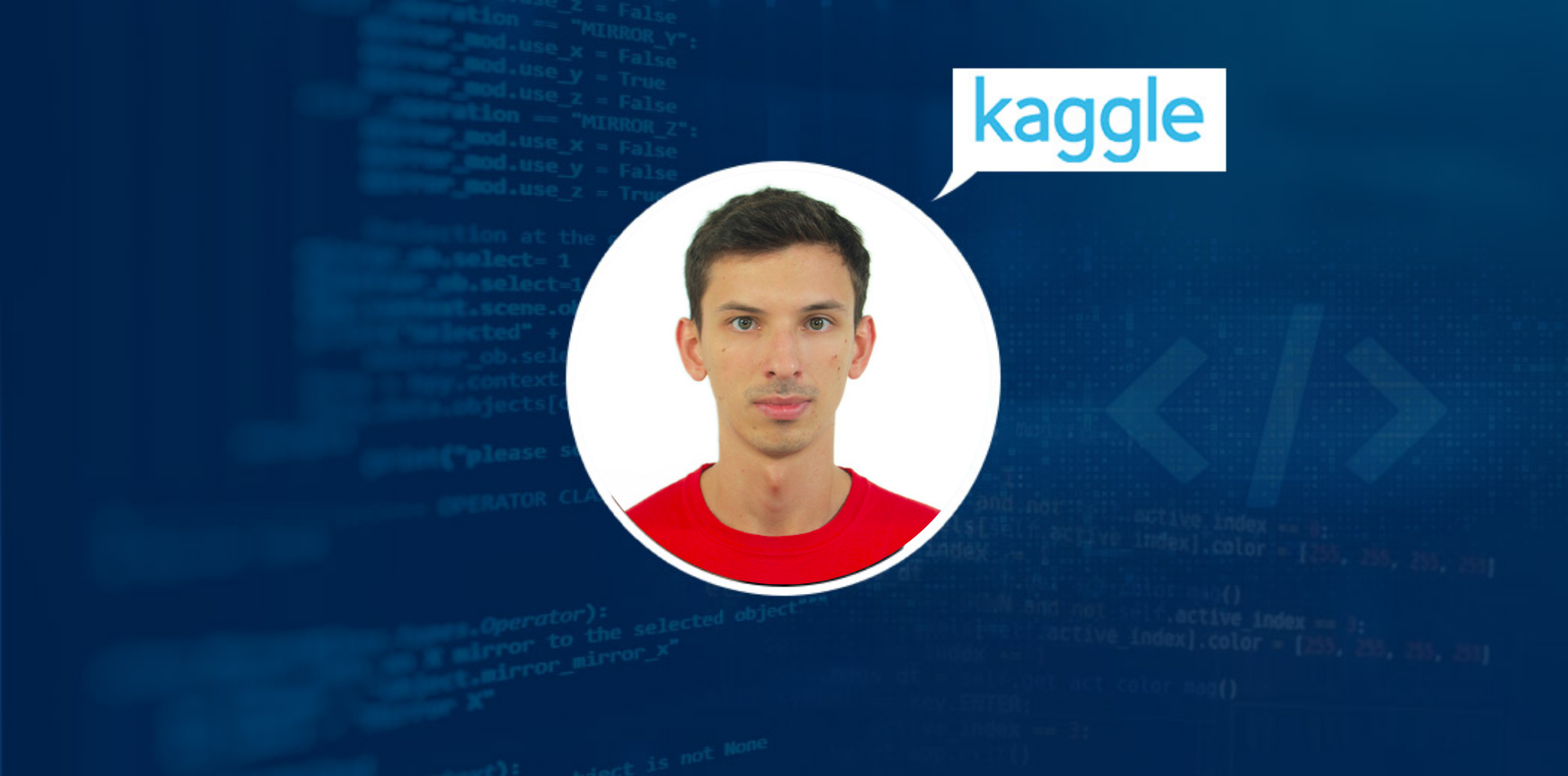
If you‘re an aspiring data scientist, you‘ve undoubtedly heard of Kaggle – the world‘s largest online community of data scientists and machine learning practitioners. And if you‘re active on Kaggle, you‘re likely familiar with Kostiantyn Isaienkov.
Kostiantyn is currently ranked #8 among all Kaggle Notebooks Grandmasters. He has an impressive 28 gold medals along with 14 silver and 10 bronze. But Kostiantyn is more than just a collection of numbers and accolades. He‘s an accomplished data scientist with a wealth of knowledge to share.
I recently had the privilege of sitting down with Kostiantyn (virtually of course) to learn more about his background, Kaggle journey, current work, and advice for beginners. Let‘s dive in!
From Academia to Data Science
Kostiantyn earned both his Bachelor‘s and Master‘s degrees in Computer Science from Donetsk National Technical University in Ukraine. He then went on to complete an exchange semester at Czech Technical University where he honed his skills in machine learning and autonomous robotics.
While some argue that a Master‘s degree or higher is essential for a data science career, Kostiantyn believes it‘s not necessarily a hard requirement. In his view, a strong foundation in computer science and mathematics is certainly beneficial. But he has worked with many successful data scientists from a variety of educational backgrounds.
Kostiantyn credits his own academic training with instilling important skills like discipline, communication, problem-solving, and self-directed learning – all very applicable to data science. And the in-depth knowledge gained during his exchange semester gave him an advantage landing his first data science role.
Solving Real-World Data Problems
After completing his studies, Kostiantyn began working as a Data Science Engineer. He has spent time at both Akvelon and Quantum where he tackles data science problems for a variety of clients. While the core responsibility of delivering data-driven solutions is consistent, Kostiantyn notes some differences between the two roles.
At Akvelon, many of the projects centered on structured data and classical machine learning use cases. Kostiantyn also took on some data engineering tasks. In contrast, Quantum has exposed Kostiantyn to a wider range of challenges spanning machine learning, computer vision, and natural language processing. He has implemented ML algorithms in Java, integrated them into an iPhone app, and even worked on developing an AutoML product.
Kostiantyn also leads Quantum‘s data science internship program. Having successfully guided several cohorts, he is passionate about training the next generation. Beyond his core job functions, Kostiantyn makes time for research. One of his recent papers focused on detecting changes in Ukraine‘s forests using satellite imagery.
Lessons from the Kaggle Trenches
Now let‘s get to the part you‘re all here for – Kostiantyn‘s Kaggle experience! He first joined the platform about 5 years ago as a way to practice his skills and learn new techniques. Like many newcomers, Kostiantyn initially struggled with the fear of putting his work out there and potentially receiving negative feedback. But he quickly realized the Kaggle community is overwhelmingly supportive.
Another early challenge was creating clean, readable code and clear documentation to accompany his insights. Kostiantyn emphasized that good data science is about much more than just training models. Investing time to refine his presentation and communication paid off in the form of better reception from the community.
When deciding which competitions to enter or datasets to analyze, Kostiantyn looks for problems that will stretch his abilities and expand his knowledge. He gravitates towards challenges in less familiar domains. Even if he doesn‘t achieve a top leaderboard spot, Kostiantyn sees every competition as an opportunity to learn something new. He has even directly applied techniques picked up through Kaggle to projects at work.
To create a good notebook, Kostiantyn follows a loose template covering key steps like data loading, cleaning, EDA, and modeling. He is a big proponent of acquiring domain knowledge to provide useful context. Visualizations are another essential tool in his arsenal for rapidly uncovering insights. While he always shoots for a respectable leaderboard finish, Kostiantyn is quick to point out how slim the margins often are between winning a medal and getting no recognition. Fractions of a percent frequently make the difference.
Keeping Up with a Fast-Moving Field
Data science and machine learning are evolving at a breakneck pace. New techniques, tools, and best practices emerge on a near-daily basis. To stay ahead of the curve, Kostiantyn employs a few key strategies:
-
Reading research papers to learn about cutting-edge approaches before they are widely adopted
-
Participating in Kaggle competitions and studying high-performing notebooks to deconstruct winning methodologies
-
Actively sharing knowledge with colleagues and tapping into the collective wisdom of data science communities
Kostiantyn can‘t stress enough the importance of lifelong learning for data science professionals. But he also reminds us not to neglect our programming abilities. As data scientists, our code needs to be accurate, efficient, maintainable, and scalable.
Kostiantyn‘s Advice for Beginners
For those just starting their data science journey, Kostiantyn has a wealth of hard-earned wisdom to impart. First and foremost, commit to continuous learning. Set aside dedicated time to practice new skills, work on projects, study the latest research, and compete on Kaggle.
When it comes to Kaggle specifically, Kostiantyn recommends beginners hone their exploratory data analysis chops on the classics – datasets like Titanic or House Prices. The associated notebooks with hundreds or thousands of upvotes serve as an excellent starting point. Don‘t be afraid to dig into the code, add comments to explain your understanding, and experiment with modifications.
In the interpersonal realm, Kostiantyn urges developing your communication and collaboration muscles. Data science is a team sport. You need to be able to clearly explain your work to both technical and non-technical audiences. Seek out opportunities to partner with colleagues on projects. Consider volunteering as a mentor for data science beginners.
Kostiantyn‘s final words of advice really resonated with me. He reminds us that while leveling up your data science skills is important, it shouldn‘t come at the cost of your overall well-being. Make time for family, friends, hobbies, and self-care. Burnout is very real in this field. A balanced lifestyle is key to long-term success and fulfillment.
Parting Thoughts
A huge thanks to Kostiantyn for so generously sharing his time and insights with the data science community. His technical accomplishments speak for themselves. But even more impressive is Kostiantyn‘s genuine passion for helping others grow and succeed.
My key takeaways from our conversation:
- A data science career is accessible from a variety of educational paths. Cultivate core competencies in programming, math/stats, and domain knowledge. Never stop learning.
- Kaggle competitions are an excellent proving ground. Focus on gaining new skills vs. chasing leaderboard positions. Communicate your insights effectively.
- Stay up-to-date by reading papers, participating in the community, and selectively applying new techniques. Always be expanding your technical toolbox.
- Soft skills and collaboration are just as crucial as technical chops. Invest in your ability to work well with others.
- Maintain a healthy work-life balance. Pursue your data science goals sustainably and make time for self-care to avoid burnout.
I hope you found this interview as enlightening as I did. Share your favorite insights in the comments and let me know which other data science leaders you‘d like to see profiled in future Kaggle Grandmaster Series installments.
Until next time, happy data sleuthing!