Male vs Female Dachshund: An In-Depth Look at the Differences
Dachshunds are one of the most popular dog breeds in the United States, ranking 12th out of 197 breeds according to the latest 2024 AKC registration statistics. It‘s easy to see why these charming "wiener dogs" have captured the hearts of so many. With their short legs, long bodies, and bold personalities, dachshunds are lovable, comical companions.
But within this delightful breed, there are some notable differences between male and female dachshunds to consider when choosing your new best friend. As a veterinarian for over 20 years and a lifelong dachshund devotee myself, I‘m here to give you the complete scoop on dachshund girls versus boys.
Dachshund 101: Breed Overview
Before we dive into male and female distinctions, let‘s review what makes a dachshund a dachshund. Originating in Germany over 300 years ago, these short-legged, elongated pooches were bred to hunt badgers and other burrow-dwelling animals. In fact, their name literally means "badger dog" in German.
Today‘s dachshunds come in two sizes:
- Standard: 16-32 pounds
- Miniature: under 11 pounds
And three coat types:
- Smooth
- Wirehaired
- Longhaired
Common to all varieties are the breed‘s keen intelligence, stubborn streak, and lively, outgoing nature. Dachshunds tend to be very devoted to and protective of their humans. My first family dachshund, Schnitzel, appointed himself my personal guardian and would fiercely bark at anyone he perceived as a threat to me (including my poor date to senior prom).
Male vs Female Dachshund Appearance
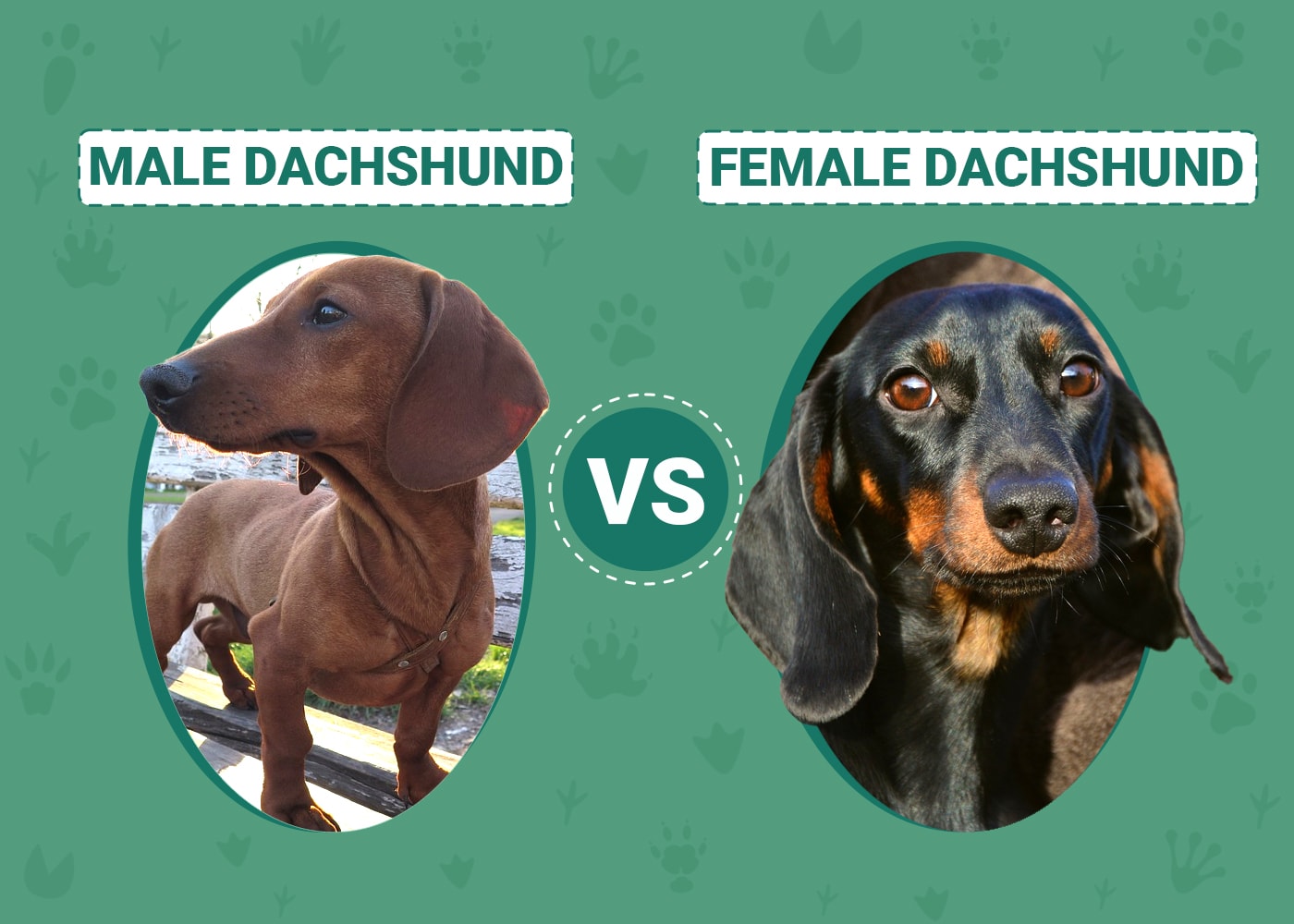
While male and female dachshunds share the same breed standards and general conformation, there are a few physical nuances between the sexes.
Size
According to the AKC, the average male standard dachshund weighs between 16-32 pounds and stands 8-9 inches tall at the shoulder. Females tend to be slightly smaller, typically weighing on the lower end of the 16-32 pound range and measuring closer to 7-8 inches. For miniatures, both male and female fall under 11 pounds and stand around 5-6 inches.
Of course, genes and lifestyle factor in too, and some individuals may grow larger or smaller. Obesity is an issue for many dachshunds, so keeping your pup at a healthy weight is essential.
Features
At a glance, male and female dachshunds look very similar. Both have adorably elongated snouts, floppy ears, and a deep chest with short, muscular legs. However, males tend to have slightly broader heads and more muscular builds compared to the more delicately built females.
Some owners report that male dachshunds have more prominent eyebrow ridges and thicker, longer muzzles, giving them a "masculine" appearance. In my experience, these facial feature differences are very subtle. Coat colors and patterns don‘t vary between the sexes.
Temperament
While each dachshund is an individual, some general personality traits tend to differ between males and females. Many of these relate to levels of affection, independence, and stubbornness. Let‘s look at male dachshunds first.
Male Dachshund Temperament and Personality
Male dachshunds have a reputation for being real cuddlebugs. They crave physical affection and will often seek out a warm lap to snuggle in. My current male longhaired, Baron, flops across my legs whenever I sit down, begging for a belly rub. This affectionate nature extends to most people they meet.
Along with being extremely devoted, male dachshunds are often sillier and more playful than their female counterparts. They retain a puppy-like goofiness and zest for playtime well into adulthood. This high energy level needs a constructive outlet, or else your dog may resort to digging or other mischief.
On the flip side, male dachshunds can sometimes be a bit clingy and needy with their chosen person. Separation anxiety is common if they are frequently left alone for long periods. Some males are also more prone to marking and humping behaviors, especially if not neutered. With strangers and other dogs, males tend to be more outgoing and friendly compared to aloof females.
Female Dachshund Temperament and Personality
Female dachshunds are often more independent than velcro-dog males. While still loving and loyal, females are less likely to be overly needy with their affections. My female smooth coat Greta enjoys cuddling on her own terms and isn‘t shy about trotting off to do her own thing when she‘s had enough petting.
Females can be more selective when giving out their affections, tending to bond deeply with their favorite human while remaining more reserved with strangers. This standoffishness can veer into protectiveness and even snippiness if a female feels her space is being invaded, especially by young children or rowdy dogs.
In general, female dachshunds are a bit more serious and less goofy than males. They still have an eager playfulness about them but may have a lower overall energy level day-to-day. Females also tend to be fastidious about cleanliness and housetraining.
Trainability and Intelligence
Dachshunds of both sexes are very smart pooches. In fact, they rank 49th out of 138 dog breeds in canine psychologist Stanley Coren‘s intelligence rankings. However, they are notoriously stubborn, which can make training a challenge.
Male Trainability
Male dachshunds are often easier to train than females. As people-pleasing extroverts, they thrive on positive reinforcement and are highly motivated by treats and praise. They pick up on commands quickly and enjoy the bonding time that training sessions provide with their beloved owner.
However, that quintessential dachshund stubbornness is still present in males. They can get easily distracted by an interesting scent or the prospect of playtime. Leash training can be tricky since they want to greet every dog and person they see on walks. Patience and consistency are key.
Female Trainability
Females are often more challenging to train due to their independent nature. They are less eager to please and more likely to dig in their paws and refuse to comply if something doesn‘t interest them. Finding a female‘s motivation, whether it‘s a special toy or an extra yummy treat, helps keep training on track.
On the plus side, females are less prone to distraction and more focused during training. Since they tend to be less excitable on walks, leash training often comes easier. Females are also typically neater and pick up on housetraining cues faster.
Health
As a breed, dachshunds are generally healthy pups with an average lifespan of 12-16 years. However, their long spines and short legs leave them prone to certain health issues, namely intervertebral disc disease (IVDD). Other health concerns include eye problems like glaucoma, heart disease, hip dysplasia, hypothyroidism, and patella luxation.
Male Health
Overall, male dachshunds tend to be slightly healthier and longer-lived than their female counterparts. According to a 2022 UK study from the Royal Veterinary College, the average male dachshund lifespan is 12.7 years versus 12.1 years for females.
In general, male dogs have a slight longevity advantage over females, perhaps due to their larger size and delayed onset of certain age-related diseases. However, male dachshunds (especially those not neutered) are more prone to prostate issues, perianal fistulas, and certain cancers like perianal adenomas.
Female Health
The main health concern for female dachshunds is related to breeding. Their unique body shape makes carrying and delivering puppies more taxing than for females of other breeds. There‘s an increased risk of joint problems and complications like dystocia (obstructed labor). For this reason, it‘s essential to wait until a female dachshund is fully physically mature (after her first heat cycle or around 12 months old) before breeding.
Not being spayed also leaves females vulnerable to mammary tumors and pyometra (a potentially life-threatening uterine infection). Spaying too early can increase IVDD risk, so most vets now recommend waiting until 10-12 months. Compared to males, female dachshunds are slightly more prone to dental disease, urinary tract infections, and certain skin problems.
Family Friendliness
Dachshunds make wonderful family pets, but not all are well-suited for households with small children. Because of their long backs, dachshunds can be seriously injured if improperly picked up or played with too roughly.
Male dachshunds tend to do better with respectful children, as they are more tolerant and less likely to nip than females. However, both sexes have the potential to be snippy if their space is invaded or they are startled. Close supervision around kids is a must.
Getting Along With Other Pets
Dachshunds can get along with other dogs and even cats if raised together. However, that hunting instinct is still strong, so smaller pets like birds and rodents should be kept safely away. In general, male dachshunds tend to be more easygoing around other animals compared to territorial females.
Male dachshunds are often more successfully paired together than two females, who may fight for dominance. A male and female together usually works well. Proper introductions and socialization from an early age set any pairing up for success.
Guard Dog Potential
Neither male nor female dachshunds are cut out to be true guard dogs. At 30 pounds max, they simply don‘t have the size or strength to pose much of a physical deterrent. However, dachshunds of both sexes are alert watchdogs who will bark ferociously at any perceived threat.
Males tend to be slightly better watchdogs, as they are more likely to bark at strangers and other dogs. Females are more likely to quietly assess a potential threat rather than immediately sound the alarm. However, once aroused, that protective instinct kicks in for both.
Choosing Between a Male and Female Dachshund
With all these differences in mind, which dachshund is the best fit for you? It really depends on your lifestyle and what traits you value most in a canine companion.
If your ideal dog is a cuddly, goofy extrovert who loves everyone they meet, a male dachshund may be your perfect match. If you prefer a more independent pup who‘s less needy with their affections, a female could be the way to go.
Of course, these are all generalizations, and individual personality plays a huge role. Meeting your potential new dachshund and getting to know them is the best way to find your ideal wiener dog. Regardless of sex, you‘re sure to fall in love with this comical, clever, and utterly charming breed.