Multilingual NLP for Low-Resource Indian Languages: Challenges, Techniques and Emerging Opportunities

Introduction
India is one of the most linguistically diverse countries in the world, home to over 450 languages from 4 different language families. 22 languages are recognized as official languages by the Indian constitution, while many more are spoken by sizable populations as a first or second language. Hindi is the most widely spoken, serving as a lingua franca, but only around 40% of Indians speak Hindi as a first language. English also plays an important role as a language of business, education and pan-Indian communication, even though just 10% or so of the population are fluent in it.
This rich linguistic tapestry presents both challenges and opportunities for natural language processing (NLP) in India. On one hand, the sheer diversity of languages, many of which are low-resource with limited labeled data and linguistic tools available, makes developing language technologies difficult. We can‘t realistically expect to manually curate large-scale annotated corpora for hundreds of languages.
On the other hand, the universal linguistic principles underlying all human languages and the overlap between closely related Indian languages provide an opportunity to leverage knowledge and resources from high-resource languages to accelerate progress in low-resource ones. Smart algorithms can learn cross-lingual representations and models that transfer across languages.
Over the past few years, the NLP community has proposed a variety of techniques to improve multilingual NLP for low-resource languages, from cross-lingual transfer learning to joint multilingual training and unsupervised learning. In this post, we‘ll explore how these techniques can be applied to Indian languages and survey the landscape of tools, datasets and pretrained models currently available. We‘ll also highlight some emerging trends and exciting opportunities for multilingual NLP in India.
Techniques for Low-Resource NLP
Working with low-resource languages poses a chicken-and-egg problem: most modern NLP systems rely on supervised learning over large annotated datasets to achieve high accuracy, but creating such datasets in the first place requires a lot of manual effort from native speakers. For the vast majority of the world‘s languages, large labeled datasets simply don‘t exist and are too costly to create from scratch.
There are two main ways around this problem: transfer knowledge from high-resource languages for which labeled data is more plentiful, and make more effective use of unlabeled data which is easier to obtain. Let‘s look at some specific techniques in each category.
Transfer Learning
The main idea behind transfer learning is to leverage models or datasets from a high-resource source language to improve accuracy on a low-resource target language. Rather than train separate models from scratch for each language, we can transfer knowledge across languages either by projecting different languages into a shared representation, or by adapting a model trained on the source language using a small amount of target language data.
A common approach is to use cross-lingual word embeddings, which learn a linear mapping to align the embedding spaces of different languages. This can be done in a supervised way using bilingual dictionaries as anchor points, or in an unsupervised way by exploiting similarities in the structure of monolingual embeddings across languages. The aligned embeddings can then be used for cross-lingual applications like document classification or named entity recognition.
Another powerful paradigm is zero-shot and few-shot learning, where we train a model on a high-resource language but evaluate it on a low-resource language with zero or a small number of labeled examples. With the success of massively multilingual pretrained models like mBERT and XLM-R which learn universal representations from unlabeled text in 100+ languages, zero-shot transfer has become feasible for many tasks. Few-shot techniques can further adapt these models using a handful of labeled examples in the target language.
Joint Multilingual Learning
An alternative to transferring models or representations from one language to another is to jointly learn from many languages simultaneously. This allows the model to pick up on linguistic universals and share statistical strength across languages with different levels of resource availability.
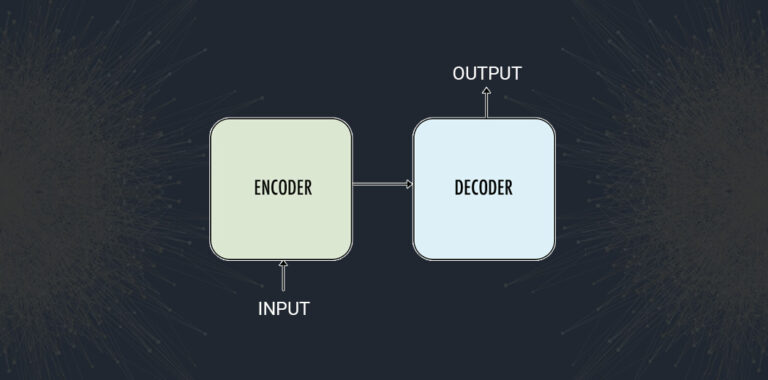
Multilingual neural models with shared encoders and decoders have become a standard approach for machine translation, outperforming bilingual models on low-resource languages thanks to knowledge transfer from high-resource ones. For example, Google‘s GNMT system that powers Google Translate uses a single model to translate between 100+ languages. This even enables zero-shot translation between language pairs that weren‘t seen during training.
Beyond machine translation, multilingual models have also been developed for other tasks like parsing, named entity recognition, question answering and language understanding. They are typically trained on a mix of labeled data from high-resource languages and unlabeled data from low-resource languages. The joint training aligns the representations across languages and leads to more robust models.
Unsupervised Learning
What if we have no labeled training data at all for a language? It turns out we can still learn useful representations and models from raw unlabeled text, which is much easier to obtain. Recent breakthroughs in unsupervised NLP techniques have shown a lot of promise for low-resource languages.
One remarkable finding is that we can align word embedding spaces between languages without using any bilingual data at all, by exploiting similarities in the geometry of the embeddings. Unsupervised methods like VecMap and MUSE optimize an orthogonal mapping to align monolingual embeddings based on a distance metric like cross-domain similarity local scaling (CSLS). This enables cross-lingual word translation and document retrieval without any parallel corpora.
More recently, researchers have extended unsupervised learning to sequence-to-sequence tasks like machine translation. By combining denoising autoencoders, back-translation and shared encoders, unsupervised NMT systems are able to learn to translate between languages without any parallel sentences. While the translation quality still lags behind supervised models, it‘s impressive that this is possible at all and opens up many possibilities for low-resource languages.
Google Translate for Indian Languages
Neural machine translation has been a game changer for multilingual NLP, and nowhere is this more apparent than in Google Translate‘s ever-improving coverage of Indian languages. As of 2022, Google Translate supports 9 widely spoken Indian languages (Hindi, Bengali, Marathi, Tamil, Telugu, Gujarati, Kannada, Malayalam, Urdu) with more on the way.
This has been made possible by Google‘s shift from statistical phrase-based translation to neural machine translation (NMT) powered by massive multilingual models. NMT translates entire sentences at a time, taking into account long-range context and dependencies, unlike the older phrase-based approach which stitches together local phrase translations.
Using a shared multilingual model not only improves translation quality for low-resource languages, but also enables zero-shot translation between Indian languages, even if no direct parallel data was seen between them during training. Google further trains these multilingual models for Indian languages using back-translation of crawled monolingual data and other domain adaptation techniques.
Millions of Indian users now use Google Translate through the dedicated mobile app, website, API and integrations in other Google products like Search, Maps, Lens and Assistant. Regional language support is an important way to make the internet more accessible and useful to Indian users. However, translation quality still varies between languages and domains. More work is needed to extend coverage to India‘s other 400+ languages and improve results on informal and code-mixed content.
NLP Tools and Resources for Indian Languages
Building NLP applications in Indian languages has traditionally been difficult due to a lack of standard tools and datasets compared to high-resource languages like English and Chinese. However, the situation is gradually improving thanks to community creation and sharing of open-source projects in both academia and industry. Here are some of the NLP tools and resources currently available for Indian languages:
-
iNLTK: A Python library for natural language processing in Indic languages, providing support for tasks like tokenization, embedding, POS tagging etc. Currently covers 13 major Indian languages.
-
StanfordNLP: A Python NLP library that provides a suite of tools for converting raw texts into structured linguistic representations in 70+ languages including the main Indian languages. Provides tokenization, lemmatization, POS tagging, morphological analysis and dependency parsing.
-
Indic NLP Library: Another open-source Python library that supports common NLP tasks for Indian languages.
-
NLTK: While the original NLTK library is focused on English, it now has support for tokenization and stemming in Hindi, Marathi, Tamil and a few other Indian languages.
-
Wiki Extractor: A tool for extracting clean text from Wikipedia XML dumps, which can be used to create monolingual corpora for different Indian language Wikipedias.
-
Dakshina Dataset: A large collection of text in both Latin and native scripts for 12 South Asian languages, intended for text-to-speech applications.
-
CVIT-IIITH PIB Multilingual Corpus: Sentence-aligned parallel corpus between English and 11 Indian languages, created from Press Information Bureau articles.
-
IIT Bombay English-Hindi Parallel Corpus: Large English-Hindi parallel corpus as well as Hindi monolingual corpus developed at CFILT, IIT Bombay.
-
OPUS: A growing collection of translated open-source texts from the web in over 400 languages, including many Indian languages. Useful for creating machine translation datasets.
-
LinkNet: A series of free-form conversational speech datasets in Telugu, Tamil and Kannada created by Microsoft for speech recognition research.
Emerging Trends and Opportunities
Multilingual NLP for Indian languages is a dynamic research area with many exciting developments in recent years. As commercial applications expand to serve more Indian users, the demand for accurate and robust NLP in regional languages will only grow. Here are some emerging trends that point to future opportunities:
-
Larger and more diverse datasets: The quantity and quality of multilingual datasets from India is increasing, spanning more languages, domains (Web, social media, news, Wikipedia, books etc), tasks (translation, summarization, QA, dialogue etc.) and modalities (text, speech, images/videos). Public datasets are contributed by academic and industry research groups while private datasets are mined from large internet platforms. More data enables more ambitious models and applications.
-
Massively multilingual models: Large pretrained models like Google‘s BERT, mBERT, XLM-R that learn universal language representations from 100+ languages have proven very effective for cross-lingual transfer learning. Their extensions and open-source counterparts like IndicBERT, MuRIL, and XLM-R have shown state-of-the-art results on Indian language benchmarks by pretraining on larger Indic corpora. These models can be fine-tuned for a variety of downstream NLP tasks with little labeled data.
-
Finer-grained language modeling: While most multilingual models so far treat each language as a monolith, many Indian languages exist on a spectrum of dialects and regional variations. More granular and dialect-sensitive language models will be important to accurately handle the diversity within Indian languages and even code-mixing between languages. Techniques like language/dialect identification, morphological normalization, transliteration and multi-stage "translate-then-refine" will help build more robust NLP for Indic variations.
-
Multimodal and multitask learning: Besides text, speech is another important modality for NLP tasks in a multilingual country like India. Joint modeling of speech and text in a multitask setup can improve both speech recognition and synthesis in low-resource languages. Multilingual multimodal representations can also enable cross-modal cross-lingual applications like speech translation, cross-lingual information retrieval and visual QA.
-
Responsible and ethical AI: As NLP systems become more widely deployed, it‘s important to develop them in a responsible and ethical manner. Handling the complexities of the Indian context requires careful consideration of fairness (equal accuracy across languages and demographics), interpretability (understanding model outputs and failures), privacy (protecting user data) and social impact (mitigating potential misuse and biases). Collaborations between AI researchers, social scientists, policymakers and local communities can help ensure that multilingual NLP benefits and empowers Indian users.
To conclude, multilingual NLP for Indian languages presents many technical challenges but also a huge opportunity for both research innovation and social impact in a linguistically diverse country like India. While much progress has been made in leveraging cross-lingual transfer and unsupervised learning to improve low-resource Indian language models, there is still a long way to go to reach parity with high-resource languages and handle the full spectrum of language variations and tasks. The future looks bright as more researchers and resources contribute to this important challenge. By bridging the language barriers in NLP, we can help bridge the digital divide and create a more inclusive internet for the next billion Indian users.