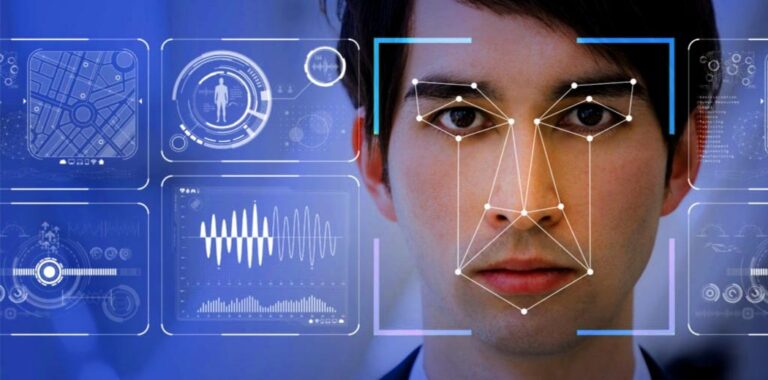
New HADAR Imaging Lets You See Clearly in the Dark

Imagine a world where vehicles can drive themselves safely at night, robots can deftly navigate in the dark, and security cameras can detect threats even in low visibility. This futuristic vision is fast becoming a reality thanks to a groundbreaking new imaging technology called HADAR.
Short for "heat-assisted detection and ranging", HADAR is a novel approach that uses infrared cameras and artificial intelligence to see clearly in the dark. Developed by researchers at MIT, Stanford, Caltech and other top institutions, HADAR has the potential to revolutionize fields from autonomous driving to robotics to security and defense.
In this article, we‘ll dive into what makes HADAR such a game-changer, explore the science behind how it works, and discuss the latest research pushing the boundaries of this exciting technology. By the end, you‘ll understand why HADAR may soon make the ability to "see in the dark" an essential feature for all sorts of intelligent systems and devices.
What is HADAR and How Does it Work?
At its core, HADAR is a imaging and sensing technique that uses infrared cameras to detect the heat signatures given off by objects and people. All objects emit infrared radiation based on their temperature. The hotter something is, the more infrared light it gives off. Infrared cameras can detect this radiation, even in the darkest conditions where visible light is scarce.
However, interpreting the blurry, indistinct infrared images and converting them into something meaningful has traditionally been a major challenge. This is where HADAR‘s real magic comes in – using advanced machine learning algorithms to decode infrared data and reconstruct it into clear, detailed images.
HADAR systems leverage deep neural networks trained on vast datasets of infrared imagery to understand patterns, edges, shapes and outlines of objects. This allows them to cut through visual clutter and obstructions like fog, smoke, and most importantly – darkness. By discerning subtle variations in temperature, material properties, and thermal emission profiles, HADAR can determine the identity, position and surroundings of objects with high accuracy.
So in summary, HADAR uses infrared cameras as "eyes" to collect raw thermal data, and AI as a "brain" to interpret that information and reconstruct it intelligently. The result is the ability to generate visual scenes even in low-light and no-light environments. In a sense, HADAR can "illuminate the darkness" and make the invisible visible.
The Challenge of Heat Vision
If seeing in the dark with infrared imaging is possible, why haven‘t we been using it widely already? The main issue is that heat vision has faced major limitations due to the way thermal radiation diffuses and scatters in the environment.
Unlike visible light which mostly travels in straight lines, infrared radiation spreads out in all directions from its source. This causes images captured by thermal cameras to be blurry, hazy and lack sharp outlines and textures. Fine details are lost and objects tend to blend together into a smudgy mess. Researchers call this the "ghosting" effect.
For a long time, this physical fuzziness seemed to be an unsolvable problem for thermal imaging. Even as camera resolutions improved, images were still indistinct and textureless. It appeared that relying solely on emitted infrared light was simply not enough to reconstruct clear, meaningful pictures, especially at longer ranges.
This is the challenge that HADAR has overcome in groundbreaking fashion, by fusing thermal vision with the power of AI. With intelligent processing, it can cut through the haze and pull out astonishing levels of detail and visual fidelity from infrared.
Decoding Heat Signatures With AI
The core innovation of HADAR is the use of advanced machine learning to decode infrared data in ways never before possible. Researchers have crafted powerful deep learning models and trained them on massive datasets of thermal images to detect, analyze and extract insights from infrared signatures.
The process starts with collecting high-resolution thermal data from cutting-edge infrared cameras. The HADAR AI is then set loose on this raw input. Using convolutional neural networks (CNNs), it scans the images at the pixel level, learning to recognize visual features like edges, shapes, textures and patterns.
Importantly, HADAR algorithms are able to understand context and piece together how groups of pixels relate to each other spatially to form discrete objects. They can separate foreground from background, even in cluttered environments, to pick out individual people, vehicles, trees, buildings, terrain features, etc.
By comparing input data to its training knowledge base, the AI can then classify what it detects into semantic categories – this blob of pixels is a human, that‘s a car, those are bushes, and so on. It can even make remarkably granular inferences about material properties – distinguishing metal from wood from fabric for instance – based on their unique heat signatures.
Pushing even further, cutting-edge HADAR research is now using generative adversarial networks (GANs) to reconstruct realistic, high-resolution images from infrared. GANs work by pitting two neural nets against each other – a generator which creates fake images, and a discriminator which tries to spot the fakes.
Through many cycles of competition and feedback, the generator learns to create synthetic pictures that can fool the discriminator. The result is an AI that can conjure up astonishingly life-like thermal images, with sharp edges, rich textures and fine details. In a sense, it learns to "imagine" what a scene should look like based on its understanding of heat data.
So in summary, HADAR combines state-of-the-art infrared sensors with the interpretive and even imaginative powers of artificial intelligence to extract visual meaning from thermal noise. Overcoming the challenges that long held thermal imaging back.
Seeing in the Dark – HADAR Enables Night Vision
The implications of being able to see clearly in the dark cannot be overstated. HADAR is rewriting the rules of what‘s possible with machine vision in low-light conditions. For the first time, it‘s enabling computer systems and devices to generate detailed, high-resolution visuals even when visible illumination is very low or totally absent.
Thermal imaging has obvious strengths at night, since heat signatures remain constant regardless of lighting. But previous technologies suffered from the blurriness and haziness we discussed. HADAR changes the game by extracting visual fidelity and semantic meaning from infrared data.
This breakthrough allows it to create richly informative digital pictures from pitch darkness. Vehicles, robots, drones and more can now discern their surroundings as clearly as if they were in broad daylight. Even fine details like facial features, vegetation and ground texture are captured.
What‘s remarkable is that HADAR can achieve daytime quality using only invisible radiation – no active illumination required. Unlike night vision that relies on infrared spotlights, or techniques like LiDAR that actively emit lasers, HADAR is entirely passive. It simply collects the heat emanating naturally from the environment to reconstruct visual scenes.
This allows unparalleled stealth and efficiency, with no telltale lights or signals to give away a system‘s presence. It can see without being seen. The implications for surveillance and reconnaissance are immense.
But the benefits go far beyond just military and security applications. HADAR is set to make 24/7, all-weather vision a standard capability for all sorts of autonomous systems. Self-driving cars that can navigate safely on moonless nights. Robots that can operate in unlit buildings or caves. Drones that can fly and explore in the darkest conditions. The possibilities are endless.
Potential Applications and Impacts
As HADAR matures and scales up, it‘s poised to make a transformative impact across industries and domains. Here are some key sectors where its ability to see clearly in the dark is likely to reshape the game:
Self-Driving Vehicles
Low-light conditions have long been a major challenge for autonomous driving, as traditional cameras struggle in the dark. High-beam headlights help but are blinding to oncoming traffic. Thermal imaging with HADAR promises a safer alternative. Vehicles will be able to detect heat-emitting obstacles like pedestrians, animals, and other cars at long range, without actively illuminating their surroundings. This will enable smoother, more reliable autonomy at night and in adverse conditions like fog, rain and snow.
Robots and Drones
HADAR could be revolutionary for robots and drones operating in low-light environments. Search and rescue bots could find disaster victims in the dark. Underground mining robots could navigate tunnels and caves. Night-time security drones could patrol in stealth mode with no lights to reveal their position. In general, dark-capable drones and robots will be able to access places and accomplish tasks currently off-limits.
Security and Surveillance
The ability to detect people and threats in the dark is a holy grail for security systems. HADAR could provide the breakthrough, enabling cameras to capture faces, bodies, and behaviors even in very low light. This would greatly enhance the effectiveness of automated surveillance in securing borders, facilities, airports and more. Of course, it will also raise major privacy concerns around 24/7 thermal monitoring.
Beyond these domains, HADAR has intriguing potential in fields like energy audits (spotting heat leaks in buildings), wildlife monitoring (tracking nocturnal creatures), and medical imaging (visualizing inflammation). As the tech spreads, people will doubtless find creative uses across disciplines.
Limitations and Future Potential
For all its remarkable capabilities, HADAR is still an emerging technology with limitations and obstacles to overcome. One challenge is range – infrared radiation fades quickly with distance. While HADAR performs far better than conventional thermal imaging, there are still limits on how far it can see details, especially small heat sources.
There are also environmental factors – heavy rain, snow and fog can scatter infrared light and degrade image quality, though HADAR‘s AI is getting better at correcting for these. Reflections from glass and shiny surfaces can sometimes confuse the sensors.
Cost is another hurdle. The latest HADAR equipment integrates high-resolution thermal cameras and powerful edge computing hardware, which can be expensive. As with all deep learning technologies, data is a limitation too. Training effective HADAR algorithms requires massive and carefully curated datasets of annotated thermal imagery from diverse environments. Building these datasets is a painstaking and costly process.
But researchers are making rapid progress in tackling these issues. Super-resolution techniques are enhancing HADAR‘s ability to see detail at long distances. Multi-spectral infrared that fuses different thermal wavelengths is improving performance in adverse weather. New materials are helping to manage heat diffusion and reflections. And training data is being captured at scale by large self-driving car and robotics companies.
As the technology continues to mature, many experts believe HADAR will become standard issue for autonomous systems and smart devices in the near future. The cost and size of thermal cameras is steadily dropping as they enter mass production. And the deep learning software behind HADAR can be easily deployed on common chips and processors.
Latest HADAR Research and Developments in 2024
Since the initial breakthroughs in HADAR technology a few years ago, research in the field has continued at a rapid clip. In the past year alone, several remarkable advances have brought the dream of robust HADAR-enabled night vision closer to commercial reality:
-
In April 2024, a team at the University of Illinois demonstrated a new HADAR system that can generate 4K resolution thermal images in real-time, a tenfold increase over previous technology. Their approach employs a novel infrared camera array and a highly efficient transformer model for AI processing.
-
Researchers at Carnegie Mellon unveiled a lightweight, low-power HADAR chip in June 2024 that integrates both thermal sensing and edge AI in a compact package. The chip uses ultra-fast phase change memory to store the AI model parameters, and novel analog compute circuits to perform neural network calculations with minimal latency and energy consumption.
-
A startup called HADAR Vision raised $50M in July to commercialize their turnkey HADAR solution for autonomous vehicles. The company has developed a proprietary dataset of over 100 million annotated thermal images to train their AI models, and boasts partnerships with several leading automakers and robotaxi services.
-
MIT engineers published a paper in August detailing a groundbreaking "polarimetric" HADAR technique that captures the polarization of infrared light. By measuring not just the intensity but also the orientation of heat waves, the system can discern remarkable material properties, like distinguishing between reflective and diffuse surfaces. This could allow HADAR to penetrate ice, snow and even glass.
-
In October, DARPA announced a new initiative called "Invisible Headlights" to advance HADAR technology for military applications. The $100M program aims to develop portable HADAR goggles for soldiers, and high-resolution HADAR imaging for drones and armored vehicles, enabling combat operations in zero-light conditions.
As HADAR continues to evolve at this blistering pace, it‘s clear that we‘re on the cusp of a new era in machine perception. The power to see in the dark as clearly as day will have a profound impact, reshaping what‘s possible for autonomous systems and opening up new frontiers for exploration and understanding.
Conclusion
HADAR technology represents a remarkable fusion of cutting-edge infrared imaging and state-of-the-art artificial intelligence. By using machine learning to decode thermal radiation and reconstruct detailed visuals, it‘s shattering the long-standing limitations of heat vision. For the first time, HADAR is enabling machines to see clearly in the dark, without any external illumination.
The implications of this advance are immense, with the potential to transform industries from transportation to robotics to security. Self-driving cars will be able to navigate safely on moonless nights. Robots will explore caves and tunnels with ease. Surveillance systems will detect threats even in total darkness. And as HADAR tech matures and proliferates, its uses will likely expand in ways we can scarcely imagine.
Of course, challenges remain in terms of range, cost, and data. But research is progressing at astonishing speed, with breakthroughs in sensing, processing and materials emerging constantly. As HADAR devices grow cheaper, smaller and more powerful, they may soon become standard equipment for all sorts of intelligent systems.
In a sense, HADAR promises to be a great equalizer between night and day, at least from the perspective of machines. Autonomous systems will be able to gather rich visual information around the clock, rain or shine, rendering conditions that have historically been obstacles. This newfound perceptual freedom is likely to reshape the boundaries of what‘s possible technologically.
At the same time, HADAR raises important questions about surveillance and privacy that will need to be grappled with. The ability to see people‘s heat signatures remotely in any conditions is a powerful capability that could easily be abused. As with all potent technologies, the ethical implications will have to be carefully considered and regulated.
Ultimately, HADAR represents a fascinating direction in the quest to give machines more advanced powers of perception and situational awareness. As this technology takes off, it heralds a future of intelligent systems that can see and navigate effortlessly in darkness. We may soon look back in amazement at a time when the lack of visible light blinded our autonomous cars and robots. HADAR and is set to illumination that limitation and usher in a bright future, even in the darkest night.