
Intelligent Image Resizing with Seam Carving and Dynamic Programming
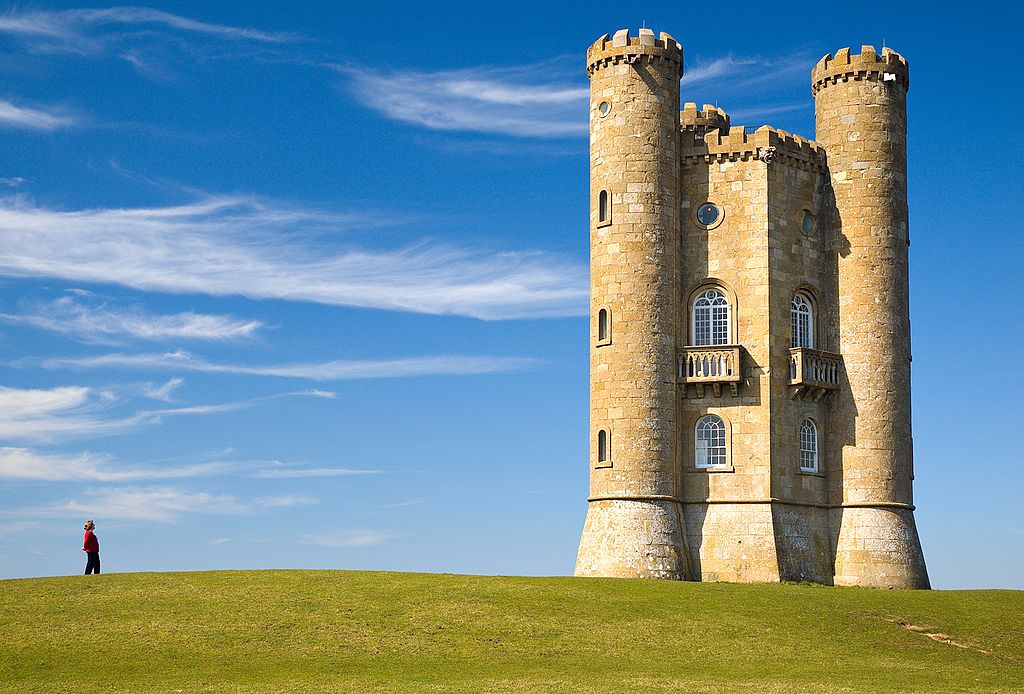
In today‘s visually-driven digital world, images are everywhere – from social media posts and online articles to product catalogs and user interfaces. With the proliferation of devices and display formats, the ability to efficiently and intelligently resize images has become a critical challenge for developers and designers alike.
Traditional image resizing methods like scaling and cropping often result in distorted proportions, cut-off subjects, or loss of important details. What if there was a smarter way to adapt images to different aspect ratios and sizes while preserving their core content and visual appeal?
Enter seam carving – a content-aware image resizing algorithm that leverages dynamic programming to intelligently remove or insert "seams" of pixels. Developed by Shai Avidan and Ariel Shamir in 2007[^1], seam carving has revolutionized the field of image resizing and sparked a wave of research and innovation in content-aware media processing.
How Seam Carving Works
At its core, seam carving is an optimization problem that aims to find the best paths of pixels (seams) to remove or duplicate in order to resize an image. The key idea is to prioritize removing seams that pass through less important regions of the image, such as smooth backgrounds or textureless areas, while avoiding seams that cut through salient objects or structures.
The seam carving algorithm consists of three main steps:
-
Energy Calculation: Assign an importance score to each pixel based on its local gradient magnitude, saliency, or other visual features. Common energy functions include sobel, scharr, and forward energy[^2].
-
Seam Finding: Use dynamic programming to efficiently compute the minimum energy seam from one end of the image to the other. The optimal seam is found by traversing the energy matrix and accumulating the minimum seam cost at each pixel.
-
Seam Removal or Insertion: Remove the minimum energy seam by shifting all pixels after it by one position, or insert a duplicate of the seam to expand the image. Repeat the process until the target dimensions are reached.
Here‘s a visual illustration of the seam carving process:

The dynamic programming recurrence relation for finding the minimum energy seam can be expressed as:
M(i, j) = E(i, j) + min(M(i-1, j-1), M(i-1, j), M(i-1, j+1))Where M(i, j) represents the minimum cumulative energy of a seam ending at pixel (i, j), and E(i, j) is the energy value of pixel (i, j). The base case for the first row is simply the energy values themselves.
By using dynamic programming to cache and reuse overlapping subproblems, seam carving achieves an efficient time complexity of O(W × H × N) for resizing an image of width W, height H by N seams[^3].
Advantages and Applications
Compared to standard resizing methods, seam carving offers several key advantages:
-
Content-Aware Resizing: By prioritizing the removal or duplication of less noticeable seams, seam carving preserves the most important visual content of an image during resizing. This is particularly effective for images with distinct foregrounds and backgrounds.
-
Flexibility: Seam carving can resize images to arbitrary aspect ratios and dimensions, making it suitable for a wide range of display formats and devices. It can also be combined with other techniques like cropping and scaling for more fine-tuned control.
-
Speed: With the dynamic programming optimization, seam carving can resize images efficiently in linear time. This enables real-time, interactive applications such as photo editing tools and responsive web designs.
Seam carving has found widespread adoption in various domains, including:
-
Photography and Image Editing: Tools like Adobe Photoshop, GIMP, and ImageMagick have integrated seam carving for content-aware resizing and object removal. It allows photographers and designers to easily adapt their images for different print and digital formats.
-
Web and UI Design: Seam carving can intelligently resize images and graphics to fit responsive layouts and different screen sizes. It ensures that the most important parts of an image remain visible and well-proportioned across devices.
-
Thumbnail Generation: Online platforms like e-commerce websites and social media apps use seam carving to automatically generate thumbnails that capture the essence of an image in a small, fixed-size format[^4].
-
Video Resizing: Seam carving has been extended to resize videos with temporal coherence, enabling content-aware adaptation of videos for different aspect ratios and resolutions[^5].
Real-World Examples and Results
To demonstrate the effectiveness of seam carving, let‘s look at some real-world examples and compare the results with traditional resizing methods.
In this image of a person standing in front of a building, seam carving is able to reduce the width by 50% while keeping the person and building intact. The less important background regions are seamlessly removed:

In contrast, standard scaling squishes the person and building unnaturally, while cropping cuts off part of the building:

Here‘s another example where seam carving expands a landscape photo to a wider aspect ratio. Notice how the sky and water are intelligently extended without distorting the key foreground elements:

Scaling stretches the image awkwardly, while cropping loses important parts of the scene:

These examples illustrate the power of seam carving to adapt images to different sizes while preserving their visual integrity. The results are often imperceptible and far superior to traditional resizing methods.
Challenges and Future Directions
Despite its advantages, seam carving is not a perfect solution for all image resizing tasks. It can struggle with images that have complex textures, intricate patterns, or many small, interconnected objects. Removing too many seams can also lead to noticeable distortions and artifacts.
To address these limitations, researchers have proposed various extensions and improvements to the basic seam carving algorithm, such as:
-
Improved Energy Functions: More sophisticated pixel importance measures that account for high-level features, saliency, and object semantics[^6]. This helps prioritize the preservation of visually prominent regions.
-
Graph Cut Seam Carving: An alternative formulation that finds seams using graph cut optimization to better handle complex energy landscapes and overlapping seams[^7].
-
Multi-Operator Seam Carving: A generalization that combines seam carving with other operators like scaling and cropping to enable more flexible and content-aware resizing[^8].
-
Deep Learning-Based Approaches: Convolutional neural networks (CNNs) trained to predict visual saliency, semantic segmentation, and object boundaries[^9]. These learned features can guide the seam carving process to better preserve semantic content.
As the field of computer vision and deep learning continues to advance, we can expect even more sophisticated and intelligent content-aware resizing methods in the future.
On the research front, there are still open challenges and opportunities, such as:
- Developing more efficient and parallelizable seam carving algorithms for real-time, high-resolution video resizing
- Designing energy functions and optimization techniques that are more robust to complex image content and extreme resizing
- Exploring the use of generative adversarial networks (GANs) and other deep learning architectures for content-aware image synthesis and editing
- Extending content-aware resizing to other domains like 3D models, point clouds, and virtual/augmented reality
- Investigating the perceptual and cognitive aspects of image resizing to create more visually pleasing and semantically meaningful results
With the rapid growth of visual data and the increasing diversity of display devices, the need for intelligent, content-aware resizing will only continue to grow. Seam carving and its variants offer a promising solution that balances efficiency, flexibility, and visual quality.
As researchers and practitioners, it is our responsibility to push the boundaries of what‘s possible and develop new tools and techniques that can adapt and enhance visual media in meaningful ways. By leveraging the power of artificial intelligence, computer graphics, and human-centered design, we can create a future where digital content seamlessly and intelligently fits our evolving needs and preferences.


![[‘NLTK‘, ‘is‘, ‘a‘, ‘leading‘, ‘platform‘, ‘for‘, ‘building‘, ‘Python‘, ‘programs‘, ‘to‘, ‘work‘, ‘with‘, ‘human‘, ‘language‘, ‘data‘, ‘.‘]](https://33rdsquare.com/wp-content/uploads/2024/12/20241210155652-675864c4ccd72-768x295.png)

