Robotics and Machine Learning: Powering the Next Generation of Intelligent Machines
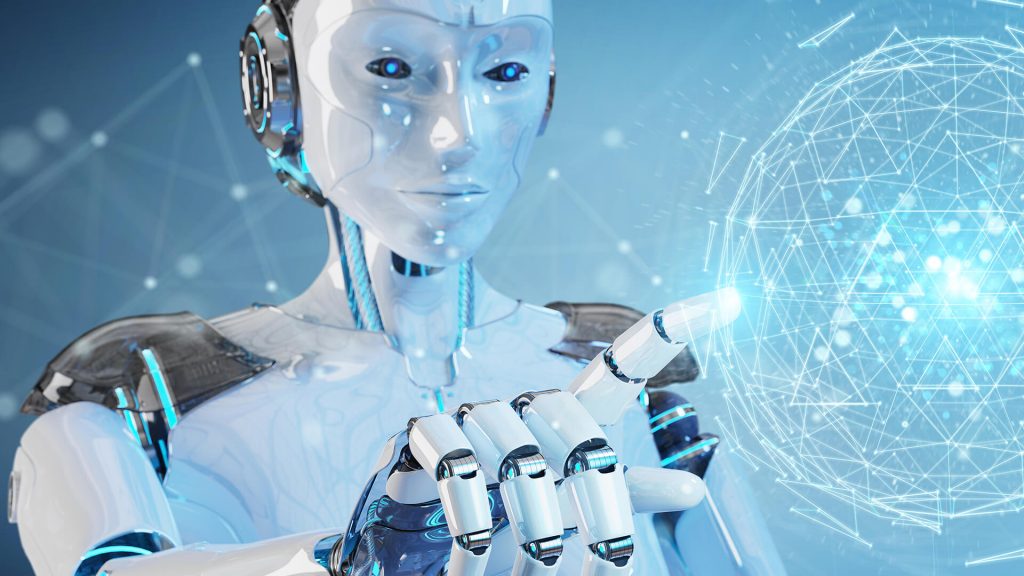
The fields of robotics and machine learning are becoming increasingly intertwined, with machine learning enabling robots to perceive, reason, and act in increasingly sophisticated ways. From manufacturing and transportation to healthcare and beyond, the convergence of these technologies is paving the way for a future filled with intelligent and autonomous systems that can work alongside humans in transformative ways.
In this deep dive, we‘ll explore the state of the art in robotics and machine learning, highlighting key technological advancements, real-world applications, and future possibilities. Whether you‘re a robotics researcher, machine learning practitioner, or industry leader, understanding the intersection of these fields will be critical to shaping the future of intelligent machines.
The Machine Learning Revolution in Robotics
Historically, robots were primarily programmed using explicit rules and heuristics defined by human engineers. While effective for structured, predictable environments, this approach falls short when robots need to operate in complex, open-ended settings and reason about novel situations. This is where machine learning comes in.
Machine learning allows robots to automatically acquire knowledge and skills from data and experience, rather than relying solely on human programming. Some of the key machine learning paradigms powering the current revolution in robotics include:
-
Deep Learning: Deep neural networks have achieved remarkable performance on perception tasks like object recognition, semantic segmentation, and natural language processing. By learning hierarchical representations from raw sensory data, deep learning allows robots to extract meaningful features and reason about their environment in ways that approach or exceed human capabilities.
-
Reinforcement Learning: Reinforcement learning (RL) is a framework for learning control policies through trial-and-error interaction with an environment. By receiving rewards or penalties based on the outcomes of their actions, robots can learn to optimize their behavior for a given task. RL has been used to train robots for a wide range of skills, from grasping and manipulation to locomotion and navigation.
-
Transfer Learning: Training robots from scratch for each new task is time-consuming and data-intensive. Transfer learning allows robots to leverage knowledge learned from previous tasks or simulations to more quickly adapt to new situations. By reusing learned features or policies, robots can acquire new skills with much less data and fine-tuning.
-
Imitation Learning: Humans are incredibly skilled at performing a wide range of tasks, from cooking and cleaning to playing sports and musical instruments. Imitation learning allows robots to learn skills by observing human demonstrations, either through teleoperation or video examples. This can greatly accelerate the learning process and allow robots to acquire complex behaviors that would be difficult to specify through traditional programming.
The combination of these and other machine learning techniques is enabling robots to perceive, reason, and act in ways that were previously impossible, opening up new frontiers for automation and human-robot collaboration.
The Growth of Robotics and Machine Learning
The robotics and machine learning markets are both experiencing rapid growth, driven by advancements in technology, falling costs, and increasing adoption across industries. Some key statistics highlight the scale and trajectory of this growth:
-
The global robotics market is expected to grow from $76.6 billion in 2020 to $176.8 billion by 2025, at a compound annual growth rate (CAGR) of 18.2% (Markets and Markets, 2020).
-
The global artificial intelligence market, which includes machine learning, is projected to grow from $58.3 billion in 2021 to $309.6 billion by 2026, at a CAGR of 39.7% (Markets and Markets, 2021).
-
The number of industrial robot installations worldwide is expected to grow from 373,000 units in 2019 to 630,000 units by 2024, at a CAGR of 11% (International Federation of Robotics, 2020).
-
The global autonomous mobile robot market is expected to grow from $1.6 billion in 2020 to $8.7 billion by 2026, at a CAGR of 32.8% (Markets and Markets, 2021).
These growth projections are being driven by a number of factors, including:
- Increasing adoption of automation across industries to improve efficiency, quality, and safety
- Falling costs of sensors, computing hardware, and robotic components
- Advancements in machine learning algorithms and tools, making it easier to develop and deploy intelligent systems
- Growing demand for autonomous systems in applications like self-driving vehicles, drones, and service robots
- Demographic shifts, such as aging populations, driving demand for robots in healthcare and assistive roles
The COVID-19 pandemic has further accelerated interest in robotics and automation, as companies seek to increase resilience and reduce reliance on human labor in the face of disruptions. For example, a survey by McKinsey found that 66% of organizations have accelerated their adoption of automation and AI during the pandemic (McKinsey, 2021).
Applications and Case Studies
Machine learning is enabling robots to take on an expanding range of roles across industries, from manufacturing and logistics to healthcare, agriculture, and beyond. Here are a few examples of cutting-edge applications and research:
Industrial Robotics
Industrial robots have been a mainstay of manufacturing for decades, but machine learning is enabling them to take on more complex and varied tasks. For example, researchers at UC Berkeley have developed a system called BRETT (Berkeley Robot for the Elimination of Tedious Tasks) that uses deep reinforcement learning to learn industrial assembly tasks like inserting pegs into holes and screwing nuts onto bolts (Levine et al., 2016). By learning from its own trial-and-error experience, BRETT can adapt to variations in parts and environments that would stymie traditional robotic systems.
Other applications of machine learning in industrial robotics include quality control, where deep learning-based computer vision can identify defects and anomalies with superhuman accuracy, and predictive maintenance, where machine learning models can forecast equipment failures before they occur, reducing downtime and maintenance costs.
Autonomous Vehicles
Self-driving cars are one of the most visible and high-stakes applications of machine learning in robotics. Companies like Waymo, Tesla, and Cruise are using deep learning for perception tasks like object detection, semantic segmentation, and motion forecasting to enable vehicles to navigate complex urban environments. Reinforcement learning is also being used for decision making and control, allowing vehicles to optimize their trajectories and behaviors based on real-time feedback from the environment.
While fully autonomous driving is still an active area of research, significant progress has been made in recent years. Waymo‘s fleet of self-driving cars has driven over 20 million miles on public roads, while Tesla‘s Autopilot system has logged over 3 billion miles of driving data. A study by RAND Corporation estimated that autonomous vehicles could reduce crashes by up to 90% compared to human drivers, potentially saving tens of thousands of lives each year (RAND Corporation, 2020).
Healthcare Robotics
Robotics and machine learning are also transforming healthcare, from surgical robots that enable minimally invasive procedures to assistive robots that help patients with mobility and daily living. For example, the da Vinci surgical system uses machine learning-based computer vision to provide surgeons with real-time guidance and enhanced precision during complex procedures like prostatectomies and hysterectomies (Intuitive Surgical, 2021).
Researchers are also developing robots that can assist with tasks like physical therapy and rehabilitation. A robotic exoskeleton developed by ReWalk Robotics uses machine learning to adapt to each patient‘s gait and provide personalized support and resistance during walking exercises (ReWalk Robotics, 2021). Other applications include social robots for eldercare, robotic prosthetics, and robotic systems for drug discovery and pharmaceutical research.
Agriculture and Food Production
Machine learning-powered robots are also being deployed in agriculture and food production to improve efficiency and sustainability. For example, Blue River Technology (acquired by John Deere) has developed a robotic weed sprayer that uses computer vision to identify and precisely target weeds, reducing herbicide usage by up to 90% (Blue River Technology, 2021). Other applications include robotic harvesting, autonomous tractors, and drones for crop monitoring and analysis.
In food production, robots are being used for tasks like sorting, packaging, and quality control. A startup called Nippon Biodegradable Plastics has developed a robotic sushi chef that uses computer vision and deep learning to autonomously prepare and serve sushi dishes (Nippon Biodegradable Plastics, 2021). The system can adapt to different ingredients and customer preferences, highlighting the potential for robotics and machine learning to transform the food service industry.
Challenges and Future Directions
While the intersection of robotics and machine learning presents enormous opportunities, there are also significant challenges that will need to be addressed as these technologies continue to evolve. Some key challenges and future directions include:
-
Robustness and Generalization: One of the biggest challenges in robotics is building systems that can operate reliably in complex, unstructured environments. While machine learning has made significant progress in this area, most systems still struggle to generalize to novel situations or adapt to changing conditions. Approaches like transfer learning, meta-learning, and sim-to-real training show promise for improving robustness and generalization, but much work remains to be done.
-
Safety and Security: As robots become more autonomous and interact more closely with humans, ensuring their safety and security will be paramount. This includes both physical safety, such as avoiding collisions and minimizing the risk of injury, and cybersecurity, such as protecting against hacking and malicious attacks. Techniques like formal verification, adversarial machine learning, and safe exploration are active areas of research for addressing these challenges.
-
Interpretability and Transparency: Many machine learning models, particularly deep neural networks, are "black boxes" whose internal reasoning is opaque to human users. This lack of interpretability can make it difficult to debug errors, validate safety, or explain decisions. Developing more interpretable and transparent AI systems, such as those based on probabilistic graphical models or rule-based reasoning, will be important for building trust and accountability in robotics applications.
-
Human-Robot Interaction: As robots become more sophisticated, designing effective interfaces and interaction paradigms for human-robot collaboration will be increasingly important. This includes both physical interaction, such as intuitive control interfaces and haptic feedback, and cognitive interaction, such as natural language communication and shared mental models. Techniques from human-computer interaction, cognitive science, and social robotics will be key to unlocking the full potential of human-robot teams.
-
Ethics and Societal Impact: The development and deployment of robotics and machine learning systems raise important ethical and societal questions that will need to be carefully considered. This includes issues of bias and fairness, privacy and data protection, job displacement and reskilling, and the potential for autonomous systems to be used for harm. Ongoing public dialogue and interdisciplinary collaboration will be essential to ensuring that these technologies are developed and used in ways that benefit society as a whole.
Despite these challenges, the future of robotics and machine learning is incredibly bright. As these technologies continue to mature and converge, we can expect to see transformative impacts across industries and domains, from manufacturing and transportation to healthcare, education, and beyond. Some of the most exciting future possibilities include:
-
Personalized Robotics: Just as personalized medicine tailors treatments to each patient‘s unique genetic profile, personalized robotics could adapt to each user‘s individual needs, preferences, and abilities. This could include everything from custom-fit prosthetics and exoskeletons to personal robotic assistants that learn and grow with their users over time.
-
Swarm Robotics: While most robots today operate individually or in small teams, swarm robotics envisions large numbers of simple robots working together to achieve complex goals. By leveraging principles of self-organization and emergent behavior, swarm robots could be used for applications like environmental monitoring, search and rescue, and space exploration.
-
Neuromorphic Robotics: Taking inspiration from the brain, neuromorphic robotics seeks to build robots with more brain-like computing architectures and learning mechanisms. This could lead to robots with greater energy efficiency, adaptability, and cognitive capabilities, paving the way for more intelligent and autonomous systems.
-
Soft Robotics: Traditional robots are built from rigid materials like metal and plastic, but soft robotics uses compliant, deformable materials that can safely interact with humans and adapt to unstructured environments. Soft robots could be used for applications like minimally invasive surgery, assistive wearables, and deep sea exploration.
-
Quantum Machine Learning: While still in its early stages, the intersection of quantum computing and machine learning could have transformative impacts on robotics. Quantum algorithms for optimization, sampling, and linear algebra could accelerate learning and enable new types of robotic systems with enhanced perception, planning, and control.
Conclusion
The convergence of robotics and machine learning is one of the most exciting and transformative trends of our time. By enabling robots with advanced perception, learning, and reasoning capabilities, machine learning is paving the way for a future filled with intelligent and autonomous systems that can work alongside humans in increasingly sophisticated ways.
As we‘ve seen, the applications and impacts of these technologies are vast and far-reaching, from industrial automation and self-driving vehicles to healthcare, agriculture, and beyond. At the same time, significant challenges remain, from improving robustness and generalization to ensuring safety, transparency, and ethical alignment.
Addressing these challenges will require ongoing collaboration and innovation across disciplines, from robotics and machine learning to human-computer interaction, ethics, and policy. It will also require active engagement and dialogue with stakeholders across society, from industry and academia to government and the general public.
Ultimately, the success of robotics and machine learning will depend not just on technological advancement, but on our ability to harness these technologies in ways that benefit humanity as a whole. By working together to shape the future of intelligent machines, we can unlock the full potential of these powerful tools and build a world where robots and humans can thrive side by side.
As we look ahead to the future of robotics and machine learning, one thing is clear: the possibilities are limitless, and the impact will be profound. Whether you‘re a researcher pushing the boundaries of what‘s possible, an entrepreneur building the next generation of intelligent machines, or a citizen exploring the implications of these technologies for your life and work, there has never been a more exciting time to be a part of this incredible journey.