Exploring the Frontiers of AI: Sam Altman and Bill Gates Discuss the Future
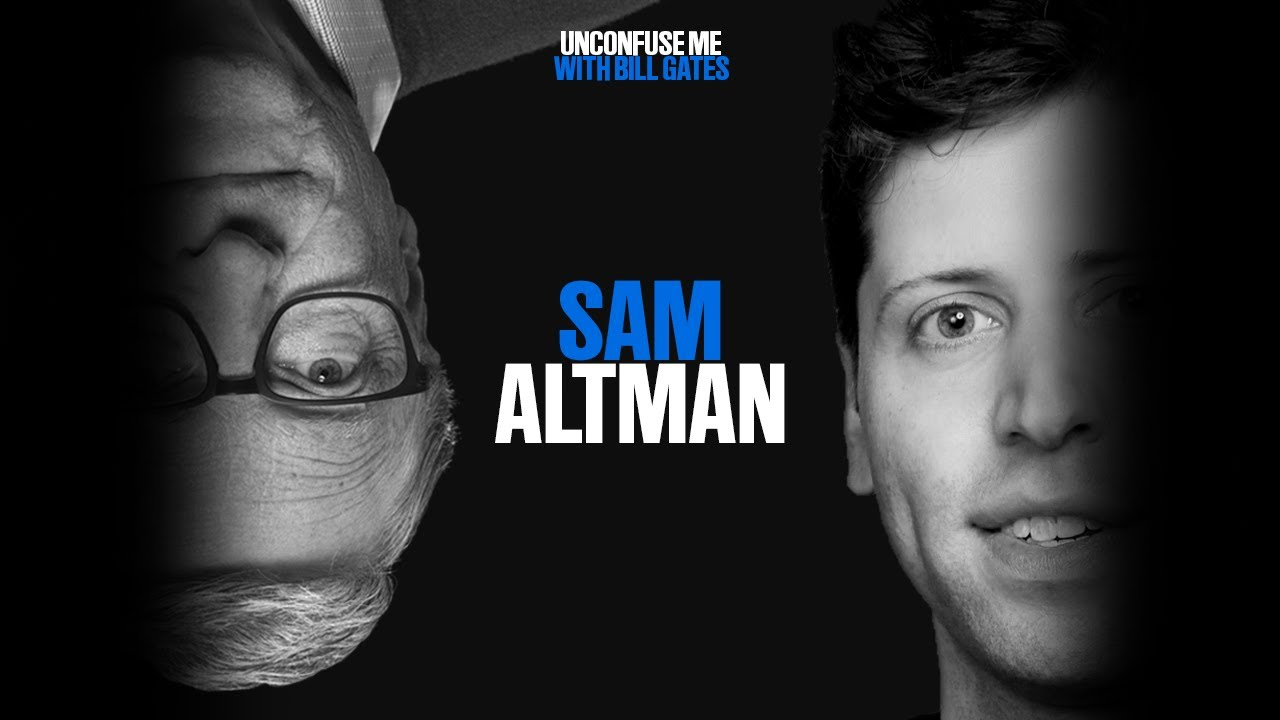
In the rapidly evolving landscape of artificial intelligence (AI), few voices carry as much weight as Sam Altman and Bill Gates. Altman, the CEO of OpenAI, has been at the forefront of AI development, steering his organization to create groundbreaking technologies like GPT-3 and ChatGPT. Meanwhile, Gates, the co-founder of Microsoft and a visionary in his own right, has long been an advocate for the transformative potential of AI.
Recently, these two titans of tech came together for a thought-provoking conversation on the "Unconfuse Me with Bill Gates" podcast. Their discussion spanned a wide range of topics, from the current state of AI and its limitations to the future milestones that could redefine our relationship with technology. As we delve into the key insights from this conversation, we‘ll explore the challenges and opportunities that lie ahead in the AI revolution.
OpenAI and the Pursuit of AGI
To understand the significance of Altman‘s perspective, it‘s essential to appreciate the mission and achievements of OpenAI. Founded in 2015 with the goal of advancing artificial intelligence in a responsible and safe manner, OpenAI has been at the cutting edge of AI research and development.
One of their most notable breakthroughs was GPT-3 (Generative Pre-trained Transformer 3), a language model with an astounding 175 billion parameters. GPT-3‘s ability to generate human-like text, answer questions, and even write code showcased the immense potential of large language models. It was a testament to the rapid progress in natural language processing and a glimpse into the future of AI-powered tools.
Building on the success of GPT-3, OpenAI recently launched ChatGPT, a conversational AI model that has taken the world by storm. ChatGPT‘s ability to engage in natural, context-aware conversations has opened up new possibilities for AI-assisted writing, customer support, and educational applications. It‘s a prime example of how AI is becoming more accessible and integrated into our daily lives.
However, Altman is quick to point out that despite these impressive achievements, today‘s AI models are still in their "stupidest" phase. He acknowledges that there is a long road ahead in the pursuit of artificial general intelligence (AGI) – AI systems that can match or surpass human intelligence across a wide range of domains. This candid assessment underscores the need for continued research, collaboration, and responsible development in the field of AI.
The Unpredictable Path of AI Progress
One of the most striking aspects of AI development, as highlighted by Altman, is its unpredictable trajectory. Unlike traditional scientific fields, where theoretical understanding often precedes practical applications, AI has seen empirical discoveries that have outpaced our scientific understanding.
This empirical-first approach has led to breakthroughs like GPT-3 and ChatGPT, which have demonstrated remarkable capabilities despite our limited understanding of the underlying mechanisms. It‘s akin to a cartographer charting new lands without fully grasping the geography. While this approach has yielded impressive results, it also underscores the need for caution and responsible deployment of AI systems.
The Quest for Interpretability
As AI models become more complex and powerful, the quest for interpretability has become increasingly important. Altman is confident that within the next five years, we‘ll gain a deeper understanding of the "Shakespearean encoders" within these neural networks. This isn‘t just academic curiosity; it‘s about harnessing this knowledge to improve training efficiency, accuracy, and safety.
Interpretability is crucial for building trust in AI systems. When we can understand how an AI model arrives at its decisions, we can better assess its reliability, fairness, and potential biases. It‘s about turning the AI black box into a glass house, where every calculation is transparent, and every decision is explainable. This transparency will be essential as AI systems are deployed in high-stakes domains like healthcare, finance, and governance.
The Future of Multimodal AI
Looking ahead, Altman envisions multimodality as a key milestone in AI development. Integrating speech, vision, and language into a single AI system could open up new frontiers for AI applications. Imagine an AI assistant that can not only converse with you but also understand and generate visual content, recognize objects and faces, and even navigate physical spaces.
This multimodal approach could lead to more natural and intuitive interactions with AI systems. It could enable applications like virtual reality assistants, autonomous vehicles that can understand voice commands and interpret road signs, or educational tools that can adapt to a student‘s learning style and provide personalized feedback. The possibilities are vast and exciting.
The Challenges of Reliability and Customization
As AI systems become more integrated into our lives, reliability and customization will be critical challenges to address. Altman notes that even with cutting-edge models like GPT-4, consistency and reliability can be a game of chance. The goal is to develop AI systems that can provide optimal responses every single time, not just once in a while.
Alongside reliability, customization will play a crucial role in the adoption and acceptance of AI. Users crave personalized experiences, and AI systems will need to adapt to individual preferences, data, and contexts. This could involve fine-tuning models on specific domains, incorporating user feedback, or leveraging transfer learning to quickly adapt to new tasks and environments.
The Role of Regulation in AI‘s Future
As AI systems become more powerful and pervasive, the question of regulation becomes increasingly important. Altman suggests that a global regulatory body, akin to the International Atomic Energy Agency, may be necessary to oversee the responsible development and deployment of advanced AI systems.
Finding the right balance between innovation and safety will be a delicate task. Too much regulation could stifle progress and hinder the potential benefits of AI, while too little could lead to unintended consequences and misuse. Collaboration between policymakers, researchers, and industry leaders will be essential to navigate this complex landscape.
AI‘s Impact on Productivity and the Job Market
One of the most promising aspects of AI is its potential to boost productivity and efficiency across various industries. Altman likens the current state of AI to giving programmers superpowers, enabling them to work faster, smarter, and more creatively. This could lead to significant advancements in fields like healthcare, education, and scientific research.
However, the rapid pace of AI development also raises concerns about its impact on the job market. As AI systems become more capable of automating tasks and even entire professions, society will need to adapt and reskill at an unprecedented pace. This will require proactive efforts to invest in education, training, and support for workers affected by technological disruption.
The Philosophical Questions of AI
Beyond the practical implications, the development of advanced AI systems raises profound philosophical questions about the nature of intelligence, consciousness, and purpose. What happens when AI surpasses human intelligence in areas like creativity, problem-solving, and decision-making? How will we define our role and purpose in a world where machines can do almost everything better than us?
Altman remains optimistic, believing that humanity will always find new challenges and ways to derive fulfillment, even in a post-scarcity world. He suggests that we may need to redefine our relationship with work and find meaning in pursuits beyond economic productivity. These are complex and deeply personal questions that will require ongoing reflection and dialogue as AI continues to advance.
Conclusion
The conversation between Sam Altman and Bill Gates offers a fascinating glimpse into the minds of two visionary leaders at the forefront of the AI revolution. Their insights underscore the immense potential of AI to transform our world, as well as the challenges and uncertainties that lie ahead.
As we navigate this uncharted territory, it‘s clear that the development of AI is not just a technological endeavor, but a deeply human one. It will require collaboration, empathy, and a shared commitment to building a future that benefits all of humanity. By engaging in open and honest conversations like this one, we can chart a course towards a future where AI empowers us to solve the world‘s greatest challenges and unlock our full potential as a species.