
Building a Spotify Recommendation System using PySpark and Kafka Streaming
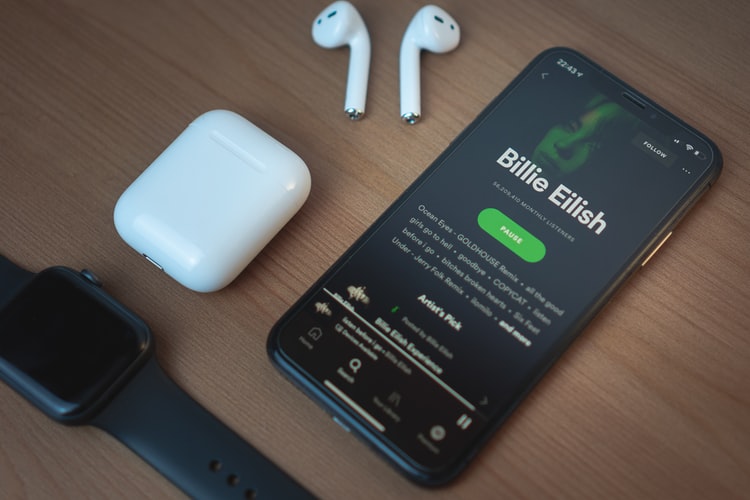
Spotify has revolutionized how we discover and listen to music. A key part of Spotify‘s success is its powerful recommendation system that suggests songs tailored to each user‘s unique tastes. Behind the scenes, Spotify combines state-of-the-art machine learning with big data technologies to deliver its intelligent recommendations.
In this article, we‘ll take a deep dive into how we can build our own music recommendation system that scales to massive datasets using Apache Spark and Kafka. We‘ll walk through the key steps from data ingestion and preprocessing to model training and deployment. By the end, you‘ll have a solid understanding of the core concepts and a working prototype to experiment with. Let‘s get started!
Overview of Recommendation Systems
At a high level, Spotify‘s recommendation system relies on two main approaches:
-
Content-based filtering – Recommends songs similar to what a user has liked in the past based on song attributes like artist, genre, mood, etc.
-
Collaborative filtering – Recommends songs that users with similar tastes have liked (e.g. "Users who liked X also liked Y")
Spotify employs both methods and blends the results to generate highly relevant suggestions. The content-based approach ensures recommendations match a user‘s past preferences while collaborative filtering helps uncover hidden gems a user hasn‘t heard before but is likely to enjoy.
Under the hood, these recommendation systems are powered by machine learning models trained on enormous datasets. Spotify has over 400 million users generating billions of streams per day – far too much data to process on a single machine. This is where big data tools like Spark and Kafka come into play.
Data Ingestion with Kafka
The first step is getting data flowing into our system. We‘ll use Kafka, a distributed streaming platform, to ingest songs in real-time as users listen to them.
We start with a CSV file containing song metadata like title, artist, duration, tempo, genre, etc. A Kafka producer reads the CSV, filters for popular songs in the last couple years, and publishes each song as a message to a Kafka topic. Here‘s what the producer code looks like:
import pandas as pd
from kafka import KafkaProducer

KAFKA_TOPIC = "songs"
KAFKA_BOOTSTRAP_SERVERS = ‘localhost:9092‘

kafka_producer = KafkaProducer(
    bootstrap_servers=KAFKA_BOOTSTRAP_SERVERS,
    value_serializer=lambda x: x.encode(‘utf-8‘)
)

filepath = "songs.csv"
songs_df = pd.read_csv(filepath)
songs_df = songs_df[songs_df[‘popularity‘] > 70]

for _, row in songs_df.iterrows():
    message = ‘,‘.join(str(v) for _, v in row.items())
    kafka_producer.send(KAFKA_TOPIC, message)
Next, we use a Kafka consumer to subscribe to the "songs" topic and retrieve messages in real-time. We create a Spark streaming DataFrame to read from Kafka, specifying the bootstrap servers and topic to subscribe to.
spark = SparkSession \
        .builder \
        .appName("Spotify Recommendations") \
        .getOrCreate()

songs_stream_df = spark \
  .readStream \
  .format("kafka") \
  .option("kafka.bootstrap.servers", "localhost:9092") \
  .option("subscribe", "songs") \
  .load()

song_schema = "artist STRING, title STRING, danceability DOUBLE, energy DOUBLE, loudness DOUBLE,
               speechiness DOUBLE, acousticness DOUBLE, instrumentalness DOUBLE, liveness DOUBLE,
               valence DOUBLE, tempo DOUBLE"

songs_stream_df = songs_stream_df.select(
    from_csv(col("value"), song_schema).alias("data"),
    "timestamp"
)
With a few lines of code, we have an end-to-end data pipeline to ingest and process songs in real-time.
Data Preprocessing with PySpark
With our raw data streaming in, the next step is to clean and preprocess it using PySpark. Some key steps:
- Handle missing data by dropping invalid rows or imputing default values
- Remove duplicate songs by title and artist
- Normalize numeric features to ensure they are on similar scales
- Apply log transformation to skewed features like tempo
- Convert categorical features like key and mode into one-hot encoded vectors
Here‘s a code snippet demonstrating some of these techniques:
from pyspark.ml.feature import StandardScaler, OneHotEncoder, VectorAssembler

scaled_features = [
    "danceability", "energy", "loudness", "speechiness",
    "acousticness", "instrumentalness", "liveness", "valence", "tempo"
]

assembler = VectorAssembler(
    inputCols=scaled_features,
    outputCol="unscaled_features"
)

scaler = StandardScaler(
    inputCol="unscaled_features",
    outputCol="features",
    withStd=True
)

ohe_key = OneHotEncoder(inputCol="key", outputCol="key_vec")
ohe_mode = OneHotEncoder(inputCol="mode", outputCol="mode_vec")

songs_stream_df = assembler.transform(songs_stream_df)
songs_stream_df = scaler.fit(songs_stream_df).transform(songs_stream_df)
songs_stream_df = ohe_key.fit(songs_stream_df).transform(songs_stream_df)
songs_stream_df = ohe_mode.fit(songs_stream_df).transform(songs_stream_df)

songs_stream_df = songs_stream_df.select(
    "artist", "title", "features", "key_vec", "mode_vec", "timestamp"
)
After these transformations, we have a clean set of features ready for machine learning. The next step is to use this preprocessed data to train models for our recommendation system.
Content-based Recommendations with K-Means
For our content-based approach, we‘ll use K-means clustering to group songs with similar audio features together. The idea is that if a user likes a particular song, they‘re likely to enjoy other songs in the same cluster.
We use PySpark‘s MLlib library to perform K-means clustering on the normalized feature vectors:
from pyspark.ml.clustering import KMeans

kmeans = KMeans(
    featuresCol="features",
    predictionCol="cluster",
    k=20,
    maxIter=10
)

kmeans_model = kmeans.fit(songs_stream_df)

clustered_songs = kmeans_model.transform(songs_stream_df)
To recommend songs for a given user, we find their favorite songs, look up which clusters those songs belong to, and suggest other songs from the same clusters.
Collaborative Filtering with ALS
For the collaborative filtering piece, we turn to a technique called matrix factorization. The idea is to represent both users and songs in a lower dimensional latent space that captures their underlying preferences/attributes.
A popular algorithm for matrix factorization is Alternating Least Squares (ALS). Spark MLlib provides a distributed implementation of ALS that we can easily apply to our dataset. Given a user-song matrix of listening counts, ALS will learn latent user and song factors that can be used to estimate preferences.
from pyspark.ml.recommendation import ALS

als = ALS(
    rank=20,
    maxIter=10,
    regParam=0.01,
    userCol="user_id",
    itemCol="song_id",
    ratingCol="play_count",
    coldStartStrategy="drop"
)

als_model = als.fit(user_song_history)
For a given user, we can now use the trained ALS model to generate personalized song recommendations based on their latent factor:
user_id = 12345
user_recommendations = als_model.recommendForUserSubset(spark.createDataFrame([(user_id,)], ["user_id"]))
Putting It All Together
To summarize, our recommendation pipeline works as follows:
- Ingest song data in real-time using Kafka producers and consumers
- Preprocess and normalize song features using PySpark transformations
- Train a K-means model on song features for content-based recommendations
- Train an ALS model on user listening history for collaborative filtering
- Combine content and collaborative recommendations, de-duplicate, and rank results
- Serve recommendations to users via a REST API or batch process
- Monitor, evaluate, and retrain models on new data
We can deploy this system on a Spark cluster to handle Spotify-scale datasets and deliver real-time recommendations to millions of users.
Extensions and Future Work
This article presents a simplified version of Spotify‘s recommendation system, but there are many ways to extend it:
- Experiment with more sophisticated models like deep learning and reinforcement learning
- Incorporate diversity and fairness constraints to avoid filter bubbles
- Leverage side information like user demographics, song lyrics, artist images for context-aware recommendations
- Apply multi-armed bandit techniques for explore/exploit recommendations in production
- Build feedback loops to learn from user interactions and continuously improve models
Conclusion
Building an intelligent, scalable recommendation system is a challenging but rewarding endeavor. By combining machine learning with big data technologies like Spark and Kafka, we can create highly personalized experiences for millions of users.
This article provides a blueprint for developing your own music recommendation system from scratch. While there are many moving pieces, the core ideas are straightforward – ingest and preprocess data using Spark, train models for content and collaborative filtering, combine and rank results, and serve recommendations in real-time.
I encourage you to try implementing this system yourself and experiment with different models and techniques. Feel free to reach out if you have any questions or ideas to share. Happy coding!

