Unveiling Hidden Themes: A Comprehensive Guide to Topic Modeling with BERT
Introduction
In today‘s digital age, we are inundated with vast amounts of unstructured text data from sources like social media, news articles, customer reviews, and scientific publications. Making sense of this deluge of information is a daunting task for businesses, researchers, and policymakers alike. This is where topic modeling comes in – a powerful unsupervised learning technique that can automatically discover the hidden themes or "topics" within large collections of text documents.
Topic modeling has a wide range of applications, from analyzing customer sentiment and tracking brand perception, to understanding research trends and identifying emerging issues. By uncovering the latent structure within text corpora, topic modeling enables organizations to gain valuable insights, make data-driven decisions, and stay ahead of the curve.
While traditional topic modeling algorithms like Latent Dirichlet Allocation (LDA) have been widely used for over a decade, recent advances in deep learning have paved the way for more sophisticated approaches. In particular, the introduction of powerful language models like BERT (Bidirectional Encoder Representations from Transformers) has revolutionized the field of natural language processing (NLP), achieving state-of-the-art performance on a wide range of tasks.
In this comprehensive guide, we will dive deep into the exciting world of topic modeling with BERT. We will explore the nuts and bolts of how BERT works, its advantages over traditional methods, and how it can be harnessed for unsupervised topic discovery. Through hands-on code examples and best practices, you will learn how to apply BERT topic modeling to your own datasets and uncover hidden insights. Let‘s get started!
Understanding BERT and Its Advantages
Before we delve into the specifics of topic modeling with BERT, let‘s first take a step back and understand what BERT is and how it works.
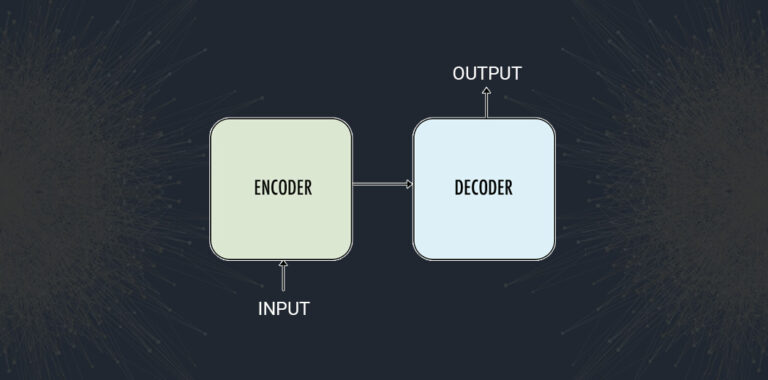
BERT, which stands for Bidirectional Encoder Representations from Transformers, is a pre-trained language model developed by Google in 2018. It is based on the transformer architecture, which uses self-attention mechanisms to capture long-range dependencies and contextual information within text sequences.
What sets BERT apart from previous language models is its bidirectional nature. Unlike models that only consider the left or right context of a word, BERT takes into account both the left and right context simultaneously. This allows it to better understand the meaning of words in their specific context and generate more accurate representations.
Another key feature of BERT is its pre-training on massive amounts of unlabeled text data, such as the entire Wikipedia corpus. Through unsupervised learning tasks like masked language modeling and next sentence prediction, BERT learns general-purpose language representations that can be fine-tuned for various downstream NLP tasks with minimal additional training.
So how does this relate to topic modeling? Traditionally, topic modeling algorithms like LDA rely on bag-of-words representations, which ignore word order and context. They also require specifying the number of topics in advance and can struggle with capturing polysemy (words with multiple meanings) and synonymy (different words with similar meanings).
In contrast, by leveraging the rich contextual embeddings learned by BERT, we can overcome these limitations. BERT‘s embeddings capture semantic similarities between words and documents, allowing for more nuanced and accurate topic discovery. Moreover, by using clustering techniques on these embeddings, we can automatically determine the optimal number of topics without manual specification.
Implementing BERT Topic Modeling: A Step-by-Step Guide
Now that we have a solid understanding of BERT and its potential for topic modeling, let‘s dive into the practical implementation. In this section, we will walk through a step-by-step guide on how to perform topic modeling using BERT, complete with code examples in Python.
Step 1: Generating Document Embeddings
The first step in BERT topic modeling is to generate vector representations, or embeddings, for each document in our corpus. These embeddings capture the semantic meaning of the documents and will serve as the input for clustering.
To obtain document embeddings from BERT, we typically use the output of the [CLS] token, which is a special token added to the beginning of each input sequence. The [CLS] token‘s final hidden state is considered a representation of the entire sequence.
Here‘s an example of how to generate document embeddings using the Hugging Face Transformers library in Python:
from transformers import BertTokenizer, BertModel

# Load pre-trained BERT tokenizer and model
tokenizer = BertTokenizer.from_pretrained(‘bert-base-uncased‘)
model = BertModel.from_pretrained(‘bert-base-uncased‘)

# Tokenize and encode the documents
encoded_docs = tokenizer(documents, padding=True, truncation=True, return_tensors=‘pt‘)

# Generate document embeddings
with torch.no_grad():
    embeddings = model(**encoded_docs)[‘pooler_output‘]
In this code snippet, we first load the pre-trained BERT tokenizer and model. We then tokenize and encode our documents using the tokenizer, which converts the text into numerical input that BERT can understand. Finally, we pass the encoded documents through the BERT model and extract the [CLS] token‘s output as the document embeddings.
Step 2: Clustering Document Embeddings
With the document embeddings generated, the next step is to cluster them to discover latent topics. Clustering algorithms group similar documents together based on their embedding vectors, forming clusters that represent distinct topics.
There are various clustering algorithms to choose from, such as K-means, Hierarchical Clustering, or Gaussian Mixture Models. For simplicity, let‘s use the popular K-means algorithm:
from sklearn.cluster import KMeans

# Perform K-means clustering
kmeans = KMeans(n_clusters=num_topics, random_state=42)
topic_assignments = kmeans.fit_predict(embeddings)
Here, we create a K-means clustering object with the desired number of clusters (topics) and fit it to our document embeddings. The fit_predict method assigns each document to a cluster (topic) based on its embedding vector.
Step 3: Evaluating Topic Quality
After clustering, it‘s important to evaluate the quality of the discovered topics. One common metric is topic coherence, which measures how semantically related the top words within each topic are.
Here‘s an example of calculating topic coherence using the Gensim library:
from gensim.corpora import Dictionary
from gensim.models import CoherenceModel

# Create a dictionary and corpus from the documents
dictionary = Dictionary(tokenized_docs)
corpus = [dictionary.doc2bow(doc) for doc in tokenized_docs]

# Calculate topic coherence
coherence_model = CoherenceModel(topics=[kmeans.cluster_centers_[i] for i in range(num_topics)],
                                 texts=tokenized_docs, dictionary=dictionary, coherence=‘c_v‘)
coherence_scores = coherence_model.get_coherence_per_topic()
In this code, we first create a dictionary and corpus from the tokenized documents. We then initialize a coherence model with the cluster centers (topic representations) and calculate the coherence score for each topic using the c_v coherence measure.
Higher coherence scores indicate more semantically coherent topics, suggesting better topic quality. You can experiment with different clustering algorithms, number of topics, and hyperparameters to optimize topic coherence.
Best Practices and Considerations
When applying BERT topic modeling to real-world datasets, there are several best practices and considerations to keep in mind:
-
Data Preprocessing: Ensure that your text data is properly preprocessed before feeding it into BERT. This may include tokenization, lowercasing, removing stopwords and punctuation, and handling special characters or emoji.
-
Choosing the Right BERT Model: There are various BERT models available, such as BERT-base, BERT-large, and domain-specific variants like BioBERT or FinBERT. Select the model that best suits your data and task requirements.
-
Handling Long Documents: BERT has a maximum sequence length limit (typically 512 tokens). For longer documents, you may need to truncate or split them into smaller chunks and aggregate the embeddings.
-
Hyperparameter Tuning: Experiment with different hyperparameters, such as the number of topics, clustering algorithm, and distance metrics, to find the optimal configuration for your specific dataset and objectives.
-
Interpretability and Visualization: To make the discovered topics more interpretable, consider techniques like topic labeling (assigning meaningful names to topics based on top words) and visualization tools like word clouds or inter-topic distance maps.
-
Scalability and Efficiency: When dealing with large-scale datasets, you may need to leverage distributed computing frameworks like Apache Spark or use more efficient clustering algorithms to handle the computational complexity.
Recent Developments and Future Directions
The field of topic modeling with BERT is rapidly evolving, with new research and advancements constantly pushing the boundaries. Some recent developments and future directions include:
-
Dynamic Topic Modeling: Extending BERT topic modeling to capture the evolution of topics over time, allowing for the analysis of temporal trends and patterns.
-
Hierarchical Topic Modeling: Discovering topic hierarchies and relationships using BERT embeddings, enabling a more granular and structured understanding of the topic space.
-
Cross-lingual Topic Modeling: Leveraging multilingual BERT models to perform topic modeling across different languages, facilitating comparative analysis and knowledge transfer.
-
Topic-Aware Language Models: Incorporating topic information into the pre-training or fine-tuning of language models like BERT to improve performance on topic-related downstream tasks.
-
Integration with Other Techniques: Combining BERT topic modeling with other techniques like sentiment analysis, named entity recognition, or text summarization to gain a more comprehensive understanding of the text data.
Conclusion
In this comprehensive guide, we have explored the powerful technique of topic modeling with BERT. By leveraging the rich contextual embeddings learned by BERT, we can discover latent topics within large text corpora in a more accurate and nuanced manner compared to traditional methods.
Through a step-by-step implementation guide and best practices, we have shown how to generate document embeddings, cluster them to uncover topics, evaluate topic quality, and consider various considerations when applying BERT topic modeling to real-world datasets.
As the field continues to evolve, with new research and advancements pushing the boundaries, the potential applications of BERT topic modeling are vast and exciting. From analyzing customer sentiment and tracking brand perception to understanding research trends and identifying emerging issues, this technique empowers organizations to gain valuable insights and make data-driven decisions.
By mastering the art of topic modeling with BERT, you can unlock the hidden themes within your text data and stay ahead of the curve in today‘s rapidly changing digital landscape. So go ahead, experiment with different datasets, refine your techniques, and uncover the insights that await you!