The Australian Labradoodle: A Comprehensive Guide to this Lovable Breed
Are you considering adding an Australian Labradoodle to your family? These lovable, teddy bear-like dogs have soared in popularity in recent years, thanks to their friendly personalities, low-shedding coats, and overall adorableness. But before you rush out to get an Australian Labradoodle puppy, it‘s important to learn all about the breed to determine if they‘re the right fit for your lifestyle. In this comprehensive guide, we‘ll dive deep into the Australian Labradoodle breed, with a special focus on fully grown adult dogs. You‘ll learn about their history, temperament, exercise needs, grooming requirements, potential health issues, and more. By the end, you‘ll have a clear picture of what life with an Australian Labradoodle is really like. Let‘s get started!
Australian Labradoodle Breed Overview
The Australian Labradoodle was first developed in Australia in the 1980s by Wally Conron, who was the breeding manager for the Royal Guide Dogs Association of Australia. His goal was to create a hypoallergenic guide dog by crossing a Labrador Retriever with a Standard Poodle. Later, Cocker Spaniels were also introduced into the mix. The result was a smart, friendly, low-shedding dog that made an excellent assistance animal and companion.
Australian Labradoodles come in three sizes:
- Miniature (14-16" tall and 15-25 lbs)
- Medium (17-20" tall and 25-45 lbs)
- Standard (21-24" tall and 50-75 lbs)
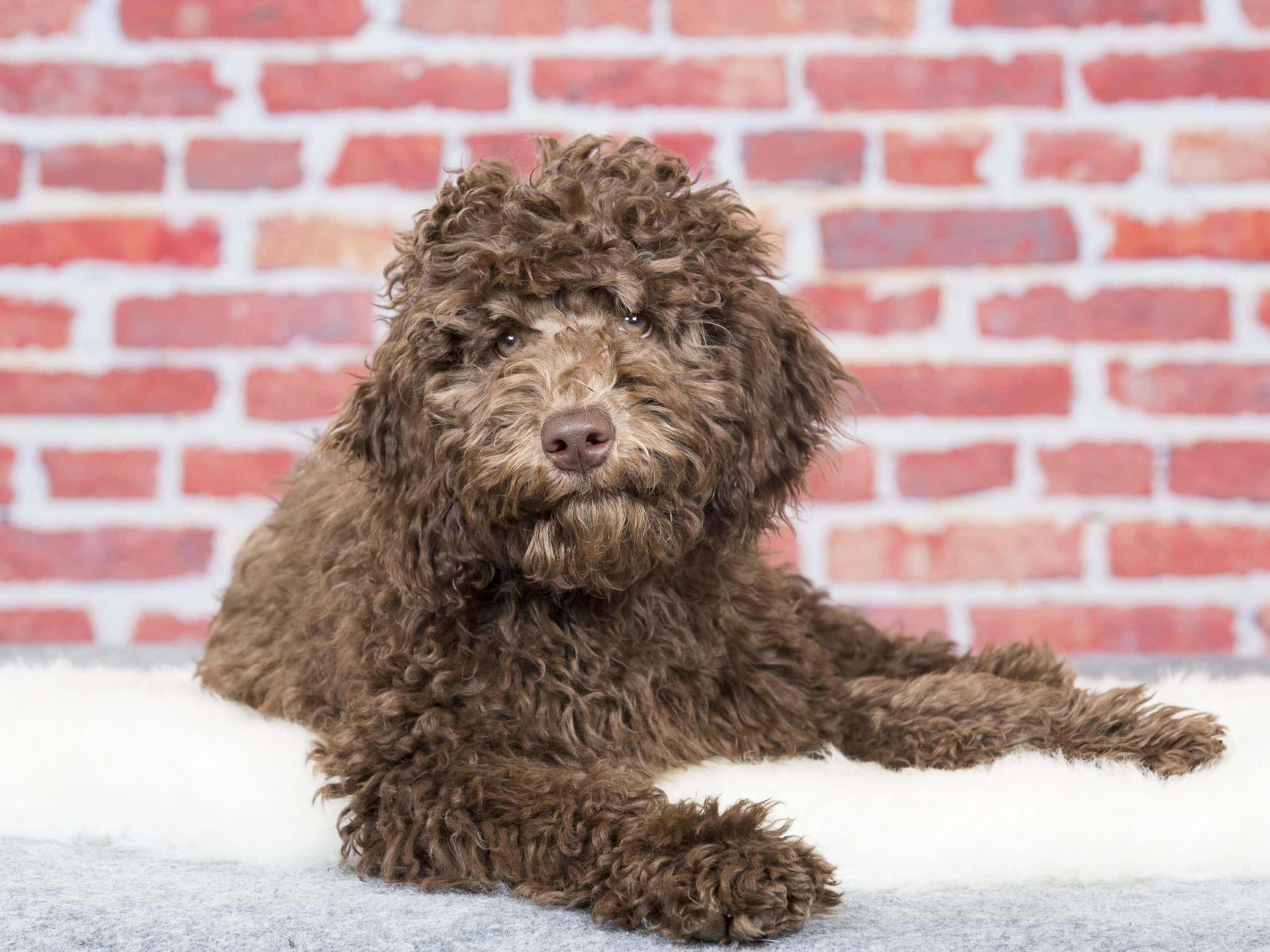
Their coats can be wooly and fleece-like or wavy/straight. Common colors include cream, gold, red, chocolate, black, blue, silver, chalk, parchment, and parti. Multi-colored or merle coats are not accepted for purebred Australian Labradoodles.
Australian Labradoodles vs Labradoodles
It‘s important to note that Australian Labradoodles (ALDs) differ from standard Labradoodles. While both are Poodle crosses, ALDs have Cocker Spaniel in their genetic makeup. They‘ve also been bred over many generations to produce consistent appearance and temperament. In contrast, Labradoodles exhibit more genetic variation since any Lab-Poodle cross can be called a Labradoodle, even first generation mixes.
ALDs are still a relatively new breed, but there are established breed organizations like the Australian Labradoodle Association of America (ALAA) working to maintain breed standards. Still, if you get a puppy from a breeder, do your research to ensure they are reputable and health test their dogs.
Australian Labradoodle Temperament and Personality
Australian Labradoodles are known for being smart, friendly, and affectionate family dogs. They are outgoing and sociable, eager to be involved in all your daily activities. ALDs bond very closely with their families and do not like being left alone for long periods. Separation anxiety can be an issue if they are not trained to feel confident by themselves.
ALDs get along wonderfully with children, thanks to their gentle, patient nature. They are playful without being overly rambunctious. Their friendly, non-aggressive personalities also make them excellent companions for other dogs and pets in the household. Early socialization helps ensure your ALD puppy grows up to be a confident, well-adjusted adult dog.
While every individual dog is unique, ALDs tend to be moderately active. They love playing, going for walks, romping at the dog park, or swimming with their families. But they also have an "off switch" and will happily nap at your feet when playtime is over. For experienced dog owners and first-timers alike, ALDs can be a great fit.
Caring for Your Adult Australian Labradoodle
Australian Labradoodles are relatively easy keepers, but like all dogs, they have specific needs to keep them healthy and happy. Here‘s what you should know about caring for an adult ALD:
Exercise Needs
Adult ALDs need about 30-60 minutes of exercise per day. This can be broken up into a couple walks, backyard playtime, trips to the dog park, swimming, or games of fetch. Puzzle toys are great for mental stimulation. While ALDs enjoy activity, their exercise needs are moderate and can be met with normal daily outings. A couple short walks combined with playtime is usually sufficient to keep them happy and fit.
Training
ALDs are intelligent, eager to please, and highly trainable. Start training early and be consistent with positive reinforcement methods. Make training sessions short and fun so your ALD doesn‘t get bored or frustrated. ALDs excel at obedience, agility, therapy work, and even scent detection so consider getting involved in dog sports or training programs.
Grooming
One of the Australian Labradoodle‘s biggest draws is their low-shedding coat. While no dog is 100% hypoallergenic, ALDs are a good choice for many allergy sufferers. Their fleece or wavy coats do require regular brushing (3-5x per week) to prevent matting and professional grooming every 2-3 months. ALDs don‘t need frequent bathing – once every few months or as needed is plenty. Brush their teeth regularly, keep their nails trimmed, and check/clean their ears weekly to prevent infections since they have floppy, hairy ears that trap moisture.
Australian Labradoodle Health and Lifespan
Australian Labradoodles are generally healthy dogs with an average lifespan of 12-15 years. As with all breeds, there are some health conditions to be aware of:
– Hip and elbow dysplasia
– Eye disorders like progressive retinal atrophy
– Addison‘s disease
– Ear infections
Responsible breeders health test their dogs before breeding to reduce the risk of genetic issues being passed on. All dogs should see the vet annually for checkups, vaccinations, and screenings. A healthy diet, regular exercise, and oral hygiene also go a long way in extending your ALD‘s life.
Is an Australian Labradoodle Right for You?
Australian Labradoodles can be wonderful companions for many types of households. They are great with kids, get along with other dogs, and do well in moderately active families. A securely fenced yard is ideal for play time. ALDs are adaptable and can do well in apartments as long as their exercise needs are met, but a home with a yard is better.
If you work long hours or travel frequently, an ALD may not be the best choice. They thrive on companionship and will become anxious, bored, and destructive if left alone too much. ALDs are sensitive and don‘t respond well to scolding or harsh training methods.
Grooming is another factor to consider. While ALDs don‘t shed much, they do require regular brushing and trips to the groomer which takes time and money. If you want a true "wash and wear" dog, an ALD isn‘t it. But if you don‘t mind some upkeep, their coats are manageable.
Finding an Adult Australian Labradoodle
If you‘ve decided an Australian Labradoodle is right for you, you may be wondering where to find one, especially an adult dog. Puppies are adorable, but with an adult, you know exactly what you‘re getting in terms of size, coat type, and temperament. Here are a few places to look:
Breeders
Start your search with reputable ALD breeders who follow ALAA guidelines for responsible breeding practices. Sometimes breeders have adult dogs for sale, either retired breeding dogs or dogs that were returned by their original owners. Reach out and let them know you are interested in an adult dog.
Rescue Organizations
There are several Australian Labradoodle rescue groups across the country. These organizations take in surrendered ALDs and rehome them. Adopting an adult rescue is a great way to give a deserving dog a second chance at a loving home. Check out the Worldwide Australian Labradoodle Rescue website to see available dogs.
Shelters
While not as common, Australian Labradoodles and Labradoodle mixes sometimes end up in local animal shelters. Check Petfinder or Adopt a Pet and browse local shelter websites. If your heart is set on an ALD, you may need to be patient and willing to travel to adopt.
Conclusion
Australian Labradoodles are smart, sweet, affectionate dogs that have captured the hearts of many. As you can see, they have a lot to offer for the right family. By understanding their needs, doing your research, and being committed to training, exercise, and grooming, you‘ll set your ALD up for a happy, healthy life by your side. Whether you choose to raise a puppy or adopt an adult, enjoy every moment with your new best friend!