The Charming and Regal Pekingese: An Ultimate Guide
As a lifelong dog lover and veterinarian, I‘ve had the pleasure of caring for many different breeds over the years. But few have captured my heart quite like the Pekingese. With their distinctive lion-like appearance, soulful expressions, and larger-than-life personalities, Pekingese are truly a breed apart. If you‘re considering adding a Pekingese to your family, or simply want to learn more about this fascinating breed, this in-depth guide will tell you everything you need to know.
Breed Overview and History
The Pekingese, affectionately known as "Pekes," are an ancient toy breed that originated in China over 2000 years ago. They were bred as companions to the Chinese imperial court, and owning a Pekingese was once a privilege reserved only for royalty. In fact, stealing a Pekingese was once punishable by death!
According to legend, the Pekingese was created by the Buddha, who shrunk down a lion to dog size. The lion was so enraged at being miniaturized that his eyes popped out and his face flattened, giving the breed their signature appearance.
Pekingese first came to the Western world in 1860, when British troops looted the imperial palace during the Opium Wars and brought several of the dogs back to England. The breed quickly gained popularity among European nobility and were officially recognized by the American Kennel Club in 1909.
Physical Characteristics and Breed Standard
The ideal Pekingese is a compact, well-balanced dog with a stocky, muscular body. According to the AKC breed standard, they should weigh no more than 14 pounds and stand 6-9 inches tall at the shoulder. However, many pet Pekes are larger, with some weighing up to 20 pounds or more.
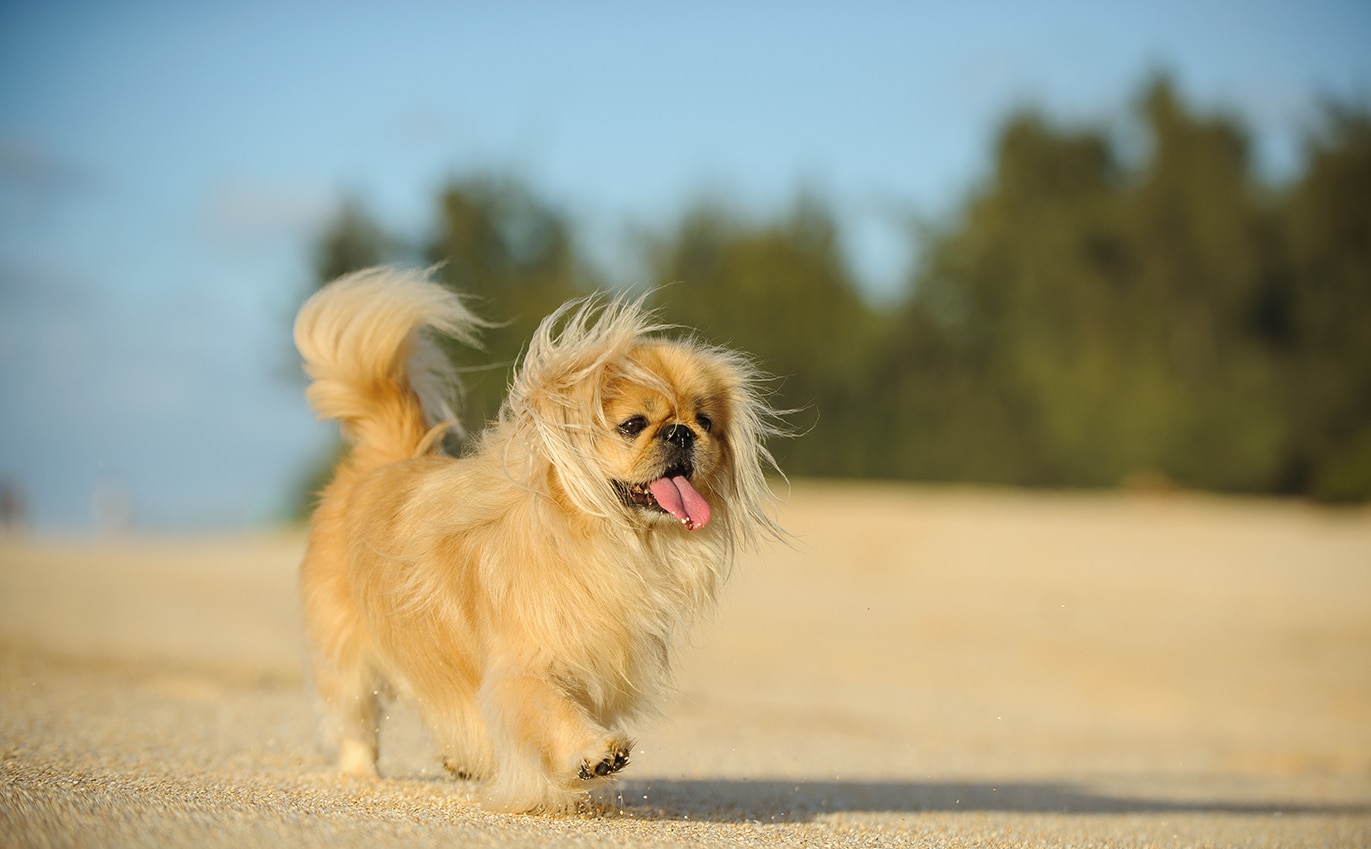
One of the most distinctive features of the Pekingese is their flat, brachycephalic face with large, round, dark eyes, a black mask, and a very short, broad muzzle. Their ears are heart-shaped and set high on the head. The Pekingese gait is unique – they move with a dignified, rolling trot with good reach and drive.
The breed‘s double coat is another defining characteristic. The undercoat is soft and thick, while the outer coat is long, coarse, and straight, forming a lion-like mane around the shoulders. Coat colors include fawn, red, black, cream, white, and parti-color. There are actually two varieties of Pekingese coat: a longer "sleeve" coat and a slightly shorter "brush" coat.
Temperament and Personality Traits
"Pekingese pack a lot of personality into a small package. They are regal, intelligent, and can be quite opinionated. But to their family, they are also deeply loyal and affectionate companions." – Dr. Jerry Klein, AKC Chief Veterinary Officer
Pekingese are famous for their independent, self-important, and sometimes stubborn nature. They tend to bond very closely with one or two people and can be aloof or distrusting with strangers if not well-socialized. Pekes have a definite silly side and crave being the center of attention.
Despite their aristocratic bearing, Pekingese can also have quite the sense of humor. My own Peke will "smile" by drawing his lips back to reveal his front teeth when he‘s happy. He also loves playing hide-and-seek and having "conversations" with me in Peke-speak (a combination of grunts, snorts, and yodels).
As a veterinarian, one of the things I appreciate most about Pekingese is their adaptability. They are just as content snuggling on the couch as they are going for a walk or chasing a ball. This makes them well-suited for a variety of living situations, from apartments to larger homes.
Health and Lifespan
Like many purebreds, Pekingese have some genetic health predispositions potential owners need to be aware of. Their flat faces make them prone to breathing problems, dental issues, and heat sensitivity. According to a study by the Orthopedic Foundation for Animals, an estimated 25% of Pekingese suffer from brachycephalic airway obstruction syndrome to some degree.
Other health issues seen in the breed include:
- Eye problems like cherry eye, corneal ulcers, and dry eye (19.5% of Pekes per the OFA)
- Patellar luxation, or dislocating kneecaps (12.9%)
- Intervertebral disk disease (IVDD) due to their long backs
- Skin fold dermatitis
- Cardiac issues like mitral valve disease
- Autoimmune disorders
- Epilepsy
- Hypothyroidism
Of course, not every Pekingese will develop these problems. With proper preventive care, nutrition, and regular vet check-ups, Pekingese have an average lifespan of 12-14 years, with some living to 18 or more. In a 2004 UK Kennel Club survey, the leading causes of death for Pekingese were old age (25%), cardiac (16%), and cancer (14%).
Grooming and Care
Pekingese are high-maintenance in the grooming department. Their long, dense double coats require daily to weekly brushing to prevent mats and tangles. Many pet owners opt to keep their Pekes in a shorter "puppy cut" to make maintenance easier. Regular bathing, at least monthly, helps keep the coat and skin clean and healthy.
Some must-have grooming tools for Pekingese include:
- Pin brush for everyday brushing
- Greyhound comb to work out tangles
- Dematter for removing stubborn mats
- Nail grinder or clippers (Peke nails grow quickly!)
- Ear cleaner and cotton balls
- Dental kit with toothbrush and enzymatic toothpaste
Besides coat care, other grooming needs include cleaning the face folds daily to prevent skin infections, keeping the eyes free of discharge, brushing the teeth several times a week, and checking the ears for wax buildup or signs of irritation.
Pekingese don‘t need a lot of exercise, but regular short walks and play sessions are important for their physical and mental well-being. I recommend harness-training Pekes to avoid putting pressure on their sensitive tracheas. Because of their flat faces, Pekingese can‘t handle strenuous exercise or heat/humidity. On hot days, keep walks brief and always carry water.
Feeding and Nutrition
Pekingese have unique nutritional needs due to their small size and prone-to-obesity body type. According to a 2018 clinical survey by the Association for Pet Obesity Prevention, 52% of Pekingese were classified as overweight or obese by their veterinary healthcare professional. Excess weight is especially hard on Pekes because of their brachycephalic anatomy and intervertebral disk disease risk.
When choosing a food for your Pekingese, here‘s what to look for:
- High-quality animal protein (real chicken, lamb, fish, etc.) as the first ingredient
- Moderate fat levels, ideally from animal sources
- Low to moderate carbohydrate content from digestible sources like brown rice and vegetables
- A "complete and balanced" AAFCO statement, indicating the food meets minimum nutrient requirements
- No artificial colors, flavors, or preservatives
For most adult Pekes, I recommend a portion-controlled diet using a food specifically formulated for small breeds. Puppies and adolescents may need a growth formula to support their developing bodies. Your vet can help you calculate the proper amount to feed based on your dog‘s age, weight, and body condition score.
Because Pekingese are prone to dental disease, it‘s also a good idea to incorporate dental-friendly treats and chews into their diet. Dental kibble, raw meaty bones, and products like Greenies can help reduce plaque and tartar buildup.
Training and Socialization
The Pekingese‘s independent nature can make them a challenge to train, especially for novice owners. They respond best to positive reinforcement methods using high-value treats and lots of praise. Short, 5-minute training sessions work best to hold their attention. Housetraining in particular requires patience and consistency, as some Pekes can be stubborn about going outside.
Early and ongoing socialization is a must for this breed. Expose your Peke to a variety of people, animals, sights, sounds, and surfaces from a young age so they learn to be confident in different situations. Puppy kindergarten and obedience classes are great ways for Pekes to practice their manners. Even adult Pekes can learn to be more outgoing with a gradual socialization program.
Because of their small size and tendency to be possessive of their owners, I always advise erring on the side of caution when it comes to interactions between Pekingese and young children. Pekes can easily be injured by rough handling, and they may snap or bite if feeling threatened. Older kids who have been taught to interact gently are a safer bet.
Pekingese in Popular Culture
Pekingese have long been popular with celebrities and public figures. A few famous Pekingese owners past and present include:
- Queen Victoria of England
- Empress Dowager Cixi of China
- Author Edith Wharton
- Music legend Elton John
- Actress Elizabeth Taylor
- TV personality Sharon Osbourne
Several Pekingese have also made their mark on history:
- Sun Yat-Sen, a Peke belonging to Henry Harper, survived the sinking of the Titanic in 1912. He was one of only three dogs to make it out alive.
- Looty, one of the original Pekingese brought to England from the Imperial Palace, was presented to Queen Victoria in 1861. All modern Pekingese may trace their ancestry back to the original five dogs, including Looty.
- Rascal, a red Pekingese, is said to have sparked 13th century Venetian explorer Marco Polo‘s interest in the Far East.
Showing and Breeding
The Pekingese has consistently ranked among the most popular toy breeds in the United States and England. In 2021, the breed ranked 93rd out of 197 AKC registered breeds, with 1,052 individual dogs registered. This is down from a peak of over 19,000 annual registrations in the 1970s.
For those interested in showing Pekingese, the breed competes in the Toy Group at AKC conformation shows. If you want to start showing your Peke, attend a few local shows to meet breeders and exhibitors, and learn about the process. Pekes require expert presentation in the ring to showcase their unique gait and lion-like appearance.
Breeding Pekingese is not for the faint of heart. Because of the breed‘s flat face and large head, the vast majority of Pekes are delivered by cesarean section. Birth defects and whelping complications are not uncommon. Reputable breeders typically do extensive pre-breeding health testing to screen for known genetic issues.
If you‘re seeking a show-quality Pekingese puppy, expect to pay anywhere from $1500 to over $5000, depending on the breeder and bloodlines. For a pet-quality puppy, prices range from $500 to $1500. Always choose a responsible breeder who health tests their breeding stock and raises puppies in the home.
Adopting an Adult Pekingese
For those open to adopting an adult dog, rescuing a Pekingese can be an excellent way to skip the challenging puppy stage. According to Petfinder.com, there are currently over 500 Pekingese and Pekingese-mix dogs available for adoption nationwide.
Many Pekes end up in rescue because their owners underestimated the grooming needs and veterinary costs associated with the breed. Others are surrendered due to housetraining troubles, separation anxiety, or incompatibility with young children. The benefit of adopting an adult is that you can choose a dog whose personality is already developed.
If you‘re interested in Peke rescue, check out breed-specific organizations like Pekingese Rescue and the Pekingese Club of America Rescue Network. They can help match you with available dogs in your area. Adoption fees typically range from $100 to $500 and include spay/neuter surgery, microchipping, and necessary vaccinations.
Final Thoughts
With their endearing faces, lively personalities, and rich history, Pekingese are a truly special breed. They make excellent companions for those seeking a loyal, affectionate lapdog who doesn‘t need a lot of outdoor exercise. However, their intensive grooming needs, strong-willed temperament, and potential health issues are not for everyone.
If you think the Pekingese might be the breed for you, I recommend meeting several dogs in person before making a decision. Attend local dog shows, visit a responsible breeder, or volunteer with a Pekingese rescue to get firsthand experience with the breed.
Caring for a Pekingese is a long-term commitment, but for the right person, the rewards are immeasurable. There‘s nothing quite like the love of a Pekingese – they will make you laugh, keep you on your toes, and shower you with adoration. As the saying goes, "Pekingese are not a dog; they are Pekingese!"