
The Doberman Dalmatian Mix: Loyal, Energetic, and Brilliantly Spotted
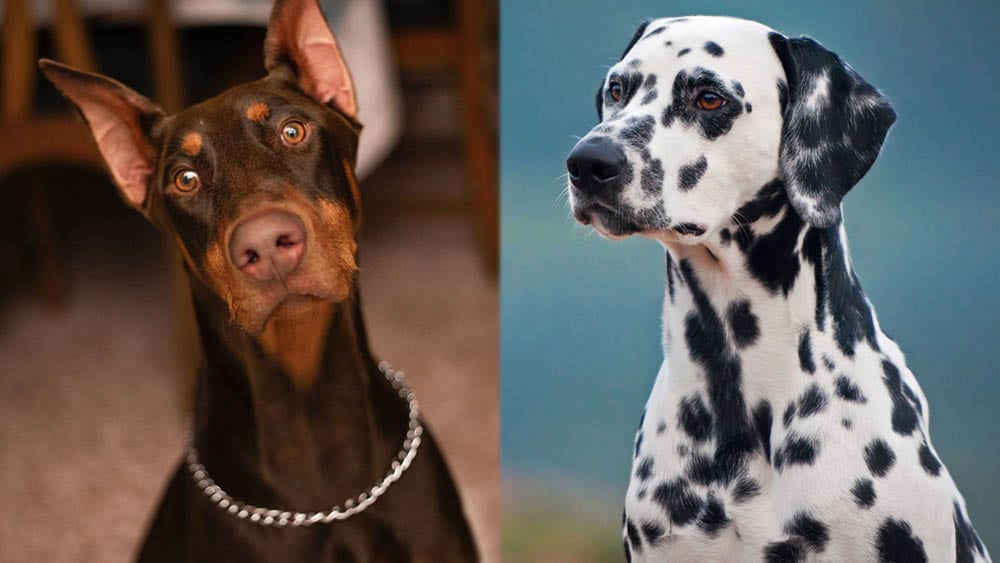
If you‘re seeking a unique, active, and devoted companion, the Doberman Dalmatian mix may be your ideal match. This eye-catching hybrid inherits many of the best qualities from both of its purebred parents – the fearless loyalty of the Doberman Pinscher and the playful, people-oriented nature of the Dalmatian. The result is an intelligent, energetic, and protective family dog enrobed in a strikingly spotted coat.
As a veterinarian and lifelong dog lover, I‘ve seen my fair share of designer mixes, but few turn heads quite like the "Dalmadobe." While this crossbreed has been gaining popularity, it‘s still a relatively rare dog. Let‘s dive into what makes these dotted dynamos so special and whether one might be the right fit for your lifestyle.
Parent Breeds and History
The Doberman Dalmatian mix is a cross between two distinctive and historically significant purebreds:
The Doberman Pinscher
- Originated in Germany in the late 19th century
- Developed by Louis Dobermann, a tax collector, to be the ideal personal protection dog
- Ancestors likely include the Rottweiler, Black and Tan Terrier, German Pinscher, and Weimaraner
- Prized for their fearlessness, loyalty, and trainability
- Excel as police, military, and guard dogs
- Currently the 17th most popular breed in the U.S. (AKC, 2021)
The Dalmatian
- Origins trace back to Croatia as early as the 17th century
- Gained popularity in England in the 1800s as coach dogs and firehouse mascots
- Bred to have the stamina to trot beside horse-drawn carriages for miles
- Famously starred in Disney‘s 1961 animated film "101 Dalmatians"
- Known for their affinity for horses, love of children, and clownish sense of humor
- Ranked 56th in AKC breed popularity in 2021
As a designer dog, the Dalmadobe is not recognized by major purebred registries like the AKC or UKC. Some smaller organizations focused on hybrid breeds, such as the Designer Breed Registry, do acknowledge this mix.
Appearance and Size
The Doberman Dalmatian mix is a large breed, typically weighing between 45 and 80 pounds and standing 19 to 27 inches tall at the shoulder when fully grown. Size can vary quite a bit depending on whether the individual dog favors their Doberman or Dalmatian parent. In general, males are larger than females.
| Breed | Height (inches) | Weight (pounds) |
|---|---|---|
| Doberman | 24-28 (M) 24-26 (F) | 60-100 (M) 60-90 (F) |
| Dalmatian | 19-24 | 45-70 |
| Doberman Dalmatian Mix | 19-27 | 45-80 |
One of the most distinctive features of this mix is their spotted coat. Puppies are born pure white, with spots developing within a few weeks. The base color is almost always white, with spots ranging from black to liver (brown). Some may inherit the tan point markings of their Doberman parent as well. The coat is usually short, dense, and glossy.
Eye color can range from brown to blue or even a combination of the two. Doberman Dalmatian mixes may inherit heterochromia (two different colored eyes) from their Dalmatian parent. Their ears may be cropped like a Doberman or left natural like a Dalmatian.
Temperament and Personality
The ideal Doberman Dalmatian mix will inherit the best traits from both parent breeds:
- Loyal and devoted to family
- Intelligent and easy to train
- Energetic and athletic
- Playful and affectionate
- Alert and protective
- Good with children
- Bonds closely with humans
However, temperament is influenced by both genetics and environment. Poor breeding, lack of socialization, or inconsistent training can result in a dog that is:
- Shy or fearful
- Overly suspicious of strangers
- Aggressive towards people or other dogs
- Destructive when bored or anxious
- Difficult to control due to size and strength
According to the American Temperament Test Society, Doberman Pinschers and Dalmatians both have above-average passing rates of 79.1% and 82.4% respectively, compared to an average of 83.7% for all breeds. This suggests that both parent breeds tend to have stable, friendly temperaments when bred and raised responsibly.
Proper socialization is key to helping Dalmadobe puppies grow into well-adjusted adult dogs. Positive exposure to a wide variety of people, animals, environments, and experiences during the critical development period of 3-16 weeks can prevent fear and aggression issues down the line.
Doberman Dalmatian mixes need plenty of exercise and mental stimulation to stay happy and well-behaved. A minimum of 60-90 minutes per day of walking, running, playing, or training is a must. They enjoy hiking, jogging, swimming, fetch, and dog sports.
Failure to provide an outlet for their physical and mental energy can lead to problem behaviors like:
- Excessive barking or howling
- Destructive chewing
- Hyperactivity
- Digging
- Escape attempts
"My Doberman Dalmatian mix, Spot, is scary smart. Teaching him new tricks is a breeze, but I can‘t slack off on exercise or he‘ll redesign my couch with his teeth." – Jenn R., owner of a 2-year-old "Dalmadobe"
This mix can be an excellent family dog when raised with children. They‘re more playful than a purebred Doberman and more protective than a purebred Dalmatian. However, their size and exuberance may be too much for very small children. Always supervise interactions and teach kids how to respect the dog‘s space.
Grooming and Care
Doberman Dalmatian mixes shed moderately year-round and more heavily during seasonal coat changes. Weekly brushing with a slicker brush or hound glove will help remove loose hair and prevent mats. They don‘t need frequent baths unless they‘ve rolled in something smelly.
Other grooming needs include:
- Nail trims every 2-4 weeks
- Ear cleaning weekly to prevent infections
- Tooth brushing several times per week
- Occasional anal gland expression as needed
Since Dalmatians are prone to urinary stones, it‘s important to choose a dog food formulated to reduce urate crystals and ensure your Dalmadobe always has access to fresh water. Your veterinarian may recommend a prescription diet or supplements based on your dog‘s unique needs.
Choosing a Doberman Dalmatian Mix Puppy
If you‘ve decided this spotted smarty-pants is the dog for you, take your time finding a responsible breeder. Reputable Doberman and Dalmatian breeders are more likely to perform the relevant health clearances on their parent dogs and raise puppies with care.
Questions to ask a Doberman Dalmatian mix breeder:
-
Do you perform health testing on the parent dogs? Ask for proof of hip, elbow, heart, eye, and hearing exams at minimum. Some breeders also test for von Willebrand‘s disease (vWD) and hypothyroidism.
-
How do you socialize the puppies? Look for a breeder who raises pups in the home and exposes them to positive experiences during the critical 3-16 week development period.
-
What is your guarantee? A reputable breeder will insist you return the puppy to them if you cannot keep it at any point in the dog‘s life. They should also offer a health guarantee against congenital defects.
-
Can I meet the parent dogs? Seeing where the puppies were raised and observing the temperament and condition of their mother and father can give you an idea of what to expect.
-
What lifetime support do you offer? The best breeders are mentors, providing guidance and answering questions throughout the dog‘s life.
Expect to pay anywhere from $500 to $2000+ for a well-bred Doberman Dalmatian puppy, depending on parent pedigree, location, and other factors. Avoid the temptation of a cheap puppy from unknown origins – you‘re likely to pay the difference in vet bills, training, and heartache down the line.
If you‘re open to a rescue, search for Doberman Pinscher, Dalmatian, and large breed mixes at your local shelters. With the "Cruella" effect driving up demand for spotted dogs, more "designer" mixes are sadly losing their homes. An adolescent or adult Dalmadobe can be a great choice for experienced owners who can handle their size and strength.
Health and Longevity
Purebred Dalmatians and Doberman Pinschers are both prone to certain genetic health issues. While mixed breed dogs may have more genetic diversity, Doberman-Dalmatian crosses can still inherit problems from either parent breed.
Potential health concerns for this mix include:
- Hip and elbow dysplasia
- Heart disease (dilated cardiomyopathy, valve disease)
- Eye problems (progressive retinal atrophy, entropion)
- Deafness (especially in dogs with a large amount of white)
- Hypothyroidism
- Skin allergies
- von Willebrand‘s disease (a blood clotting disorder)
- Urate bladder stones
- Bloat (gastric dilatation volvulus)
To stack the odds in your spotted pup‘s favor:
- Choose a puppy from health tested parents
- Feed a high quality, complete and balanced diet
- Keep your dog at a healthy weight
- Provide regular veterinary care including dental cleanings
- Use monthly parasite preventives
- Avoid strenuous exercise during the growth phase
- Secure your dog during car rides to prevent injury
- Consider health insurance to offset unexpected vet bills
While there‘s no guarantee when it comes to health, a proactive approach can help your Doberman-Dalmatian mix live their best life. With good care, this mix has a life expectancy of 10-13 years.
Breeder Q&A: Insights from a Doberman Dalmatian Mix Breeder
To gain more perspective on this unique mixed breed, I reached out to Montana-based breeder Rachel C. of Treasure State Dalmadobe for her insights.
"I started crossing purebred Dobermans and Dalmatians four years ago because I wanted to combine the courage and stable temperament of the Doberman with the classic spotted look and goofy personality of the Dalmatian. My goal is to produce healthy, intelligent, versatile dogs who excel as family companions and performance prospects." – Rachel C., Treasure State Dalmadobe
Rachel emphasized the importance of health testing, early socialization, and ongoing training for Doberman Dalmatian mix puppies to thrive in their new homes. She recommended puppy kindergarten and ongoing positive reinforcement classes for this intelligent, handler-oriented mix.
Regarding exercise, Rachel cautioned against going overboard with puppies while their joints are still developing. "Until growth plates close between 12-18 months old, limit repetitive impact and don‘t jog or bike with your Dalmadobe pup. Let them be a puppy — focus on socialization and play."
As for the spotted elephant in the room? "Yes, Dalmatian Doberman mixes shed, so be prepared to bust out the vacuum and lint roller if you‘re persnickety about dog hair. A robot vacuum can be a spotted dog owner‘s best friend."
Rachel also stressed the importance of securely fencing your yard, as the mix‘s athleticism and desire to be with their people can lead to wanderlust. She recommended a minimum six foot privacy fence, as this mix can easily scale a four footer when motivated.
Final Thoughts
The Doberman Dalmatian mix is a striking, smart, and spirited cross that can make a wonderful companion for the right person or family. As with any high-energy working breed, they require dedicated owners willing to put in the time and effort to train, socialize, and exercise them properly.
While no dog is 100% hypoallergenic or guaranteed health-wise, choosing a responsibly bred Dalmadobe puppy or a thoroughly vetted rescue can stack the odds in your favor. Careful selection, a committed approach to training and socialization, and a proactive health care plan can help your spotted sidekick live a long, happy life by your side.
If you‘re ready to take the plunge into Doberman Dalmatian mix ownership, buckle up for a dotted adventure full of love, laughter, and the occasional liver-spotted lip print. With a dash of Doberman devotion and a dollop of Dalmatian hilarity, life with a Dalmadobe is never boring.


